Source Forklift Load Wheel with Thread Guards for Warehouse, Repair, and Maintenance
Compare 30 available Forklift Load Wheel with Thread Guards from verified Chinese manufacturers. Buyers can evaluate specifications, weights, and customization options for warehouse, repair, and maintenance applications.
Key considerations
Products List


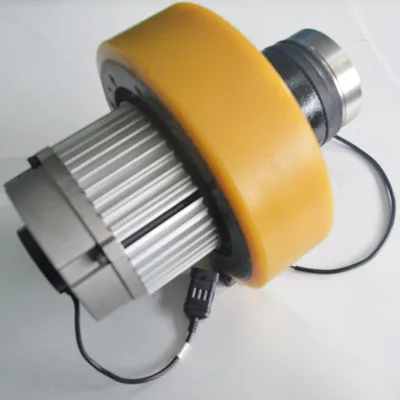
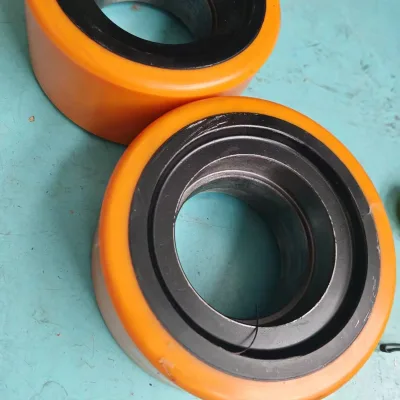


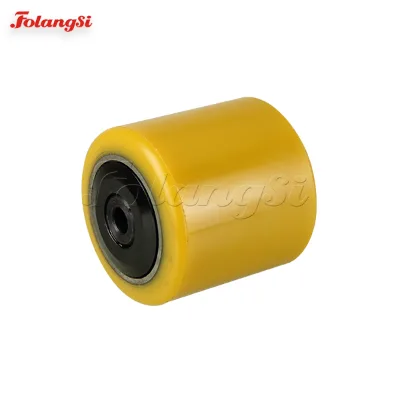


Steel Skid Steer Wheel, Industrial Wheel, Forklift Wheel, Loader Wheel
$40.00 - $80.00
MOQ: 200 Pieces
Comprehensive Sourcing Guide
Strategic Sourcing Guide for Forklift Load Wheels with Thread Guards
Understanding Product Specifications and Technical Variability
When sourcing forklift load wheels with thread guards, buyers must first navigate a landscape defined by highly specific technical attributes rather than generic descriptions. The product category encompasses various models where dimensions, bearing types, and structural configurations vary significantly based on the intended load capacity and operational environment. In the observed market data, specific model numbers such as Lw13-25411401p and Lw13-28508501p indicate a coding system that likely correlates to precise dimensional requirements. For instance, the specification model 254114-90/110(6212/6210) suggests a wheel with a diameter of 254mm and a width of 114mm, paired with specific bearing configurations like the 6212 or 6210 series. Similarly, the model 28585-62(7206) points to a different dimensional profile and bearing type, highlighting that a single "load wheel" designation covers a wide array of mechanical interfaces.
The presence of thread guards is a critical functional requirement for these components, designed to protect the wheel assembly's mounting threads from debris, corrosion, and physical impact during heavy-duty forklift operations. While the core keyword emphasizes thread guards, the actual product listings reveal a diversity in specifications that buyers must verify against their equipment manuals. Some units are listed with a "Standard Specifications Or Customized" status, indicating that while standard dimensions exist, customization is a viable path for specialized machinery. The weight of these components varies drastically, ranging from lightweight auxiliary wheels at 0.85kg to heavy-duty load wheels reaching 450kg. This variance necessitates a rigorous review of the "Specification Model" and "Model Number" fields to ensure the purchased part matches the exact load-bearing requirements of the specific forklift model.
Buyers should also pay close attention to the "English Name" and "Purpose" fields. Products are explicitly labeled as "Load Wheel" or "Auxiliary Wheel," and their stated purpose is often "for replace/repair." This distinction is vital because auxiliary wheels may have different load ratings and structural reinforcements compared to primary load wheels. The application is consistently noted as "Forklift," but the specific operational context—whether it involves high-speed maneuvering or heavy static loading—will dictate the necessary material strength and bearing quality. The "Condition" is uniformly listed as "New," which is a baseline expectation for replacement parts, but the "Quality" attribute is often described as "High-Quality," a subjective term that requires objective verification through supplier documentation.
Compliance, Certification, and Standard Verification
Navigating the compliance landscape for industrial forklift components requires a disciplined approach to verifying certifications and standards. The provided data indicates that certain products carry the CE certification, a mandatory conformity mark for products sold within the European Economic Area. However, the data also presents a certification entry of "CE,ISO9001: Condition:New," suggesting that some suppliers may offer dual compliance, though the formatting implies a potential data aggregation issue where condition status is mixed with certification data. Buyers must treat these certifications as observations of specific listings rather than universal guarantees for all products in the category.
The "Standard" attribute in the product data shows a split between "Nonstandard" and "Standard" classifications. This dichotomy is crucial for procurement. A "Nonstandard" product may require custom tooling or unique manufacturing processes, potentially affecting lead times and cost. Conversely, "Standard" products, such as those adhering to "Standard Specifications Or Customized" norms, are likely more readily available and interchangeable. The "prod_standard" field further clarifies this, with some entries listing specific dimensions like "8570-47/14mm (6204 bearing)" as the standard, while others list "254114-90/110" as the standard. This implies that "Standard" in this context often refers to a specific dimensional configuration rather than a universal industry standard like ISO or ANSI.
Buyers must verify if the "CE" certification applies to the specific thread guard mechanism or the entire wheel assembly. In many jurisdictions, thread guards are considered safety-critical components, and their failure can lead to catastrophic equipment damage. The presence of a "Certificate" field listing "CE" is a positive indicator, but it should be cross-referenced with the "prod_standard" to ensure the specific model number is covered under that certification. Furthermore, the "ISO9001" reference suggests a quality management system is in place for the manufacturer, which is a strong proxy for consistent production quality, though it does not guarantee the performance of every individual unit.
It is essential to note that the "Standard" attribute can also refer to the "prod_standard" of the product itself, which might be "Standard Specifications Or Customized." This means that while a product might be marketed as standard, the actual delivery could be customized. Buyers should explicitly request documentation proving that the specific model they are purchasing meets the required safety standards for their region. The "Location" of the product origin is listed as "Anhui, China" or generally "China," which provides context for the supply chain but does not inherently dictate compliance. Compliance must be verified through the supplier's official documentation, not assumed based on the origin country.
Cost Drivers and Pricing Structure Analysis
The pricing structure for forklift load wheels with thread guards is influenced by a complex interplay of factors, including material costs, manufacturing complexity, and customization levels. The observed price range in the market spans from $1 to $20,000 USD, a vast disparity that reflects the difference between small auxiliary wheels and massive, heavy-duty load wheels. A unit weighing 0.85kg will naturally command a lower price point than a unit weighing 450kg, as the latter requires significantly more raw material and more robust manufacturing processes. The "Weight" attribute is a primary driver of cost, as heavier wheels require thicker treads, larger bearings, and more substantial hubs.
Customization is another significant cost driver. The data indicates that "Customized" options are available, and some products are explicitly marked as "Non-Customized" while others are "Customized." Customization often involves unique mold creation, specialized surface treatments like "Baking Paint," or specific bearing configurations that deviate from standard inventory. The "prod_packing" field shows options for "Standard Shipping Packaging or Customized," and choosing custom packaging can add to the overall cost. Similarly, the "Standard" attribute being "Nonstandard" for some items suggests that these products may incur a premium due to the specialized nature of their production.
The "Selling Units" field indicates that many items are sold as "Single item," which can affect the per-unit cost compared to bulk purchases. The "MOQ" (Minimum Order Quantity) range observed is 1 to 200 units. A buyer ordering a single unit may face a higher per-unit price due to the lack of economies of scale, whereas an order meeting the higher end of the MOQ range might benefit from volume discounts. The "Brand Name" "huanxin" is listed for some products, and branded components often carry a price premium compared to unbranded or generic equivalents, assuming the brand has a reputation for quality.
Lead times and shipping costs also contribute to the total cost of ownership. While specific lead times are not provided in the data, the "Location" being "Anhui, China" implies international shipping for many buyers, which adds logistics costs. The "Warranty" of "12 Months" is a standard offering for some products, which can be factored into the cost analysis as a form of risk mitigation. A higher price point might be justified if it includes a longer warranty or superior quality assurance, but buyers must weigh this against the immediate budget constraints. The "Color" attribute, such as "Orange," is a minor cost factor but may be relevant for safety compliance in specific facilities, adding value beyond the mechanical function.
Typical Applications and Operational Context
Forklift load wheels with thread guards are designed for a variety of industrial applications, primarily centered around material handling and logistics. The "Application" field explicitly states "Forklift," but the specific operational context varies based on the wheel's specifications. Heavy-duty wheels, such as those weighing 40kg or 450kg, are typically used in warehouses, distribution centers, and manufacturing plants where heavy pallets and machinery are moved frequently. These wheels must withstand high static and dynamic loads, making the "High-Quality" designation critical for their longevity.
The "Purpose" of these wheels is often "for replace/repair," indicating that they are essential maintenance components for keeping forklift fleets operational. In environments with high traffic and frequent loading/unloading cycles, the wear and tear on load wheels is accelerated. The "Thread Guards" play a vital role in these applications by protecting the wheel assembly's mounting points from dirt, oil, and debris that could compromise the structural integrity of the connection. This is particularly important in outdoor or semi-outdoor environments where exposure to the elements is higher.
Auxiliary wheels, such as the one with a weight of 0.85kg and a model of 85*70-47/14mm(6204), are often used in lighter-duty applications or as steering wheels on smaller forklifts. These wheels require less load-bearing capacity but still need to be durable enough to handle the rotational stresses of steering. The "Surface Treatment" of "Baking Paint" is a common feature across the product range, providing a protective layer against corrosion and wear. This is especially important for wheels that may be exposed to chemicals or moisture in industrial settings.
The "Condition" being "New" ensures that the wheels are ready for immediate installation without the need for refurbishment. The "Warranty" of 12 months provides a safety net for buyers, ensuring that any manufacturing defects are covered within the first year of operation. The "Color" of the wheels, such as "Orange," may also serve a safety function, making them more visible in busy warehouse environments. The "Model Number" and "Specification Model" fields provide the necessary information to match the wheel to the specific forklift model, ensuring compatibility and optimal performance.
Supplier Evaluation and Quality Control Protocols
Evaluating suppliers for forklift load wheels requires a systematic approach to verifying their capabilities and quality control measures. The "Location" of the supplier, often listed as "Anhui, China" or "China," provides a starting point for due diligence, but buyers should not rely solely on geographic origin. Instead, they should focus on the supplier's ability to provide documentation that supports their claims of "High-Quality" and "CE" certification. The "Standard" attribute, whether "Nonstandard" or "Standard," should be verified against the supplier's manufacturing capabilities to ensure they can consistently produce parts that meet the required specifications.
Quality control protocols should be a central part of the supplier evaluation process. Buyers should request evidence of the "Quality" attribute, such as test reports or quality assurance certificates. The "Certificate" field listing "CE" and "ISO9001" is a positive sign, but buyers must ensure that these certifications are current and cover the specific products they are purchasing. The "prod_standard" field, which may list specific dimensions like "254*114-90/110," should be cross-referenced with the supplier's production records to confirm that the parts are manufactured to these exact specifications.
The "prod_packing" field, which offers "Standard Shipping Packaging or Customized," is another area where quality control is relevant. Proper packaging is essential to prevent damage during transit, especially for heavy wheels weighing up to 450kg. Buyers should verify that the supplier uses packaging that meets the "Standard Shipping Packaging" requirements or offers customized solutions that ensure the product arrives in perfect condition. The "Brand Name" "huanxin" is listed for some products, and buyers should research the brand's reputation and history to ensure it aligns with their quality expectations.
The "MOQ" range of 1 to 200 units is a key factor in supplier evaluation. A supplier with a low MOQ may be more flexible for small orders, but buyers should also consider the supplier's capacity to handle larger orders if demand increases. The "Lead Time" is not explicitly provided in the data, but buyers should inquire about it during the evaluation process to ensure it aligns with their operational needs. The "Warranty" of 12 months is a standard offering, but buyers should clarify the terms and conditions of the warranty to understand what is covered and what is excluded.
Long-Term Procurement and Lifecycle Management
Long-term procurement of forklift load wheels with thread guards involves more than just the initial purchase; it requires a strategic approach to lifecycle management and supply chain resilience. The "Customization" attribute, which is "Available" for some products, suggests that buyers may need to plan for long-term compatibility and the ability to source replacement parts as their fleet ages. The "Standard Specifications Or Customized" status indicates that while standard parts are available, customization may be necessary for older or specialized forklift models, requiring a supplier who can adapt to changing needs.
The "Warranty" of 12 months is a critical component of long-term planning. Buyers should establish a relationship with suppliers who offer reliable warranty support and can quickly replace defective parts. The "Condition" being "New" ensures that the wheels are ready for immediate use, but buyers should also consider the lifespan of the wheels and the frequency of replacement. The "Weight" and "Specification Model" fields provide the necessary data to estimate the lifespan and plan for future procurement.
The "Surface Treatment" of "Baking Paint" is a factor in the longevity of the wheels. Buyers should verify that the paint quality is sufficient to withstand the operational environment and that the supplier can provide consistent quality over time. The "Color" of the wheels, such as "Orange," may also be relevant for long-term maintenance, as it can help identify worn or damaged wheels more easily. The "Brand Name" "huanxin" and other brand names should be evaluated for their long-term reliability and the availability of support.
The "Location" of the supplier, often "Anhui, China," suggests that buyers should consider the logistics of long-term supply. Establishing a reliable supply chain is essential to avoid disruptions in operations. The "MOQ" range of 1 to 200 units allows for flexibility in ordering, but buyers should plan for bulk purchases to reduce costs and ensure a steady supply. The "Standard" attribute, whether "Nonstandard" or "Standard," should be monitored to ensure that the supplier can continue to produce parts that meet the required specifications as the fleet ages.
In conclusion, sourcing forklift load wheels with thread guards requires a comprehensive understanding of technical specifications, compliance requirements, cost drivers, and supplier capabilities. By following the guidelines outlined in this guide, buyers can make informed decisions that ensure the reliability and efficiency of their forklift operations. The data provided offers a solid foundation for evaluation, but buyers must conduct their own due diligence to verify the specific attributes of the products they intend to purchase.
FAQs
What specifications define the Forklift Load Wheel with Thread Guards?
Specifications vary by model, such as 254*114-90/110mm or 285*85-62mm with specific bearing types. Buyers must verify the exact model number against their equipment manual to ensure compatibility and proper load capacity.
Can I find customized Forklift Load Wheel with Thread Guards?
Yes, customization is available for certain models, while others are sold as non-customized standard items. Buyers should confirm if their required dimensions or surface treatments like baking paint are offered as custom options.
Which certifications apply to the Forklift Load Wheel with Thread Guards?
Some listings display CE certification, and others mention ISO9001 quality management standards. These certifications apply to specific product listings and should be verified individually rather than assumed for all units in the category.
How much do Forklift Load Wheel with Thread Guards weigh?
Weights range significantly from 0.85kg for auxiliary wheels up to 450kg for heavy-duty load wheels. The specific weight depends on the model number and intended application, such as replacement or repair for forklifts.
Where are the Forklift Load Wheel with Thread Guards manufactured?
Products originate from China, with specific locations noted as Anhui. This origin information helps determine shipping logistics and potential lead times for international buyers sourcing these industrial components.
What is the minimum order quantity for these wheels?
The minimum order quantity ranges from 1 unit to 200 units depending on the supplier and product type. Single item sales are common, but bulk orders may offer different pricing structures or packaging options.
Can the Forklift Load Wheel with Thread Guards be painted orange?
Yes, some units are available in orange color, which aids visibility in warehouse environments. This color option is an attribute of specific listings and may be relevant for safety compliance in certain facilities.