Source Foton Tunland Pickup Monitoring Ambulance for Medical Transfer, Rescue, and Prehospital Care
Compare 30 Foton Tunland Pickup Monitoring Ambulance units from verified Chinese manufacturers. Buyers can evaluate specifications like engine power, dimensions, and medical equipment integration for medical transfer, rescue operations, and prehospital care applications.
Key considerations
Products List

Foton Tunland Pickup Hospital First Aid Rescue Monitoring Box Mobile Care Ambulance
$25000.00 - $41000.00
MOQ: 1 set


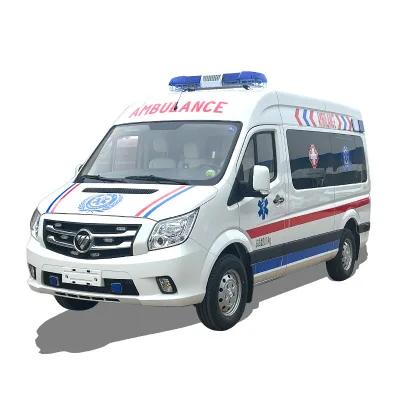


Foton V362 ICU Ambulance Car Patient Monitoring Vehicle for First Aid Transit
$25000.00 - $39990.00
MOQ: 1 Unit

Factory Sale 4X2 Emergency Medical Hospital Rescue Car Foton Rhd Ambulance
$25600.00 - $40000.00
MOQ: 1 Pieces


Diesel Gasoline Foton 4X2 Negative Pressure Ambulances for Transportation Isolation Patients
$15000.00 - $30000.00
MOQ: 1 Pieces

Customizable New Foton 4X2 ICU Medical Hospital Emergency Rescue Ambulance with Cheap Price
$15000.00 - $30000.00
MOQ: 1 Pieces

Gasoline Engine Emergency Foton 4X2 First Aid Monitoring Ambulance for Patients Transit
$12000.00 - $18500.00
MOQ: 1 Unit

Emergency First Aid Monitoring Ambulance, Foton 4X2 Gasoline Engine for Patient Transport
$15000.00 - $29500.00
MOQ: 1 UNIT


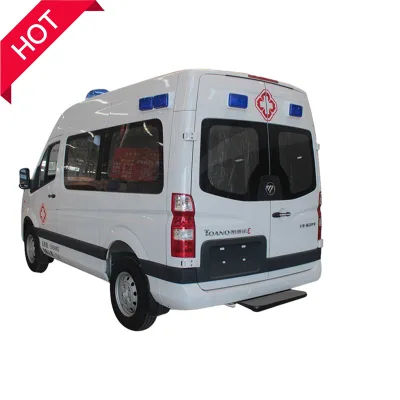


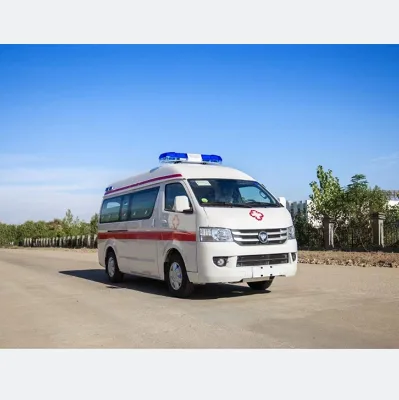

Foton Scenic Negative Pressure Ambulance Monitoring ICU Rescue Transport Vehicle
$12000.00 - $30000.00
MOQ: 1 Pieces

Comprehensive Sourcing Guide
Strategic Sourcing Guide for Foton Tunland-Based Monitoring Ambulances
The procurement of specialized emergency vehicles, specifically those based on the Foton Tunland chassis configured as monitoring ambulances, requires a rigorous, evidence-based approach. Buyers in the medical transfer and prehospital rescue sectors must navigate a complex landscape of technical specifications, regulatory compliance, and supply chain logistics. This guide synthesizes available product data to provide a framework for evaluating potential suppliers and selecting units that meet critical operational requirements without relying on unverified marketing claims.
Technical Architecture and Chassis Specifications
The foundation of any reliable ambulance lies in its chassis and powertrain. In the current market, Foton remains a dominant manufacturer for the base vehicles used in these conversions. The specific models observed in the supply chain often utilize the Foton 4G69s4n or the Foton 4f20tc37 engine variants. These powertrains are paired with manual transmission systems, such as the Zm001 or Zm6t82, which offer 6-speed manual configurations. The transmission type is a critical observation, as manual gearboxes in this segment often provide better torque control for heavy loads in off-road or emergency scenarios compared to automatic alternatives.
The chassis configuration typically features a single axle design, though some micro-axle variants exist for smaller units. The wheelbase is a decisive factor for the overall dimensions and patient compartment space. Data indicates a range of wheelbases, with specific models showing 3110 mm, 3750 mm, and 2570 mm configurations. These variations directly influence the vehicle's length, which generally falls between 3 and 8 meters, with specific observed dimensions including 5450 mm, 4840 mm, and 5990 mm. The overall dimensions are not merely aesthetic; they dictate the vehicle's ability to navigate urban environments while providing sufficient internal space for medical equipment.
Material selection for the bodywork is equally critical. The observed products utilize Carbon Steel Q235, a standard structural steel that offers a balance of strength and weldability. This material choice supports the structural integrity required for a vehicle that must withstand the rigors of emergency response. The tire specifications, such as 245/70r16 with a 4+1 configuration or 195r15c steel rims, suggest a design intended for varied road conditions. Buyers must verify that the tire load index matches the vehicle's gross weight, which includes the full medical equipment load.
Compliance, Certification, and Emission Standards
Regulatory compliance is the primary gatekeeper for procurement in the medical vehicle sector. The observed product data highlights specific certifications, including ISOCCC and CE marks. These certifications are essential for market access in regions that require adherence to international safety and quality standards. However, buyers must treat these as observations of specific listings rather than universal guarantees for all units. The presence of CE certification implies conformity with European health, safety, and environmental protection standards, while ISOCCC indicates adherence to specific organizational management systems.
Emission standards are another non-negotiable aspect of modern procurement. The data explicitly references the Euro Fuel:Diesel standard. In many jurisdictions, vehicles must meet specific Euro emission norms (such as Euro 4 or Euro 5) to be registered for road use. The engine models identified, such as the Cummins ISF2.8s4161p and Yuchai BJ493ZLQ4, are diesel engines that must be verified against local emission regulations. Buyers should not assume that a "Euro Fuel" designation automatically satisfies local legal requirements without cross-referencing the specific emission class of the engine.
The braking system is a critical safety component, with the observed data specifying an ABS+Ebd system. Anti-lock Braking Systems (ABS) prevent wheel lock-up during hard braking, while Electronic Brakeforce Distribution (Ebd) optimizes brake force between axles. This combination is vital for a heavy vehicle carrying a patient compartment. Procurement teams must verify that the braking system is not only present but also certified to function correctly under the vehicle's maximum loaded weight.
Cost Drivers and Pricing Dynamics
The pricing structure for Foton Tunland-based monitoring ambulances is influenced by several variable factors. The observed price range in the market spans from 2,000 to 41,000 USD. This wide variance is not indicative of a single product but rather reflects differences in chassis configuration, body customization, and the level of medical equipment integration. The lower end of the spectrum likely corresponds to basic chassis cab units or smaller micro-axle models with minimal bodywork, while the higher end reflects fully equipped units with advanced patient compartments and specialized monitoring systems.
The Minimum Order Quantity (MOQ) observed is consistently 1 unit, indicating a flexible supply chain that accommodates single-unit purchases. This is advantageous for smaller healthcare providers or municipal services that do not require fleet-wide procurement. However, the "Naked" or "Nake" packing method noted in the specifications suggests that some units may be delivered as bare chassis or semi-finished bodies, requiring the buyer to arrange for final assembly or customization. This can impact the total cost of ownership, as additional labor and materials must be factored into the budget.
Customization is a significant cost driver. The product attributes confirm that customization is available and OEM custom options are "Yes." This allows buyers to tailor the vehicle to specific operational needs, such as adjusting the patient compartment dimensions or integrating specific medical devices. However, every customization adds to the lead time and cost. Buyers must balance the desire for a bespoke vehicle against the need for rapid deployment and budget constraints.
Operational Applications and Patient Compartment Design
The primary application for these vehicles is defined as "Medical Transfer and Prehospital Rescue." The design of the patient compartment is central to fulfilling this role. Observed dimensions for the patient compartment vary significantly, ranging from 2450x1900x1700 mm to 2800x1700x1620 mm. These dimensions determine the number of patients that can be transported and the space available for medical personnel to perform procedures.
The "Fast, Safe and Effective" feature is a key attribute, but it must be validated through the physical layout of the vehicle. The interior must accommodate stretchers, oxygen tanks, and monitoring equipment without compromising the driver's visibility or the vehicle's handling. The overall dimensions of the vehicle, such as the 5450x2050x2600 mm model, provide a clear indication of the external footprint, which must be compatible with local road infrastructure and parking facilities.
For monitoring ambulances, the integration of life-support systems is paramount. The vehicle must support the installation of ventilators, cardiac monitors, and defibrillators. The electrical system, often derived from the chassis battery or a dedicated auxiliary power unit, must be robust enough to handle these loads. Buyers should verify the power capacity of the vehicle, as the standard fuel tank capacity of 76 liters may not be sufficient for extended operations without refueling.
Supplier Evaluation and Origin Verification
Geographic origin is a critical factor in supplier evaluation. The data indicates production origins in Hubei, China, and Hebei, China. These regions are known for their automotive manufacturing capabilities, but buyers must verify the specific factory's reputation and capacity. The model numbers, such as DYFTLE7131-JH2, DYA1002FT, and DYA0701FT, serve as unique identifiers for specific configurations. These codes can be used to trace the production history and verify the authenticity of the supplier.
When evaluating suppliers, buyers should look for evidence of the claimed certifications (ISOCCC, CE) rather than accepting them at face value. Requesting copies of the certificates and verifying their validity with the issuing bodies is a standard due diligence step. Additionally, the "Condition: New" attribute should be confirmed through inspection reports or third-party verification to ensure that the vehicle has not been previously used or modified in a way that compromises its safety.
The "Product Name" variations, such as "Rescue Ambulance" and "Rescue Ambulance Vehicle," suggest that suppliers may use different terminologies for the same or similar products. Buyers must ensure that the specific model they are purchasing matches their operational requirements, rather than relying solely on the generic product name.
Quality Control and Long-Term Procurement Considerations
Quality control in the ambulance sector extends beyond the initial delivery. The use of Carbon Steel Q235 for the body requires protection against corrosion, especially in regions with harsh weather conditions. Buyers should inquire about the painting and anti-corrosion processes applied to the vehicle. The "Naked" packing method mentioned in the specifications implies that the vehicle may arrive without final finishing, necessitating a rigorous quality check upon receipt.
Long-term procurement considerations include the availability of spare parts and the support network for the Foton Tunland chassis. The engine models (4G69s4n, 4f20tc37, Cummins ISF2.8s4161p) and transmission types (Zm001, Zm6t82) are specific components that must be supported by the supplier or a local distributor. Buyers should assess the lead time for parts delivery and the technical expertise of local service centers.
The "OEM Custom: Yes" attribute indicates that the supplier can accommodate changes, but this also introduces complexity into the supply chain. Customized vehicles may have longer lead times and higher risks of production delays. Buyers should establish clear timelines and penalties for non-delivery in their contracts. Furthermore, the "Feature: Fast, Safe and Effective" claim should be backed by performance data or case studies from previous clients, as these are subjective attributes that require objective validation.
Final Procurement Checklist
To conclude the sourcing process, buyers should utilize a structured checklist to ensure all critical parameters are met. This includes verifying the engine model, transmission type, and axle configuration against the operational requirements. The dimensions of the patient compartment must be measured to ensure they accommodate the necessary medical equipment. The certification status, particularly ISOCCC and CE, must be validated. The price range of 2,000 to 41,000 USD should be benchmarked against the specific configuration to ensure value for money. Finally, the supplier's location in Hubei or Hebei should be cross-referenced with their reputation and capacity to deliver on time. By adhering to these evidence-based criteria, buyers can secure a Foton Tunland-based monitoring ambulance that meets the rigorous demands of medical transfer and prehospital rescue operations.
FAQs
What certifications do these ambulances hold?
These vehicles hold ISOCCC and CE certifications. Buyers must verify these specific marks on individual listings rather than assuming all units possess them, as certifications are observations of specific products.
Which engine models are available for this chassis?
Available engines include the Foton 4G69s4n, Foton 4f20tc37, Yuchai BJ493ZLQ4, and Cummins ISF2.8s4161p. Each engine variant pairs with specific transmission types like Zm001 or Zm6t82 to suit different operational loads.
Can I customize the patient compartment dimensions?
Yes, OEM customization is available for these rescue ambulances. Dimensions vary by model, such as 2600x1780x1750 mm or 2800x1700x1620 mm, allowing buyers to tailor space for specific medical equipment needs.
What is the typical price range for these units?
The observed price range spans from 2,000 to 41,000 USD. This variance reflects differences in chassis configuration, body customization levels, and the extent of integrated medical equipment within the vehicle.
Where are these ambulances manufactured?
Production origins are located in Hubei, China, and Hebei, China. Buyers should verify the specific factory location associated with their chosen model number to ensure supply chain reliability and quality control.
What is the minimum order quantity for purchase?
The minimum order quantity is one unit. This flexible MOQ allows single-unit procurement for smaller healthcare providers or municipal services without requiring a large fleet commitment.