Source Frameless LED Lightbox with Illuminated Fabric Graphics for retail, events, and exhibitions
Explore 30 options for the Frameless LED Lightbox with Illuminated Fabric Graphics designed for indoor advertising and decoration. Buyers can compare specifications like IP ratings, power consumption, and customization availability across multiple suppliers.
Key considerations
Products List


Seg Aluminum Fabric Frameless LED Light Box for Exhibition Advertising Display
$20.50 - $25.50
MOQ: 10 Pieces


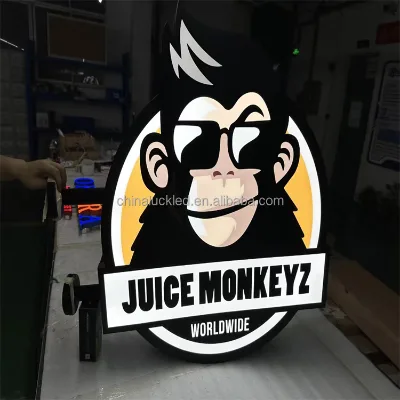

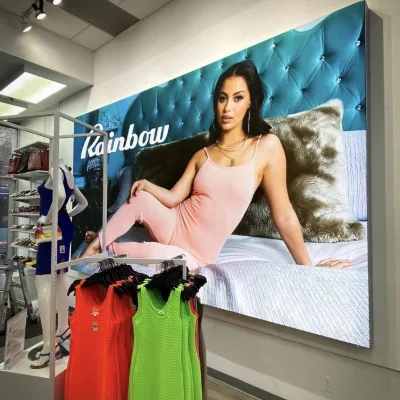
Comprehensive Sourcing Guide
Strategic Sourcing Guide for Frameless LED Lightboxes with Illuminated Fabric Graphics
Understanding the Technical Architecture of Fabric Lightboxes
The core keyword "Frameless LED Lightbox with Illuminated Fabric Graphics" points to a specific category of advertising and decorative lighting solutions that prioritize visual continuity and lightweight construction. Unlike traditional rigid lightboxes that rely on aluminum extrusions to hold a diffuser, these units utilize a tensioned fabric graphic system. The supplied product data indicates that the primary structural material for the frame is Aluminum, which provides the necessary rigidity while maintaining a slim profile. The thickness of these units is observed to range from 55mm to 200mm, suggesting a significant variation in depth depending on the internal lighting configuration and the tensioning mechanism employed.
The illumination source is consistently identified as LED Lights, which aligns with the industry shift toward energy efficiency. A specific attribute noted in the product data claims a power consumption of 60% less than traditional light boxes, a figure buyers should verify through independent testing or detailed datasheets from the manufacturer. The longevity of these lighting tubes is stated to be up to 50,000 hours, a critical metric for total cost of ownership calculations. The lighting output can be customized, with options for White, Clear, or specific color temperatures. Furthermore, some configurations support RGB capabilities, allowing for dynamic color changes, while others maintain a fixed brightness of 3000 Lumens. The contrast ratio is observed to reach 10,000:1, ensuring high visibility in various ambient lighting conditions.
The fabric graphic itself is a critical component. The data specifies the printing carrier as Synthetic Paper, though other textile options are implied by the "Fabric/Textile" attribute. The printing methods available include Dye Sublimation Printing and UV printing. Dye sublimation is particularly relevant for fabric graphics as it allows the ink to penetrate the fibers, resulting in vibrant colors that do not crack or peel. The shape of the unit is predominantly Rectangle, but the standard allows for customized sizes, with the specification noting "Any Size Available." This flexibility is essential for buyers needing to fit specific architectural spaces or branding requirements.
Compliance and Certification Verification Protocols
When sourcing these lighting units, verifying compliance with international safety and environmental standards is paramount. The product data lists a wide array of certifications, including CCC, CE, RoHS, UL, CQC, C-tick, EMC, Energy Star, and ETL. However, buyers must exercise caution, as the presence of these certifications in a general product listing does not guarantee that every specific unit or model possesses all of them. For instance, one entry lists "CCC,CE,RoHS,UL," while another lists "CE,RoHS," and a third includes "CCC,CE,CQC,C-tick,EMC,Energy Star,ETL."
Buyers should request specific test reports for the model they intend to purchase. The CE mark indicates conformity with health, safety, and environmental protection standards for products sold within the European Economic Area. The UL and ETL marks are crucial for North American markets, indicating that the product has been tested by recognized testing laboratories. RoHS compliance ensures that the product does not contain restricted hazardous substances, which is a legal requirement in many jurisdictions. The Energy Star certification, if applicable, validates the energy efficiency claims made in the product description.
The product standard is noted as "customized size available," which implies that non-standard dimensions may require specific engineering validation to maintain safety compliance. Additionally, the IP Rating is mentioned in conjunction with installation types, such as "Wall-Mounted" or "Ceiling Hanging," though the specific IP number (e.g., IP65) is not explicitly defined in the text. Buyers must verify the ingress protection rating to ensure the unit is suitable for its intended environment, particularly if it will be used in areas with high humidity, as the data notes a humidity resistance range of 30% to 70% Rh.
Cost Drivers and Pricing Dynamics
The observed price range for these products spans from $2.6 to $500 USD. This wide variance is driven by several factors, including the size of the unit, the complexity of the lighting system, and the customization level. The minimum order quantity (MOQ) is observed to be as low as 1PC, with a maximum observed range up to 1000 units. This flexibility allows buyers to test the market with small orders or scale up for large installations.
The cost is heavily influenced by the material and printing method. Aluminum frames are standard, but the thickness and finish can affect the price. The printing method is another significant driver; UV printing on synthetic paper or dye sublimation on fabric may carry different cost structures depending on the volume and color density required. Customization is available, which typically incurs additional costs for engineering, tooling, and setup. The delivery date is listed as 2~3 Days for some items, while the lead time is noted as 7 Days for others. These discrepancies suggest that lead times vary based on stock availability versus custom manufacturing.
Buyers should also consider the packaging costs. The product packing is described as "Bubble Bag+Layer Foam+Export Carton/Plastic Case" or "Foam+Export Carton." Robust packaging is essential to prevent damage during transit, especially for large, thin units. The origin of the products is primarily Jiangmen, China (Mainland) and Guangdong, China. Sourcing from these regions often offers competitive pricing due to established supply chains, but logistics costs and import duties must be factored into the total landed cost.
Typical Applications and Usage Scenarios
The primary usage for these frameless LED lightboxes is Advertising and Decoration. The product attributes explicitly state "Usage: Advertising" and "Usage: Decoration," indicating their versatility in commercial and aesthetic contexts. The style is described as "Modern," making them suitable for contemporary retail environments, corporate lobbies, and exhibition booths. The feature set includes "Durable" and "Portable," suggesting they are well-suited for temporary installations such as trade shows or pop-up shops, as well as permanent fixtures.
The installation methods vary, with options for Wall-Mounted and Ceiling Hanging. This flexibility allows for integration into various architectural designs. The brightness of 3000 Lumens and the high contrast ratio make them effective for drawing attention in busy environments. The fabric graphics allow for large-format imagery without the seams often seen in rigid panels, providing a seamless visual experience that is highly desirable for brand storytelling.
The following table summarizes the key application attributes based on the provided data:
| Attribute | Specification / Observation | Application Implication |
|---|---|---|
| Usage | Advertising, Decoration | Retail, Exhibitions, Corporate Interiors |
| Installation | Wall-Mounted, Ceiling Hanging | Versatile mounting for various spaces |
| Style | Modern, Decoration | Contemporary branding and aesthetic appeal |
| Feature | Durable, Portable | Suitable for temporary and permanent use |
| Durability | Weatherproof | Potential for semi-outdoor or high-traffic areas |
| Lighting | White, Clear, Customized, RGB | Adaptable to different mood and branding needs |
Supplier Evaluation and Origin Verification
When evaluating suppliers for these products, buyers should focus on the consistency of the information provided and the transparency of the manufacturing process. The product origin is listed as Jiangmen, China (Mainland) and Guangdong, China. These regions are known for their lighting manufacturing clusters, but buyers should verify the specific factory location to ensure quality control. The product model numbers vary, with examples including "tianyu-light box" and "LB-W89," as well as generic descriptions like "Combination Light Box." This variation suggests that some suppliers may be trading companies rather than direct manufacturers, or they may have multiple product lines under different naming conventions.
Buyers should request a company profile that details their manufacturing capabilities, specifically regarding the assembly of the aluminum frame and the tensioning of the fabric. The ability to provide customized sizes is a key differentiator, and suppliers should demonstrate their capacity to handle non-standard dimensions without compromising structural integrity. The lead time of 7 days or 2~3 days indicates a mix of stock and custom production. Buyers should clarify whether the quoted lead time applies to stock items or custom orders to avoid delays.
The certification list is extensive, but as noted, not every unit may carry every certification. Suppliers should be able to provide valid certificates for the specific model being purchased. The presence of certifications like CCC and CQC indicates compliance with Chinese national standards, while CE and UL indicate international compliance. Buyers should ensure that the supplier can provide the necessary documentation for customs clearance in their target market.
Quality Control and Long-Term Procurement Considerations
Quality control is critical for lighting products, particularly those involving electrical components and tensioned fabrics. The data mentions a brightness adjustment feature that is "Automatic," which requires precise electronic control systems. Buyers should verify the quality of the drivers and power supplies, as these are common points of failure. The power specification is listed as AC 220V, which is standard in many regions, but buyers must confirm compatibility with their local voltage standards (e.g., 110V or 120V) to avoid damage.
The longevity of the lighting tubes, stated as up to 50,000 hours, is a significant selling point. However, this figure should be understood as a theoretical maximum under ideal conditions. Real-world performance can be affected by heat dissipation, voltage fluctuations, and the quality of the LED chips. Buyers should inquire about the warranty period and the supplier's policy on replacing defective units. The packaging, described as "Bubble Bag+Layer Foam+Export Carton," is designed to protect the product, but buyers should inspect the packaging upon receipt to ensure no damage has occurred during transit.
For long-term procurement, buyers should consider the availability of replacement parts, such as LED strips or power supplies. The "Customization: Available" attribute suggests that the supplier can adapt the product to future needs, but buyers should confirm the minimum order quantities for custom runs and the lead times for re-orders. The "Any Color Available" and "Any Size Available" options provide flexibility, but they also introduce complexity in inventory management. Buyers should establish clear specifications and standards with the supplier to ensure consistency across multiple orders.
In conclusion, sourcing frameless LED lightboxes with illuminated fabric graphics requires a thorough understanding of the technical specifications, a rigorous verification of certifications, and a clear assessment of cost drivers. By focusing on the aluminum frame construction, the specific printing methods, and the compliance standards, buyers can make informed decisions that align with their project requirements. The flexibility in size, color, and installation methods makes these products highly adaptable, but the variability in lead times and certifications necessitates careful supplier evaluation and quality control measures.
FAQs
What certifications do Frameless LED Lightbox with Illuminated Fabric Graphics typically have?
These units commonly hold CCC, CE, RoHS, UL, CQC, C-tick, EMC, Energy Star, and ETL certifications. Buyers must verify specific test reports for the exact model purchased as not every listing guarantees all listed certifications are present on every unit.
How long do the lighting tubes last in these lightboxes?
The lighting tubes offer a longevity of up to 50,000 hours under ideal conditions. This figure represents a theoretical maximum, and real-world performance depends on factors like heat dissipation and voltage stability in the installation environment.
Can I order a custom size for Frameless LED Lightbox with Illuminated Fabric Graphics?
Yes, customization is available with any size available to fit specific architectural spaces. Buyers should note that non-standard dimensions may require specific engineering validation to maintain structural integrity and safety compliance standards.
What is the minimum order quantity for these products?
The minimum order quantity can be as low as 1PC for some listings. However, observed ranges extend up to 1000 units, so buyers should confirm the specific MOQ with the supplier before placing an order for large installations.
How much less power do these lightboxes consume compared to traditional ones?
These units claim to consume 60% less power than traditional light boxes. Buyers should verify this efficiency claim through independent testing or detailed datasheets from the manufacturer to ensure accuracy for their energy budget calculations.
Which installation methods are supported for Frameless LED Lightbox with Illuminated Fabric Graphics?
The products support both wall-mounted and ceiling hanging installation methods. This flexibility allows for versatile integration into various architectural designs, though the specific IP rating for each installation type must be verified for environmental suitability.
What printing methods are used for the fabric graphics on these lightboxes?
The available printing methods include dye sublimation printing and UV printing on synthetic paper. Dye sublimation allows ink to penetrate fibers for vibrant colors, while UV printing offers a durable alternative for different graphic requirements.