Find Freestanding Electric Bun Toaster for Bread, Pizza, and Bakery
Source 30 Freestanding Electric Bun Toaster models with varying power and output rates. Compare specifications like capacity, weight, and packing options to find the right equipment for bread, pizza, and bakery applications.
Key considerations
Products List


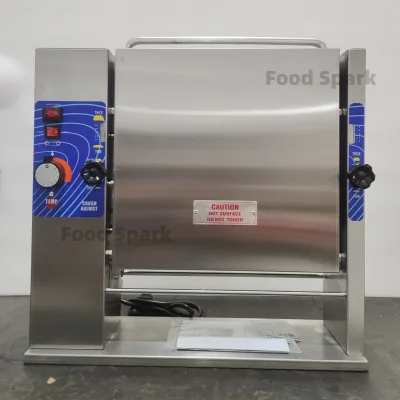
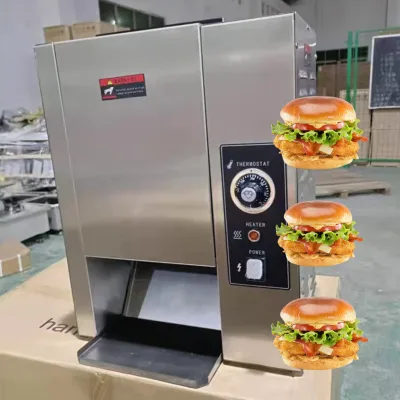


Comprehensive Sourcing Guide
Strategic Sourcing Guide for Freestanding Electric Bun Toasters
Understanding Technical Specifications and Operational Capacity
When sourcing a Freestanding Electric Bun Toaster, the primary focus must be on aligning the machine's technical specifications with the specific throughput requirements of your production line. The market offers a variety of models, each defined by distinct power ratings, dimensions, and output capacities. A critical observation from current product data indicates that power consumption varies significantly between units, ranging from approximately 1.34 kW to 2.64 kW. This variance directly impacts your facility's electrical load planning and energy cost projections. Buyers must verify the specific voltage requirements, as some units operate on standard 220V systems, while others may require different configurations not explicitly detailed in general listings.
Capacity is another decisive factor. The observed output rates for these electric units span from 150-180 slices per hour for smaller models to as high as 450-500 slices per hour for industrial-grade variants. For instance, specific models are documented with outputs of 300-350 slices per hour, while others are rated for the 450-500 range. It is essential to match this capacity to your peak production windows. A unit rated for 150 slices per hour may suffice for a small bakery, whereas a high-volume facility would require the higher capacity models to avoid bottlenecks. Furthermore, the physical footprint of the equipment is crucial for floor planning. Dimensions vary widely, with standard operating sizes recorded as W468D418H387mm for certain high-output models, while others are more compact at W368D418H387mm. Larger industrial units may extend to 1000700800 mm. Buyers should measure their available floor space carefully, ensuring that the "Packing Size" dimensions, which can range from 450400420mm to 740510370mm, account for the space needed for installation and maintenance access.
Compliance and Certification Verification
In the B2B food processing sector, compliance with safety and quality standards is non-negotiable. The primary certification observed in the current market data for these electric units is the CE mark. This certification indicates conformity with health, safety, and environmental protection standards for products sold within the European Economic Area. While the presence of the CE mark is a strong indicator of compliance, buyers must verify that the certification is current and applies specifically to the model being purchased. It is not sufficient to rely on a general statement; the specific model number, such as BT-212S or ECT-300, must be listed on the official certification documentation.
Beyond electrical safety, food contact materials are a critical compliance area. The majority of the observed units are constructed from Stainless Steel, a material choice that aligns with food safety hygiene requirements due to its resistance to corrosion and ease of cleaning. However, buyers should request material certificates to confirm the grade of stainless steel used, ensuring it meets local food safety regulations. Additionally, the manufacturing origin is a relevant compliance factor. Most units in this category originate from China, specifically the Guangdong region. While this is a major manufacturing hub, buyers should ensure that the supplier provides clear documentation regarding the factory's adherence to international food safety standards, such as HACCP or ISO 22000, even if these are not explicitly listed in the basic product attributes. The "Process" attribute for these machines is identified as Thermal Processing, which implies the machine uses heat to achieve the desired browning. Buyers must ensure that the thermal control mechanisms in the specific model they select allow for precise temperature regulation to prevent uneven toasting or burning, which could lead to product rejection.
Cost Drivers and Pricing Structures
The pricing for freestanding electric bun toasters is influenced by a complex interplay of factors, including capacity, material quality, and customization options. The observed price range in the market is substantial, spanning from $3 to $645 USD. This wide disparity suggests that the lower end of the spectrum may represent basic, smaller-scale units or perhaps incomplete listings, while the higher end likely reflects industrial-grade machines with advanced features, higher capacity, and robust construction. Buyers should be cautious of prices that seem anomalously low, as they may indicate compromised quality or missing components.
The Minimum Order Quantity (MOQ) is another significant cost driver. The observed MOQ range is extensive, varying from 1 unit to 2000 units. For small businesses or startups, an MOQ of 1 is highly advantageous, allowing for a low-risk entry into the market. Conversely, large-scale operations may benefit from negotiating bulk pricing with an MOQ closer to 2000 units. Customization is a key variable in pricing. Some products are listed as "Customized" with specific features, while others are "Non-Customized" or standard. Customization, such as altering the dimensions, adding specific timing devices, or modifying the power source, will invariably increase the unit cost and potentially extend the lead time. Buyers must weigh the cost of customization against the operational benefits it provides. For example, a unit with a "Timing Device" may cost more than one without, but the added precision could reduce waste and improve product consistency. Additionally, packaging costs can influence the final price. Options range from simple "Carton" packaging to more robust "Wooden Package" or "Plywood Case" solutions, which are essential for international shipping but add to the overall cost.
Typical Applications and Usage Scenarios
Freestanding electric bun toasters are versatile machines designed for various food processing applications. The primary usage identified in the product data is for "Bread," indicating their suitability for bakeries, sandwich shops, and commercial kitchens that require consistent toasting of bread rolls or buns. However, the versatility of these machines extends beyond bread. Some models are explicitly noted for dual usage, capable of handling both "Bread" and "Pizza." This dual functionality makes them valuable for pizzerias or fast-food establishments that need to toast pizza bases or rolls on the same equipment.
The application of these machines also depends on the specific model's capacity and features. Smaller units with outputs of 150-180 slices per hour are ideal for boutique bakeries or cafes with lower volume requirements. These machines often feature a "Semi-Automatic" grade, which may require some operator intervention but offers flexibility for varied batch sizes. In contrast, high-capacity models producing 450-500 slices per hour are better suited for large-scale industrial bakeries or central commissaries. These units often come with advanced features like "Timing Devices," which automate the toasting process and ensure uniformity across large batches. The "Net Weight" of the units, ranging from 13kg to 19kg, also influences their application. Lighter units may be easier to move for cleaning or reconfiguration, while heavier units offer greater stability during high-speed operation. Buyers should assess their specific product mix and volume to select a machine that optimizes both throughput and operational flexibility.
Supplier Evaluation and Product Attributes
Evaluating a supplier for freestanding electric bun toasters requires a meticulous review of product attributes and supplier reliability. The market data reveals a mix of attributes that buyers must scrutinize. For instance, the "Color" of the units is consistently listed as "Silver," which is standard for stainless steel equipment, but buyers should confirm if other color options are available for branding purposes. The "Power Source" is uniformly "Electric," but the specific power ratings (e.g., 1.94 kW, 2 kW, 2.64 kW) must be matched to the buyer's electrical infrastructure.
Supplier evaluation should also focus on the "Customization" capabilities. While some listings indicate "Customization: Available," others specify "Non-Customized." Buyers seeking tailored solutions must engage with suppliers who explicitly offer customization services. This includes the ability to modify the "Packing Size" or "Standard" dimensions to fit specific facility layouts. The "prod_packing" attribute is another critical evaluation point. Options include "Wooden Package," "Carton with Plywood Case," and "Plywood Package." The choice of packaging affects the safety of the equipment during transit and the ease of unpacking. Suppliers offering robust packaging solutions like "Plywood Package" are preferable for international shipments to prevent damage.
Furthermore, the "prod_origin" is predominantly "China, Guangdong." While this region is a global manufacturing hub, buyers should verify the supplier's track record in exporting to their specific region. The presence of specific model numbers like "ECT-300," "ECT-450," and "GF-211" suggests a diverse product line. Buyers should request detailed datasheets for these specific models to ensure that the listed attributes, such as "Output" and "Net Weight," are accurate and consistent with the physical unit they will receive.
Quality Control and Long-Term Procurement Considerations
Implementing a robust quality control (QC) protocol is essential when procuring freestanding electric bun toasters. Given the variation in "Net Weight" and "Packing Size" across different models, buyers should establish a clear acceptance criteria based on the supplier's specifications. QC checks should include verifying the "Stainless Steel" construction for durability and hygiene, ensuring the "Voltage" matches the local grid, and testing the "Output" capacity to confirm it meets the claimed 150-500 slices per hour range. The presence or absence of a "Timing Device" should be physically verified, as this impacts the automation level and operational efficiency.
Long-term procurement considerations extend beyond the initial purchase. Buyers should evaluate the availability of spare parts and the technical support offered by the supplier. The "Process" being "Thermal Processing" means the heating elements are subject to wear and tear. Ensuring that the supplier can provide replacement parts for heating elements, timers, and motors is crucial for minimizing downtime. Additionally, the "Automatic Grade" of the machine, often listed as "Semi-Automatic," implies a need for operator training. Buyers should factor in the cost and time required to train staff on the specific operation of the chosen model.
Finally, buyers must consider the lifecycle of the equipment. The "Standard" dimensions and "Packing Size" should be compatible with future facility expansions or reconfigurations. The "Customized" nature of some units offers flexibility, but it also means that replacing the unit in the future may require matching the custom specifications. Therefore, maintaining detailed records of the specific model numbers, such as "BT-212S" or "ECT-450," and their unique attributes is vital for long-term maintenance and potential future procurement. By focusing on these technical and operational details, buyers can ensure a successful and sustainable procurement process for their freestanding electric bun toasters.
Comparative Analysis of Key Model Specifications
To assist buyers in making informed decisions, the following table summarizes the key specifications observed across different models in the market. This comparison highlights the variations in capacity, power, and dimensions that influence the selection process.
| Model Number | Output Capacity (Slices/Hr) | Power Rating | Net Weight | Packing Size (mm) | Timing Device |
|---|---|---|---|---|---|
| ECT-150 | 150-180 | Not Specified | 13kg | 450500420 | Without |
| ECT-300 | 300-350 | 2.64 kW | 16kg | 450400420 | Without |
| ECT-450 | 450-500 | 1.94 kW | 18kg | 450500420 | Without |
| ETC-450 | 450-500 | 1.34 kW | 13kg | 450500420 | With |
| BT-212S | Not Specified | 2 kW | 19kg | 740510370 | Not Specified |
| GF-211 | Not Specified | Not Specified | Not Specified | 420390260 | Not Specified |
| GF-212 | Not Specified | Not Specified | Not Specified | 1000700800 | Not Specified |
This table illustrates that while capacity is a primary differentiator, power consumption and physical dimensions vary independently. For example, the ETC-450 model achieves the same output as the ECT-450 but consumes less power (1.34 kW vs 1.94 kW) and includes a timing device, making it potentially more energy-efficient and easier to operate. Conversely, the GF-212 model has a significantly larger footprint (1000700800 mm) compared to the GF-211, suggesting it is designed for higher volume or different operational needs. Buyers should use this data to cross-reference their specific requirements with the available models, ensuring that the selected unit offers the optimal balance of capacity, efficiency, and space utilization.
FAQs
What power source do these toasters use?
These freestanding electric bun toasters use an electric power source. The specific power ratings vary by model, ranging from 1.34 kW to 2.64 kW, so buyers must verify the exact voltage requirements for their facility.
Which certification is standard for these units?
The CE certification is the primary standard observed for these electric units. Buyers should verify that this certification applies specifically to the model number they intend to purchase to ensure compliance with safety standards.
Can I find models with timing devices?
Yes, some models include a timing device while others do not. Units like the ETC-450 feature a timing device for automation, whereas models like the ECT-300 are listed without one, affecting operational precision.
What is the output capacity range for these machines?
Output capacities range from 150-180 slices per hour for smaller models up to 450-500 slices per hour for industrial variants. Selecting the correct capacity is essential to match your peak production requirements and avoid bottlenecks.
How much does the net weight vary across models?
The net weight varies significantly, ranging from 13 kg to 19 kg depending on the specific model. Lighter units may be easier to move, while heavier units offer greater stability during high-speed toasting operations.
What materials are used for construction?
The majority of these units are constructed from stainless steel to ensure hygiene and corrosion resistance. Buyers should request material certificates to confirm the specific grade of stainless steel meets local food safety regulations.
Are customization options available for these toasters?
Customization is available for some units, while others are listed as non-customized standard models. Buyers seeking tailored dimensions or features must engage with suppliers who explicitly offer these services, which may impact pricing and lead time.