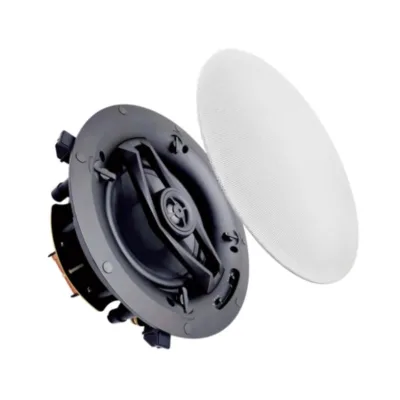
Source Full Range Indoor Ceiling Speaker for Hotels, Schools, and Airports
Explore 30 options for Full Range Indoor Ceiling Speaker units suitable for commercial and home environments. Compare models with active or passive configurations, varying power ratings, and diverse mounting standards to find the right fit for your project; compare the available evidence and request quotations based on your requirements.
Key considerations
Products List

$1.70 - $1.80
MOQ: 1 Pieces


$4.40 - $4.80
MOQ: 1 Pieces




Comprehensive Sourcing Guide
Full Range Indoor Ceiling Speaker Sourcing Guide
Procuring full-range indoor ceiling speakers requires distinguishing between passive and active configurations, as the supplied data indicates a market split between simple passive units and active systems with built-in amplification. Buyers must first determine if the installation demands a standalone speaker or an integrated solution that includes power handling and signal processing within the enclosure. The observed product attributes reveal that some units are designed for commercial environments like hotels and airports, while others target home theater or portable player applications, necessitating a clear definition of the end-use scenario before evaluating specific models.
The physical installation constraints are equally critical, with observed specifications ranging from compact 161mm standards to larger 226x78mm floorstanding-style dimensions adapted for ceiling mounting. Sourcing teams should verify the enclosure structure, noting that closed enclosure designs are prevalent to manage acoustic isolation and prevent sound leakage into adjacent rooms. Additionally, the presence of optional combination speaker systems suggests that buyers may need to configure multi-unit arrays for specific coverage areas, requiring careful attention to the mounting hardware and the spatial requirements of the intended venue.
Product Scope and Observed Listing Signals
The market for indoor ceiling speakers presents a wide variance in material composition, with listings explicitly citing both plastic and metal speaker materials as available options. This distinction is vital for buyers assessing durability and acoustic performance, as metal components often offer superior rigidity for high-frequency reproduction, while plastic housings may provide better cost-efficiency for general commercial applications. Procurement teams must scrutinize individual product listings to confirm the specific material composition, as the aggregate data shows no single material dominates the entire category, and mixing assumptions could lead to mismatched performance expectations.
Frequency response and noise levels serve as primary indicators of audio fidelity, with observed ranges spanning from 100Hz to 15kHz and noise floors kept below 95dB for many units. These metrics suggest that while some products are optimized for full-range reproduction suitable for music and speech, others may be tuned specifically for voice reinforcement in commercial settings like schools or churches. Buyers should not assume all listed units meet high-fidelity standards, as the data explicitly notes a split between Hi-Fi and non-Hi-Fi classifications, requiring a targeted search based on the specific audio quality requirements of the project.
Technical Specifications to Verify
Amplification type and power handling are the most critical technical differentiators, with the data showing a clear division between active systems rated at 1.5W to 6W and passive units requiring external amplification. Verification of the rated power is essential to ensure the speaker can handle the intended signal levels without distortion, particularly in high-traffic commercial areas where volume demands are higher. Buyers must cross-reference the listed power ratings with the specific application, ensuring that active units with built-in amplifiers are matched to the correct voltage and signal sources, while passive units are paired with compatible external amplifiers.
Control mechanisms and signal processing features further define the operational flexibility of these ceiling speakers, with observed attributes including touch-control adjusting methods and remote control operation modes. The presence of optional sound channel combinations allows for versatile configurations, but buyers must confirm the specific wiring requirements and compatibility with existing audio infrastructure. Additionally, the total harmonic distortion (THD) figures, observed at less than 0.005% for certain models, indicate high-fidelity potential, yet this specification is not universal across all listings, necessitating a model-by-model verification to ensure the selected unit meets the project's audio clarity standards.
Compliance and Safety Documentation
Certification requirements vary significantly across the supplier base, with observed listings displaying CE, CCC, FCC, RoHS, and CB marks, indicating a diverse compliance landscape for different target markets. Buyers must verify that the specific unit intended for purchase carries the necessary certifications for the region of installation, as the presence of one mark does not guarantee the others. For instance, a unit with CE and CCC certification may be suitable for domestic Chinese markets, while international deployments might require the additional FCC and CB certifications to meet local regulatory standards for electromagnetic compatibility and safety.
Safety documentation must also address the operational limits of the speaker, with observed attributes highlighting protection against high temperatures, overloads, and short circuits. These protection features are critical for ensuring long-term reliability in unattended commercial environments like airports or hotels, where thermal management and electrical safety are paramount. Procurement teams should request detailed test reports or safety data sheets that explicitly confirm these protection mechanisms, rather than relying solely on the general attribute labels, to ensure the product can withstand the specific environmental stresses of the installation site.
Cost Drivers and Commercial Terms
Pricing and minimum order quantities (MOQ) exhibit a broad spectrum, with observed ranges spanning from $1 to $3,000 and MOQs varying between 1 and 500 units. This variance suggests that cost is heavily influenced by the complexity of the unit, such as the inclusion of active amplification, premium materials like metal, or specialized certifications. Buyers should anticipate that high-performance models with full-range capabilities and robust safety features will command higher prices, while basic passive units for general commercial use may be available at the lower end of the price spectrum.
Lead times and delivery schedules are another significant commercial factor, with observed delivery windows ranging from 2 to 25 days depending on the supplier and order volume. The flexibility of these timelines can impact project scheduling, particularly for large-scale installations requiring immediate deployment. Procurement teams must clarify the specific lead time for their chosen model, as the wide range indicates that some suppliers may offer rapid turnaround for standard items while others require extended periods for custom configurations or OEM/ODM production runs.
Supplier Qualification and Quality Control
Supplier longevity and manufacturing capabilities are key indicators of reliability, with observed data noting factory histories exceeding ten years and the ability to provide both OEM and ODM services. These factors suggest a mature supply chain capable of handling complex customization requests and maintaining consistent quality over time. Buyers should prioritize suppliers with a proven track record in the specific application areas, such as home theater or commercial stage systems, to ensure they possess the technical expertise required for the specific speaker configuration.
Quality control processes should be validated through warranty terms and specific protection attributes, with observed warranties extending up to three years and protection against overload and short circuits. A robust warranty period often reflects the supplier's confidence in the product's durability and their commitment to after-sales support. Procurement teams should verify the specific terms of the warranty, including coverage for manufacturing defects and the process for handling claims, to ensure that the long-term operational costs are minimized and that any potential issues are resolved efficiently.
Long-Term Procurement Checks
Customization availability and structural design are critical for future-proofing the installation, as the data confirms that customization is available and structures range from closed enclosures to floorstanding configurations. Buyers should assess the potential for future upgrades or modifications, ensuring that the selected speaker system can be adapted to changing acoustic requirements or venue layouts. The ability to customize the product allows for a tailored solution that can evolve with the needs of the facility, reducing the need for complete system replacements in the future.
Environmental and operational resilience must be continuously monitored, particularly regarding the noise levels and frequency response stability over time. With observed noise levels below 95dB and frequency responses up to 15kHz, buyers should establish baseline performance metrics during the initial installation to detect any degradation in audio quality. Regular audits of the installed units against these initial benchmarks will help identify potential failures early, ensuring that the full-range indoor ceiling speakers continue to meet the project's audio standards throughout their operational lifespan.
FAQs
What certifications are available for these speakers?
CE and CCC certifications are available for these units. Additional options include FCC, RoHS, and CB standards. These documents ensure compliance with regional safety and environmental regulations. Buyers should verify specific requirements with the supplier before ordering to ensure the product meets local import rules.
Can I customize the speaker design?
Customization is available for these products. The factory supports both OEM and ODM services to meet specific branding needs. This allows buyers to tailor the appearance and functionality to their commercial or home theatre applications. Contact the manufacturer directly to discuss specific design modifications and minimum order quantities.
What is the typical lead time for orders?
The delivery time ranges from 2 to 25 days depending on order size. This window covers production and shipping preparation. Buyers should confirm exact timelines with the supplier based on their specific quantity and customization requirements. Faster delivery may be available for standard models with lower minimum order quantities.
What is the minimum order quantity for these speakers?
The minimum order quantity ranges from 1 to 500 units. This flexibility allows both small and large buyers to place orders. Lower MOQs are suitable for testing or small commercial installations. Higher volumes may qualify for better pricing. Buyers should check specific model requirements with the supplier to confirm the exact MOQ.
Where are these speakers manufactured?
These speakers originate from Zhejiang and Guangdong provinces in China. Specific locations include Hangzhou and Guangzhou. This region is known for its robust manufacturing infrastructure. Buyers can verify the exact factory location with the supplier to ensure quality control and logistics planning align with their sourcing strategy.
What warranty is provided for these products?
A 3-year warranty is provided for these speakers. This coverage protects against manufacturing defects and ensures long-term reliability. The factory has over 10 years of history, indicating established quality control processes. Buyers should review the specific warranty terms with the supplier to understand coverage details and claim procedures.