Source Gantry Type Laser Cutting Machine for Automotive, Aerospace, and Advertising
Explore 30 listings of gantry type laser cutting machines designed for metal processing in automotive, aerospace, and advertising sectors. Buyers can compare fiber laser power options, working areas, and customization features to find the right equipment for industrial needs.
Key considerations
Products List


Gantry Double Drive Cutting Double Exchange Table Laser Cutting Machine
$10000.00 - $20000.00
MOQ: 1 Pieces

Digital Laser Processing Gantry Double-Drive Laser Cutting Machine
$10000.00 - $20000.00
MOQ: 1 Pieces

Gantry Double-Drive Laser Cutting Machinematerial-Saving and High-Efficiency Cutting
$10000.00 - $20000.00
MOQ: 1 Pieces


Gantry Type Metal Cutting Machine with Exchanged Table CNC Fiber Laser Cutting Machine
$7000.00 - $28000.00
MOQ: 1 Pieces


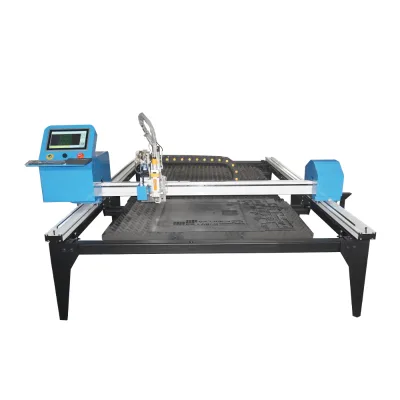


Gantry Laser Cutting Machine for 18mm 20mm 25mm 30mm 40mm 50mm Steel
$46666.00 - $428699.00
MOQ: 1 set


$2700.00 - $3600.00
MOQ: 1 Pieces


Comprehensive Sourcing Guide
Strategic Sourcing Guide for Gantry Type Laser Cutting Machines
Understanding the Gantry Architecture and Core Configuration
When sourcing a Gantry Type Laser Cutting Machine, the primary distinction lies in the mechanical architecture where the laser head moves along a bridge-like structure (the gantry) that traverses the X-axis, while the workpiece remains stationary or moves on a Y-axis table. This configuration is distinct from desktop or portable units and is specifically engineered for heavy-duty, high-precision industrial applications. Based on observed market data, the standard Gantry Type Laser Cutting Machine is frequently categorized under the "Solid Laser" classification with a "Pulse Laser" technical class, though continuous wave variants are also prevalent in the sector.
The structural integrity of these machines is a critical procurement factor. High-end models often feature a "Mineral Cast Base" which provides superior vibration damping compared to welded steel, ensuring cutting precision over long operational cycles. Furthermore, the crossbeam component is increasingly specified as "Carbon Fiber" in advanced configurations to reduce moving mass and increase acceleration rates. The physical footprint of these units varies significantly; observed specifications indicate dimensions ranging from approximately 1.85m x 1.22m x 2m for smaller gantry units to larger industrial frames measuring 2.8m x 2.2m x 2m. Buyers must verify that the facility floor plan can accommodate the specific working area required, which can extend up to 2300mm x 10000mm for large-format applications.
Technical Specifications and Laser Source Selection
The heart of any gantry laser cutting machine is the laser source, which dictates the machine's capability to cut various metal thicknesses and types. The supplied data highlights a prevalence of "Fiber Laser Generator" sources, with power ratings spanning from 1 kW to 6 kW in standard configurations, and extending to 12 kW for heavy industrial tasks. Specific models are identified by power ratings such as 1500W, 2000W, and 3000W, while others are designated by their maximum output capacity like 6KW or 12KW. It is essential to note that while fiber lasers dominate the current market, the data also references "Gaseous Laser" and "Free Electron Laser" classifications, indicating a diverse technological landscape where buyers must match the laser type to their specific material processing needs.
The cutting material specifications are equally critical. The machine's working area and laser power must align with the intended material dimensions. Observed cutting material specifications include standard sheet sizes of 400mm x 400mm, 800mm x 1000mm, and 1250mm x 1250mm. The machine must be capable of handling "Metal Sheet" materials, and the specific cutting technology employed, such as "Laser Flame Cutting," must be compatible with the intended application. The laser head assembly is another area requiring scrutiny; top-tier configurations often utilize branded components like "Raytools Ipg Max" to ensure beam quality and cutting consistency. Additionally, the positioning mode, often indicated as "Red Light" for alignment, and the linear guideway systems are vital for maintaining the micron-level accuracy required in precision manufacturing.
Power Requirements and Operational Environment
The operational environment of a Gantry Type Laser Cutting Machine is heavily influenced by its power and cooling requirements. Unlike portable units that may operate on standard single-phase power, industrial gantry machines typically require a robust "3-Phase, 5-Wire System" operating at 380V ±5% and 50Hz ±5%. This high-voltage requirement necessitates a dedicated electrical infrastructure within the manufacturing facility. However, some portable or smaller gantry variants may operate on a broader voltage range of AC 110-220V at 50-60Hz, offering flexibility for different regional power standards.
Cooling systems are another non-negotiable technical specification. The data indicates a split between "Air Cooling" and "Water Cooling" systems. Air-cooled systems are generally suitable for lower power lasers (e.g., up to 1.5kW or 2kW) and offer simpler maintenance, whereas water cooling is essential for high-power fiber lasers (e.g., 3kW, 6kW, and above) to dissipate the significant heat generated during continuous operation. The choice of cooling system directly impacts the machine's duty cycle and long-term reliability. Buyers must ensure that the facility has the necessary infrastructure to support the selected cooling method, including access to chilled water loops or adequate ventilation for air-cooled units. The weight of the machine, which can reach 300kg for certain portable gantry models, also dictates the need for a reinforced floor capable of supporting the static and dynamic loads of the equipment.
Application Scope and Industry Suitability
Gantry type laser cutting machines are versatile tools designed for a wide array of industrial applications. The observed data explicitly lists the "Automotive Industry" and "Aerospace Industry" as primary application sectors, where precision and the ability to cut complex geometries in metal sheets are paramount. Beyond these high-tech sectors, the machines are also utilized in the "Advertising Industry" for signage, "Agriculture Machinery" for component fabrication, "Petroleum Machinery Manufacturing" for heavy-duty parts, and "Environmental Equipment" production.
The versatility of these machines is further enhanced by their ability to handle various metal types. The "Applicable Material" is broadly defined as "Metal," but the specific cutting capabilities depend on the laser power and the type of assist gas used. For instance, the "Laser Flame Cutting" process is particularly effective for thicker carbon steel plates, while pure fiber cutting is preferred for stainless steel and aluminum. The "Product Name" often includes descriptors like "Standard-Size Precision Laser Cutting Machine," suggesting that these units are optimized for general-purpose manufacturing tasks that require high repeatability and speed. Buyers should evaluate whether the machine's working area and power output align with their specific production volume and material thickness requirements.
Supplier Evaluation and Customization Options
When evaluating potential suppliers for gantry type laser cutting machines, the focus should be on their ability to provide customization and after-sales support. The data confirms that "Customization" is widely available, allowing buyers to tailor the machine to specific production needs. This can include customizing the "Product Packing" (e.g., standard packaging versus wooden cases) and adjusting the "Standard Specifications" to meet unique operational demands. The "Product Origin" is a significant factor, with major manufacturing hubs identified as "Jiangsu, China" and "Jinan, Shandong." These regions are known for their concentration of laser equipment manufacturers, offering a competitive landscape for buyers.
Supplier evaluation should also consider the availability of technical service. The presence of "Engineers Available" is a critical indicator of a supplier's commitment to long-term support. This service capability ensures that buyers receive assistance with installation, troubleshooting, and maintenance, which is crucial for minimizing downtime in a production environment. Furthermore, the "Software" ecosystem, such as "Cyput Software," plays a vital role in the machine's usability. Buyers should verify that the control software is compatible with their existing design workflows and offers intuitive interfaces for programming complex cutting paths. The "Working Voltage" and "Power Supply" compatibility should also be confirmed to ensure seamless integration into the buyer's facility.
Quality Control and Long-Term Procurement Considerations
Ensuring the quality of a Gantry Type Laser Cutting Machine requires a rigorous approach to verification and testing. While specific certification data like "CE" is noted in background contexts, buyers should not assume certification status without explicit verification from the supplier. Instead, procurement teams should request detailed test results and performance claims that align with international standards. The "Mechanical Engineering" aspects, such as the mineral cast base and carbon fiber crossbeam, should be inspected for build quality and material integrity.
Long-term procurement considerations extend beyond the initial purchase price, which ranges significantly from $1,900 to $428,699 depending on the model and specifications. Buyers must account for the "Lead Time" and "MOQ" (Minimum Order Quantity), which are observed to be as low as 1 unit, offering flexibility for small-scale procurement. However, the complexity of the machine and the customization level can impact delivery schedules. The "Standard Specifications" and "Customized" options should be clearly defined in the contract to avoid scope creep. Additionally, the "Weight" and "Size" of the machine must be considered for logistics and installation planning. By focusing on these technical and operational details, buyers can make informed decisions that ensure the Gantry Type Laser Cutting Machine meets their production goals and delivers a strong return on investment over its lifecycle.
FAQs
What is the standard structure type for these machines?
The standard structure type is Gantry Type, designed for heavy-duty industrial applications. This architecture features a bridge-like structure where the laser head moves along the X-axis while the workpiece remains stationary, ensuring high precision for metal cutting tasks.
Which laser classification is most common for these units?
The most common classification is Solid Laser, often categorized as a Pulse Laser. While Fiber Laser Generators are prevalent, the data also references Gaseous and Free Electron Laser types, requiring buyers to match the specific laser technology to their material processing needs.
Can the machine handle large metal sheet dimensions?
Yes, the machine can handle various metal sheet dimensions including 400mm x 400mm, 800mm x 1000mm, and 1250mm x 1250mm. Larger working areas up to 2300mm x 10000mm are available for specific models, allowing flexibility for different production requirements.
How is the mechanical engineering configured for stability?
High-end models feature a Mineral Cast Base for superior vibration damping and a Carbon Fiber Crossbeam to reduce moving mass. This configuration ensures cutting precision over long operational cycles and increases acceleration rates for faster production speeds.
What power supply requirements do industrial models have?
Industrial gantry machines typically require a 3-Phase, 5-Wire System operating at 380V ±5% and 50Hz ±5%. Some portable variants may operate on AC 110-220V, but buyers must verify facility infrastructure to support the specific voltage and phase requirements.
Are customization options available for packaging and standards?
Yes, customization is available for product packing, offering standard packaging or wooden cases. Buyers can also request customized standard specifications to meet unique operational demands, ensuring the machine integrates seamlessly with their specific production workflows.
Which industries are these machines primarily applied to?
These machines are primarily applied to the Automotive Industry and Aerospace Industry for precision metal cutting. They are also widely used in Advertising, Agriculture Machinery, Petroleum Machinery Manufacturing, and Environmental Equipment production sectors.
What cooling systems are used for different power levels?
Cooling systems vary between Air Cooling and Water Cooling depending on the laser power. Air cooling suits lower power lasers, while water cooling is essential for high-power fiber lasers like 6kW or 12kW to dissipate significant heat during continuous operation.