Source High Efficiency NdYAG Laser Crystal for medical, industrial, and research
Compare 30 listings for High Efficiency NdYAG Laser Crystal with varying doping concentrations, wavelengths, and crystal structures. Buyers can evaluate Czochralski grown options with custom dimensions and orientations for diverse laser applications; compare the available evidence and request quotations based on your requirements.
Key considerations
Products List


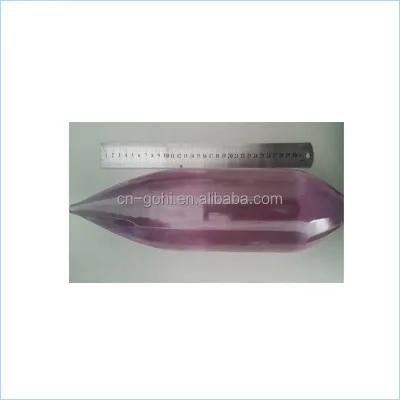
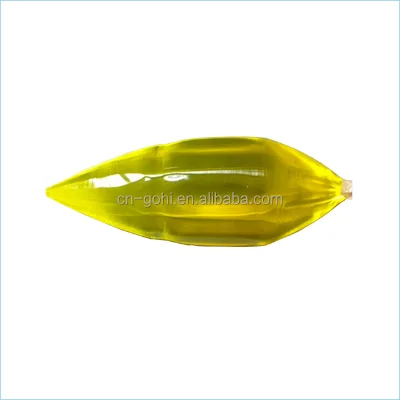

High Quality ND: YAG Laser Rod Crystals Source Factory Non-Standard Customization
$100.00 - $500.00
MOQ: 1 Pieces

High-Optical-Homogeneity ND: YAG Crystals -Tailored for Q-Switched Lasers
$100.00 - $500.00
MOQ: 1 Pieces


Fast Laser Machine ND: YAG ND YAG Crystal Alexandrite Pulse Instrument
$8399.00 - $9599.00
MOQ: 1 Pieces
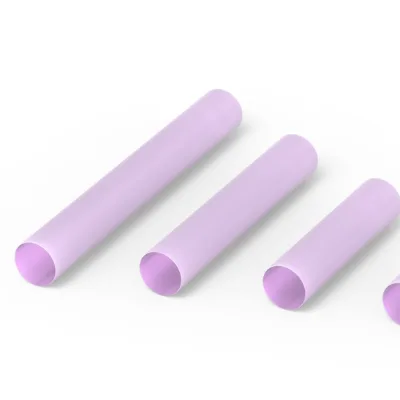
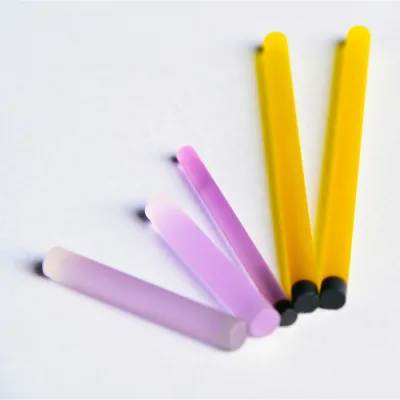

ND: YAG Laser Rod-Neodymium-Doped Crystal for High-Power Solid-State Lasers
$0.50 - $50.00
MOQ: 1 Pieces


Optical Undoped YAG Laser Rod 195mm, YAG Crystal for Laser Beauty Equipment
$19.00 - $129.00
MOQ: 1 piece/pieces


Comprehensive Sourcing Guide
High Efficiency Nd:YAG Laser Crystal Sourcing Guide
Procuring high-efficiency Nd:YAG laser crystals requires a rigorous understanding of material properties and manufacturing precision. These crystals serve as the active gain medium in solid-state laser systems, converting pump energy into coherent light with high stability. Buyers must prioritize suppliers who demonstrate mastery over the Czochralski growth process, as this method significantly influences crystal homogeneity and defect density. The choice between non-standard and standard components dictates the integration complexity within your optical assembly, making clear specification alignment critical before initiating any purchase order.
The market offers a variety of doped concentrations, typically ranging from 0.1% to 1.5% atomic percent, which directly impacts absorption efficiency and thermal management. Understanding the specific lasing wavelengths, such as 1064 nm or 1065 nm, is essential for matching the crystal to your diode pump sources. Furthermore, the physical dimensions and orientation, often specified as <111> ± 5°, must align precisely with your resonator design. Misalignment in crystal orientation can lead to polarization issues and reduced output power, so verifying these geometric tolerances is a non-negotiable step in the sourcing workflow.
Product Scope and Observed Listing Signals
The current market landscape for Nd:YAG crystals includes a diverse array of product models and configurations, reflecting the specialized nature of industrial laser manufacturing. Listings often highlight specific model numbers like 999, 000, or 47334, which may correspond to internal supplier coding rather than universal industry standards. Buyers should interpret these identifiers as reference points for communication rather than definitive technical classifications. The presence of customized options indicates that many manufacturers are willing to adapt crystal dimensions and doping levels to meet unique application requirements, providing flexibility for niche laser system designs.
Observed price ranges vary widely, from low-cost entry-level components to high-precision, custom-grown crystals costing significantly more. This variance is driven by factors such as crystal size, surface quality, and the complexity of the growth process. Minimum order quantities typically range from one to ten units, suggesting that these products are often treated as specialized components rather than high-volume commodities. Buyers should expect to engage in direct negotiation for larger volumes or specific customizations, as standardized pricing is rarely applicable across all product variants in this sector.
Technical Specifications to Verify
Verifying the lasing wavelength and absorption characteristics is paramount for ensuring system compatibility. Nd:YAG crystals typically emit at 1064 nm, but variations such as 1065 nm or broader ranges like 1023-1060 nm may be available. Buyers must confirm the diode-pumped absorption wavelength, often around 809 nm, to ensure efficient energy transfer from the pump source. Additionally, the thermal conductivity, which can range from 2.6 to 14 W/m/K depending on the specific crystal composition and quality, is a critical factor in managing heat dissipation during high-power operation. Inadequate thermal management can lead to thermal lensing and beam degradation.
Surface quality and geometric tolerances are equally important for optical performance. Specifications such as 10/5 surface quality per Mil-O-13830A and endface flatness of λ/10 at 632.8 nm indicate high-precision manufacturing. Dimensional tolerances, such as a diameter tolerance of 0/-0.03 mm and length tolerance of 0/+0.5 mm, ensure proper fit within laser cavities. Buyers should also verify the chamfer size, typically 0.15 ± 0.05 mm, to prevent chipping during handling and installation. These precise measurements are essential for maintaining the integrity of the optical path and minimizing scattering losses.
Compliance and Safety Documentation
While specific certification statuses are not universally listed, buyers should request documentation confirming adherence to international safety and quality standards. This includes material safety data sheets (MSDS) that detail the handling requirements for neodymium-doped yttrium aluminum garnet. Proper documentation ensures that the crystals are free from hazardous contaminants and that the manufacturing process complies with environmental regulations. Buyers must also verify that the supplier provides certificates of analysis (CoA) that validate the doping concentration and optical homogeneity of each batch.
Safety protocols for handling laser crystals are critical, as damaged or improperly coated crystals can pose risks during laser operation. Buyers should ensure that the supplier provides guidelines for coating application and laser damage threshold testing. The laser damage threshold of the coating is a vital specification, as it determines the maximum power density the crystal can withstand without degradation. Custom coating systems may be available, but buyers must verify the compatibility of these coatings with their specific laser wavelengths and pulse durations to prevent premature failure.
Cost Drivers and Commercial Terms
The cost of Nd:YAG crystals is influenced by several key factors, including the raw material purity, the complexity of the Czochralski growth process, and the precision of post-growth processing. Higher doping concentrations and tighter dimensional tolerances generally increase production costs. Additionally, the choice of holder material, such as brass or stainless steel, can affect the overall price, especially for integrated crystal assemblies. Buyers should consider the total cost of ownership, which includes potential costs associated with rework or replacement if the crystals do not meet performance expectations.
Commercial terms often include provisions for customization and quality assurance. Buyers should negotiate clear terms regarding lead times, especially for custom orders, as the growth and processing of high-quality crystals can be time-intensive. Payment terms may vary based on the order volume and the supplier’s risk assessment. It is advisable to establish a clear agreement on acceptance criteria, including specific test results for wavefront distortion and extinction ratio, to ensure that the delivered products meet the required performance standards before final payment is authorized.
Supplier Qualification and Quality Control
Evaluating supplier qualifications requires a focus on their manufacturing capabilities and quality control processes. Buyers should inquire about the supplier’s experience with the Czochralski method and their ability to produce crystals with consistent homogeneity and low defect densities. Quality control measures should include rigorous inspection of crystal orientation, surface quality, and dimensional accuracy. Suppliers who invest in advanced metrology equipment and have a robust quality management system are more likely to deliver products that meet stringent technical specifications.
Transparency in the supply chain is also crucial for ensuring long-term reliability. Buyers should verify the origin of the raw materials and the traceability of each crystal batch. Suppliers who provide detailed documentation of the growth and processing steps demonstrate a commitment to quality and accountability. Additionally, buyers should assess the supplier’s ability to provide technical support and troubleshooting assistance, as this can be invaluable in resolving any issues that arise during the integration of the crystals into laser systems.
Long-Term Procurement Checks
Establishing long-term procurement relationships requires regular performance reviews and continuous improvement initiatives. Buyers should monitor the consistency of crystal quality over time, tracking metrics such as lasing efficiency, thermal stability, and mechanical integrity. Any deviations from expected performance should be investigated promptly to identify potential issues in the manufacturing process or material sourcing. Maintaining open communication with suppliers allows for collaborative problem-solving and ensures that both parties are aligned on quality expectations.
Adapting to technological advancements is essential for staying competitive in the laser industry. Buyers should stay informed about new developments in crystal growth techniques and coating technologies that may offer improved performance or cost savings. Regularly updating technical specifications and requirements ensures that procurement strategies remain aligned with evolving application needs. By fostering a partnership based on mutual trust and shared goals, buyers can secure a reliable supply of high-efficiency Nd:YAG crystals that support the long-term success of their laser systems.
FAQs
What is the crystal structure of High Efficiency NdYAG Laser Crystal?
The crystal structure is cubic. This geometry supports stable laser emission and efficient energy transfer. It is grown using the Czochralski process for high optical quality. The material exhibits a density of 4.5 g/cm3 and a melting point of 1970 degrees Celsius. These properties ensure reliable performance in industrial laser systems.
Which lasing wavelengths are available for High Efficiency NdYAG Laser Crystal?
Available lasing wavelengths include 1065 Nm and ranges from 1023-1060 Nm. Specific models also support 911 Nm, 1067 Nm, and 1351 Nm. These wavelengths are optimized for diode-pumped absorption at 809 Nm. The precise spectral output allows for versatile applications in precision machining and medical devices.
Can High Efficiency NdYAG Laser Crystal be customized for specific orientations?
Yes, customization is available for crystal orientation. Customers can specify the exact orientation required for their optical setup. Doping concentrations range from 0.1 to 1.0 at%, with options like 0.6at.% or 1.5at%. This flexibility ensures optimal performance for diverse laser cavity designs and operational requirements.
What are the thermal properties of High Efficiency NdYAG Laser Crystal?
Thermal conductivity ranges from 2.6 to 3.8 W/M/K for some variants, while others reach 14 W/M/K. High thermal conductivity minimizes thermal lensing during operation. This property is critical for maintaining beam quality in high-power applications. The material effectively dissipates heat, ensuring stable laser output over extended periods.
What surface quality standards apply to High Efficiency NdYAG Laser Crystal?
Surface quality is typically rated at 10/5 per Mil-O-13830A standards. Endface flatness is maintained at λ/10 at 632.8 Nm. Parallelism is kept within 10 arcseconds, and perpendicularity within 5 arcminutes. These tight tolerances ensure minimal optical loss and high damage thresholds for coating systems.
What dimensions are standard for High Efficiency NdYAG Laser Crystal rods?
Standard dimensions include diameters up to 15 mm and lengths up to 150 mm. Tolerances are strictly controlled, with diameter at 0/-0.03 mm and length at 0/+0.5 mm. Cylindrical surfaces are precision ground and polished. These specifications ensure compatibility with standard laser housing and optical mounting systems.