Source Gas Chicken Rotisserie Oven for Hotels, Restaurants, and Outdoor Events
Explore 30 listings of gas chicken rotisserie ovens designed for commercial and household use. Buyers can compare specifications such as temperature range, capacity, and power source to find the right equipment for hotels, restaurants, and outdoor catering.
Key considerations
Products List


Commercial Rotisserie Grill Chicken Gas Rotisserie Machine Roaster Oven
$1050.00 - $1080.00
MOQ: 1 Sets


Commercial Gas Grill Rotisserie Chicken Oven / Electric Rotating Chicken Oven
$400.00 - $1000.00
MOQ: 1 Pieces


Rottiserie Chicken Rotisserie Machine Gas Stainless Steel Chicken Rotisseries
$1050.00 - $1080.00
MOQ: 1 Sets


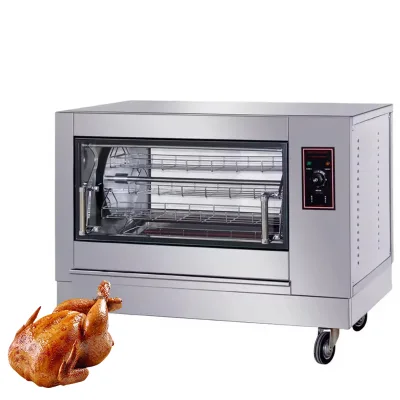

3 6 9 Rotary Gas Chicken Grill Rotisserie Machine Chicken Rotisserie Oven
$790.00 - $980.00
MOQ: 1 Pieces


Comprehensive Sourcing Guide
Gas Chicken Rotisserie Oven Sourcing Guide
The Gas Chicken Rotisserie Oven represents a specialized category of commercial cooking equipment designed for high-volume poultry preparation in diverse settings ranging from outdoor events to hotel kitchens. Based on observed market listings, these units are engineered to handle specific capacities, such as 3 to 9 rods or 8 to 12 pieces of chicken, while maintaining consistent heat distribution for uniform roasting. Buyers must recognize that while the core function remains the same, the physical footprint and power requirements vary significantly between electric and gas-powered models, necessitating a careful review of site infrastructure before procurement.
Sourcing decisions for this equipment hinge on matching the specific operational environment with the correct fuel source and temperature capabilities. The market data indicates a clear divergence between electric units operating at 380V/50Hz and gas models utilizing 28,000 BTU/Hr inputs, each with distinct temperature ranges extending from 20°C up to 550°C depending on the specific configuration. Procurement teams must verify that the selected unit aligns with their facility's utility availability, as the presence of a timing device or the absence thereof further dictates the level of automation and operator intervention required during the roasting cycle.
Product Scope and Observed Listing Signals
The product scope for gas chicken rotisserie ovens encompasses a variety of configurations tailored for commercial, household, and outdoor applications, with observed listings highlighting features like high efficiency and ease of operation. Buyers should note that while some models are explicitly marketed for outdoor hotel use, others are designed for indoor commercial kitchens, and the distinction often lies in the ventilation requirements and the robustness of the stainless steel construction. The observed capacity ranges, from 3 to 9 rods to specific piece counts like 8 to 12 chickens, serve as critical signals for determining the throughput capability required for a specific business volume.
Listing signals also reveal significant variations in physical dimensions and packaging standards, which directly impact logistics and installation planning. Dimensions observed in the market range from compact units measuring approximately 1100x620x370mm to larger industrial models exceeding 1380mm in length, with weights varying from 45kg to 95kg depending on the build quality and material thickness. The packaging methods, ranging from export-standard wooden cases to crates and plywood cases, indicate the level of protection provided during transit, which is a vital consideration for international buyers importing these heavy appliances from manufacturing hubs.
Technical Specifications to Verify
Technical verification must begin with the power source and voltage compatibility, as the market presents distinct options including 220V electric systems and gas units with specific consumption rates like 2.4kg/H. Buyers need to confirm that the facility's electrical grid can support the 380V/50Hz requirements for electric models or that the gas supply lines meet the pressure and flow demands for the 28,000 BTU/Hr gas burners. The temperature range is another critical specification, with observed units capable of operating between 20°C and 550°C, requiring precise calibration to ensure food safety standards are met without burning the poultry.
Physical dimensions and machine capacity must be cross-referenced against the available floor space and the expected production volume to avoid installation bottlenecks. The observed standard dimensions, such as 1186x490x1350mm or 1380x500x1525mm, suggest that the internal chamber size and external footprint are not interchangeable, and buyers should measure their kitchen or outdoor prep area to ensure the unit fits without obstructing workflow. Additionally, the presence or absence of a timing device is a functional specification that affects the operational workflow, with some models offering automated cycles while others rely on manual monitoring, a distinction that influences labor allocation and training requirements.
Compliance and Safety Documentation
Compliance and safety documentation for gas chicken rotisserie ovens must address the specific risks associated with high-temperature gas combustion and heavy machinery operation. Buyers should request evidence that the gas consumption rates and burner designs adhere to local fire safety codes, particularly for units intended for outdoor or semi-outdoor commercial use where ventilation is a primary concern. The material composition, typically stainless steel, should be verified for food-grade compliance to ensure that the cooking surface does not leach harmful substances during the high-temperature roasting process.
Safety certifications for electrical components in hybrid or electric models must be validated against the voltage specifications provided, ensuring that the 220V or 380V systems are protected against short circuits and overheating. Documentation should also cover the structural integrity of the unit, including the stability of the rotisserie rods and the secure mounting of the heating elements, to prevent mechanical failures during operation. Buyers must ensure that the supplier provides clear instructions for emergency shutdown procedures and regular maintenance schedules to mitigate the risks associated with long-term use of high-heat cooking equipment.
Cost Drivers and Commercial Terms
Cost drivers for gas chicken rotisserie ovens are primarily influenced by the material quality, specifically the grade of stainless steel used, and the complexity of the heating system, which dictates the BTU output and temperature control precision. The observed price range of 100 to 1520 USD suggests a wide spectrum of value, where lower-cost units may lack advanced features like timing devices or robust insulation, while higher-priced models likely offer enhanced durability, better temperature uniformity, and longer service life. Buyers should analyze the total cost of ownership, including gas consumption rates and energy efficiency, rather than focusing solely on the initial purchase price.
Commercial terms such as Minimum Order Quantity (MOQ) and lead times are critical factors in the procurement process, with observed listings indicating an MOQ of 1 unit, which facilitates small-scale testing or single-unit purchases. However, the lead time and shipping costs can vary significantly based on the packaging method, whether it is a wooden case or a standard export carton, and the origin location, which is noted as China for many of these units. Buyers must negotiate clear terms regarding the delivery of heavy items, ensuring that the supplier's packing standards protect the unit from damage during transit and that the delivery timeline aligns with the business's operational launch schedule.
Supplier Qualification and Quality Control
Supplier qualification for gas chicken rotisserie ovens requires a thorough assessment of the manufacturer's ability to deliver consistent quality across different models, such as the LM-6, WJ-6, and SY-CHR series observed in the market. Buyers should verify the supplier's track record in providing after-sales service, particularly for gas units where technical support for burner adjustments and gas line connections is essential for safe operation. The presence of features like "Long Service Life" and "High Efficiency" in product descriptions should be backed by tangible evidence of build quality, such as the thickness of the stainless steel and the reliability of the rotisserie mechanism.
Quality control processes must include rigorous testing of the temperature range and heating uniformity to ensure that the unit can consistently maintain the 20°C to 550°C operating window without hot spots or cold zones. Buyers should request test reports or certification documents that validate the machine's performance under load, confirming that the gas consumption and power output match the advertised specifications. Additionally, the inspection of the packing and shipping standards, such as the use of wooden cases or export-standard packaging, is vital to ensure that the unit arrives in pristine condition, ready for immediate installation and use.
Long-Term Procurement Checks
Long-term procurement checks for gas chicken rotisserie ovens focus on the durability of the rotisserie mechanism and the ease of maintenance required to sustain high-volume operations. Buyers should evaluate the availability of spare parts, such as heating elements, rotisserie rods, and control panels, to ensure that the equipment can be repaired quickly without significant downtime. The "Easy to Operate" feature observed in listings should be validated through user feedback or trial runs to confirm that the controls are intuitive and that the cleaning process does not require excessive labor or specialized tools.
Sustainability and energy efficiency are becoming increasingly important in long-term procurement strategies, requiring buyers to assess the gas consumption rates and the overall energy efficiency of the unit over its lifespan. The ability of the oven to maintain consistent temperatures with minimal fuel waste is a key indicator of long-term value, as it directly impacts operational costs and environmental compliance. Buyers should also consider the scalability of the equipment, ensuring that the chosen model can adapt to changing business needs, such as increased demand or expanded menu offerings, without requiring a complete replacement of the cooking infrastructure.
FAQs
What power sources are available for gas chicken rotisserie ovens?
Both electric and gas power sources are available for these ovens. Electric models typically operate at 380V/50Hz with 12.3kw power or 220V with 2800 BTU/hr equivalents. Gas models consume approximately 2.4kg of gas per hour and offer high efficiency. Buyers can select the source based on their facility infrastructure and operational cost preferences.
What is the temperature range for these roasting machines?
The working temperature ranges from 20°C to 550°C for gas models and 50°C to 300°C for electric variants. This wide range allows for versatile cooking applications, from slow roasting to high-heat grilling. The precise control ensures consistent results for commercial and household use, accommodating different chicken sizes and desired doneness levels.
Can these ovens be customized for specific business needs?
Yes, customization is available for these ovens. Buyers can request specific dimensions, capacities, or voltage configurations to match their kitchen layout. The machines are designed for outdoor, hotel, commercial, and household applications. Customized options ensure the equipment integrates seamlessly into existing workflows while maintaining high efficiency and ease of operation.
What is the typical capacity of a chicken rotisserie oven?
Capacity varies by model, with options holding 3, 6, or 9 rods, or 8 to 12 pieces of chicken. Some models have a maximum capacity of 30 units depending on the configuration. Buyers should select the capacity that aligns with their daily production volume to ensure optimal throughput without compromising cooking quality or energy efficiency.
How are these ovens packaged for shipping?
Ovens are packaged in export-standard wooden cases, crates, or plywood cases to ensure safe transit. Dimensions vary by model, with some packing sizes measuring 1120x710x980 mm. This robust packaging protects the stainless steel construction during international shipping. Buyers receive clear packing details to facilitate logistics planning and warehouse handling upon delivery.
What materials are used in constructing these rotisserie ovens?
These ovens are primarily constructed from stainless steel, ensuring durability and hygiene. The material resists corrosion and withstands high temperatures, making it suitable for heavy commercial use. The sturdy build supports long service life and easy cleaning. Buyers benefit from a reliable, food-safe construction that meets standard commercial kitchen requirements for safety and maintenance.