Source Gas Burner Brick Oven for Industrial Kilns, Furnaces, and Ovens
Compare 30 Gas Burner Brick Oven listings from Chinese manufacturers offering automatic and semi-automatic options. Buyers can evaluate specifications like fuel types, production capacity, and kiln dimensions for industrial applications.
Key considerations
Products List

Brick Oven Automatic Clay Brick Machine Brick Kiln Burner Clay Brick Burning Tunnel Kiln
$200000.00 - $800000.00
MOQ: 1 Sets


Clay Bric Making Machine Brick Kiln Furnace Heater Gas Burner for Sale
$8522.00 - $8965.00
MOQ: 1 Sets


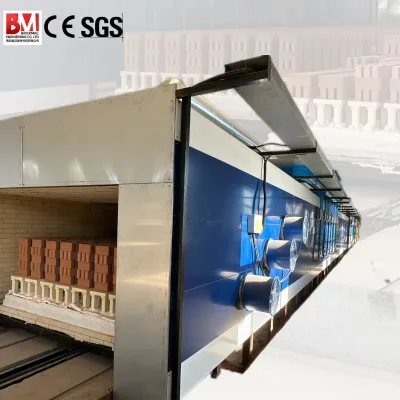


High-Quality Electric Furnace Equipment Brick Oven for Firing Bricks Kiln Factory
$252000.00 - $269800.00
MOQ: 1 Sets


Electric High Temperature Resistant Industrial Brick Furnace Brick Oven for Ceramic Tiles
$252000.00 - $269800.00
MOQ: 1 Sets


Comprehensive Sourcing Guide
Strategic Sourcing Guide for Gas Burner Brick Ovens
Understanding Technical Specifications and Operational Parameters
When sourcing a Gas Burner Brick Oven, often categorized as a tunnel kiln or industrial furnace, buyers must first establish a clear understanding of the technical specifications that define the equipment's capability. The core functionality of these machines relies on the integration of a vacuum extruder for brick molding and a sophisticated combustion system for firing. The observed product attributes indicate that these units are designed for automatic operation, featuring a "Max-Min-Stop" automatic starting mechanism and flame control managed by electrodes. This level of automation is critical for maintaining consistent firing temperatures and ensuring uniform product quality across large production runs.
The physical dimensions and structural integrity of the kiln are paramount. Specifications observed in the market include a kiln height of 2.6 meters and a section length ranging from 2.5 meters to 9 meters. The overall dimensions for specific models, such as the ASG/1T, can reach 3.6 meters in width and 120 meters in length, with a height of 2.6 meters. These dimensions directly correlate with the production capacity, which varies significantly between 100 to 1,500 tons per day. Buyers must verify that the selected model's physical footprint aligns with their facility's available space and that the internal chamber dimensions accommodate the specific brick sizes they intend to produce. The standard brick size of 24011553 mm is common, but the machinery must also support alternative dimensions such as 400100200 mm, 300150100 mm, and 20010060 mm, depending on the specific project requirements.
The fuel flexibility of the system is another critical technical aspect. While the core keyword focuses on gas burners, the observed data suggests that these furnaces are often designed to be versatile, capable of utilizing natural gas, coal, furnace oil, and biomass gas. The choice of fuel impacts the thermal efficiency and the specific burner configuration required. The system typically includes a kiln control system and a kiln handling system as core components, which work in tandem to manage the firing process. The surface treatment is generally painted for corrosion resistance, and the assembly is often located at the kiln top or side, depending on the specific design of the tunnel or chamber.
Compliance, Certification, and Safety Standards
Navigating the regulatory landscape is essential for any B2B procurement of industrial machinery. The market data indicates that many suppliers adhere to ISO 9001:2000 certification standards, which validates their quality management systems. Additionally, some units carry both ISO and CE certifications, suggesting compliance with European safety and health standards, which is often a prerequisite for exporting to international markets. Buyers should verify that the specific unit they are purchasing holds current, valid certifications that match their local regulatory requirements. The "Exported to 25 Countries" attribute suggests a level of international compliance, but this should not be assumed for every unit without explicit documentation.
Safety standards regarding the gas burner system are particularly important. The flame control mechanism, described as being managed by electrodes, implies a need for rigorous safety protocols to prevent gas leaks or uncontrolled combustion. The voltage requirements are typically standardized at 380V, which is common for industrial three-phase power systems. Buyers must ensure that their facility's electrical infrastructure can support this voltage and that the machine's electrical components meet local safety codes. The "Long Service Life" is often cited as a key selling point, but this claim should be backed by the manufacturer's warranty terms and the quality of the core components used in the kiln control and handling systems.
Furthermore, the production origin is primarily China, with specific mentions of Jiangsu as a production hub. While this location offers competitive pricing, it necessitates a thorough vetting of the supplier's export history and adherence to international shipping standards. The "Sea-Worthy Packed" attribute indicates that the equipment is prepared for long-distance transport, but buyers should still verify the packaging integrity to prevent damage during transit. The "Video outgoing-inspection: Provided" feature allows buyers to visually verify the machine's condition before shipment, a crucial step in mitigating the risks associated with remote procurement.
Cost Drivers and Financial Considerations
The financial landscape for sourcing gas burner brick ovens is complex, driven by a wide range of variables. The observed price range in the market is extensive, spanning from $1 to $800,000 USD. This vast disparity is not indicative of product quality alone but reflects differences in capacity, automation levels, customization, and included features. A basic unit with a lower production capacity will naturally fall at the lower end of this spectrum, while a fully automated, high-capacity tunnel kiln with advanced control systems will command a premium price.
The Minimum Order Quantity (MOQ) also plays a significant role in the total cost of ownership. The observed MOQ ranges from 1 to 600 units, though in the context of heavy industrial machinery like brick kilns, the "1" likely refers to a single machine unit rather than a bulk order of small parts. Buyers should be aware that negotiating the MOQ can sometimes influence the unit price, especially for customized models. The "Customized" and "Customization: Available" attributes suggest that buyers can tailor the machine to their specific needs, but this customization will inevitably increase the cost and potentially extend the lead time.
Other cost drivers include the complexity of the fuel system. A machine designed to handle multiple fuel types, such as natural gas, coal, and biomass, may require more complex burner assemblies and control logic, thereby increasing the initial investment. The weight of the equipment, which can reach 500,000 kg for larger models, also impacts logistics costs. Shipping a 500-ton machine requires specialized heavy-lift vessels and port infrastructure, which adds significant expense to the final landed cost. Buyers must factor in installation, commissioning, and the cost of any necessary site preparation, such as foundation reinforcement, which is often required for such heavy machinery.
Typical Applications and Production Capabilities
Gas burner brick ovens are primarily designed for industrial applications, specifically for the firing of clay bricks. The "Range of Applications" is explicitly listed as industrial, highlighting their use in large-scale brick manufacturing facilities. These machines are capable of producing a variety of brick sizes, from standard modular bricks to larger structural units. The ability to produce bricks with dimensions such as 400200200 mm or 230220115 mm makes these ovens versatile for different construction needs.
The production capacity is a key differentiator among models. With a capacity ranging from 100 to 1,500 tons per day, these ovens can serve small to medium-sized operations or massive industrial complexes. The "Automatic Grade" and "Automation: Automatic" attributes indicate that these systems are designed for continuous, high-volume production with minimal manual intervention. This is crucial for maintaining consistent quality and meeting high demand. The "Energy Saving" function is another important application feature, as it reduces operational costs and aligns with modern sustainability goals.
The specific process of "Brick Molding Machine" followed by "brick firing furnace" indicates a complete production line capability. The vacuum extruder mentioned in the attributes is used to shape the clay into the desired brick form before it enters the kiln. The "Kiln Section" length of 2.5 to 9 meters allows for a controlled firing cycle, ensuring that the bricks are heated and cooled at the correct rates to achieve the desired strength and durability. The "Assembly: Kiln Top/ Side" configuration suggests that the burner and control systems are integrated directly into the kiln structure, optimizing heat distribution and energy efficiency.
Supplier Evaluation and Market Positioning
Evaluating suppliers for gas burner brick ovens requires a multi-faceted approach. The market data shows that suppliers often highlight their export experience, with mentions of agents in Nepal, India, Bangladesh, Egypt, and Venezuela. This global presence suggests that these suppliers have experience navigating international trade regulations and logistics. However, buyers should not rely solely on these agent networks; direct communication with the manufacturer is essential to verify the authenticity of the claims and the quality of the product.
The "Brand Name: BRICMAC" is observed in the data, but buyers should be cautious about assuming that all products in this category carry this brand. The market is likely populated by various manufacturers, some of which may be OEMs for larger brands. Buyers should request detailed company profiles, including their history, production capacity, and financial stability. The "Place of Origin: Jiangsu, China" is a common location, but buyers should verify the specific factory location to ensure it matches the supplier's claims.
Supplier reliability can be assessed through their willingness to provide video outgoing inspections. This feature allows buyers to see the machine in operation or at least in its final assembled state before it leaves the factory. Additionally, the "Condition: New" attribute should be verified through third-party inspection reports. Buyers should also check for any past performance issues or customer reviews, although these may not be readily available in the initial product listings. The "Long Service Life" claim should be supported by a detailed warranty and after-sales service plan, including the availability of spare parts and technical support.
Quality Control and Long-Term Procurement Strategy
Ensuring the quality of a Gas Burner Brick Oven involves rigorous testing and verification processes. The "Tolerance: 0.5mm" specification indicates a high level of precision in manufacturing, which is critical for the proper fit and function of the kiln components. Buyers should request detailed quality control reports that cover the welding, assembly, and testing of the core components, such as the kiln control system and handling system. The "Surface Treatment: Painted" attribute should be verified to ensure that the paint is durable and resistant to the high temperatures and corrosive environments typical of brick firing operations.
Long-term procurement considerations include the availability of spare parts and the technical support provided by the supplier. Given the "Fully automatic or semi-automatic" nature of these machines, the complexity of the control systems means that specialized knowledge is required for maintenance and troubleshooting. Buyers should negotiate service agreements that include regular maintenance visits, training for their staff, and a guaranteed supply of critical spare parts. The "Customized" nature of the product means that standard spare parts may not fit, making it essential to secure a supply chain for custom components.
Finally, buyers should consider the environmental impact and energy efficiency of the machine. The "Energy Saving" function is a key selling point, but buyers should verify the actual energy consumption figures and the efficiency of the gas burner system. The ability to switch between different fuel types, such as biomass gas or coal, provides flexibility in fuel sourcing, which can be a significant advantage in regions where natural gas is expensive or unavailable. By focusing on these long-term factors, buyers can ensure that their investment in a Gas Burner Brick Oven remains productive and cost-effective over its entire service life.
Comparison of Key Product Attributes
| Attribute Category | Observed Specification | Verification Requirement |
|---|---|---|
| Automation | Automatic, Max-Min-Stop | Confirm control system logic and sensor reliability. |
| Fuel Type | Natural gas, Coal, Oil, Biomass | Verify burner compatibility and fuel switching mechanisms. |
| Production Capacity | 100 ~ 1,500 Ton/Day | Match capacity to actual raw material supply and demand. |
| Certification | ISO 9001:2000, ISO, CE | Request valid certificates and check expiration dates. |
| Dimensions | 3.61202.6 meter (Example) | Verify site fit and foundation requirements. |
| Brick Size | 24011553 mm to 400200200 mm | Ensure mold compatibility with desired brick types. |
| Origin | Jiangsu, China | Confirm factory location and export license. |
| Packing | Sea-Worthy, Container | Inspect packing list and insurance coverage. |
Final Procurement Considerations
The procurement of a Gas Burner Brick Oven is a significant capital investment that requires careful planning and due diligence. By focusing on the technical specifications, compliance standards, cost drivers, and supplier evaluation criteria outlined in this guide, buyers can make informed decisions that align with their operational goals. The wide range of available options, from basic models to highly customized, fully automated systems, means that there is a solution for every need. However, the complexity of the machinery and the critical nature of the firing process demand a rigorous approach to quality control and long-term support. Buyers should prioritize transparency, verification, and clear communication with suppliers to ensure a successful procurement experience. The ultimate goal is to secure a reliable, efficient, and safe brick firing solution that will serve as a cornerstone of their industrial operations for years to come.
FAQs
What is the production capacity of a Gas Burner Brick Oven?
Production capacity ranges from 100 to 1,500 tons per day depending on the model. Buyers must verify that the selected unit's physical footprint aligns with their facility's available space and internal chamber dimensions.
Which certifications do gas burner brick ovens typically hold?
Many units adhere to ISO 9001:2000 certification standards for quality management. Some models also carry both ISO and CE certifications, suggesting compliance with European safety and health standards for international export.
How does the fuel system operate in these industrial furnaces?
The system is versatile and can utilize natural gas, coal, furnace oil, and biomass gas. Flame control is managed by electrodes to ensure consistent firing temperatures and prevent uncontrolled combustion during operation.
What are the standard dimensions for the kiln sections?
Kiln sections typically range from 2.5 to 9 meters in length with a height of 2.6 meters. Specific models like the ASG/1T can reach 120 meters in length to accommodate large production runs.
Can buyers customize the brick size and automation level?
Customization is available for various brick sizes including 400*200*200 mm and standard 240*115*53 mm units. Automation levels can be selected as fully automatic or semi-automatic to match specific project requirements.
Where are these gas burner brick ovens primarily manufactured?
The primary place of origin is Jiangsu, China, with a global export history to 25 countries. Buyers should verify the specific factory location to ensure it matches the supplier's claims regarding production capacity.
What is the typical voltage requirement for the control systems?
The voltage requirement is typically standardized at 380V for industrial three-phase power systems. Buyers must ensure their facility's electrical infrastructure can support this voltage and that components meet local safety codes.