Source Glossy Front Bumper With Park Assist Sensor For Cars
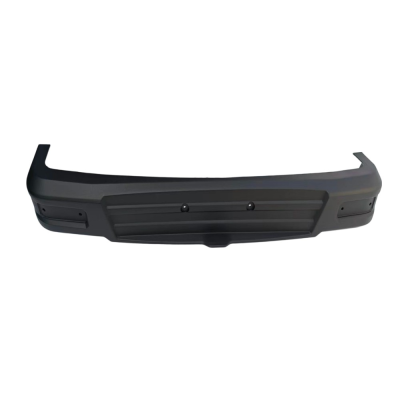
Find 30 glossy front bumper with park assist sensor options for vehicle safety upgrades. Compare models like CD01-4S1 and CB01-4T2, featuring IP67 waterproof sensors, adjustable buzzer alarms, and OEM customization for reliable rear and front parking detection; compare the available evidence and request quotations based on your requirements.
Key considerations
Products List




Comprehensive Sourcing Guide
Glossy Front Bumper with Park Assist Sensor Sourcing Guide
Procuring a glossy front bumper equipped with park assist sensors requires distinguishing between integrated systems and aftermarket retrofit kits. The observed market data indicates a strong presence of aftermarket solutions designed for repair or replacement, often featuring adjustable detection ranges and customizable installation methods. Buyers must verify whether the glossy finish is a standard aesthetic option or a specific customization request, as the supply chain frequently offers neutral packaging for generic components that require final assembly or branding.
The functional scope extends beyond simple obstacle detection to include comprehensive front and rear parking integration. Listings confirm the availability of systems capable of supporting towbar and spare tire detection through specific DIP switch configurations, which prevents false alarms in complex vehicle geometries. Sourcing decisions should prioritize units that explicitly support the intended installation location, ensuring the sensor diameter and cable lengths align with the specific bumper curvature and internal routing constraints of the target vehicle model.
Product Scope and Observed Listing Signals
The product landscape includes distinct models such as the CD01-4S1 and CB01-4T series, which offer varying sensor diameters ranging from 16.5mm to 18.5mm with specific angular adjustments. These signals suggest that buyers must carefully match the physical dimensions of the sensors to the pre-drilled holes in the glossy bumper, as the installation method is typically an open-hole type requiring precise alignment. The presence of multiple model numbers indicates a modular approach where the electronic control unit and sensor array can be mixed to suit different vehicle configurations.
Listing observations reveal a wide variance in cable specifications, with display cables often measuring five meters and power cables around 1.5 meters, while sensor cables may extend to 2.5 meters with waterproof connectors. This variation necessitates a clear verification of the total wiring harness length to ensure it reaches the vehicle's ECU without requiring splicing or extension. Buyers should also note the availability of single-item selling units, which allows for smaller initial orders but may impact the unit economics compared to bulk procurement of complete kits.
Technical Specifications to Verify
Critical technical verification begins with the operating temperature range, which must withstand environmental extremes from -20°C to +80°C to ensure reliability in diverse climates. The sensor detection distance is a primary performance metric, with observed ranges spanning from 0.3 meters to 2.5 meters, requiring buyers to confirm the specific threshold settings for their intended application. Additionally, the side sensor detection capability is often limited to 80cm via DIP switches to avoid false alarms, a feature that must be validated against the vehicle's specific bumper width and clearance requirements.
The warning mechanism is another vital specification, with systems offering both LED displays and adjustable buzzer alarms that can be set to high, low, or off modes. Buyers must verify the beep alarm support and the specific sound characteristics, such as the high-low-off adjustability, to ensure the alert is audible without being overly intrusive. The inclusion of a sounding IC box and the specific weight of the assembly, observed at 255g, also influence the mounting strategy and the overall balance of the front bumper assembly during installation.
Compliance and Safety Documentation
Regulatory compliance is a non-negotiable aspect of sourcing, with observed listings frequently citing RoHS, FCC, and CE certifications as standard attributes. These certifications indicate that the electronic components within the park assist system meet specific environmental and electromagnetic interference standards, which is essential for market entry in many regions. Procurement teams must request valid certification documents for each batch to ensure that the glossy finish and the embedded electronics do not contain restricted substances or emit excessive radio frequency interference.
Safety documentation should also cover the waterproofing standards of the sensor cables, which are observed to feature IP67 waterproof connectors to protect against moisture and dust ingress. The structural integrity of the system, including the floating structure of certain components and the durability of the electronic accessories, must be supported by test reports or manufacturer guarantees. Buyers should verify that the product standard dimensions, such as the 530mm230mm290mm packaging size, align with logistics requirements while ensuring the internal components remain protected during transit.
Cost Drivers and Commercial Terms
Cost structures are heavily influenced by the level of customization available, as the supply chain supports OEM requests and specific color options like black or white. The ability to customize the product, including the glossy finish and sensor configuration, often introduces variable pricing tiers that depend on the order volume and the complexity of the modification. Buyers should anticipate that single-item selling units may carry a higher per-unit cost compared to bulk orders, where the economies of scale can significantly reduce the price per sensor kit.
Commercial terms must account for the observed MOQ range of 1 to 500 units, which offers flexibility for small-scale repairs but requires careful negotiation for larger fleet deployments. The price range observed in the market spans from $0.01 to $200,000, reflecting the vast difference between individual sensor components and complete, high-end integrated systems. Procurement strategies should focus on defining the exact specifications to avoid paying for unnecessary features while ensuring that the selected model, such as the HS073 or CB01 series, meets all functional requirements.
Supplier Qualification and Quality Control
Supplier qualification should prioritize manufacturers located in established electronics hubs like Shenzhen, Guangdong, which are known for producing high-quality automotive accessories. The origin of the product is a key indicator of supply chain maturity, with many listings confirming production in China, a region with robust infrastructure for electronic manufacturing and component sourcing. Buyers must verify the supplier's capacity to maintain consistent quality across batches, especially when dealing with customized orders that require specific color matching or sensor calibration.
Quality control processes must include rigorous testing of the sensor detection accuracy and the durability of the waterproof connectors under various environmental conditions. The condition of the product is listed as new, but buyers should implement incoming inspection protocols to verify that the sensors are free from defects and that the electronic components function correctly upon arrival. Establishing a clear communication channel with the supplier regarding the specific model numbers and customization requirements is essential to prevent discrepancies between the ordered specifications and the delivered goods.
Long-Term Procurement Checks
Long-term procurement success depends on the supplier's ability to provide consistent support for spare parts and future replacements. The purpose of the product is often for repair or replacement, meaning that the availability of compatible sensors and control units over the product lifecycle is critical for maintaining vehicle safety and functionality. Buyers should establish a relationship with suppliers who can guarantee the continued production of specific models like the CD01-4S1 or CB01-4T2 to avoid obsolescence issues.
Continuous monitoring of market trends and technological advancements is necessary to ensure that the procured systems remain competitive and compliant with evolving safety standards. The adjustable nature of the warning types and the customizable detection ranges offer a degree of future-proofing, but buyers must remain vigilant regarding changes in regulatory requirements or vehicle integration standards. Regular audits of the supplier's quality control processes and certification renewals will help maintain the integrity of the supply chain and ensure that the glossy front bumper systems continue to perform reliably over time.
FAQs
Can this glossy front bumper park assist sensor work on both front and rear bumpers?
Yes, the sensor system supports installation on either the front or rear bumper, and some listed models combine front and rear parking sensing in one unit. Installation uses an open-hole type mounting method, so bumper drilling is required. Confirm the sensor diameter, typically 16.5mm or 18.5mm with angle, against your bumper hole size before ordering.
What is the operating temperature range of the park assist sensor system?
The sensors are rated for an operating temperature range of -20°C to +80°C, covering typical winter and summer driving conditions. Sensor cables use an IP67 waterproof connector, which helps with moisture and wash-down exposure. For extreme climates, verify that your bumper surface temperature stays within the stated range during parked and driving operation.
Which warning types are available when the sensor detects an obstacle?
Listed systems provide LED display warnings, buzzing alarms, or beep alarms with a built-in buzzer. Buzzer sound alarms can be adjustable with high-low-off settings on some models. Detection distance spans roughly 0.3 to 2.5 meters, and side sensor detection can be limited to 80cm via DIP switch to avoid false alarms.
How do you handle towbars and spare tires to avoid false alarms?
The system supports towbar and spare tire compensation with a 25cm offset configured through the DIP switch. Setting this offset shifts the detection reference so rear-mounted accessories do not trigger constant alerts. If your vehicle carries a towbar, spare tire, or similar rear accessory, enable the offset during installation and test at close range.
What customization options can buyers request for these parking sensors?
Customization is available on listed products, and OEM orders are acceptable. Color options include black, white, or customized finishes to match glossy bumper surfaces. Some listings also allow packaging customization, with neutral package as the standard packing. Discuss your color, labeling, and packing requirements with the supplier before confirming a sample or bulk order.
What certifications do the parking sensor products carry?
Listed products carry CE, FCC, and RoHS certification, which addresses basic safety, electromagnetic compatibility, and hazardous substance compliance for many markets. Certification coverage can vary by model and production batch, so request the current certificate copies for the exact model you intend to purchase. This is especially important when importing into regulated regions.
What cable lengths are supplied with the sensor and display units?
Typical listings include a 2.5 meter sensor cable with an IP67 waterproof connector, a 5 meter display cable, a 1.5 meter power cable, and a 2 meter buzzer cable. Check total cable runs against your vehicle size, since larger vehicles or longer routing paths may require extensions. Confirm cable lengths per model before ordering.
Which models are listed and where do they originate from?
Listed models include CD01-4S1, CB01-4T2, and HS073, with origins noted in Shenzhen, Guangdong, China. Products are new condition items intended for replace and repair purposes, sold as single items with MOQ ranging from 1 to 500 depending on the listing. Verify model-specific specifications, sensor counts, and pricing with the supplier directly.