Source Gold CIL Plant for Gold Mining, Processing, and Extraction
Compare 30 Gold CIL Plant options from Jiangxi, China, featuring carbon steel construction, PLC core components, and capacities up to 1000 tpd. Buyers can review specifications like 380V voltage, energy-saving features, and warranty terms to select the right unit for their operation.
Key considerations
Products List


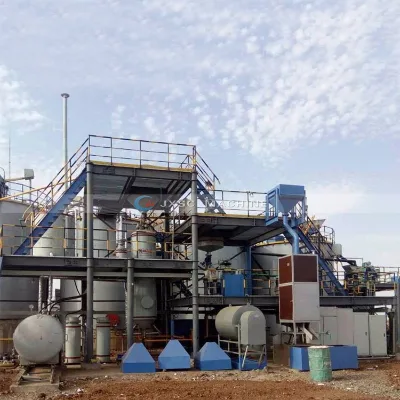
Gold Processing 500t/d Mobile Gold Elution Plant Gold Cil Leaching Plant
$55000.00 - $68000.00
MOQ: 1 sets
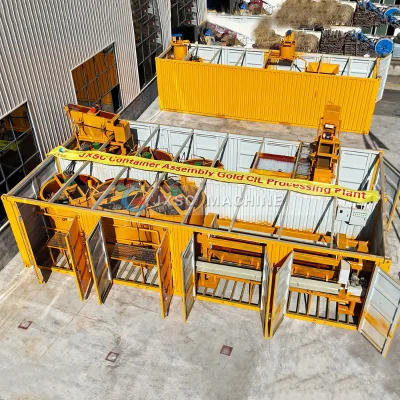
48TPD JXSC Factory Gold Tailing Recovery Cip CIL System Leaching Process Plant for Gold
$103142.68 - $411031.28
MOQ: 1 Minimum
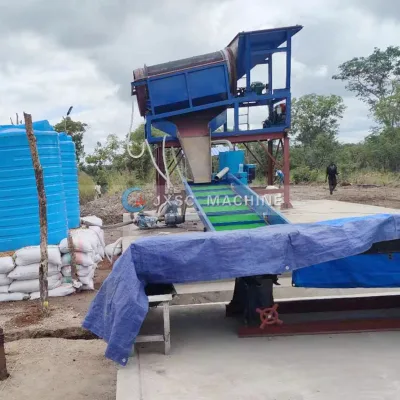


Cil CIP Recovery Tailing Gold Leaching System Process Plant Mobile CIP
$2000.00 - $20000.00
MOQ: 1 Sets


Factory Price for 50tpd-1000tpd Leaching Cil Gold CIP Processing Plant
$2000.00 - $20000.00
MOQ: 1 Sets

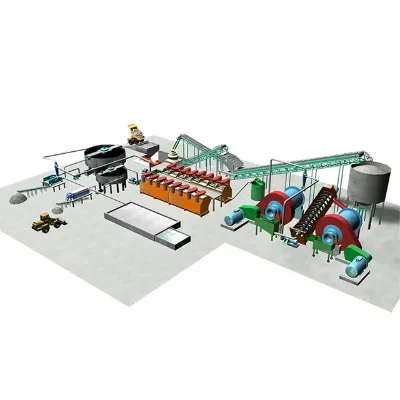


Comprehensive Sourcing Guide
Strategic Sourcing Guide for Gold CIL Plants
Procuring a Carbon-in-Leach (CIL) plant represents a significant capital investment for mining operations seeking to optimize gold recovery. The complexity of these systems requires a rigorous approach to sourcing, moving beyond simple price comparisons to a deep analysis of technical specifications, operational reliability, and supplier capability. This guide synthesizes observed market data and industry standards to provide a framework for evaluating potential suppliers and selecting equipment that aligns with specific project requirements. Buyers must navigate a landscape where capacity, material composition, and automation levels vary significantly, necessitating a disciplined verification process to ensure the selected plant delivers the expected throughput and recovery rates.
Technical Specifications and Operational Parameters
The core of a CIL plant lies in its mechanical and hydraulic design, which directly dictates its efficiency in gold extraction. When evaluating a unit, the first priority is to verify the effective volume and tank specifications. Market observations indicate that a standard configuration for a 500-ton-per-day (T/D) plant often features an effective volume of approximately 98 cubic meters. The physical dimensions of the tanks are critical for installation planning; specific listings show tank specifications around 5500 mm by 5500 mm by 6000 mm. However, buyers should not assume these dimensions apply universally. The model number, such as LT5.0*5.6, serves as a reference point, but the actual model number range in the market spans from 24 TPD to 1000 TPD. Consequently, procurement teams must request detailed engineering drawings for the specific capacity required by their mine.
The power and voltage requirements are equally vital for integration with existing site infrastructure. Observed data points to a standard voltage of 380V, though customization options exist to match local grid standards. Power consumption varies by component; while some large-scale units list a power rating of 11 kW, other configurations, particularly those involving smaller screens or auxiliary systems, may range from 2.2 kW to 7.5 kW. The impeller diameter is a key mechanical metric, with observed values around 2046 mm, and rotation speeds typically hovering near 31 r.p.m. These figures influence the agitation intensity required to keep carbon particles suspended and in contact with the gold-bearing slurry. Buyers must ensure that the core components, specifically the PLC (Programmable Logic Controller) and bearings, are specified to handle the continuous duty cycle of a gold processing operation. The material of construction is predominantly carbon steel, selected for its durability and oil resistance, which is essential in environments where chemical reagents are present.
Compliance, Certification, and Quality Standards
In the global mining sector, compliance is not merely a regulatory formality but a prerequisite for operational safety and insurance coverage. When sourcing a CIL plant, buyers must verify the certification status of the equipment. Trusted market data indicates that reputable manufacturers often hold ISO9001 certification, ensuring that their quality management systems meet international standards. Furthermore, product certificates such as CE (Conformité Européenne) and SGS (Société Générale de Surveillance) are frequently cited as evidence of safety and quality compliance. These certifications validate that the electrical systems, structural integrity, and mechanical assemblies have undergone third-party scrutiny.
However, the presence of a certificate on a product listing does not guarantee that every unit in a shipment carries the same documentation. Buyers should explicitly request copies of the specific certificates applicable to the batch they are purchasing. The standard for the equipment is often listed as "As different model," which implies that compliance may vary based on the specific configuration ordered. Therefore, the procurement contract must stipulate that the delivered plant must meet the specific safety and environmental standards of the buyer's operating jurisdiction. Additionally, the "High Reputation" attribute often associated with established brands suggests a history of reliable performance, but this should be corroborated with independent site references rather than accepted as a marketing claim.
Cost Drivers and Pricing Structure
Understanding the cost structure of a CIL plant is essential for budgeting and financial modeling. The observed price range in the market is vast, spanning from $1,000 to $888,880 USD. This wide disparity reflects the difference between individual components, such as a single screen or pump, and a fully integrated processing line. A complete plant for a 500 T/D operation involves significant material costs, primarily driven by the use of carbon steel and the complexity of the PLC automation systems. The weight of the equipment is a major cost driver; observed data lists single gross weights ranging from 550 kg for smaller units to over 8,960 kg for larger assemblies. The sheer mass of the tanks, with some weighing up to 8,896 kg, impacts shipping logistics, insurance premiums, and foundation requirements.
Buyers must also consider the "Selling Units" structure. While some items are listed as single items, a full plant is a system of integrated components. The "Bulk" packing method suggests that large components may be shipped without individual packaging to save space, which can increase the risk of damage during transit. The "Energy Saving" attribute is a critical long-term cost driver. While the initial purchase price might be lower for a less efficient unit, the operational cost of electricity over the plant's lifespan can be substantial. A plant with a verified energy-saving design, combined with a 11 kW or optimized power rating, will offer a better total cost of ownership. Furthermore, the "Customization" availability allows buyers to tailor the plant to their specific ore characteristics, but this customization often carries a premium over standard models.
Typical Applications and Capacity Scaling
The primary application for these units is the gold leaching process, specifically the Carbon-in-Leach (CIL) method. The market data explicitly identifies the "Application" as a Gold Leaching Plant, with keywords reinforcing the focus on "cil" and "cip" (Carbon-in-Pulp) processes. The capacity of the plant is a defining characteristic, with models available for throughput ranging from 24 TPD to 1000 TPD. This scalability allows the same technology to be applied to small-scale artisanal operations or large industrial mines. The "Production Capacity" attribute, noted as 98% in some contexts, likely refers to the recovery rate or the efficiency of the carbon adsorption process rather than the manufacturing output of the supplier.
When selecting a plant, the buyer must match the capacity to the mine's ore grade and processing schedule. A 500 T/D plant, for instance, is designed for medium-scale operations and features specific tank dimensions and impeller configurations to handle that volume. The "High Productivity" key selling point suggests that these plants are engineered to maximize throughput without compromising recovery. However, the "mineral" keyword "gold cip plant" indicates that the technology is versatile and can be adapted for different gold processing flowsheets. Buyers should verify that the plant's design is compatible with their specific ore type, as factors like slurry viscosity and particle size distribution can affect the performance of the impellers and the efficiency of the carbon contact time.
Supplier Evaluation and Verification
Evaluating a supplier requires a multi-faceted approach that goes beyond the information provided in a product listing. The "Brand Name" JXSC is observed in the data, but buyers should not limit their search to a single entity. Instead, the focus should be on the supplier's ability to provide comprehensive support. A critical aspect of supplier evaluation is the "Installation" capability. Trusted suppliers often provide setup videos, including trommel screen setups and work videos, to guide the installation process. This support is invaluable for remote sites where specialized technical expertise may be scarce.
The "Video outgoing-inspection" feature is another vital indicator of supplier transparency. It allows the buyer to verify the quality of the equipment before it leaves the factory. The "Place of Origin" is listed as Jiangxi Province, China, a region known for its mining equipment manufacturing. While this location provides access to a robust supply chain, buyers must verify the specific factory's capacity and quality control processes. The "Customization" attribute being "Available" suggests that the supplier is flexible, but this flexibility must be balanced against the risk of delays or quality inconsistencies. Buyers should request a list of past projects and, if possible, visit existing installations to verify the "High Recovery" claims and the durability of the equipment in real-world conditions.
Quality Control and Long-Term Procurement Considerations
Quality control is the final barrier between a successful project and a costly failure. The "Condition" of the equipment is listed as "New," but this must be verified upon delivery. The "Warranty" terms are a crucial component of the procurement agreement. Observed data shows warranty periods ranging from 1 year to 2 years, with specific mentions of a 1-year warranty for components like the Grizzly Screen Machine. Buyers should negotiate a warranty that covers both parts and labor for the entire system, not just individual components. The "Core Components" such as the PLC and bearings should be covered under a comprehensive warranty to ensure long-term reliability.
Long-term procurement considerations include the availability of spare parts and the "Single package size" logistics. Large packages, such as those measuring 550x550x600 cm or 11x111x11 cm, require careful planning for transport and on-site assembly. The "Weight" of the components, ranging from 500 kg to over 10 tons, dictates the need for heavy lifting equipment at the installation site. Buyers should also consider the "Energy Saving" aspect as a long-term operational benefit, ensuring that the plant remains cost-effective over its 10-20 year lifespan. Finally, the "High Reputation" of the supplier should be validated through independent industry reviews and customer testimonials to ensure that the "High Productivity" and "High Recovery" claims are backed by a track record of success. By rigorously applying these criteria, buyers can secure a CIL plant that meets their technical needs while mitigating the risks associated with large-scale mining equipment procurement.
FAQs
What is the effective volume of a standard 500 T/D Gold CIL Plant?
The effective volume is typically 98 cubic meters for a 500 T/D unit. This capacity supports the standard tank specifications of 5500 by 5500 by 6000 mm found in most configurations.
Can the voltage be customized for different site requirements?
Yes, the voltage can be customized to match local grid standards. While 380V is the standard observed rating, suppliers offer options to adapt the electrical system to specific needs.
Which certifications should a reliable Gold CIL Plant manufacturer hold?
Reputable manufacturers often hold ISO9001, CE, and SGS certifications. These documents verify that the equipment meets international quality and safety standards for mining operations.
How long is the warranty period for the main processing components?
The warranty period typically ranges from one to two years depending on the specific component. Some parts like the Grizzly Screen Machine may have a one-year warranty while the system offers up to two years.
What is the typical weight of the main tank assembly?
The tank weight is approximately 8896 kg for standard large units. This significant mass requires careful foundation planning and heavy lifting equipment during the installation phase.
Can the plant be customized for specific ore characteristics?
Yes, customization is available to tailor the plant to specific ore types. Buyers can request adjustments to the model specifications to optimize recovery rates for their unique mineral deposits.
What is the power consumption for the main agitation system?
Power consumption varies but is often rated around 11 kW for the main unit. Smaller auxiliary systems may range from 2.2 kW to 7.5 kW depending on the specific configuration selected.