Source Grinding Robot for Shipbuilding, Automotive, and Aerospace
Explore 30 verified Grinding Robot listings from global suppliers. Buyers can compare specifications like payload, reach, and control modes for applications in shipbuilding, automotive, and aerospace industries to find the right automated solution; compare the available evidence and request quotations based on your requirements.
Key considerations
Products List

Automatic Grinding Robot for Industrial Hardware Grinding and Polishing
$21500.00 - $49500.00
MOQ: 1 Pieces

Versatile Automatic Grinding Robot for Hardware Processing and Polishing
$21500.00 - $49500.00
MOQ: 1 Pieces

Reliable Automatic Grinding Robot for Hardware Production and Polishing
$21500.00 - $49500.00
MOQ: 1 Pieces

Automatic Grinding Machine for Hardware with Integrated Polishing Robot
$21500.00 - $49500.00
MOQ: 1 Pieces

Precision Grinding Machine Robot Arm for Effective Surface Treatment
$64500.00 - $108000.00
MOQ: 1 Pieces

Automatic Grinding Robot Machine for Hardware with Polishing Functionality
$21500.00 - $49500.00
MOQ: 1 Pieces


Robotic Polishing System Fully Automatic Grinding and Polishing Machine with Robotic
$80000.00 - $105900.00
MOQ: 1 Pieces


Robot Automatic Buffing for Special Grinding and Polishing Machine Plain Stainless Steel
$8000.00 - $80000.00
MOQ: 1 Pieces


Grinding Series Robot for Flap Disc, Mop/Flap Wheel, Grinding Wheel
$2000.00 - $20000.00
MOQ: 1 Pieces


6-Axis Grinding Robot for Metal/Composite Surfaces with Dust Extraction Port
$6999.00 - $8015.00
MOQ: 1 Pieces


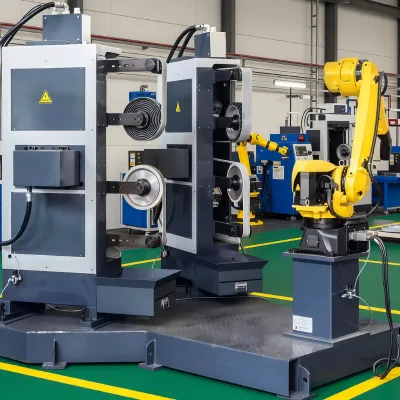

Comprehensive Sourcing Guide
Grinding Robot Sourcing Guide
Selecting the right Grinding Robot requires balancing technical precision with operational flexibility. Buyers must evaluate whether the system supports point-to-point or continuous path control, as this dictates suitability for complex surface finishing tasks. The choice between electric and pneumatic drive modes further influences maintenance cycles and force consistency during abrasive operations.
Procurement teams should also assess payload capacity and reach dimensions to ensure compatibility with existing factory layouts. A typical articulated arm with a six-axis configuration offers the dexterity needed for intricate geometries, while verifying mounting options—such as ground, bracket, or ceiling installations—ensures seamless integration into current production lines without requiring extensive structural modifications.
Product Scope and Observed Listing Signals
Market listings for grinding robots reveal a wide price spectrum, ranging from approximately $469 to over $163,800, reflecting significant variations in automation levels and brand positioning. The minimum order quantity is typically low, often starting at one unit, which facilitates pilot testing for small to medium enterprises. This accessibility allows buyers to deploy single units for specialized tasks before scaling up to full automated cells.
Observed product attributes indicate a strong emphasis on customization, with many suppliers offering tailored solutions for specific industrial applications. Models such as the YS-H-4AF and SZGH-T1500-C-6 demonstrate diverse capabilities, from aluminum alloy die-casting sanding to general-purpose polishing. Buyers should note that while some listings highlight variable speed features, others focus on full-automatic operation, necessitating careful review of technical datasheets to match machine capabilities with production volume requirements.
Technical Specifications to Verify
Critical technical parameters include the robot’s reaching distance, payload capacity, and repeatability, which directly impact part quality and cycle time. For instance, a reaching distance of 1500mm or 2 meters must align with the size of the workpieces being processed. Payload capacities observed range from 10kg to 50kg, so buyers must ensure the end-effector and tooling weight do not exceed the robot’s rated limit to prevent premature wear or operational failure.
Repeatability is another vital metric, with high-precision models offering tolerances as tight as 0.05mm. Buyers should verify the control mode, distinguishing between point-to-point control for simple movements and continuous path control for smooth, complex grinding trajectories. Additionally, confirming the drive mode—whether electric for precise torque control or pneumatic for cost-effective simplicity—ensures the selected robot meets the specific force and speed requirements of the grinding application.
Compliance and Safety Documentation
Safety and regulatory compliance are non-negotiable for industrial automation equipment. Buyers must verify that the robot holds relevant certifications, such as CE and ISO marks, which indicate adherence to European safety standards and quality management systems. These certifications are essential for legal operation within many international markets and provide assurance that the machine has undergone rigorous testing for electrical safety and mechanical integrity.
Documentation should also include mechanical test reports and warranty terms, typically ranging from one to twelve months. Buyers should confirm the availability of online support and multilingual interfaces, including English, Vietnamese, Korean, and Russian, to facilitate easier troubleshooting and operator training. Ensuring that the supplier provides comprehensive after-sales service and local support locations, such as in Romania or Turkey, reduces downtime and enhances long-term operational reliability.
Cost Drivers and Commercial Terms
The total cost of ownership extends beyond the initial purchase price, encompassing installation, integration, and ongoing maintenance. Factors such as the robot’s weight, packing method, and standard dimensions influence shipping and handling costs. For example, machines packed in wooden boxes or containers may require specialized logistics, while larger footprints, such as 4100 * 2200 * 2200mm, necessitate careful planning for factory floor space allocation.
Commercial terms should clearly define warranty coverage, spare parts availability, and support response times. Buyers should negotiate for extended warranty options if the application involves high-frequency usage or harsh environments. Additionally, understanding the customization costs is crucial, as tailored end-effectors or software configurations can significantly impact the final invoice. Transparent pricing structures help avoid hidden fees related to training, commissioning, or software licensing.
Supplier Qualification and Quality Control
Evaluating supplier credibility is essential to mitigate procurement risks. Buyers should prioritize manufacturers with established production origins, such as Shenzhen or Nanan, and verify their ability to provide mechanical test reports and certification documents. A supplier’s track record in providing online support and local service centers indicates their commitment to long-term customer satisfaction and operational continuity.
Quality control processes should include pre-shipment inspections and verification of key specifications like payload, reach, and repeatability. Buyers should request detailed technical drawings and control system documentation to ensure compatibility with existing PLCs or SCADA systems. Engaging with suppliers who offer flexible payment terms and clear return policies can further protect against defects or performance discrepancies upon delivery.
Long-Term Procurement Checks
Sustainability and scalability are key considerations for future-proofing automation investments. Buyers should assess the robot’s energy efficiency and compatibility with emerging Industry 4.0 technologies, such as IoT connectivity for predictive maintenance. Ensuring that the control software supports regular updates and language localization helps maintain operational efficiency as workforce skills evolve and production demands change.
Regular audits of supplier performance and machine uptime data provide valuable insights for future procurement decisions. Buyers should establish clear key performance indicators for grinding quality, cycle time, and maintenance frequency to evaluate the robot’s contribution to overall productivity. By maintaining a robust relationship with qualified suppliers, organizations can secure favorable terms for expansion and ensure a steady supply of compatible spare parts and technical support.
FAQs
What certifications do grinding robots typically have?
Grinding robots commonly hold CE and ISO certifications to ensure compliance with international safety and quality standards. These credentials verify that the equipment meets rigorous manufacturing requirements. Buyers should verify specific certification documents provided by the supplier to confirm regulatory adherence for their local operations and industry applications.
Can grinding robots be customized for specific industries?
Yes, customization is available for grinding robots to suit diverse industrial needs. Manufacturers can adapt these systems for shipbuilding, automotive, aerospace, and metal fabrication sectors. Customization options may include specific control modes, payload adjustments, or mounting types to integrate seamlessly into existing production lines and workflow requirements.
What is the typical voltage requirement for these robots?
The typical voltage requirement for these industrial robots is 380V. This standard electrical specification ensures compatibility with most factory power supplies. Buyers must verify their facility's electrical infrastructure matches this requirement before installation to ensure safe and efficient operation of the automated grinding and polishing equipment.
How is the robot arm payload capacity defined?
Robot arm payload capacity defines the maximum weight the arm can safely handle during operation. Some models support a payload of 10kg, while others may handle up to 50kg. Selecting the correct payload capacity is essential for matching the robot to the specific weight of the workpieces being ground or polished.
What after-sales support is provided for these machines?
After-sales support is provided to ensure long-term operational success. Services typically include online support, warranty coverage for one year, and mechanical test reports. Buyers can also access local service locations in regions like Turkey, Romania, and Mexico for on-site assistance and maintenance needs throughout the machine's lifecycle.
Which control modes are used in grinding robots?
Grinding robots utilize various control modes such as Point to Point Control and Continuous Path Control. Point to Point Control is suitable for precise positioning tasks, while Continuous Path Control allows for smooth, uninterrupted motion during complex grinding operations. The choice depends on the specific application requirements and desired surface finish quality.