Source h-type commercial rabbit cage for Farms, Breeding, and Raising
Compare 30 h-type commercial rabbit cage options featuring hot-dipped galvanized steel construction, 3-4 tiers, and capacities from 9 to 24 rabbits. These durable units are designed for commercial farms, breeding operations, and general animal raising with customizable accessories.
Key considerations
Products List






Comprehensive Sourcing Guide
Strategic Sourcing Guide for H-Type Commercial Rabbit Cages
Understanding the Technical Architecture of Commercial Rabbit Housing
The procurement of H-type commercial rabbit cages requires a precise understanding of the structural and material specifications that define durability and operational efficiency in a farming environment. Based on the available product data, the core construction of these units relies heavily on hot-dipped galvanized steel wire, a material choice critical for resisting corrosion in humid or waste-heavy agricultural settings. The wire diameter is a primary technical variable, with observed specifications ranging between 2.0mm and 4.0mm, and specific product models citing a range of 2.8mm to 3.5mm. Buyers must verify the exact wire gauge for their specific order, as this directly influences the cage's load-bearing capacity and resistance to deformation under the weight of multiple rabbits.
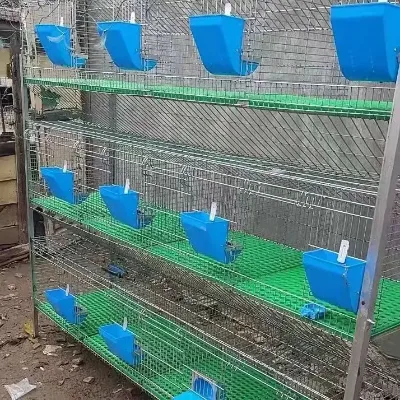
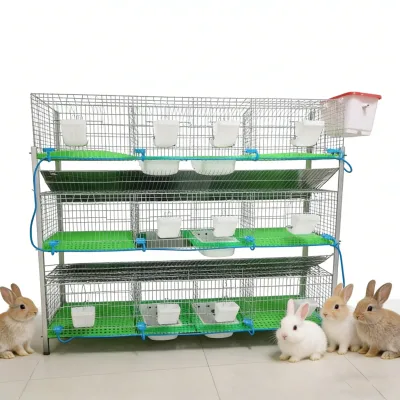
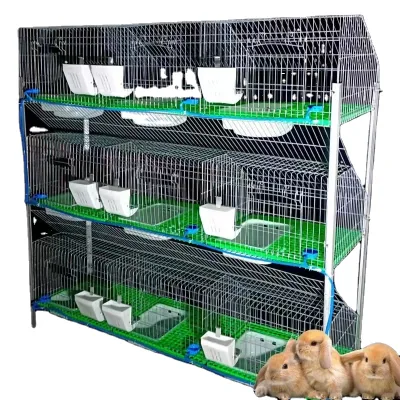
The structural framework is typically constructed from flat steel, providing a rigid skeleton that supports the wire mesh panels. The cages are designed with a multi-tier configuration, commonly available in three or four layers, which maximizes vertical space utilization within a farm facility. This tiered design is essential for commercial operations aiming to increase stocking density without expanding the physical footprint of the barn. The standard dimensions for these units often align with a size of approximately 2 meters in length, 0.6 meters in width, and 1.8 meters in height, though specific models may vary. The capacity of a single set is variable, ranging from housing 2 to 24 rabbits depending on the specific configuration and door count, with common configurations including 9-door, 12-door, and 24-door models.
The surface treatment process is a non-negotiable aspect of the product's longevity. The supplied facts confirm that the primary material undergoes a hot-dipped galvanization process. This treatment creates a protective zinc coating that significantly extends the service life of the cage, with observed data suggesting a lifespan of more than ten years when maintained correctly. The combination of hot-dipped galvanized wire and a flat steel frame ensures that the unit remains "New" in condition upon delivery and retains its structural integrity over extended periods of use.
Operational Specifications and Functional Design
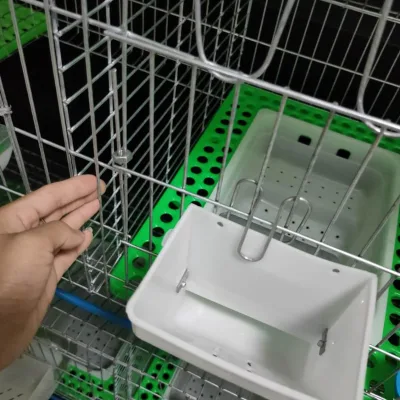
The functional design of the H-type commercial rabbit cage is tailored to support both feeding and breeding activities, making it a versatile asset for farms engaged in different stages of rabbit production. The product type is explicitly categorized as suitable for commercial breeding, with specific models designated as "Mother and Child Rabbit Cages" to accommodate the unique needs of does and their kits. The internal layout often includes specialized accessories to facilitate daily management tasks. These accessories typically consist of nipple waterers, PVC pipes for water distribution, plastic dung plates for waste collection, and various clasp and plug mechanisms for secure assembly.
The capacity of the system is a critical operational metric. While individual cages may house a single rabbit, the modular nature of the H-type design allows for sets that accommodate larger groups. The observed capacity ranges from 9 to 24 rabbits per set, with some configurations supporting up to 24 rabbits in a single unit. This scalability allows buyers to adjust their procurement based on the specific size of their herd. The cage type is further classified as a "Breed" cage, indicating that the design incorporates features necessary for successful reproduction, such as adequate space for nesting and separation of breeding stock.
Installation and maintenance are streamlined through the design of the cage frame and the inclusion of specific hardware. The product features are described as "Durable and Easy to Install," suggesting a design that minimizes the time and labor required for assembly. The inclusion of attached components such as PVC pipes, pliers, plugs, and waterer boxes indicates a comprehensive approach to functionality, reducing the need for buyers to source additional components separately. The weight of a single cage unit is approximately 70kg, a factor that must be considered when planning logistics and handling within the farm facility.
Cost Drivers and Pricing Dynamics in the Global Market
The pricing of H-type commercial rabbit cages is influenced by several dynamic factors, including material costs, manufacturing complexity, and logistical requirements. The observed price range for these products in the market spans from 1 USD to 270 USD, a wide variance that reflects differences in specifications, tier configurations, and order volumes. Buyers should understand that the lower end of this range likely corresponds to basic configurations or smaller capacity units, while the higher end may reflect multi-tier systems with advanced features or larger capacities.
The Minimum Order Quantity (MOQ) is a significant cost driver in the procurement process. The data indicates an MOQ range of 5 to 250 units, with specific product listings showing an MOQ of 10 sets. Adhering to these thresholds is essential for securing the quoted price; orders below the MOQ may incur higher per-unit costs or may not be accepted by the supplier. The tiered pricing structure, with three distinct tiers available, suggests that buyers can achieve better unit economics by increasing their order volume. This tiered approach allows for cost optimization as the scale of the operation grows.
Packaging and shipping also contribute to the overall cost structure. The standard packing method involves wooden cases or wooden boxes, which provide robust protection during transit but add to the weight and volume of the shipment. Some suppliers offer custom packing options "as your request," which may affect the final price. The volume of the shipment is another consideration, with one standard configuration noted to occupy 2 cubic meters per 10 sets. Buyers must factor in these logistical dimensions when calculating the total landed cost, including freight and insurance.
Compliance, Certification, and Quality Verification
When sourcing H-type commercial rabbit cages, verifying compliance with relevant standards and certifications is paramount to ensuring product safety and longevity. While specific certification bodies are not explicitly named in the provided data, the emphasis on "Hot Dipped Galvanized" material and a "Life Time" of over ten years implies adherence to industrial standards for agricultural equipment. Buyers should request documentation confirming the galvanization process and the quality of the steel used. The material specification of "Hot DIP Galvanized Steel" and "Wire Mesh" suggests that the products meet general industry expectations for corrosion resistance.
The origin of the products is primarily identified as China, with specific production locations noted in Hebei. This geographical information is useful for supply chain planning but does not inherently dictate quality. Buyers should verify that the manufacturing facilities adhere to consistent quality control protocols. The product standard is referenced as "9 12 24 door" and "200x180x135cm size," which serves as a baseline for dimensional compliance. However, buyers must confirm that the delivered units match these specifications exactly, as variations in door count or dimensions can impact the operational fit within a farm.
Quality verification should also include an assessment of the after-sales support provided by the supplier. The data indicates that "Online Support" is available, which is a critical component for resolving any issues that may arise post-delivery. Additionally, a warranty period of 1.5 years is observed for certain models, providing a safety net for buyers against manufacturing defects. Buyers should ensure that the warranty terms are clearly defined in the purchase agreement, covering aspects such as structural integrity and coating durability.
Typical Applications and Industry Suitability
The H-type commercial rabbit cage is designed for a broad range of applications within the agricultural sector. The primary usage is for rabbit farming, specifically for breeding and feeding operations. However, the product features also indicate applicability for other livestock, including chickens, birds, dogs, and pigs. This versatility makes the cage a valuable asset for farms that manage multiple species or those that may expand their operations in the future. The "Applicable Industri" is listed as "Farms," confirming its suitability for commercial agricultural environments.
The specific design features, such as the "Mother and Child" configuration, make these cages particularly suitable for breeding programs where the separation of does and kits is necessary. The inclusion of dung plates and nipple waterers supports hygienic management, which is crucial for preventing disease and maintaining animal health. The durable nature of the cages, with a lifespan exceeding ten years, makes them a long-term investment for farms looking to establish a permanent housing infrastructure.
The capacity of the cages allows for scalability, making them ideal for farms of varying sizes. Whether a farm is starting with a small herd of 2 rabbits or expanding to a commercial operation housing 24 rabbits per set, the modular design of the H-type cage accommodates these needs. The "Commercial" and "Durable" features highlight the product's suitability for high-throughput environments where efficiency and reliability are paramount.
Supplier Evaluation and Procurement Best Practices
Evaluating suppliers for H-type commercial rabbit cages requires a rigorous approach to ensure that the buyer receives high-quality products that meet their specific operational needs. The first step is to verify the supplier's ability to meet the Minimum Order Quantity (MOQ) requirements, which range from 5 to 250 units. Buyers should also assess the supplier's capacity to deliver within the required lead time, although specific lead times are not provided in the data. It is essential to confirm the supplier's location, with Hebei, China, being a noted origin point, and to understand the implications of shipping from this region.
Quality control should be a central component of the supplier evaluation process. Buyers should request samples or detailed product specifications to verify the wire diameter, galvanization quality, and overall construction. The observation of a "Life Time" of more than ten years should be backed by evidence or guarantees from the supplier. Additionally, the availability of "Online Support" and a "1.5 Years" warranty should be confirmed as part of the service agreement.
Buyers should also consider the customization options available. The product data indicates that "Customization" is available, allowing for tailored solutions that fit specific farm layouts or operational requirements. This flexibility can be a significant advantage for buyers with unique needs. The packing options, including wooden cases or custom requests, should be discussed to ensure that the products arrive in optimal condition.
Long-Term Procurement Considerations and Lifecycle Management
Procuring H-type commercial rabbit cages is a long-term investment that requires careful consideration of the total cost of ownership. The durability of the hot-dipped galvanized steel and the robust construction of the flat steel frame contribute to a long service life, reducing the need for frequent replacements. However, buyers should plan for ongoing maintenance and potential repairs. The inclusion of accessories such as PVC pipes and waterer boxes suggests that these components may require periodic replacement or adjustment.
The scalability of the H-type design allows for future expansion without the need for a complete overhaul of the housing system. As the farm grows, additional sets can be added to the existing infrastructure, leveraging the modular nature of the cages. The "Three or Four Tier" configuration provides flexibility in space utilization, allowing buyers to optimize their facility layout as their needs evolve.
Finally, buyers should consider the environmental impact of the product. The use of galvanized steel and the long lifespan of the cages contribute to sustainability by reducing waste and the frequency of manufacturing new units. The "Durable and Easy to Install" features also reduce the energy and labor required for setup and maintenance, further enhancing the environmental profile of the product. By focusing on these long-term factors, buyers can ensure that their investment in H-type commercial rabbit cages delivers value over many years of operation.
FAQs
What materials are used to construct the cage?
The cage is constructed from hot-dipped galvanized steel wire and a flat steel frame. This combination ensures durability and resistance to corrosion in farming environments.
How many rabbits can one set of cages hold?
A single set can hold between 2 and 24 rabbits depending on the configuration. Common models include 9-door, 12-door, and 24-door units designed for commercial capacity.
What is the minimum order quantity for these cages?
The minimum order quantity is typically 10 sets for this product. Some listings may vary, but 10 sets is the standard threshold for securing a quote.
Can the cages be customized for specific needs?
Yes, customization is available for buyers with unique requirements. You can request specific packing options like wooden boxes or tailor dimensions to fit your facility.
How long is the expected lifespan of the cage?
The expected lifespan is more than 10 years when maintained correctly. The hot-dipped galvanization process protects the steel from rust and wear over time.
What accessories are included with the cage unit?
Included accessories typically consist of nipple waterers, PVC pipes, plastic dung plates, and clasp mechanisms. These components facilitate feeding, waste collection, and secure assembly.