Find Handheld Data Terminal Scanner Battery for Logistics, Retail, and Field Service
Explore 30 Handheld Data Terminal Scanner Battery options to compare Android OS, 4G connectivity, and scan speeds. This guide helps buyers evaluate rugged PDA specifications and battery capacities for efficient inventory management and data collection workflows; compare the available evidence and request quotations based on your requirements.
Key considerations
Products List


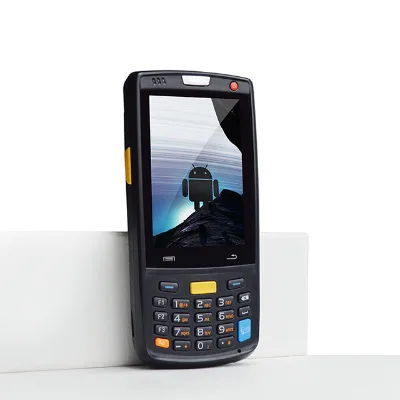


Rugged Handheld Barcode Scanner Android Scanning Terminal Barcode Reader
$210.00 - $230.00
MOQ: 10 Pieces

Rugged Handheld PDA Barcode Scanner Android Scanning Terminal 2D Barcode Reader
$198.00 - $218.00
MOQ: 10 Pieces


Handheld Terminal Featuring Durable NFC Fingerprint Scanner for Security
$120.00 - $150.00
MOQ: 2 Pieces




Comprehensive Sourcing Guide
Handheld Data Terminal Scanner Battery Sourcing Guide
Procuring handheld data terminals requires a rigorous focus on the integration of scanning hardware, computing power, and battery longevity. Buyers must treat these devices as complex industrial tools rather than simple consumer electronics. The core challenge lies in balancing the computational requirements of Android-based operating systems with the power demands of high-speed barcode scanning and RFID capabilities. This guide outlines the critical verification steps necessary to ensure that the selected hardware meets operational demands in logistics, retail, and field service environments.
The observed market data indicates a wide variance in device configurations, from basic handheld computers to ruggedized PDAs with thermal printing capabilities. Suppliers often list diverse models, such as the T80s or u9100, which feature varying battery capacities ranging from 4000mAh to 4800mAh. Understanding these baseline specifications is the first step in narrowing down potential candidates. Buyers should prioritize suppliers who provide detailed technical sheets that clearly distinguish between standard and optional battery configurations, ensuring that the procurement team is not misled by generic product descriptions that obscure critical performance differences.
Product Scope and Observed Listing Signals
The product scope for handheld data terminals encompasses a broad range of form factors, including handheld computers, bar-code scanners, and personal communication assistants. Listings frequently highlight specific keywords such as "Android Honeywell Scanner" or "Rugged IP68 Handheld Terminals," which signal the intended durability and operating system compatibility. Buyers must interpret these signals carefully, as the presence of a specific brand name in the keywords does not necessarily imply that the device contains that specific brand's internal components. Instead, these terms often indicate the type of scanner engine or the ruggedization standard the device is designed to emulate.
Observed listing signals also reveal significant differences in physical dimensions and weight, which directly impact user comfort during extended shifts. For instance, some models are listed with dimensions of 172mm x 80mm x 27mm and a weight of 300g, while others weigh up to 500g. These variations are not trivial; they affect the ergonomics of the device for warehouse workers or field technicians. Procurement teams should request physical samples or detailed ergonomic assessments to verify that the device size and weight align with the specific tasks required, ensuring that the hardware does not cause fatigue or reduce productivity over long periods of use.
Technical Specifications to Verify
Verifying technical specifications begins with the central processing unit and memory configuration. Many listed devices feature an Arm 64-bit Quad-Core processor running at 1.3GHz, paired with 2GB of RAM and 16GB of ROM. Buyers must confirm that this processing power is sufficient for the specific software applications intended for deployment, such as inventory management systems or customer relationship management tools. Insufficient memory or processing speed can lead to application crashes or slow response times, which are unacceptable in high-throughput environments. It is essential to conduct stress tests with the actual software stack before finalizing the purchase.
Battery specifications are another critical area for verification. Listings indicate battery capacities of 3.7V 4000mAh, 4200mAh, and 4800mAh, with some options for 6000mAh. The buyer must understand the relationship between capacity and actual runtime, as the presence of a high-capacity battery does not guarantee all-day operation if the device has high power consumption features like a rear 8.0-megapixel camera or active RFID scanning. Additionally, the type of battery, such as lithium-ion or lithium-polymer, affects charging speed and safety. Buyers should request battery cycle life data and charging time specifications to ensure the device meets operational uptime requirements.
Compliance and Safety Documentation
Compliance documentation is essential for ensuring that the handheld data terminal meets international safety and electromagnetic compatibility standards. While specific certification numbers are not always listed in product descriptions, buyers must request copies of CE, FCC, or RoHS compliance certificates from the supplier. These documents verify that the device has been tested for electrical safety, radio frequency interference, and hazardous material restrictions. Operating non-compliant devices can result in legal liabilities and operational disruptions, particularly when crossing international borders or using the devices in regulated industries.
Safety documentation also extends to the battery components, which are subject to strict transport and handling regulations. Buyers should ensure that the supplier provides Material Safety Data Sheets (MSDS) for the lithium-ion or lithium-polymer batteries used in the devices. This documentation is crucial for logistics planning, as it dictates how the devices must be packed, labeled, and transported. Furthermore, verifying that the device meets IP68 ruggedization standards, as indicated in some listings, requires evidence of independent testing. Buyers should not rely solely on supplier claims but should request test reports that confirm the device's resistance to dust and water immersion.
Cost Drivers and Commercial Terms
The cost of handheld data terminals is influenced by several key drivers, including the complexity of the hardware, the brand of the internal components, and the level of customization required. Observed price ranges in the market span from $6.3 to $10,000, reflecting the vast difference between basic scanner modules and fully integrated, ruggedized PDAs with thermal printers. Buyers must analyze the total cost of ownership, which includes not only the initial purchase price but also the cost of accessories, software licenses, and potential replacement parts. Understanding these cost drivers helps in negotiating better terms and avoiding unexpected expenses during the deployment phase.
Commercial terms, such as Minimum Order Quantity (MOQ) and payment structures, also play a significant role in the procurement process. Observed MOQ ranges from 1 to 1000 units, allowing for flexibility in both small-scale pilots and large-scale deployments. Buyers should negotiate payment terms that align with their cash flow, such as milestone payments or letters of credit, to mitigate financial risk. Additionally, clarifying the warranty terms and return policies is crucial, as these devices are often used in harsh environments where failures are more likely. A clear understanding of the commercial terms ensures that the procurement process is transparent and that both parties have aligned expectations regarding delivery and support.
Supplier Qualification and Quality Control
Qualifying a supplier for handheld data terminals involves assessing their manufacturing capabilities, quality control processes, and after-sales support infrastructure. Buyers should request a detailed overview of the supplier's production lines, including the number of assembly stations, testing equipment, and quality assurance personnel. Suppliers who invest in automated testing and rigorous quality control are more likely to deliver consistent products. It is also important to verify the supplier's experience in the specific industry, as they may have insights into common failure modes and best practices for device deployment in that sector.
Quality control checks should include both incoming material inspection and final product testing. Buyers can request samples for independent testing to verify that the devices meet the specified technical requirements, such as scan speed, battery life, and durability. Additionally, assessing the supplier's ability to provide technical support and spare parts is crucial for minimizing downtime. A supplier with a robust support network can quickly resolve issues, ensuring that the devices remain operational. Buyers should also consider the supplier's location, as proximity can reduce shipping times and costs, although this must be balanced against the supplier's quality and reliability.
Long-Term Procurement Checks
Long-term procurement checks focus on the sustainability of the supply chain and the longevity of the product support. Buyers should evaluate the supplier's financial stability and their ability to maintain production levels over time. A supplier with a strong financial position is less likely to face disruptions that could affect the supply of devices. Additionally, assessing the supplier's commitment to product updates and software support is important, as operating systems and security patches evolve over time. Ensuring that the supplier will provide regular updates helps in maintaining the security and functionality of the devices throughout their lifecycle.
Another critical long-term check is the availability of spare parts and replacement components. Buyers should establish a stock of critical spare parts, such as batteries, screens, and charging docks, to minimize downtime in case of failures. Negotiating a long-term supply agreement for these components can ensure consistent availability and potentially lower costs. Furthermore, monitoring the supplier's performance through regular audits and feedback loops helps in maintaining high quality standards and addressing any issues promptly. By conducting these long-term checks, buyers can build a resilient supply chain that supports their operational needs for years to come.
FAQs
What battery capacity options are available for these handheld data terminals?
The handheld data terminals offer multiple battery capacity options to suit different operational needs. Standard models typically feature a 4200mAh Li-ion battery or a 3.7V 4800mAh unit. Some variants provide a 3.7V 4000mAh lithium polymer battery, with an optional 6000 mAh battery upgrade available for extended usage scenarios in the field.
Can these handheld data terminal scanners support network scanning and connectivity?
Yes, these devices fully support network scanning and robust connectivity options. They are equipped with Wi-Fi capabilities and support 4G LTE, 3G, GPRS, and GSM networks. This ensures reliable data transmission and real-time synchronization for barcode scanning and RFID reading tasks in various industrial and retail environments.
Which operating system runs on the Android handheld computer terminals?
The handheld computer terminals run on the Android operating system. Specific models are documented with Android 6.0, providing a stable platform for custom applications. This OS supports essential business functions, including barcode scanning, RFID reading, and personal communication assistant features, ensuring compatibility with a wide range of enterprise software solutions.
How fast can the handheld barcode scanner process scans per second?
The handheld barcode scanner is designed for high-speed performance, capable of processing up to 200 scans per second. This rapid scan speed ensures efficient data capture during high-volume inventory checks or checkout processes. The device integrates a 1D/2D barcode scanner for versatile reading capabilities across different label types.
What are the physical dimensions and weight of the T80s model?
The T80s model has specific physical dimensions of 172mm in length, 80mm in width, and 27mm in depth. The weight varies by specific variant, with some models weighing approximately 300g or 400g, while others are listed at 255g. These compact dimensions make the device portable and easy to handle for extended periods.
Does the handheld PDA include RFID and NFC reading capabilities?
Yes, the handheld PDA includes comprehensive RFID and NFC reading capabilities. It supports UHF, LF, and NFC technologies, allowing for versatile asset tracking and identification tasks. This feature set enhances the device's utility in logistics and inventory management, enabling quick and accurate data collection without manual entry.