Source HDPE Pipe Clamp Saddle for Water, Gas, and Irrigation
Find 30 HDPE Pipe Clamp Saddle options from verified Chinese manufacturers. Compare specifications including PN10/PN16 pressure ratings, injection molding techniques, and connection types to select the right fittings for your project.
Key considerations
Products List


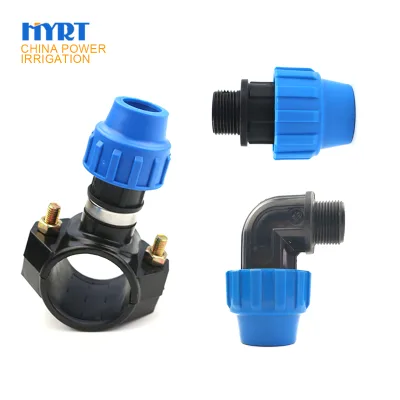


Durable HDPE Saddle Fittings ISO17885 for Reliable Irrigation Solutions
$0.04 - $0.05
MOQ: 1000 Pieces

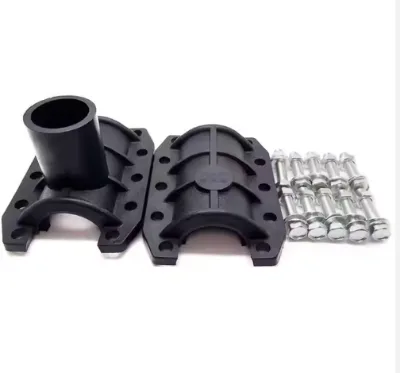


Comprehensive Sourcing Guide
Strategic Sourcing Guide for HDPE Pipe Clamp Saddles
Procuring high-performance HDPE pipe clamp saddles requires a disciplined approach that balances technical compatibility with supply chain reliability. These fittings are critical for tapping into pressurized pipelines without interrupting flow, making their material integrity and installation precision paramount. The global market for these components is diverse, with manufacturers primarily based in China, offering a wide spectrum of customization options, pressure ratings, and connection methods. Buyers must navigate a complex landscape of specifications, ranging from standard pressure classes like PN10 and PN16 to specific dimensional standards such as SDR11. This guide outlines the essential factors for evaluating suppliers and selecting the right HDPE Pipe Clamp Saddle for industrial, municipal, or commercial applications.
Technical Specifications and Material Compatibility
The foundation of a successful procurement strategy lies in understanding the precise technical specifications of the product. HDPE pipe clamp saddles are not one-size-fits-all components; they are engineered to match specific pipe dimensions and pressure requirements. The core material for these fittings is typically high-density polyethylene, ensuring chemical resistance and durability against environmental stress. However, some variants in the market may utilize iron or other metals for the clamping mechanism, necessitating a clear distinction between the saddle body and the fastening hardware.
Dimensional accuracy is a primary concern. The available product data indicates a wide range of standard sizes, including models specified as 20-315mm, 40-110mm, and 20-110mm. Buyers must verify that the selected saddle matches the outer diameter of the host pipe exactly. Furthermore, the pressure rating is a critical safety parameter. Observed specifications frequently cite PN10 and PN16 as standard nominal pressure classes, with some products adhering to SDR11 standards. These ratings dictate the maximum operating pressure the fitting can withstand. When sourcing, it is essential to confirm whether the product is designed for equal or reducing connections, as the shape of the saddle (Equal/Reducing) directly impacts the flow dynamics and structural load distribution.
The connection method is another vital technical attribute. While many HDPE saddles utilize electro-fusion or welding for a seamless, leak-proof bond, some designs may feature press connections or mechanical clamping. The "Universal" structure type observed in certain listings suggests adaptability to various pipe configurations, but the "Vertical" structure found in other listings indicates specialized mounting orientations. Buyers should explicitly request technical drawings that define the head code (often Round) and the specific injection molding techniques used, as these influence the wall thickness and long-term creep resistance of the fitting.
Compliance, Certification, and Standard Adherence
In the B2B procurement of pressure-rated components, compliance with international and local standards is non-negotiable. The supply chain for HDPE fittings is heavily influenced by Chinese manufacturing hubs, where products often reference standards such as ISO 2531, EN545, and EN598. These standards govern the performance of ductile iron and plastic pipes and fittings, ensuring that the components meet rigorous safety and quality benchmarks. However, buyers must exercise caution, as the presence of a standard reference does not automatically guarantee that every listed product is fully certified for that specific standard.
Certification verification is a critical step in the due diligence process. The most common quality management certification observed in this sector is ISO 9001:2016. This certification indicates that the manufacturer has established a quality management system capable of consistently producing products that meet customer and regulatory requirements. While some suppliers may claim adherence to ISO 9001 generally, the specific 2016 version represents a more current and robust framework. Buyers should request valid, up-to-date certificates from the supplier and verify their authenticity through the issuing body.
It is also important to distinguish between "Standard" and "Nonstandard" product classifications. While many fittings are manufactured to standard dimensions (e.g., 401/2-631), custom orders often fall into the "Nonstandard" category. For nonstandard items, the supplier's ability to maintain tolerances without a pre-existing mold is a key risk factor. Additionally, color coding is often used for identification, with common options including Blue, Black, Green, and Dark Blue. While color may not affect performance, it is essential for system identification and maintenance. Buyers should confirm that the color specified matches the required system standards, particularly in environments where color-coding indicates pressure class or fluid type.
Cost Drivers and Pricing Dynamics
The pricing of HDPE pipe clamp saddles is influenced by a complex interplay of factors, including material costs, manufacturing complexity, and order volume. The observed price range in the market spans from $0.02 to $28 per unit, reflecting the vast difference between small, standard fittings and large, custom-engineered solutions. The "Factory Price" attribute often cited by suppliers suggests a direct-from-manufacturer model, which can offer cost advantages but requires careful verification of the supplier's actual production capacity.
Material costs are a primary driver. The price fluctuates with the global market price of polyethylene and any metal components used in the clamping mechanism. Products requiring injection molding, a process noted in the technical attributes, incur costs related to mold design and maintenance. Customization is a significant cost variable; while "Available" customization allows for tailored solutions, it often increases the unit price and extends lead times. The MOQ (Minimum Order Quantity) ranges from 1 to 10,000 units, meaning that small buyers may face higher per-unit costs due to setup fees, while large-volume purchasers can leverage economies of scale.
Packaging also impacts the final landed cost. Options such as "Cartons," "PE Bags+Cartons," "Carton Box+Plastic Bag," and "Wood Pallet" vary in cost and suitability for different shipping methods. Heavy-duty packaging like wood pallets is essential for large orders to prevent damage during transit but adds to the overall weight and shipping expense. Buyers should analyze the total cost of ownership, including packaging, shipping, and potential tariffs, rather than focusing solely on the unit price.
Typical Applications and Installation Requirements
HDPE pipe clamp saddles are versatile components used across various industries, including water supply, irrigation, gas distribution, and industrial fluid transport. Their primary function is to create a secure tap point on an existing pipeline, allowing for the addition of branches or connections without cutting the main line. The "Universal" structure and "Equal/Reducing" shapes make them suitable for a wide array of pipe diameters and configurations.
Installation requirements vary based on the connection type. For electro-fusion saddles, the process involves cleaning the pipe surface, applying the fitting, and using a specialized fusion controller to melt the HDPE layers together. This method creates a monolithic joint that is often stronger than the pipe itself. In contrast, press connection or mechanical clamp saddles require precise torque application and may need specific tools for installation. The "Flexible or Rigid" attribute of the product is crucial here; rigid saddles provide a fixed connection, while flexible variants may accommodate slight pipe movements or thermal expansion.
The environment in which the saddle is installed also dictates the selection. Outdoor applications require UV-resistant materials and colors, such as the observed Black or Blue options, to prevent degradation from sunlight. Underground installations may prioritize corrosion resistance and pressure ratings, often favoring PN16 over PN10 for higher safety margins. The "Vortex-saddle" model mentioned in the specifications suggests specialized applications where flow dynamics or specific vortex generation is required, indicating that not all saddles are intended for general-purpose tapping.
Supplier Evaluation and Quality Assurance
Selecting the right supplier is as important as selecting the right product. Given that the majority of these products originate from China (Mainland), buyers must conduct thorough supplier evaluations. Key criteria include the supplier's production capacity, quality control processes, and responsiveness to customization requests. The availability of samples is a critical indicator of a supplier's confidence in their product quality. Suppliers who "Provide Samples" allow buyers to physically inspect the fit, finish, and material quality before committing to a large order.
Quality control should be a continuous process, not just a final inspection. Buyers should inquire about the supplier's in-process testing protocols, particularly for injection-molded parts where dimensional consistency is vital. The "Injection Molding" technique requires precise temperature and pressure control to avoid defects like voids or warping. Additionally, the "Product Name" and "Brand Name" (e.g., Cr) can be indicators of the supplier's market position, though buyers should remain skeptical of generic branding without supporting documentation.
When evaluating suppliers, it is essential to verify their ability to meet specific standards. While ISO 9001:2016 is a common certification, buyers should also check for industry-specific certifications relevant to their application, such as those for potable water or gas. The "Standard" vs. "Nonstandard" distinction is also a red flag for quality consistency; nonstandard products may have higher defect rates if the supplier lacks the necessary engineering expertise.
Long-Term Procurement and Risk Management
Long-term procurement of HDPE pipe clamp saddles requires a strategy that mitigates supply chain risks and ensures product longevity. Lead times can vary significantly based on the complexity of the order and the supplier's current workload. While some suppliers may offer immediate delivery for standard items, custom orders with specific dimensions or colors may require extended lead times. Buyers should establish clear communication channels and agree on realistic delivery schedules to avoid project delays.
Inventory management is another consideration. Given the wide range of sizes (20-315mm) and pressure ratings, maintaining a diverse stock can be costly. A strategic approach involves identifying the most frequently used sizes and negotiating long-term supply agreements for those items. This can stabilize pricing and ensure availability during peak demand periods.
Finally, buyers must consider the lifecycle of the product. HDPE fittings are designed for long service lives, but improper installation or exposure to incompatible chemicals can lead to premature failure. Regular maintenance checks and adherence to installation guidelines are essential. By focusing on technical compatibility, verified certifications, and reliable supplier partnerships, buyers can secure a steady supply of high-quality HDPE pipe clamp saddles that meet the rigorous demands of modern infrastructure projects.
Comparative Overview of Product Attributes
To assist in the decision-making process, the following table summarizes key attributes observed in the market for HDPE pipe clamp saddles. This comparison highlights the variability in specifications that buyers must navigate.
| Attribute Category | Common Observations | Verification Requirement |
|---|---|---|
| Material | Plastic (HDPE), Iron (for clamps) | Confirm material grade and compatibility with fluid. |
| Pressure Rating | PN10, PN16 | Verify against system operating pressure. |
| Size Range | 20-315mm, 40-110mm, 20-110mm | Match exact pipe outer diameter. |
| Connection Type | Electro Fusion, Welding, Press, Female | Ensure compatibility with installation tools. |
| Structure | Universal, Vertical, Equal/Reducing | Confirm orientation and flow requirements. |
| Certification | ISO 9001:2016, ISO 2531, EN545 | Request valid certificates and verify authenticity. |
| Origin | China (Mainland) | Assess logistics and import regulations. |
| Packaging | Cartons, PE Bags, Wood Pallets | Select based on shipping volume and fragility. |
| Customization | Available | Confirm lead time and cost implications. |
This structured approach ensures that buyers can make informed decisions, minimizing risks and maximizing the performance of their piping systems. By adhering to these guidelines, organizations can secure reliable, high-quality HDPE pipe clamp saddles that meet their specific operational needs.
FAQs
What materials are used for HDPE pipe clamp saddles?
HDPE pipe clamp saddles are primarily made from plastic, specifically high-density polyethylene, though some variants may include iron components. The material ensures chemical resistance and durability, with injection molding used to create precise shapes like equal or reducing fittings.
Which pressure ratings are available for these fittings?
Standard nominal pressure ratings for these fittings are PN10 and PN16, with some products adhering to SDR11 standards. These ratings dictate the maximum operating pressure the fitting can withstand, ensuring safety for water supply and industrial fluid transport applications.
Can suppliers provide samples for quality verification?
Yes, many suppliers provide samples to allow buyers to inspect fit, finish, and material quality before committing to large orders. This practice helps verify dimensional accuracy and confirms that the injection molding process meets the required technical specifications.
How are these saddles connected to the pipe?
Connection methods include electro fusion, welding, and press connections depending on the specific design. Electro fusion creates a seamless, leak-proof bond by melting HDPE layers, while press connections may require mechanical clamping or specific torque application tools.
What certifications do manufacturers typically hold?
Manufacturers often hold ISO 9001:2016 certification, indicating a robust quality management system for consistent production. Some products also reference standards like ISO 2531, EN545, or EN598, which govern performance benchmarks for ductile iron and plastic pipe fittings.
What is the typical minimum order quantity for these items?
The minimum order quantity ranges from 1 to 10,000 units, allowing flexibility for small buyers or large-volume purchasers. Smaller orders may incur higher per-unit costs due to setup fees, while larger volumes leverage economies of scale to reduce the unit price.
Where are these products primarily manufactured?
The majority of HDPE pipe clamp saddles originate from China (Mainland), where a diverse manufacturing base offers various customization options. Buyers should verify the specific origin and production capacity of the supplier to ensure reliable delivery and quality control.