Source HDPE Medicine Pill Bottles for Vitamins, Pharmaceuticals, and Supplements
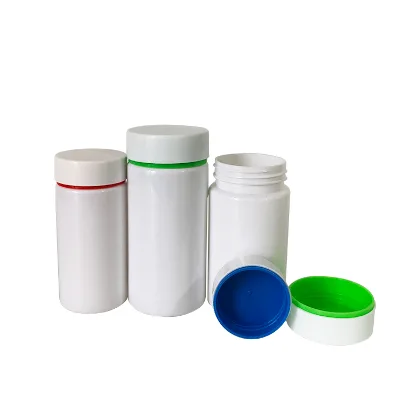
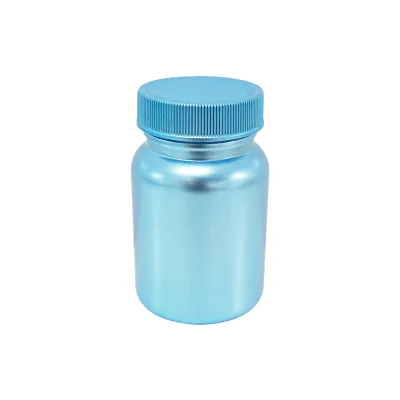
Find 20 HDPE Medicine Pill Bottles from verified suppliers in China. Buyers can compare models like MD-519 and MD-013, noting features such as screw caps, varying weights, and customization options for vitamins, pharmaceuticals, and herbal supplements.
Key considerations
Products List


Comprehensive Sourcing Guide
Strategic Sourcing Guide for HDPE Medicine Pill Bottles
Understanding Material Properties and Technical Specifications
When sourcing HDPE Medicine Pill Bottles, the primary focus must be on the material's inherent chemical resistance and structural integrity. High-Density Polyethylene (HDPE) is the dominant material for this category due to its excellent moisture barrier properties, which are critical for preserving the potency of vitamins, pharmaceuticals, and herbal supplements. The observed product data confirms that HDPE is the standard material, often listed alongside PET in mixed specifications, though pure HDPE remains the preferred choice for rigid, opaque, or translucent containers.
Technical specifications vary significantly across the supply base. Buyers will encounter a wide range of neck finishes and cap types. Common neck sizes observed include 38mm and 45mm, with specific customizations available for specialized closures. The closure type is predominantly a screw cap, designed to provide a secure seal that prevents tampering and maintains product freshness. The shape of these bottles is typically round, optimizing shelf space and handling efficiency.
Weight is a critical variable in logistics and cost calculations. The observed data indicates a substantial variance in product weight, ranging from 12g to 28g for standard units, with specific models weighing 19.5g or 22g. This variation suggests that buyers must specify exact weight requirements to avoid receiving under-engineered or over-engineered packaging that could compromise shipping costs or product protection. Capacity also varies, with standard offerings including 120ml, 150cc, 200cc, 225cc, and 300ml configurations. The "120ml" and "300ml" figures appear as both standard specifications and model identifiers, indicating that capacity is a primary selection criterion.
Compliance, Certification, and Regulatory Verification
In the pharmaceutical and supplement industries, regulatory compliance is non-negotiable. While the supplied data highlights that products are "BPA Free and Food Grade," buyers must not assume that every listed item automatically meets all international regulatory standards without verification. The term "Food Grade" implies suitability for contact with consumables, but specific certifications for pharmaceutical use (such as USP Class VI or FDA compliance for drug contact) must be explicitly confirmed with the supplier.
The data mentions "120ml" and "HDPE" as standards, but these are often descriptive rather than regulatory certifications. Buyers should verify if the manufacturer adheres to specific national or international standards for medical packaging. For instance, the origin is listed as China, specifically Zhejiang, a major manufacturing hub. While this region has a mature supply chain, the regulatory landscape requires buyers to demand documentation proving that the HDPE resin used is free from contaminants and that the manufacturing process maintains a controlled environment to prevent microbial contamination.
Additionally, the "Customized" technology and "Logo Accepted" attributes indicate that branding is a key feature. However, customization must not compromise the bottle's barrier properties. Any inks, labels, or printed logos must be verified for non-toxicity and adhesion, ensuring they do not flake or leach chemicals into the product. The "Sample: Free" and "Sample: 3 PCS" options provided by suppliers are essential for testing compliance before bulk ordering. Buyers should utilize these samples to conduct their own stability testing, ensuring the bottle maintains its integrity under various storage conditions.
Cost Drivers and Economic Factors
The economics of sourcing HDPE medicine bottles are influenced by several distinct factors. The observed price range of $0.03 to $0.58 USD per unit reflects significant variability based on capacity, wall thickness, and customization levels. The lower end of the price spectrum likely corresponds to smaller, lighter bottles (e.g., 12g, 120ml) with minimal customization, while the higher end likely represents larger capacities (e.g., 300ml), heavier gauges (28g), or bottles with complex neck finishes and custom molding.
Minimum Order Quantity (MOQ) is a critical cost driver. The observed MOQ range spans from 5,000 to 50,000 units. This high threshold is typical for injection-molded plastic products, where the cost of tooling and machine setup is amortized over large volumes. Buyers with smaller volume requirements may find it challenging to source directly without incurring significant per-unit costs or paying for custom tooling fees. The "Customization: Available" attribute suggests that bespoke designs will further increase the MOQ and unit price due to the need for dedicated production runs.
Logistics costs are heavily dependent on the weight and volume of the shipment. Since the bottles are lightweight (12g-28g), they are often shipped in cartons or carton boxes, as noted in the packing specifications. However, the "Cartons" and "Carton Box" terminology implies bulk packaging that may require palletization for efficient shipping. Buyers should calculate the total landed cost, including freight, duties, and insurance, as the low unit price can be misleading if shipping costs are high relative to the product value. Payment terms, typically T/T (Telegraphic Transfer), are standard, but buyers should negotiate terms that align with their cash flow, especially given the high MOQ requirements.
Typical Applications and Usage Scenarios
HDPE Medicine Pill Bottles serve a diverse range of applications within the health and wellness sector. The primary usage categories identified include vitamins, pharmaceuticals, herbal supplements, and general medicine storage. The "Application: Medicine/ Vitamin Bottle" and "Usage: Medicine, Pills, Tablets, Capsules" labels confirm that these containers are designed to protect a wide array of solid oral dosage forms.
The versatility of HDPE makes it suitable for both over-the-counter (OTC) supplements and prescription medications. The "Lightweight" feature noted in the data is particularly beneficial for shipping costs and user convenience, making these bottles ideal for consumer-facing products where portability is a selling point. The "Transparent" color option allows for visual inspection of the contents, which is often preferred for supplements where consumers want to verify the product before use. However, for light-sensitive medications, opaque or colored HDPE variants may be required, though the data specifically highlights transparency as a common attribute.
The "Product Name: Medicine Supplement Bottle" and "Product Category: HDPE Plastic Bottles" indicate a broad market fit. These bottles are not limited to a single niche; they are used by large pharmaceutical companies, small herbal supplement startups, and private label manufacturers. The ability to accept custom logos and the availability of various capacities (from 120ml to 300ml) allow manufacturers to tailor the packaging to specific product lines, from single-dose travel packs to family-sized monthly supplies.
Supplier Evaluation and Sourcing Strategy
Evaluating suppliers for HDPE medicine bottles requires a rigorous approach to ensure reliability and quality. The data indicates that the primary production origin is China, with a specific concentration in Zhejiang. This region is known for its plastic manufacturing capabilities, but buyers must conduct due diligence to distinguish between established manufacturers and trading companies.
Key evaluation criteria should include the supplier's capacity for customization. The "Technology: Customized" and "Customization: Available" attributes suggest that many suppliers offer molding services. Buyers should assess the supplier's mold inventory and their ability to produce custom neck finishes (e.g., 35mm, 46mm) and shapes. The "Sample: Free" and "Sample: 3 PCS" options are valuable indicators of a supplier's willingness to engage and their confidence in their product quality.
Buyers should also verify the supplier's production volume capabilities against their own demand. Given the high MOQs (5,000-50,000), a supplier must have the capacity to handle large orders without compromising lead times. The "Payment Method: T/T" is standard, but buyers should ensure that the payment terms are secure and that the supplier has a history of fulfilling orders on time. The "prod_packing: Cartons" and "Carton Box" details suggest that the supplier handles packaging, but buyers should confirm the quality of the outer packaging to prevent damage during transit.
Quality Control and Inspection Protocols
Quality control (QC) is paramount when sourcing packaging for medical and supplement products. The "BPA Free and Food Grade" claim is a baseline requirement, but it must be verified through third-party testing. Buyers should request Certificates of Analysis (CoA) for each batch to confirm that the HDPE resin meets the specified purity standards.
Inspection protocols should cover dimensional accuracy, particularly for neck finishes and cap compatibility. A mismatch in the neck size (e.g., 38mm vs. 45mm) can lead to leakage or seal failure. The observed weight variations (12g to 28g) highlight the need for strict weight control during production to ensure consistency. Buyers should implement a sampling plan that checks for visual defects, such as flow lines, sink marks, or discoloration, which can indicate processing issues.
The "prod_standard" values like "120ml" and "300ml" serve as reference points for capacity verification. Buyers should test the actual fill volume of the bottles to ensure they meet the labeled capacity. Additionally, the "Closure Type: Screw Cap" must be tested for torque resistance and seal integrity. The "Customized" nature of the technology means that any unique features, such as child-resistant caps or tamper-evident seals, must be rigorously tested to ensure they function as intended.
Long-Term Procurement and Sustainability Considerations
Sourcing HDPE medicine bottles is a long-term commitment that requires strategic planning. The high MOQs and customization options suggest that buyers should aim for stable, long-term relationships with suppliers to secure consistent pricing and production slots. The "Customized" technology implies that once a mold is created, it can be reused for future orders, reducing the per-unit cost over time.
Sustainability is an increasingly important factor in procurement. HDPE is a recyclable material, and the "BPA Free" attribute aligns with growing consumer demand for safer packaging. Buyers should inquire about the supplier's use of post-consumer recycled (PCR) content, as this can enhance the environmental profile of the product. The "Lightweight" feature also contributes to sustainability by reducing the carbon footprint associated with transportation.
Finally, buyers should consider the scalability of their supply chain. As product lines expand, the ability to increase order volumes from 5,000 to 50,000 units or more will be crucial. Maintaining open communication with suppliers regarding production schedules and potential raw material fluctuations will help mitigate risks. The "Payment Method: T/T" and "Location: Zhejiang China" details suggest a well-established trade route, but buyers should monitor geopolitical and logistical factors that could impact lead times and costs in the future. By focusing on these long-term considerations, buyers can build a resilient and efficient supply chain for their HDPE medicine pill bottle needs.
FAQs
What materials are used for HDPE Medicine Pill Bottles?
HDPE is the primary material used, often listed alongside PET in mixed specifications. Pure HDPE remains the preferred choice for rigid, opaque, or translucent containers due to its excellent moisture barrier properties.
Which closure types are standard for these medicine bottles?
The closure type is predominantly a screw cap designed to provide a secure seal. This design prevents tampering and maintains product freshness for vitamins, pharmaceuticals, and herbal supplements.
How does the weight of the bottles vary across models?
Product weight varies substantially, ranging from 12g to 28g for standard units. Specific models weigh 19.5g or 22g, so buyers must specify exact weight requirements to avoid shipping cost issues.
Can buyers customize the logo and design of the bottles?
Customization is available, and logos are accepted on the product surface. However, any inks or printed logos must be verified for non-toxicity to ensure they do not flake or leach chemicals.
What is the typical minimum order quantity for these bottles?
The minimum order quantity spans from 5,000 to 50,000 units. This high threshold is typical for injection-molded plastic products where tooling costs are amortized over large volumes.
Which capacities are commonly available for medicine pill bottles?
Standard offerings include 120ml, 150cc, 200cc, 225cc, and 300ml configurations. Capacity is a primary selection criterion, with figures appearing as both standard specifications and model identifiers.
Are these bottles BPA free and suitable for food contact?
Yes, the products are claimed to be BPA free and food grade. Buyers should verify this through third-party testing and request Certificates of Analysis for each batch to confirm purity standards.