Source Heat Resistant PPR Fitting for water supply, plumbing, and heating
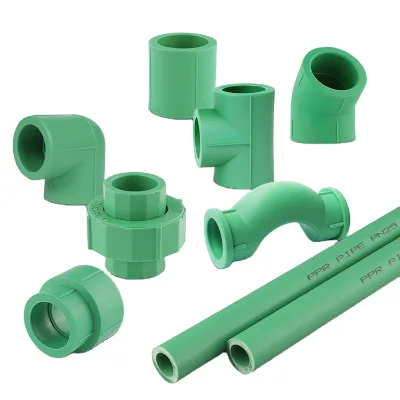
Compare 30 listings for Heat Resistant PPR Fitting designed for hot and cold water systems. Buyers can evaluate specifications like wall thickness, connection methods, and material grades from verified Chinese manufacturers offering customization and OEM services.
Key considerations
Products List




Comprehensive Sourcing Guide
Heat Resistant PPR Fitting Sourcing Guide
Product Scope and Observed Listing Signals
The market for heat resistant PPR fittings is characterized by a diverse range of product listings that emphasize specific material properties and connection methods. Buyers will observe that the core material is consistently identified as PPR or PP-R, which is a thermoplastic polymer known for its durability in plumbing systems. The observed product attributes highlight a strong focus on thermal performance, with sellers explicitly marketing advantages such as heat resistance and frost resistance. These features are critical for fittings intended to handle both hot and cold water applications, ensuring that the components maintain structural integrity under varying temperature conditions. The density of the material is typically cited within the range of 0.89 to 0.91 g/cm³, which helps in verifying the purity and quality of the raw polypropylene used in manufacturing.
Listing signals also reveal significant variation in product specifications, particularly regarding size and shape. The observed product models span a wide diameter range, from small 20mm fittings up to larger 160mm or even 1600mm variants, indicating that suppliers cater to both residential and large-scale industrial projects. The shape is predominantly described as "Equal," and the angle is frequently listed as 90 degrees, which are standard configurations for elbow fittings in piping networks. Additionally, the head code is often noted as "Round," and the wall thickness is specified as Sch40 in some listings, providing a baseline for pressure rating expectations. Buyers should note that while these signals provide a general overview, the actual specifications can vary significantly between different suppliers and product lines, necessitating careful verification before procurement.
Technical Specifications to Verify
When evaluating PPR fittings, verifying the connection method is paramount to ensuring system compatibility and leak-free performance. The primary connection technique observed is hot-melting or heat fusion, which requires specific tools and skilled labor to execute correctly. This method creates a monolithic joint that is as strong as the pipe itself, eliminating the need for gaskets or adhesives that could degrade over time. Buyers must ensure that the fittings are designed for this specific connection type and that the supplier provides clear guidelines on the required heating temperature and fusion time. The coefficient of linear expansion is another critical technical parameter, typically ranging from 0.14 to 0.16 mm/Mk, which means that piping systems must be designed with adequate expansion loops or compensation devices to accommodate thermal movement.
Material strength and physical properties are equally important factors that require detailed verification. The tensile strength of the PPR material is a key indicator of its ability to withstand internal pressure and external stresses, with some listings citing values greater than 20 MPa or specific measurements like 3.46 MPa. Buyers should also pay attention to the water absorption rate, which is often reported as less than 0.01%, indicating the material's resistance to moisture ingress and long-term degradation. The contraction percentage is another vital metric, typically listed as less than 0.4%, which affects the dimensional stability of the fitting after cooling from the fusion process. Additionally, the hardness is described as "Hard Tube," and the type is classified as a thermosetting plastic pipe, although technically PPR is a thermoplastic; this distinction is important for understanding the material's behavior under heat and pressure.
Compliance and Safety Documentation
Certification plays a crucial role in validating the quality and safety of PPR fittings, particularly for projects that require adherence to international or regional standards. The observed listings frequently mention certifications such as ASME, DIN, BS, and GB, which correspond to American, German, British, and Chinese standards respectively. These certifications indicate that the fittings have undergone testing and meet specific requirements for pressure ratings, material composition, and dimensional accuracy. Buyers should request copies of these certificates and verify their validity with the issuing bodies, as the presence of a certification mark alone does not guarantee compliance. The CE mark and ISO9001 certification are also commonly cited, suggesting that the manufacturer adheres to European safety standards and maintains a quality management system.
In addition to product-specific certifications, buyers must ensure that the fittings comply with the relevant plumbing and building codes in their target market. While specific standards like DIN 8077/8078 and ISO 15874 are mentioned in background knowledge, buyers should confirm which standards are mandatory for their specific application. For instance, in Europe, compliance with EN ISO 15874 is often required for hot and cold water installations. In China, the GB standard is the primary reference. Buyers should also verify that the raw materials used in the fittings are food-grade and safe for potable water applications, as this is a critical safety requirement for residential and commercial water supply systems. Documentation should include material safety data sheets (MSDS) and test reports from accredited laboratories.
Cost Drivers and Commercial Terms
The cost of PPR fittings is influenced by several factors, including the raw material price, manufacturing complexity, and order volume. The observed price range in the market is quite broad, spanning from $0.01 to $200 per unit, which reflects the vast difference in size, wall thickness, and certification levels between products. Smaller diameter fittings, such as 20mm elbows, are generally less expensive, while larger diameter fittings or those with specialized features can command higher prices. Buyers should be aware that the lowest price does not necessarily indicate the best value, as it may correlate with lower quality materials or lack of certification. It is essential to compare prices based on equivalent specifications and certifications to make an informed decision.
Commercial terms also play a significant role in the total cost of procurement. The observed minimum order quantity (MOQ) ranges from 1 to 5000 pieces, with some suppliers requiring MOQs of 500 or 1000 pieces. Larger orders may attract volume discounts, but buyers must balance this with their storage capacity and project timeline. Payment terms are another important consideration, with a common requirement being a 30% deposit before production and the balance before shipment. Buyers should negotiate clear payment terms and ensure that the supplier provides a detailed invoice that breaks down the cost of the fittings, packaging, and shipping. Additionally, buyers should consider the cost of packaging, which can vary from simple plastic bags to more robust woven bags or cartons, depending on the product size and shipping requirements.
Supplier Qualification and Quality Control
Selecting a reliable supplier is critical to ensuring the consistent quality and timely delivery of PPR fittings. Buyers should verify the supplier's manufacturing capabilities, including their production capacity, quality control processes, and experience in the industry. The observed listings indicate that many suppliers offer OEM services, allowing buyers to customize the fittings with their own branding or specific design requirements. However, buyers must ensure that the supplier has the necessary expertise to maintain quality standards during customization. It is also important to check the supplier's origin, with China being a common source for these products, and to verify their business license and export credentials.
Quality control measures should be a key part of the supplier evaluation process. Buyers should inquire about the supplier's testing procedures, including routine checks on material density, tensile strength, and dimensional accuracy. The observed product attributes suggest that suppliers perform tests on thermal conductivity, which ranges from 0.23 to 0.24 W/m.K, and other physical properties. Buyers should request sample fittings for independent testing before placing a large order. Additionally, buyers should establish clear quality acceptance criteria and inspection protocols, including random sampling and visual inspection of the fittings for defects such as cracks, warping, or improper fusion surfaces. Regular audits of the supplier's production facility can also help ensure ongoing compliance with quality standards.
Long-Term Procurement Checks
Ensuring the long-term reliability of PPR fittings requires ongoing monitoring and verification of their performance in the field. The observed service time for these products is often cited as 50 years, which is a significant selling point for buyers looking for durable plumbing solutions. However, this lifespan is contingent upon proper installation and adherence to the manufacturer's guidelines. Buyers should track the performance of the fittings in their applications, monitoring for any signs of leakage, degradation, or failure. Regular maintenance checks and inspections of the piping system can help identify potential issues early and prevent costly repairs.
Buyers should also stay informed about updates in industry standards and regulations that may affect the use of PPR fittings. As new standards are introduced or existing ones are revised, buyers must ensure that their procurement practices remain compliant. This may involve re-evaluating suppliers and product specifications to ensure they meet the latest requirements. Additionally, buyers should maintain open communication with their suppliers to address any quality issues or concerns that arise. Building a long-term partnership with a reliable supplier can provide access to new products, improved technologies, and better pricing, ultimately supporting the success of future projects. By implementing these long-term procurement checks, buyers can ensure the continued performance and safety of their plumbing systems.
FAQs
What certifications do heat resistant PPR fittings have?
These fittings hold ASME, DIN, BS, GB, CE, and ISO9001 certifications. They are manufactured in China and meet international standards for quality and safety in hot and cold water applications.
How are heat resistant PPR fittings connected?
They utilize hot-melting connection methods for secure welding. This technique ensures a leak-proof joint suitable for plumbing systems requiring high heat resistance and frost resistance performance.
Which raw materials are used for these fittings?
The fittings are made from PPR or PP-R plastic raw materials. This thermosetting plastic provides excellent tensile strength and low water absorption for durable water supply pipe systems.
Can I customize the specifications of these fittings?
Yes, customization is available for various product models ranging from 20mm to 160mm. Buyers can select specific wall thicknesses like Sch40 and choose from different packing options like bags or boxes.
What is the minimum order quantity for these fittings?
The minimum order quantity varies between 500 and 1000 pieces depending on the supplier. Some vendors may require up to 5000 units, while others offer flexible terms for smaller initial orders.
How long is the service life of these fittings?
These fittings are designed for a service time of up to 50 years. Their material properties ensure long-term reliability in hot and cold water systems without significant degradation over time.