Source foldable non-slip bathroom assist handle for Home, Hotel, and Care Facilities
Compare 30 listings for the foldable non-slip bathroom assist handle designed for household and commercial safety needs. Buyers can evaluate specifications, certifications, and customization options to find the right grab bar for various applications.
Key considerations
Products List




Stainless Steel Chromed Adjustable Handheld Bathroom Accessories Shower Set
$4.80 - $5.00
MOQ: 500 Pieces


Modern Good Price Handle Cold Water Wash Basin Faucet Handles for Bathroom
$5.00 - $10.00
MOQ: 100 Pieces


Comprehensive Sourcing Guide
Strategic Sourcing Guide for Foldable Non-Slip Bathroom Assist Handles
Technical Specifications and Functional Design
When evaluating a foldable non-slip bathroom assist handle, the primary objective is to identify products that balance structural integrity with space-saving utility. The core product category encompasses items explicitly labeled as "Folding Bath Safety Grip Handle" and "Portable Shower Handle," indicating a design philosophy centered on accessibility and adaptability. Buyers must scrutinize the mechanical specifications to ensure the folding mechanism does not compromise the load-bearing capacity required for safety.
The physical dimensions of these handles vary significantly across the market. Observed specifications indicate standard diameters ranging from 25mm to 38mm, with wall thicknesses typically falling between 1.0mm and 1.2mm. These metrics are critical for determining the rigidity of the bar. A diameter of 25mm offers a standard grip, while 38mm may provide a more substantial feel for users with larger hands or those requiring extra leverage. The thickness of the material directly correlates with the maximum weight capacity; thinner gauges may be suitable for light-duty assistance but could fail under the dynamic load of a user shifting their weight rapidly.
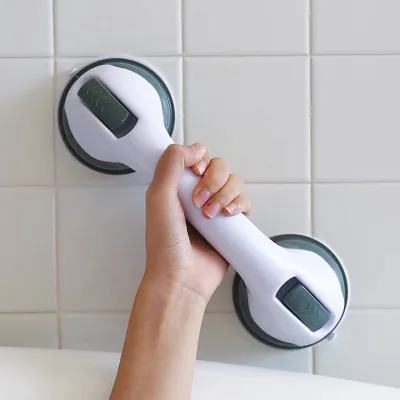
The mounting configuration is another vital technical parameter. Most units in this category are designed for wall mounting, utilizing a fixed or rotary mechanism. The "Folded" state is described as "Unfolded" in some product attributes, suggesting a transition from a compact storage position to an active support position. Buyers should verify the specific mounting hardware included, as the "Universal" standard implies compatibility with various wall types, but the actual installation requirements depend on the substrate. The "Suction Cup" variants offer a non-permanent alternative, which is useful for rental properties or temporary setups, though they generally offer lower stability than fixed wall-mounted stainless steel units.
Material Composition and Durability Standards
The longevity and safety of a bathroom assist handle are inextricably linked to the materials used in its construction. The dominant material observed in this sector is stainless steel, which provides the necessary corrosion resistance required for high-humidity environments like showers and bathrooms. The presence of "Stainless Steel" in the product attributes confirms that the primary structural components are designed to withstand constant exposure to water and cleaning agents without rusting or degrading.
However, not all components are made of metal. Some listings indicate the use of plastic for specific parts, such as the suction cups or the folding joints. While plastic offers cost advantages and can provide a softer grip, it must be high-grade to prevent cracking under stress. The "Rack Material" is sometimes listed as glass, which may refer to decorative elements or specific mounting plates, but the structural handle itself should remain metallic. The finish is equally important; observed colors include white, silver, and combinations like "Dark Grey + White" or "Black + White." These finishes are not merely aesthetic; they often indicate a specific coating process, such as powder coating or anodizing, which adds an extra layer of protection against corrosion.
The "Non-slip" attribute is a functional requirement that must be verified through the surface texture. Whether the handle is stainless steel or plastic, the grip surface must be engineered to prevent slipping when wet. Some products list "Function" as "Decoration, Non-slip," indicating a dual-purpose design, but for safety-critical applications, the non-slip capability must be the primary engineering focus. The "Modern," "Classic," and "Simplicity" style options suggest that the surface finish can be tailored to match bathroom aesthetics without sacrificing the necessary friction coefficient for safety.
Compliance, Certification, and Safety Verification
In the procurement of safety equipment, certification is not optional; it is a fundamental requirement for liability protection and user safety. The supplied data confirms that products in this category frequently carry certifications such as CE, RoHS, UL, and ISO. The CE mark indicates conformity with health, safety, and environmental protection standards for products sold within the European Economic Area. RoHS compliance ensures that the product is free from specific hazardous substances, which is crucial for environmental and health safety. UL certification, often associated with North American markets, provides assurance that the product has undergone rigorous testing for fire and electrical safety, although electrical components are less common in simple mechanical handles.
ISO certification, specifically mentioned in multiple product attributes, suggests adherence to international management system standards, which often implies a consistent manufacturing process and quality control. Buyers must verify that the specific batch of handles they purchase carries these certifications, as they are not universal guarantees for every item in a supplier's catalog. The "Universal" standard mentioned in the specifications likely refers to the compatibility of the mounting holes or the general design, rather than a specific safety standard code.
When evaluating compliance, buyers should request the specific test reports associated with the certifications. For instance, the ISO standard may refer to quality management (ISO 9001) rather than product safety (ISO 13482 for assistive products). It is essential to distinguish between the certification of the manufacturer's facility and the certification of the specific product model. The presence of "Customized" in the certification or standard fields suggests that some manufacturers offer tailored compliance documentation, which can be beneficial for meeting specific regional regulations.
Cost Drivers and Pricing Structure
The pricing of foldable non-slip bathroom assist handles is influenced by a complex interplay of material costs, manufacturing complexity, and customization requirements. The observed price range spans from $0.01 to $53 USD, a wide disparity that reflects the diversity of product types, from simple suction cups to heavy-duty stainless steel wall-mounted bars. The lower end of the spectrum likely corresponds to basic plastic components or simple suction-based units with minimal hardware. The higher end reflects premium stainless steel construction, complex folding mechanisms, and additional features like anti-slip coatings or specialized packaging.
The Minimum Order Quantity (MOQ) is another significant cost driver. The observed MOQ range extends from 1 to 5000 units. For buyers seeking small batches for testing or immediate deployment, an MOQ of 1 is highly advantageous, allowing for flexibility without significant capital commitment. However, larger orders typically benefit from economies of scale, reducing the unit cost significantly. The "Customized" attribute indicates that bespoke orders, such as those requiring specific lengths (e.g., 300mm, 400mm, 600mm, 900mm) or custom branding, may incur higher per-unit costs due to the setup and tooling required.
Packaging also impacts the final cost. Products are listed with various packing options, including "Color Box," "Carton," "PE Bag," "Blister," and "Export Package." The choice of packaging affects both the unit price and the logistics cost. A "White Bag" is the most economical option, while a "Color Box" or "Blister" pack adds value for retail presentation but increases the manufacturing cost. Buyers should calculate the total landed cost, including packaging, to determine the true cost-effectiveness of different supplier options.
Typical Applications and Usage Scenarios
The versatility of foldable non-slip bathroom assist handles makes them suitable for a wide range of applications, from residential to commercial settings. The "Usage" attribute explicitly lists "Household" and "Commercial," confirming their broad applicability. In a household context, these handles are essential for elderly individuals, people with mobility impairments, or those recovering from surgery. The "Folding" feature is particularly valuable in residential bathrooms where space is limited, allowing the handle to be tucked away when not in use to prevent accidental bumps or to maintain a clean aesthetic.
Commercial applications include hotels, hospitals, nursing homes, and public restrooms. In these environments, the handles must withstand frequent use and rigorous cleaning protocols. The "All Required Area" designation suggests that these products can be installed in various locations, including showers, bathtubs, and near toilets. The "Stair Tread" attribute, while seemingly unrelated to bathroom handles, indicates that the manufacturer may also produce related safety equipment, suggesting a comprehensive approach to fall prevention.
The "Two Functions" attribute implies that some handles may serve dual purposes, such as acting as a grab bar and a towel bar, or providing support while also serving a decorative role. This multifunctionality is highly desirable in modern bathroom design, where space efficiency and aesthetic appeal are paramount. The "Single Handle" and "Single Towel Bars" specifications highlight the modular nature of these products, allowing buyers to mix and match components to create a customized safety solution.
Supplier Evaluation and Quality Control Protocols
Selecting the right supplier requires a rigorous evaluation process that goes beyond price and basic specifications. Buyers should prioritize suppliers who demonstrate transparency in their manufacturing processes and provide clear documentation of their quality control measures. The "Customization" and "OEM" attributes indicate that many suppliers are capable of producing branded or custom-specified products, which requires a higher level of coordination and quality assurance.
Quality control should focus on the integrity of the folding mechanism, the strength of the mounting hardware, and the consistency of the non-slip surface. Buyers should request samples to test the handle's load-bearing capacity and the durability of the folding joints. The "Unfolded" state should remain stable under pressure, and the "Folded" state should securely lock in place to prevent accidental deployment or collapse. The "Export Package" and "5 ply kraft carton" specifications suggest that the supplier is experienced in international shipping, which often correlates with a higher standard of packaging and handling.
When evaluating suppliers, buyers should verify the origin of the products. The "China" origin is a common source for these items, but it is essential to ensure that the manufacturing facility adheres to the claimed certifications. The "Standard" attributes, such as "300/400/500mm" or "Customized," should be matched against the buyer's specific requirements to ensure a perfect fit. The "Number of Bars" and "Number of Handles" specifications help in planning the procurement volume and ensuring that the supply chain can meet demand.
Long-Term Procurement and Maintenance Considerations
Long-term procurement strategies for bathroom assist handles must account for maintenance, replacement cycles, and supply chain reliability. The "New" condition of the products indicates that buyers are purchasing fresh inventory, but the longevity of the product depends on the materials and construction quality. Stainless steel handles with proper coatings can last for many years, but the plastic components, such as suction cups or folding joints, may require periodic replacement.
Buyers should consider the availability of spare parts and the ease of replacement. The "Customized" nature of some products may make it difficult to source replacements if the original supplier discontinues the line. Therefore, it is advisable to maintain a relationship with a supplier who offers consistent quality and reliable lead times. The "Lead time" is not explicitly provided in the data, but buyers should negotiate clear timelines to ensure that stock levels are maintained, especially for commercial applications where downtime is not an option.
The "Color" options, including "White," "Silver," and "Dark Grey + White," allow for aesthetic consistency over time. As bathroom renovations occur, having a supplier that can match existing colors is crucial for maintaining a cohesive look. The "Style" options, ranging from "Modern" to "Classic," also play a role in long-term satisfaction, as the handle should complement the evolving design of the space.
In conclusion, sourcing foldable non-slip bathroom assist handles requires a careful balance of technical specifications, compliance verification, cost analysis, and supplier evaluation. By focusing on the core attributes of material, certification, and functionality, buyers can secure products that enhance safety and accessibility while meeting their specific procurement needs. The wide range of options available, from basic suction cups to premium stainless steel bars, ensures that there is a solution for every application, provided that the buyer conducts thorough due diligence and maintains a strategic approach to procurement.
FAQs
What certifications do foldable non-slip bathroom assist handles typically have?
These handles typically carry CE, RoHS, UL, and ISO certifications. Buyers should verify that specific batches include these marks, as they indicate compliance with safety and environmental standards for the European and North American markets.
Which materials are used for the structural components of these handles?
Stainless steel is the dominant material for structural integrity and corrosion resistance. Some components like suction cups or joints may use plastic, but the main grip bar must be metallic to ensure durability in high-humidity bathroom environments.
How do the dimensions affect the load-bearing capacity of the handle?
Diameters range from 25mm to 38mm with thicknesses of 1.0mm to 1.2mm. Thicker gauges generally provide higher rigidity and weight capacity, making them suitable for users requiring substantial support during movement or weight shifts.
Can these handles be customized for specific lengths or branding?
Yes, customization is available for lengths such as 300mm, 400mm, 600mm, and 900mm. Manufacturers also offer OEM services for branding and specific packaging, though bespoke orders may incur higher per-unit costs due to setup requirements.
What is the minimum order quantity for purchasing these assist handles?
The minimum order quantity ranges from 1 to 5000 units depending on the supplier. Small batches allow for testing with low capital commitment, while larger orders benefit from economies of scale that significantly reduce the unit price.
Which mounting options are available for these bathroom safety handles?
Most units are designed for wall mounting using fixed or rotary mechanisms. Suction cup variants offer a non-permanent alternative for rental properties, though fixed stainless steel units provide greater stability for permanent installations in showers or bathtubs.