Source Ceramic Brake Pads for Cars, Trucks, and SUVs
Explore 30 listings for Ceramic Brake Pads designed for various vehicle types. Buyers can compare specifications, materials, and delivery times from multiple suppliers to find the right fit for their automotive needs.
Key considerations
Products List


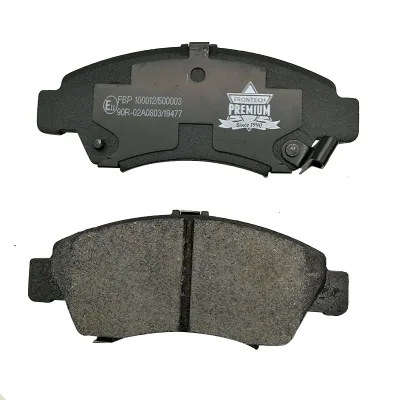


Comprehensive Sourcing Guide
Strategic Sourcing Guide for Ceramic Brake Pads
Understanding Technical Specifications and Material Composition
When sourcing Ceramic Brake Pads, the primary focus must be on the material composition and the specific performance attributes associated with ceramic fiber and metal blends. The market offers products defined by a "Texture" of metal and ceramic materials, indicating a hybrid approach where ceramic fibers are integrated with metallic components to optimize friction and heat dissipation. Buyers should verify that the product material is explicitly listed as "Ceramic Fiber" or a "Semi-Metallic" blend, as these are the standard formulations for high-performance braking systems. The "Formula" available in the supply chain often includes Semi-Metallic, Carbon Ceramic, and Less Metallic options, each catering to different vehicle dynamics and driving conditions.
The physical specifications of the brake pads are equally critical. The "Standard" for packaging and dimensions often varies, with some listings noting a standard size of 303030cm for bulk cartons, while others specify "Mixed material" standards for the product itself. The "Position" of the brake pad is a key differentiator; some suppliers specialize in "Front" position pads, while others offer universal solutions for "Most Car Models." The "Classification" is consistently listed as "Disc," confirming the compatibility with disc brake systems rather than drum systems. Furthermore, the "Surface Treatment" is a vital aesthetic and functional detail, often available in "Pure Black or Colored" finishes, which can indicate specific coating technologies designed to reduce dust and corrosion.
Compliance, Certification, and Regulatory Standards
Navigating the regulatory landscape for automotive brake components requires rigorous verification of certifications. The supply chain for Ceramic Brake Pads frequently references a robust set of compliance standards, including ISO/TS, ISO 9001, and Ts16949. These certifications are essential indicators of a manufacturer's adherence to quality management systems specific to the automotive industry. Additionally, regional compliance is often marked by "E Mark ECE R90," which is a critical standard for brake pads sold in European markets. Buyers must ensure that the supplier provides valid documentation for these certifications, as they validate that the product meets international safety and performance benchmarks.
Beyond general quality certifications, specific material safety standards are paramount. The "Asbestos" attribute is a non-negotiable safety check; all reputable Ceramic Brake Pads must be certified as "Non-Asbestos." This is a fundamental requirement for modern automotive safety to prevent health hazards associated with asbestos fibers. The "Certification" field in supplier data often aggregates these requirements, listing combinations such as "ISO/TSIATF-ISOECE," which suggests a comprehensive compliance framework. When evaluating potential suppliers, procurement teams should request proof of these certifications rather than relying solely on marketing claims. The presence of "OEM standard" labeling indicates that the product is manufactured to meet the original equipment manufacturer's specifications, ensuring a direct fit and performance parity with factory-installed parts.
Cost Drivers and Pricing Structures
The pricing of Ceramic Brake Pads is influenced by several variable factors, including material complexity, certification status, and order volume. The observed market price range for these components spans from $0.10 to $22.00 USD, a wide spectrum that reflects the diversity of product tiers from basic semi-metallic options to high-end carbon ceramic formulations. This variance is not merely a function of brand but is heavily dictated by the "Material" content and the "Advantages" offered, such as "No Noise, Long Life, High Powered" performance characteristics.
Minimum Order Quantity (MOQ) is another significant cost driver. The market data indicates an MOQ range of 1 to 100 units, with specific listings suggesting a standard MOQ of "50 SETS" for certain premium brands. This flexibility allows buyers to scale their procurement based on immediate needs versus long-term inventory planning. The "Packaging" method also impacts the final landed cost; options range from simple "Plastic Bag" or "Shrinkage Packing" to more robust "Carton Box," "Pallet," or "Wooden Case" configurations. While the latter offers better protection for international shipping, it adds to the overall unit cost. Buyers should analyze the total cost of ownership, considering that higher upfront costs for premium packaging and certification may result in lower failure rates and reduced warranty claims over the product's lifecycle.
Typical Applications and Vehicle Compatibility
Ceramic Brake Pads are designed for a broad spectrum of vehicle types, making them a versatile component for global automotive markets. The "Suitable Car Type" is generally listed as "PV Car and CV Car," covering passenger vehicles and commercial vehicles. The "What Car Is Suitable for" attribute often states "For all cars" or "Most Car Models," suggesting a high degree of universality in the product design. However, buyers must remain cautious with these broad claims and verify specific model compatibility against their fleet requirements. The "Brand" of the brake pad, such as "Transboss Powertech" or "Frontech Premium," often correlates with specific vehicle applications, though many suppliers also offer "OEM" or "Powertech or OEM" branding to indicate generic compatibility.
The "Advantages" of Ceramic Brake Pads, such as "High Efficiency" and "Long Life," make them particularly suitable for vehicles that require consistent braking performance under varied conditions. The "Warranty" period, often cited as "30000-50000 kms," serves as a benchmark for expected durability. This performance metric is crucial for fleet managers and automotive repair shops looking to minimize downtime and maintenance costs. The "Function" of the brake pad is explicitly defined as "Brake Stability," ensuring that the component contributes to safe and predictable vehicle handling. When sourcing for specific applications, buyers should cross-reference the "prod_model" codes, such as "C-1," "BP-080," or "BH150," with their vehicle's specific braking system requirements to ensure a precise fit.
Supplier Evaluation and Origin Verification
Evaluating suppliers requires a deep dive into their operational capabilities and geographic origins. The "prod_origin" is predominantly listed as "China," with specific manufacturing hubs noted as "Cangzhou, China." This concentration of manufacturing in specific regions often implies a mature supply chain for automotive components, but it also necessitates thorough due diligence regarding logistics and quality control. The "Main Market" data reveals a global reach, with products exported to "South America, North America, Eastern Europe, Southeast Asia, Africa, Western Europe, Eastern Asia, Northern Europe, Southern Europe, Central America, South Asia," and "Oceania." This extensive market presence suggests that the suppliers are experienced in handling international trade regulations and logistics.
The "Customization" attribute is a key differentiator in supplier selection. Many suppliers offer "Available" customization options, allowing buyers to tailor products to specific vehicle models or branding requirements. The "ID" of the supplier, often described as "OEM Brake Pad Manufacturer Suppliler," indicates their capability to produce private-label goods. When assessing suppliers, buyers should verify their "Brand" reputation and whether they offer "Free Charge" samples, which is a common practice for "Free" sample programs to allow for pre-purchase testing. The "Delivery Time" is another critical factor, with observed ranges from "One Week" to "30-45 Days." This variance depends on the supplier's production capacity and the specific "prod_packing" requirements, such as "by Sea/ Air/ Railway" shipping methods.
Quality Control and Long-Term Procurement Considerations
Ensuring consistent quality in Ceramic Brake Pads involves a multi-layered approach to quality control. The "Texture" and "Material" consistency must be maintained across all batches, as variations can lead to uneven wear or reduced braking efficiency. The "Surface Treatment" of "Pure Black or Colored" should be uniform, indicating a controlled manufacturing process. Buyers should also verify the "Packaging" integrity, as options like "Plastic Bag/Carton/Pallet/Wooden Case/Customized" must protect the product during transit to prevent damage. The "Advantages" of "No Noise" and "Long Life" are performance claims that must be validated through independent testing or supplier-provided test results.
For long-term procurement, the "Warranty" period of "30000-50000 kms" provides a baseline for performance expectations. However, buyers should also consider the "Lead Time" and "Delivery Time" stability. A supplier offering a "One Week" delivery time may be more suitable for urgent orders, while a "30-45 Days" lead time might be acceptable for bulk inventory replenishment. The "MOQ" flexibility allows for strategic inventory management, enabling buyers to balance stock levels with cash flow. Finally, the "Customization" availability ensures that as vehicle models evolve, the brake pad supply chain can adapt to new requirements without necessitating a complete supplier switch. By focusing on these long-term factors, buyers can build a resilient and cost-effective procurement strategy for Ceramic Brake Pads.
FAQs
What certifications do Ceramic Brake Pads typically have?
Ceramic Brake Pads typically hold ISO/TS, ISO 9001, and E Mark ECE R90 certifications. These standards ensure compliance with international safety benchmarks and quality management systems specific to the automotive industry for global distribution.
Can I find Ceramic Brake Pads with a one-week delivery time?
Yes, some suppliers offer a one-week delivery time for Ceramic Brake Pads. However, other listings indicate a longer lead time of 30 to 45 days depending on the specific model and packaging requirements.
Which materials are used in these brake pad products?
These products utilize metal materials, ceramic materials, and ceramic fiber. Formulas often include semi-metallic, carbon ceramic, and less metallic blends to optimize friction and heat dissipation for various vehicle types.
What is the minimum order quantity for Ceramic Brake Pads?
The minimum order quantity ranges from 1 to 100 units across the market. Specific premium brands may require a standard MOQ of 50 sets, allowing flexibility for different procurement scales.
How are Ceramic Brake Pads packaged for international shipping?
Packaging options include plastic bags, carton boxes, pallets, and wooden cases. Some suppliers offer customized packaging or shrinkage packing to ensure product integrity during sea, air, or railway transport.
Which regions are the main markets for these brake pads?
The main markets include South America, North America, Eastern Europe, and Southeast Asia. Products are also exported to Africa, Western Europe, Eastern Asia, and Oceania, indicating a broad global reach.
Are these brake pads suitable for most car models?
Yes, they are suitable for most car models, including passenger and commercial vehicles. The classification is disc, and they are designed for front positions with universal compatibility for PV and CV cars.