Source Heavy Duty Commercial Food Mixer for Bread Pizza Cake
Find and compare 30 Heavy Duty Commercial Food Mixer options from verified suppliers. Buyers can review specifications like voltage, capacity, and power to select units suitable for bread, pizza, and cake production.
Key considerations
Products List


20 Liter Commercial Heavy-Duty Planetary Mixer Food Mixer for Bakery & Hotel
$308.00 - $318.00
MOQ: 1 Pieces


Durable High-Performance Cooking Mixer for Heavy-Duty Baking Enthusiasts
$205.00 - $255.00
MOQ: 5 Pieces


Commercial Heavy Duty Dough Mixer Kitchen Mixer Bakery Mixer for Bakery
$2810.00 - $3320.00
MOQ: 5 Pieces
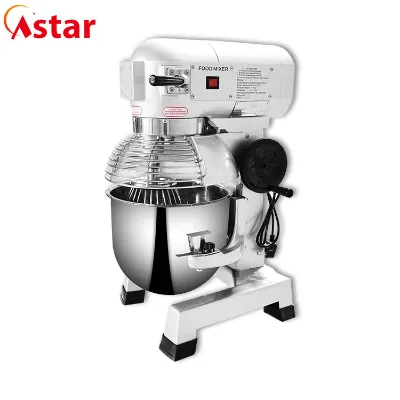


Comprehensive Sourcing Guide
Strategic Sourcing Guide for Heavy Duty Commercial Food Mixers
Selecting a heavy-duty commercial food mixer requires a rigorous approach that balances technical performance with operational reliability. In the global marketplace, these machines are the backbone of bakeries, pizzerias, and large-scale catering operations. The procurement process must move beyond basic feature lists to a detailed analysis of mechanical specifications, electrical compatibility, and supply chain robustness. This guide outlines the critical factors buyers must evaluate to ensure the acquisition of equipment that meets high-volume production demands without compromising safety or efficiency.
Technical Specifications and Mechanical Performance
The core of any heavy-duty mixer lies in its mechanical design and power delivery. When evaluating potential units, buyers must scrutinize the power source and motor specifications. The market offers units powered by electricity, with voltage requirements varying significantly based on the intended market and facility infrastructure. Common voltage standards observed in commercial listings include 220V and 380V, which dictates the necessary electrical infrastructure upgrades at the installation site. Power ratings also vary widely, ranging from smaller units at 1.1kw to industrial-grade models rated at 12kw. Selecting the correct wattage is essential to ensure the motor can handle the torque required for dense doughs without overheating or stalling.
Capacity is another defining technical parameter. The volume of the mixing bowl, often referred to as the barrel size, determines the batch size per cycle. Available capacities in the current market span from compact 3L and 4L units suitable for small bakeries to massive 20L, 40L, and 60L systems designed for industrial output. The physical dimensions of the machine, such as those measured in millimeters (e.g., 530435820mm or 13508101500), are critical for facility planning. Buyers must verify that the equipment fits within their designated workspace while allowing sufficient clearance for maintenance and operator safety.
The mixing mechanism itself often features dual-speed capabilities to handle different viscosities. For instance, specific models offer hook speeds of 248r/M for fast mixing and 124r/M for slow kneading, allowing operators to optimize the mixing process for various ingredients. The absence or presence of a timing device is a crucial differentiator. While some units operate without a timing device, relying on operator judgment, others include integrated timing systems to ensure consistent batch processing. Additionally, the material of construction is paramount; stainless steel is the industry standard for hygiene and durability, ensuring the equipment can withstand frequent washing and harsh chemical cleaners.
Compliance, Certification, and Safety Standards
In the commercial food sector, regulatory compliance is non-negotiable. Buyers must verify that the equipment meets the safety and quality standards of their target market. The CE certification is a widely recognized mark indicating conformity with health, safety, and environmental protection standards for products sold within the European Economic Area. While the presence of CE certification is a strong indicator of quality, it should be treated as a baseline requirement rather than a guarantee of performance in all jurisdictions.
Beyond certification, the physical standards of the machine, often denoted by specific dimensional codes or model numbers, must align with local building codes and electrical regulations. For example, standard dimensions like 375X245X260 or 380240310 may be listed alongside specific model identifiers such as DH / CF-211C or SC-635. These codes often correlate with specific regulatory compliance packages. Buyers should request documentation proving that the electrical components and mechanical guards meet the specific safety standards of their region. Relying solely on the supplier's word without verified documentation can lead to costly delays during inspections or audits.
Cost Drivers and Pricing Dynamics
Understanding the cost structure of heavy-duty mixers is essential for budgeting and ROI analysis. The price range for these units is extensive, spanning from approximately $1 to over $8,500. This variance is driven by several key factors, including motor power, bowl capacity, material quality, and the inclusion of advanced features like LED displays or automated timing devices. A unit with a 12kw motor and a 60L capacity will naturally command a higher price than a 1.1kw unit with a 3L bowl.
The Minimum Order Quantity (MOQ) is another significant cost driver in B2B procurement. The market exhibits a wide range of MOQs, from as low as 1 unit to as high as 2,000 units. Many suppliers set standard MOQs at 500 or 1,000 pieces, which can impact the unit price significantly. Buyers purchasing smaller quantities may face higher per-unit costs or may need to negotiate directly with manufacturers to waive these thresholds. Additionally, packaging requirements, such as the use of wooden boxes versus standard cartons or gift boxes, can influence shipping costs and overall landed price. Buyers must calculate the total cost of ownership, including shipping, insurance, and potential import duties, rather than focusing solely on the listed unit price.
Typical Applications and Operational Versatility
Heavy-duty commercial mixers are designed for a diverse range of food production applications. The versatility of these machines allows them to handle various ingredients and product types. Common usage scenarios include the preparation of bread, pizza dough, cakes, and biscuits. The mechanical action of the mixer must be capable of developing gluten in bread doughs while also being gentle enough for delicate cake batters. Some specialized units are also rated for applications involving chips and ice cream, indicating a robust design capable of handling frozen or high-density mixtures.
The type of mixer, whether a standard planetary mixer or a specialized spiral mixer, dictates its suitability for specific tasks. For instance, models identified by codes like HLD50 or JCH-75F may be optimized for specific dough types. The presence of an LED display on certain models suggests enhanced user interface capabilities, allowing for precise control over mixing times and speeds. This feature is particularly valuable in commercial environments where consistency is key to maintaining product quality across multiple shifts. Buyers should match the mixer's application profile to their specific production needs, ensuring the machine can handle the full spectrum of their product line.
Supplier Evaluation and Product Attributes
Evaluating a supplier requires a deep dive into the product attributes and manufacturing capabilities. The origin of the product, often listed as China for many commercial units, provides context for the supply chain but does not guarantee quality. Buyers must look beyond the country of origin to assess the supplier's track record. Key attributes to verify include the customization options available. While some products are listed as non-customized, others offer full customization, allowing buyers to tailor the machine to specific operational requirements.
The warranty period is a critical indicator of supplier confidence. A standard warranty of one year is common, but buyers should investigate the terms of coverage, including what components are included and the process for claiming service. The net weight of the machine, such as 65kg, is also a useful metric for logistics planning and floor load calculations. Furthermore, the automatic grade of the machine, whether manual or automatic, affects the labor requirements. Manual grade machines may require more operator intervention, while automatic models can streamline the workflow.
Quality Control and Long-Term Procurement Considerations
Implementing a robust quality control (QC) strategy is vital for mitigating risks in the procurement of heavy machinery. Buyers should establish clear acceptance criteria based on the product specifications provided. This includes verifying the dimensions, voltage, and power ratings against the purchase order. For units with specific packing requirements, such as wooden boxes or master cartons, the QC process should include an inspection of the packaging integrity to prevent damage during transit.
Long-term procurement considerations extend beyond the initial purchase. The availability of spare parts and the supplier's ability to provide technical support are crucial for minimizing downtime. The lead time for production and delivery, which can vary significantly, must be factored into the production schedule. Buyers should also consider the energy efficiency of the motor, as high-power units can significantly impact operational costs over time. Finally, the scalability of the equipment should be considered; purchasing a unit that can be easily upgraded or expanded as the business grows is a prudent long-term strategy.
Comparative Analysis of Key Specifications
To assist in the decision-making process, the following table summarizes the key specifications observed across different commercial mixer models. This comparison highlights the diversity in capacity, power, and dimensions available in the market.
| Product Model | Capacity | Power Rating | Voltage | Dimensions (Approx.) | Timing Device | Material Standard |
|---|---|---|---|---|---|---|
| DH / CF-211C | 4L | N/A | N/A | 375x245x260 | Without | N/A |
| SC-635 | 3L | N/A | N/A | 380x240x310 | N/A | N/A |
| SC-661 | N/A | N/A | N/A | 32.5x22.5x32.5cm | N/A | N/A |
| HLD50 | N/A | 1.1kw | 220V | N/A | N/A | Stainless Steel |
| TL-7L | N/A | N/A | N/A | N/A | N/A | N/A |
| B20 | 20L | 1.1kw | 380V | 530x435x820mm | N/A | Stainless Steel |
| JCH-75F | N/A | 12kw | 380V | 1350x810x1500 | N/A | N/A |
| HS30 | N/A | 12kw | N/A | 780x430x900mm | N/A | N/A |
| Mixture Mixer | N/A | N/A | N/A | N/A | With | N/A |
This table illustrates the wide range of options available. Buyers must carefully cross-reference these specifications with their operational needs. For example, a facility requiring high-volume dough production would prioritize models with higher power ratings (12kw) and larger capacities (20L or more), while a small café might opt for a compact 3L or 4L unit. The presence of a timing device and LED display should also be weighed against the required level of automation. By systematically evaluating these attributes, buyers can make informed decisions that align with their specific commercial requirements.
FAQs
What power sources are available for heavy duty commercial food mixers?
Electric power sources are standard for these units. Buyers must verify voltage compatibility, as options include 220V for smaller units and 380V for industrial models requiring higher power ratings like 12kw.
Which capacity sizes are available for heavy duty commercial food mixers?
Capacities range from compact 3L and 4L units to large 20L, 40L, and 60L systems. Selection depends on batch volume needs, with larger barrels supporting high-volume production for bread and pizza dough.
Can heavy duty commercial food mixers be customized for specific needs?
Customization is available for some models, while others are non-customized. Buyers should check specific product attributes to determine if tailored specifications or standard configurations are offered by the supplier.
What certifications ensure safety for heavy duty commercial food mixers?
CE certification is a recognized standard for safety and quality compliance. Buyers should verify this mark as a baseline requirement, though it does not guarantee performance in all jurisdictions without further documentation.
How does the minimum order quantity affect Heavy Duty Commercial Food Mixer procurement?
MOQs vary significantly, ranging from 1 unit up to 2000 pieces. Many suppliers set standard thresholds at 500 or 1000 pieces, which impacts unit pricing and requires negotiation for smaller orders.
What materials are used for Heavy Duty Commercial Food Mixer construction?
Stainless steel is the industry standard for hygiene and durability. This material ensures the equipment withstands frequent washing and harsh chemical cleaners required in commercial food production environments.
Which applications are suitable for heavy duty commercial food mixers?
These mixers handle bread, pizza, cake, biscuit, chips, and ice cream. The mechanical action must be versatile enough to develop gluten in doughs while gently mixing delicate batters or frozen mixtures.