Source Heavy Load Warehouse Shelving for Storage, Industry, and Supermarkets
Compare 30 listings of Heavy Load Warehouse Shelving from Chinese manufacturers. Buyers can evaluate specifications, load capacities, and customization options for industrial, food, and supermarket storage needs.
Key considerations
Products List

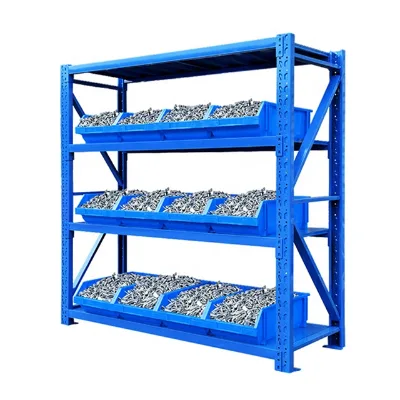
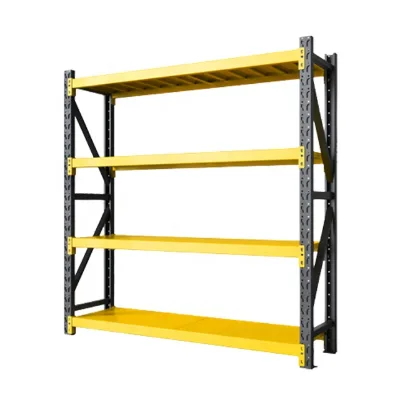


Multi-Level Industrial Shelving with Heavy-Duty for Warehouse Storage Requirements
$180.00 - $200.00
MOQ: 10 Pieces


Steel Structure Heavy Duty Multi-Level Shelving for Industrial Warehouse Storage
$180.00 - $200.00
MOQ: 10 Pieces


Industrial Shelving Heavy Duty Shelf Shelvings Storage Warehouse Shelving
$180.00 - $200.00
MOQ: 10 Pieces


$0.90 - $1.20
MOQ: 1000 kg


Comprehensive Sourcing Guide
Strategic Sourcing Guide for Heavy Load Warehouse Shelving
Procuring Heavy Load Warehouse Shelving represents a critical infrastructure decision for logistics and storage operations. The selection of racking systems directly influences inventory density, operational safety, and long-term capital efficiency. In the current global market, buyers face a diverse array of configurations ranging from conventional pallet racking to multi-level storage solutions. This guide synthesizes observed market data and technical attributes to provide a disciplined framework for evaluating suppliers and specifications. The focus remains on evidence-based criteria, ensuring that procurement decisions are grounded in verifiable product characteristics rather than unverified marketing claims.
Technical Specifications and Structural Variations
The technical landscape of Heavy Load Warehouse Shelving is defined by a wide spectrum of load capacities, dimensions, and structural materials. Observed product data indicates that the primary material composition for these systems is predominantly steel, specifically cold-rolled steel plates, which provide the necessary tensile strength for heavy-duty applications. Some listings also reference reinforced concrete and steel combinations, suggesting specialized heavy-load environments. The structural design is frequently categorized as a rack system, with specific types including pallet racking and multi-level configurations.
Dimensions vary significantly based on the intended application. Standard specifications observed include models with heights ranging from 0 to 5 meters, while other heavy-duty variants extend from 5 to 15 meters. Width and depth combinations are equally diverse, with common footprints including 1000mm x 400mm, 1200mm x 500mm, and 1500mm x 600mm, often paired with four or five shelf layers. Load-bearing capacities are a critical differentiator; specific data points indicate loading ranges between 300kg and 800kg per bay or shelf level. However, buyers must verify that these figures apply to the specific configuration being purchased, as capacity is often dependent on beam spacing and upright column gauge.
The customization factor is a key technical attribute. While some models offer standard dimensions like 2.5m x 0.9m x 3m, the majority of suppliers offer "Customer Size" options. This flexibility allows for the optimization of storage density in facilities with unique ceiling heights or aisle width constraints. The development stage of these products varies between conventional designs and new types, implying that buyers should assess whether a newer design offers superior engineering or if a proven conventional model offers better reliability for their specific use case.
Compliance, Certification, and Safety Standards
Ensuring compliance with international and local safety standards is paramount when sourcing industrial racking. The market data highlights several recognized certifications, including ISO9001, ISO14001, and ISO18001. These certifications indicate that the supplier adheres to quality management, environmental management, and occupational health and safety management systems, respectively. While these are strong indicators of a supplier's operational maturity, buyers must request current, valid certificates for the specific manufacturing facility producing the shelving units.
Beyond general management certifications, specific product standards must be verified. Observed standards include dimensions such as L2000 x W300 x H2200mm, which serve as a baseline for specific models. However, relying solely on listed dimensions is insufficient. Buyers should verify that the shelving design complies with relevant structural engineering codes, such as those governing seismic loads, wind loads, and dynamic impact resistance. The attribute of "Corrosion Protection" is frequently listed, suggesting that surface treatments like powder coating or galvanization are standard. It is essential to confirm the thickness of these coatings and the specific standards they meet to ensure longevity in varying warehouse environments, particularly those with high humidity or chemical exposure.
Cost Drivers and Pricing Dynamics
The pricing of Heavy Load Warehouse Shelving is influenced by a complex interplay of material costs, customization levels, and order volume. The observed price range in the market is extensive, spanning from $0.60 to $1,250. This variance reflects the difference between individual components, such as single shelves or small units, and complete racking systems or large pallet bays. The lower end of the spectrum likely corresponds to smaller, lighter-duty units or single items, while the higher end represents full-scale industrial installations.
Minimum Order Quantity (MOQ) is a significant cost driver. Data shows an MOQ range from 1 unit to 1,000 units, with specific constraints such as "100 Bays" for certain heavy-duty models. For buyers with smaller storage needs, suppliers offering an MOQ of 1 provide a viable entry point, though the unit cost may be higher. Conversely, large-scale projects can leverage economies of scale by meeting higher MOQ thresholds. The supply ability, observed at 1,000 cartons per month, suggests that suppliers have the capacity to handle moderate to large orders, but buyers should confirm lead times during peak production periods.
Additional cost factors include packaging and logistics. Products are typically packed in cartons or on pallets, with dispatch ports listed as Ningbo and Shanghai. Shipping costs, particularly for sea freight, can significantly impact the final landed cost. Buyers should calculate the total cost of ownership, including freight, insurance, and customs duties, rather than focusing solely on the ex-works price. The "Multi-functional" nature of the shelving also adds value, as a single system capable of storing goods, tools, clothing, and beverages may reduce the need for multiple specialized storage solutions.
Typical Applications and Usage Scenarios
Heavy Load Warehouse Shelving is designed for a broad spectrum of industrial applications. The primary usage is identified as warehouse storage and goods storage, making it suitable for distribution centers, manufacturing plants, and logistics hubs. The versatility of these systems allows them to be deployed in various sectors, including food processing, supermarkets, tool storage, clothing warehouses, and beverage distribution. The "Open" closed attribute and "Rack" structure facilitate easy access to inventory, which is crucial for high-throughput environments.
The specific application dictates the required specifications. For instance, a food storage facility may require shelving with enhanced corrosion protection and specific surface finishes to meet hygiene standards. Similarly, a tool rack application might prioritize accessibility and modular configurations. The "Multi-Level" style is particularly advantageous for maximizing vertical space in facilities with high ceilings, allowing for the storage of heavy items without expanding the facility's footprint. Buyers should match the shelving type to their specific inventory profile, ensuring that the load capacity and shelf dimensions align with the weight and size of the goods being stored.
Supplier Evaluation and Sourcing Criteria
Evaluating potential suppliers requires a rigorous assessment of their capabilities, origins, and reliability. The market data indicates that a significant portion of Heavy Load Warehouse Shelving originates from China, with specific manufacturing hubs noted in Suzhou and Jiangxi. While the origin provides insight into the supply chain, it is not the sole determinant of quality. Buyers should prioritize suppliers who demonstrate transparency in their manufacturing processes and provide verifiable evidence of their production capacity.
Key evaluation criteria include the supplier's ability to meet customization requests, their adherence to the stated standards, and their track record for delivery. The "Customization" attribute being "Available" suggests that many suppliers are willing to tailor products to specific needs, but buyers must clarify the scope of this customization and any associated costs. Furthermore, the "Serviceability" is noted as "Common Use," implying that the products are designed for standard maintenance and repair. Buyers should inquire about the availability of spare parts and the technical support offered by the supplier.
Quality Control and Inspection Protocols
Implementing a robust quality control (QC) protocol is essential to mitigate risks associated with structural failures. Given the high loads involved, even minor defects in welding or material integrity can lead to catastrophic consequences. Buyers should establish a QC plan that includes pre-shipment inspections, material verification, and load testing. The "Corrosion Protection" feature should be verified through independent testing to ensure it meets the required durability standards.
Inspection should cover the dimensional accuracy of the shelving units, ensuring they match the specified models such as FH-1050 or TU-P22. Visual inspections for surface defects, such as scratches or uneven coatings, are also necessary. For large orders, third-party inspection agencies can provide an objective assessment of the product quality before shipment. Additionally, buyers should request test reports that validate the load-bearing capacity claims, ensuring that the shelving can safely support the intended weight without deformation or failure.
Long-Term Procurement and Lifecycle Management
The procurement of Heavy Load Warehouse Shelving is a long-term investment that requires consideration of the product's lifecycle. The "Development" attribute, ranging from conventional to new types, suggests that buyers should evaluate the longevity and adaptability of the chosen system. A conventional design may offer proven reliability, while a new type might offer improved efficiency or safety features. Buyers should assess the expected lifespan of the shelving and the availability of maintenance services.
Scalability is another critical factor. As business needs evolve, the storage system may need to be expanded or reconfigured. Suppliers that offer modular designs and easy assembly can facilitate future growth without requiring a complete system replacement. The "Packing" details, such as carton boxes or pallet packages, should be evaluated for their impact on storage and handling during the product's lifecycle. Finally, buyers should consider the environmental impact of the shelving, particularly if the supplier holds ISO14001 certification, which indicates a commitment to sustainable manufacturing practices. By focusing on these long-term considerations, buyers can ensure that their investment in Heavy Load Warehouse Shelving delivers sustained value and operational efficiency.
FAQs
What materials are used for Heavy Load Warehouse Shelving?
Heavy Load Warehouse Shelving is primarily constructed from cold-rolled steel plates or steel combined with reinforced concrete. These materials provide the necessary tensile strength and durability required for industrial storage environments and heavy inventory loads.
Can I customize the dimensions of the warehouse racks?
Yes, customization is available for most Heavy Load Warehouse Shelving units to meet specific facility requirements. Buyers can request customer sizes or select from standard specifications like 1000x400x2000mm to optimize storage density and aisle width.
Which certifications should I look for in a supplier?
Suppliers often hold ISO9001, ISO14001, and ISO18001 certifications indicating adherence to quality, environmental, and safety management systems. Buyers should verify these certificates to ensure the manufacturing facility meets international operational maturity standards.
How much weight can the shelves typically hold?
Specific loading capacities for these units range between 300kg and 800kg per bay or shelf level depending on the configuration. Buyers must verify that these figures apply to the specific beam spacing and upright column gauge being purchased.
What is the minimum order quantity for these racks?
The minimum order quantity varies significantly, ranging from 1 unit for single items to 100 bays for certain heavy-duty models. Buyers should check specific supplier constraints as some require a minimum of 100 bays for full system orders.
Where are these warehouse shelving units manufactured?
The majority of Heavy Load Warehouse Shelving originates from China, with specific manufacturing hubs located in Suzhou and Jiangxi. Products are typically dispatched from major ports like Ningbo and Shanghai for international shipping.
How are the shelving units packaged for shipment?
Products are commonly packed in carton boxes or on pallets, with some options available for sea freight packaging. The packaging details ensure safe transport, and suppliers may offer custom packing requests to suit specific logistics needs.