Source Height Adjustable Chrome Kneeling Stool for Office School Commercial
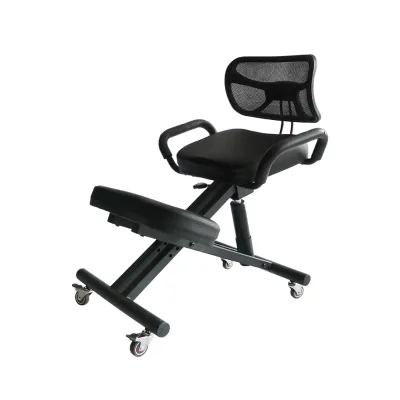
Compare 30 listings for the Height Adjustable Chrome Kneeling Stool featuring modern styles, synthetic leather upholstery, and high-density foam padding. Buyers can evaluate options with gas springs, chrome bases, and varying lead times from manufacturers in China.
Key considerations
Products List


Lightweight Height Adjustable Shower Stool with Padded Armrest, Non-Slip Feet
$22.00 - $25.00
MOQ: 200 Pieces


$30.00 - $100.00
MOQ: 100 Pieces


Heavy-Duty Portable Promotional Sturdy Kneeling Chair with 6cm EVA Foam Padding
$5.00 - $7.00
MOQ: 500 Pieces

Outdoor Multi-Functional Patio Kneeling Bench Foldable Knee Stool Kneeling Chair
$5.00 - $7.00
MOQ: 500 Pieces

Garden Stool Kneeler Foldable Kneeling Chair with Foam Cushion and Steel Tube Frame
$4.00 - $8.00
MOQ: 500 Pieces




Comprehensive Sourcing Guide
Strategic Sourcing Guide for Height Adjustable Chrome Kneeling Stools
The global shift toward ergonomic workplace solutions has elevated the demand for height-adjustable kneeling stools, particularly those featuring chrome bases and synthetic or leather upholstery. For procurement professionals, sourcing these specialized seating units requires a nuanced understanding of technical specifications, supply chain logistics, and quality assurance protocols. This guide synthesizes available market data and industry standards to provide a disciplined framework for evaluating suppliers and products in this category. Buyers must navigate a landscape where product attributes vary significantly between listings, necessitating a rigorous verification process to ensure the final procurement aligns with operational requirements.
Technical Specifications and Structural Integrity
When evaluating a Height Adjustable Chrome Kneeling Stool, the primary focus must be on the mechanical components that ensure stability and adjustability. The base material is a critical differentiator; chrome-plated bases are frequently cited for their aesthetic appeal and resistance to corrosion, though the underlying structural integrity depends on the metal gauge and welding quality. In the observed market data, specific listings reference a "Chrome" base paired with a "Simple" mechanism, which suggests a focus on basic tilt and height functions rather than complex multi-axis adjustments.
The gas lift mechanism is another pivotal specification. High-quality units often adhere to industry benchmarks such as the BIFMA Standard for gas lifts, which typically dictates a stroke length of 200mm for adequate range of motion. However, buyers must verify the actual stroke length and pressure rating of the specific unit, as observed data shows variations ranging from 10cm to 200mm. A gas lift that is too short may limit the ergonomic benefits for taller users, while one that is too short or lacks certification may pose a safety risk. The frame construction is equally important; listings indicate "Matt Black Frame" options, but the material composition and load-bearing capacity must be confirmed. The seat itself often utilizes "High Density Mold Foam" or "High-density Foam" to provide necessary support during kneeling, preventing discomfort during extended use. The upholstery, described variously as "Synthetic Leather" or "Leather," must be durable enough to withstand the friction of kneeling movements without tearing or excessive wear.
Compliance, Certification, and Safety Standards
Compliance is a non-negotiable aspect of B2B procurement, especially for furniture intended for commercial and educational environments. While some background data mentions CE certification, this should be treated as a potential attribute rather than a guaranteed standard for every unit. Buyers must explicitly request valid certification documents from the supplier to verify that the product meets the safety regulations of the destination market. For instance, in North America, adherence to BIFMA (Business and Institutional Furniture Manufacturers Association) standards is the industry norm for testing stability, durability, and safety.
The "Gas Lift" specification often links directly to safety certifications. A gas lift rated to the BIFMA Standard implies it has undergone rigorous testing for burst pressure and fatigue resistance. However, without explicit confirmation from the supplier, buyers cannot assume compliance. Similarly, the "Warranty" periods observed in the market range from 2 to 3 years, which serves as a proxy for the manufacturer's confidence in their product's longevity. A longer warranty period often correlates with higher quality control standards, but it must be backed by clear terms and conditions. Buyers should also verify if the product meets fire safety standards for upholstery, particularly for "Office School" applications where regulations can be stringent. The absence of specific certification data in general listings means the onus is on the buyer to demand proof of compliance before finalizing any order.
Cost Drivers and Pricing Dynamics
The pricing structure for height adjustable chrome kneeling stools is influenced by a complex interplay of material costs, customization levels, and order volume. The observed price range in the market spans from $1.85 to $200, a significant variance that reflects differences in quality, brand positioning, and specification depth. The lower end of this spectrum typically corresponds to basic models with standard foam padding and simple chrome bases, often sourced with minimal customization. Conversely, the higher price points likely encompass premium materials, such as genuine leather upholstery, advanced gas lift mechanisms, and custom branding or color options.
Minimum Order Quantity (MOQ) is a primary driver of unit cost. Data indicates MOQs ranging from 10 pieces to 2,500 pieces. Smaller orders, such as those with an MOQ of 10 or 30 pieces, often carry a higher per-unit cost due to the fixed overheads of production setup and logistics. Larger orders benefit from economies of scale, reducing the marginal cost of each unit. Additionally, the "Customization" attribute plays a significant role. Products marked as "Customized" or offering "OEM" services will invariably cost more than standard "Non-Customized" units. The packaging method also affects the final landed cost; options like "CKD" (Completely Knocked Down) or "1PC/CTN" influence shipping efficiency and volume. Buyers must balance the desire for customization and premium features against the budget constraints imposed by MOQs and unit pricing.
Typical Applications and Usage Scenarios
The versatility of height adjustable chrome kneeling stools makes them suitable for a diverse range of environments. The observed data highlights "Office School" as a primary use case, indicating suitability for educational institutions, corporate offices, and training centers. In these settings, the ergonomic design promotes active sitting, which can reduce back strain and improve posture. The "Commercial Furniture" classification further reinforces their applicability in high-traffic areas where durability is essential.
For adult users, the adjustability of the stool is crucial. The "Suitable for: Adult" attribute confirms that the design accommodates a wide range of body types, provided the height range is sufficient. The "Folded" and "Unfolded" states observed in product listings suggest that some models may offer space-saving features, which are valuable in compact office environments or classrooms. The "Function" attributes, such as "Adjustable" and "Wobble," indicate that these stools are designed to encourage movement, making them ideal for tasks requiring focus and physical engagement. Whether used in a creative studio, a reception area, or a technical workspace, the stool must maintain stability while allowing for the dynamic movement characteristic of kneeling chairs.
Supplier Evaluation and Production Capabilities
Selecting the right supplier requires a deep dive into their production capabilities and business model. The market data identifies "Manufacturer" as a common business type, which is generally preferable to trading companies for ensuring quality control and direct communication. Suppliers offering "OEM" (Original Equipment Manufacturer) services demonstrate flexibility in meeting specific buyer requirements, such as custom branding or unique color schemes. The "Customization" availability is a key indicator of a supplier's ability to adapt to specific project needs.
Lead times are a critical factor in supply chain planning. Observed data shows a "Lead Time" of 30 days for standard production, with a "Mass Production" window of 35-40 days. For sample orders, the lead time is significantly shorter, typically 7-10 days. However, other listings indicate a broader range of 15-35 days. Buyers must clarify the specific lead time for their order to avoid delays. The "Fob Port" is listed as "Shenzhen Any Port," which is a major logistics hub in China, facilitating efficient export. Payment terms, such as "30% Deposit and Balance Before Loading" or "by T/T," are standard but must be negotiated to ensure financial security. Evaluating the supplier's ability to meet these timelines and terms is essential for a smooth procurement process.
Quality Control and Long-Term Procurement Considerations
Quality control is paramount when sourcing furniture that will be used daily by employees or students. The "Warranty" period, ranging from 2 to 3 years in the observed data, serves as a baseline for expected product life. However, buyers should implement a robust quality control protocol that includes pre-shipment inspections. Key areas to inspect include the stability of the chrome base, the functionality of the gas lift, and the durability of the foam padding and upholstery. The "Carton Size" of 71x56x30cm and a "Cbm" of 0.11 per unit are critical for calculating shipping costs and ensuring efficient container loading.
Long-term procurement considerations involve building a sustainable relationship with the supplier. Consistency in product quality, reliability in meeting lead times, and responsiveness to after-sales issues are vital. The "Packaging" method, whether "Standard" or "CKD," impacts the condition of the product upon arrival. Proper packaging prevents damage during transit, which is especially important for items with chrome finishes and mechanical components. Buyers should also consider the environmental impact of the materials used, such as the "Synthetic Leather" and "High Density Foam," and inquire about the sustainability of the manufacturing process. By focusing on these long-term factors, buyers can ensure a reliable supply of high-quality kneeling stools that meet their organizational needs for years to come.
Comparative Analysis of Product Attributes
To assist buyers in making informed decisions, the following table summarizes the key attributes observed in the market, highlighting the variations that must be verified during the sourcing process.
| Attribute Category | Observed Variations | Verification Requirement |
|---|---|---|
| Base Material | Chrome, Matt Black Frame | Confirm plating thickness and corrosion resistance. |
| Gas Lift | 10cm, 200mm (BIFMA Standard) | Verify stroke length and certification status. |
| Foam Padding | High Density Mold Foam, High Density | Check density rating and durability. |
| Upholstery | Synthetic Leather, Leather | Assess wear resistance and cleaning requirements. |
| MOQ | 10 Pieces, 30 PCS, 2500 | Negotiate based on order volume and budget. |
| Lead Time | 7-10 days (Sample), 15-35 days (MP) | Confirm specific timeline for the order size. |
| Warranty | 2 Years, 3 Years | Review terms and conditions for coverage. |
| Customization | Customized, Non-Customized, OEM | Define specific branding or design needs. |
| Packaging | 1PC/CTN, CKD, Standard | Calculate shipping volume and handling needs. |
This comparative analysis underscores the importance of detailed specification checks. Buyers should not assume that all products labeled as "height adjustable chrome kneeling stools" share the same attributes. Instead, they must treat each listing as a unique offer requiring individual verification against their specific project requirements. By adhering to these disciplined sourcing practices, procurement professionals can mitigate risks and secure high-quality products that enhance the ergonomic environment of their facilities.
FAQs
What is the typical lead time for mass production?
The mass production lead time ranges from 35 to 40 days for standard orders. Some listings indicate a broader window of 15 to 35 days, so buyers must confirm the specific timeline based on their order volume and customization requirements before finalizing the purchase.
Can I request a sample before placing a large order?
Yes, samples are available with a lead time of 7 to 10 days. This allows buyers to verify the quality of the high-density foam, chrome base, and upholstery before committing to the minimum order quantity, which typically starts at 10 pieces or 30 pieces depending on the supplier.
Which gas lift specifications are commonly available?
Gas lift options vary, with some units featuring a 10cm stroke and others offering a 200mm stroke that meets BIFMA standards. Buyers should verify the specific stroke length and certification status to ensure the mechanism provides adequate height adjustment and safety for adult users in office or school settings.
What are the standard packaging and shipping dimensions?
Products are typically packed as one piece per carton with a carton size of 71 by 56 by 30 centimeters. The volume per unit is approximately 0.11 cubic meters, though some options may come in CKD or standard packaging, which affects shipping efficiency and total landed costs.
How long is the warranty period for these stools?
Warranty periods observed in the market range from 2 to 3 years, reflecting the manufacturer's confidence in product durability. This coverage generally applies to structural components like the chrome base and gas lift, but buyers should review specific terms to understand what is included in the protection plan.
What customization options are available for branding?
Customization is available, including OEM services for custom branding and design variations. While some units are sold as non-customized standard models, buyers can request specific colors like black or unique frame finishes, provided they meet the supplier's minimum order quantity requirements for custom production runs.