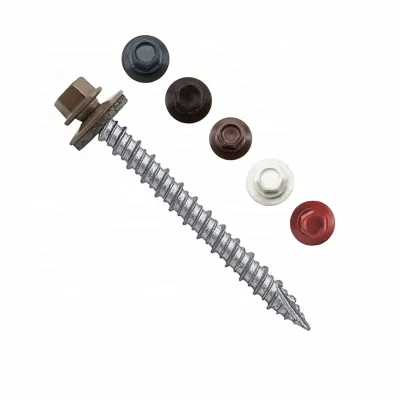
Source Hex Head Self Drilling Screw with Epdm Washer for Roofing, Cladding, and Metal Framing
Compare 30 listings for Hex Head Self Drilling Screw with Epdm Washer from suppliers in China. Options include carbon steel grades, various surface treatments like zinc plating, and customizable packing for roofing, cladding, and metal framing applications.
Key considerations
Products List


EPDM Bonded Sealing Washer/Rubber Bonded Seal Washer Use for Self Drilling Screw
$0.01 - $2.00
MOQ: 10000 Pieces


Stainless Steel A2 A4 Hex Head Self Drilling Screw with EPDM Bond Washer
$0.02 - $0.05
MOQ: 10000 Pieces


Comprehensive Sourcing Guide
Strategic Sourcing Guide for Hex Head Self-Drilling Screws with EPDM Washers
Understanding Technical Specifications and Material Grades
When sourcing hex head self-drilling screws, particularly those designed for metal-to-metal or metal-to-wood applications, the technical specifications define the operational limits and compatibility of the fastener. The core product category often references specific material grades and structural geometries that dictate performance. Based on available market data, these fasteners are frequently manufactured from Carbon Steel, a material choice that balances cost-effectiveness with sufficient tensile strength for general construction and industrial assembly. The grade of the steel is a critical variable; observed specifications include Grade 4 and Grade 6 variants, which correspond to different hardness and tensile strength requirements. Buyers must verify that the specific Grade 4 or Grade 6 designation aligns with the load-bearing demands of the project, as these grades are distinct from higher-strength alloy steels often used in aerospace or heavy machinery.
The geometric configuration of the screw is equally vital. The "Hex Head" style is a standard attribute, providing a robust driving surface for high-torque applications using hexagonal sockets or wrenches. The head type can vary, with options including Pan, Truss, Flat, Round, Hex, Cheese, Binding, and Countersunk (Csk), though the Hex Head remains the primary choice for self-drilling variants requiring significant clamping force. The shank of the screw features a self-drilling tip, often described in specifications with groove types such as "Cross" or "Hexagon," which aids in chip evacuation and reduces torque resistance during installation. The thread pitch and length are standardized, with observed models ranging from DIN7504 specifications to custom metric sizes like 3.5-6.3mm and 4.2-6.3mm. The measurement system is typically Metric, though some suppliers offer Inch systems, requiring precise verification of the thread standard before procurement.
Surface treatment is another critical technical parameter that influences corrosion resistance and longevity. The observed surface finishes include Zinc Plated, Plain, Copper Plating, Phosphating, Black Oxide, and Yellow Zinc. For applications involving moisture or outdoor exposure, Zinc Plated or Yellow Zinc finishes are common choices, while Plain or Black Oxide may be selected for indoor or non-corrosive environments. The inclusion of an EPDM washer is a specific requirement for many of these screws, designed to create a watertight seal when the screw is driven into place. While the provided data confirms the availability of various surface treatments, the specific integration of an EPDM (Ethylene Propylene Diene Monomer) washer must be explicitly confirmed with the supplier, as this component is not always standard on all hex head self-drilling screws.
Compliance Standards and Certification Verification
Navigating the complex landscape of international standards is essential for ensuring that sourced fasteners meet regulatory and safety requirements. The market data indicates a wide array of recognized standards that manufacturers may adhere to, including GOST, GB, DIN, ANSI, BSW, and JIS. These standards govern dimensions, thread pitches, and mechanical properties. For instance, the DIN standard is frequently cited, with specific model references like DIN7504, which is a common benchmark for self-drilling screws in European and international markets. Similarly, GB (Guobiao) standards are prevalent among manufacturers in China, while ANSI and BSW standards are critical for buyers targeting North American or British specifications.
Compliance is not merely about matching a standard number; it involves verifying that the product actually meets the mechanical and chemical requirements of that standard. The observed data lists standards such as GB, DIN, JIS, and ANSI, suggesting that suppliers often produce to multiple standards depending on the destination market. Buyers should request a Certificate of Conformity (CoC) that explicitly references the specific standard (e.g., DIN 7504 or GB/T) for the batch being purchased. It is important to note that while some background information may suggest ISO 9001 certification, this should not be assumed without direct verification from the supplier. ISO 9001 relates to the quality management system of the manufacturer rather than the specific product performance, so its presence indicates a commitment to process consistency but does not guarantee the fastener meets specific technical tolerances.
Certification checks should also extend to the materials used. The standard list includes "Carbon steel" as a product standard in some contexts, which is a material classification rather than a dimensional standard. Buyers must ensure that the carbon steel used meets the chemical composition requirements of the relevant standard, particularly regarding sulfur and phosphorus content, which affect weldability and ductility. For construction applications, additional certifications may be required, such as fire resistance ratings for the EPDM washer or specific corrosion resistance tests. While CE marking is mentioned in background contexts, it is a self-declaration for the European market and requires rigorous internal testing. Buyers should not rely on the mere presence of a CE claim but should request the technical file supporting the declaration to ensure the fastener and washer combination has been tested for the intended application.
Cost Drivers and Pricing Dynamics
The pricing of hex head self-drilling screws is influenced by a complex interplay of material costs, manufacturing processes, and order volume. The observed price range in the market spans from $0.01 to $1,600, a vast disparity that reflects the difference between single-unit samples and bulk industrial pallets. The lower end of the spectrum typically represents individual screws or small sample packs, while the higher end reflects large-scale orders, custom configurations, or specialized high-grade materials. Understanding these cost drivers is crucial for budgeting and negotiation.
Material costs are the primary driver, with carbon steel prices fluctuating based on global commodity markets. The choice of surface treatment also significantly impacts the final price. Zinc plating is generally more cost-effective than copper plating or specialized yellow zinc finishes, which require additional chemical processes. The inclusion of an EPDM washer adds a secondary material cost, which varies based on the quality and hardness of the rubber compound. High-quality EPDM that offers superior UV and temperature resistance will command a higher price than standard rubber washers.
Order volume is another critical factor. The observed Minimum Order Quantity (MOQ) ranges from 1 unit to 1,500,000 units, indicating that suppliers cater to both small prototype orders and massive industrial contracts. For smaller orders, the unit price will be higher due to setup and handling costs. Conversely, large orders can leverage economies of scale to reduce the per-unit cost. The packaging method also plays a role; options like "25kgs Per Box, 36box Per Pallet" or "Carton, Boxes, Ton Bag" affect logistics costs. Bulk packing in ton bags is typically more economical for large shipments, while boxed or palletized packing is necessary for retail or smaller distribution channels.
Payment terms and logistics also influence the effective cost. Standard terms observed include FOB (Free on Board) and 30% TT in advance with 70% TT before shipment. These terms affect cash flow and risk allocation. Buyers should consider the total landed cost, which includes the product price, shipping, insurance, and import duties. The origin of the product, such as Ningbo, Hebei, or Tianjin in China, can impact shipping times and freight costs. Buyers should request detailed quotes that break down the unit price, packaging costs, and shipping estimates to make an informed decision.
Typical Applications and Industry Use Cases
Hex head self-drilling screws with EPDM washers are versatile fasteners used across a wide range of industries, from light construction to heavy industrial assembly. The primary application is in metal roofing and cladding systems, where the self-drilling capability eliminates the need for pre-drilling holes, significantly reducing installation time and labor costs. The EPDM washer provides a critical waterproof seal, preventing leaks at the fastener penetration point, which is essential for maintaining the integrity of the building envelope.
In the automotive and transportation sectors, these fasteners are used for assembling body panels and interior components where vibration resistance and sealing are important. The hex head design allows for high torque application, ensuring a secure fit that can withstand the dynamic loads experienced in vehicle operation. The carbon steel construction provides the necessary strength, while the surface treatment protects against road salt and moisture.
Construction and civil engineering projects also rely heavily on these fasteners for securing steel framing, purlins, and girts. The ability to drill through multiple layers of material in a single operation makes them ideal for rapid assembly of structural frameworks. The EPDM washer is particularly valuable in outdoor structures where exposure to rain and humidity is a concern. Additionally, these screws are used in HVAC installations, where they secure ductwork and ventilation components, and in the manufacturing of machinery and equipment where quick assembly and disassembly are required.
The versatility of the product is further enhanced by the availability of different head types and sizes. While the hex head is standard, other options like pan or truss heads may be used for aesthetic purposes or specific clearance requirements. The size range, from M3 to M40, allows for applications ranging from delicate electronic enclosures to heavy structural connections. Buyers should match the screw specification to the thickness of the materials being joined and the required load-bearing capacity of the joint.
Supplier Evaluation and Selection Criteria
Selecting the right supplier is a critical step in the procurement process, as it directly impacts product quality, delivery reliability, and long-term support. When evaluating potential suppliers, buyers should prioritize those with a proven track record in manufacturing hex head self-drilling screws and a clear understanding of the relevant standards. The observed data indicates that suppliers are located in key manufacturing hubs in China, such as Ningbo, Hebei, and Tianjin. These regions have established supply chains for steel and fasteners, but buyers should verify the specific capabilities of each supplier.
Key evaluation criteria include the supplier's ability to provide samples, their quality control processes, and their flexibility in customization. The availability of samples is a strong indicator of a supplier's confidence in their product and allows buyers to physically inspect the quality of the screw, the washer, and the surface finish. Customization is another important factor, as many suppliers offer options for different grades, sizes, and surface treatments. The ability to customize packaging, such as "Box + Carton + Pallet" or "Small Box + Outer Carton + Pallets," can also be a deciding factor for buyers with specific logistics requirements.
Suppliers should be able to demonstrate compliance with relevant standards and provide documentation such as mill test reports and certificates of conformity. The range of standards they support, including GOST, GB, DIN, ANSI, BSW, and JIS, indicates their ability to serve diverse markets. Buyers should also assess the supplier's production capacity and lead times. The observed delivery time of 10-25 days is a benchmark, but buyers should confirm if this can be met for their specific order volume and customization requirements.
Communication and responsiveness are also critical. Buyers should evaluate the supplier's ability to answer technical questions, provide timely updates on order status, and resolve any issues that arise. A supplier that offers clear payment terms, such as FOB or TT in advance, and has a transparent pricing structure is generally more reliable. Finally, buyers should consider the supplier's reputation and history in the market, looking for reviews or references from other clients to gauge their reliability and quality consistency.
Quality Control and Long-Term Procurement Considerations
Ensuring consistent quality is paramount in the procurement of hex head self-drilling screws, as failures can lead to structural issues, leaks, and costly repairs. Quality control should be implemented at multiple stages, from raw material inspection to final packaging. Buyers should request detailed quality control reports that include tensile strength tests, hardness tests, and corrosion resistance tests. The surface treatment, such as zinc plating or yellow zinc, should be verified for thickness and adhesion to ensure long-term durability.
The integration of the EPDM washer is a critical quality point. The washer must be securely attached to the screw head and made of high-quality EPDM material that resists degradation from UV exposure, temperature fluctuations, and chemical exposure. Buyers should request samples for testing to verify the washer's elasticity and sealing capability. Long-term procurement considerations also include the stability of the supply chain and the supplier's ability to maintain consistent quality over time. Buyers should establish long-term contracts with suppliers who demonstrate a commitment to quality and continuous improvement.
Packaging and storage are also important factors in maintaining product quality. The observed packaging options, such as "25kgs Per Box, 36box Per Pallet" or "Carton, Boxes, Ton Bag," should be selected based on the storage conditions and handling requirements. Proper packaging protects the screws from damage during transit and storage, preventing rust and deformation. Buyers should also consider the environmental impact of the packaging and choose eco-friendly options where possible.
Finally, buyers should plan for future needs and scalability. As projects grow, the demand for fasteners may increase, and the supplier should be able to scale production to meet these needs without compromising quality. Establishing a relationship with a reliable supplier who can provide consistent quality, competitive pricing, and timely delivery is essential for long-term success in procurement. By focusing on these quality control and long-term considerations, buyers can ensure that their hex head self-drilling screws with EPDM washers meet the highest standards of performance and reliability.
FAQs
What material grades are available for Hex Head Self Drilling Screw with Epdm Washer?
Available material grades include Grade 4 and Grade 6 carbon steel variants. These grades offer different hardness and tensile strength requirements suitable for general construction and industrial assembly applications.
Which surface treatments can be applied to Hex Head Self Drilling Screw with Epdm Washer?
Surface treatments include Zinc Plated, Plain, Copper Plating, Phosphating, Black Oxide, and Yellow Zinc. Buyers should select finishes based on corrosion resistance needs for indoor or outdoor environments.
Can I customize the packaging for Hex Head Self Drilling Screw with Epdm Washer orders?
Yes, customization is available for packaging options like boxes, bulk packing, or pallets. Standard configurations include 25kg per box with 36 boxes per pallet or custom ton bags for large shipments.
What standards do Hex Head Self Drilling Screw with Epdm Washer manufacturers follow?
Manufacturers adhere to standards such as GOST, GB, DIN, ANSI, BSW, and JIS. Specific models often reference DIN7504 or metric sizes ranging from 3.5mm to 6.3mm depending on the product specification.
How long is the delivery time for Hex Head Self Drilling Screw with Epdm Washer?
The typical delivery time ranges from 10 to 25 days after order confirmation. This timeline applies to standard orders, though custom requirements may affect the final schedule.
What is the minimum order quantity for Hex Head Self Drilling Screw with Epdm Washer?
Minimum order quantities vary from 1 unit to 1,500,000 units depending on the supplier and size. Some vendors require a minimum of 2 tons for specific bulk configurations.
Which payment terms are common for Hex Head Self Drilling Screw with Epdm Washer?
Common payment terms include FOB, 30% TT in advance, and 70% TT before shipment. These terms help manage cash flow and risk allocation between buyers and suppliers.