Source High-Accuracy Quantitative Filling Machine for Pharma, Food, and Chemical
Find and compare high-accuracy quantitative filling machine options for pharmaceutical, food, and chemical applications. This collection features 30 models with automatic or semi-automatic grades, stainless steel or titanium construction, and customizable filling methods to suit diverse packaging needs.
Key considerations
Products List


Installation, Training and Maintenance 1 Year Beverage High-Precision Filling Machine
$40000.00 - $42000.00
MOQ: 1 Pieces


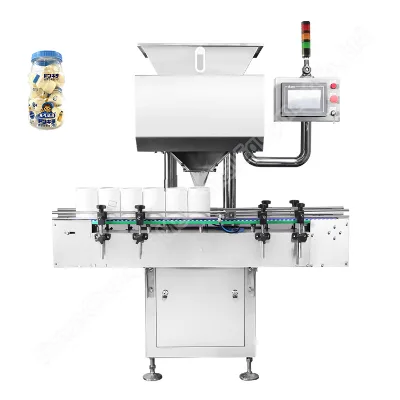
PLC Controlled Count Filling Machine with High-Position Liquid Storage
$50000.00 - $56650.00
MOQ: 1 Pieces

Precise Quantitative Liquid Filling Machine with Accurate Measurement Technology
$2500.00 - $3500.00
MOQ: 1 Pieces


High-Speed Liquid Filling Machines for Efficient Production Solutions
$25000.00 - $50000.00
MOQ: 1 Pieces


Comprehensive Sourcing Guide
High-Accuracy Quantitative Filling Machine Sourcing Guide
Selecting the right quantitative filling equipment requires a clear understanding of how machine architecture aligns with your specific product viscosity, packaging format, and production volume. The market offers a diverse range of solutions, from semi-automatic units designed for low-volume or specialized tasks to fully automatic systems engineered for high-speed continuous operation. Buyers must distinguish between machines that rely on simple gravity or basic pump mechanisms and those equipped with advanced screw or high-precision pump filling technologies capable of handling complex materials like powders with poor fluidity or viscous liquids. The decision often hinges on whether the primary need is flexibility in bag styles or absolute precision in fill weight for regulated industries such as pharmaceuticals or food safety.
Furthermore, the integration of control interfaces and automation levels significantly impacts operational efficiency and labor requirements. Modern systems frequently feature advanced touch human-machine interfaces that allow for intelligent weight adjustment and batch coding, reducing setup time and minimizing human error. However, not all machines labeled as "automatic" offer the same degree of customization or modular design. Some units provide quick-change modular structures suitable for varied packaging formats, while others are fixed to specific capsule models or bag styles. Procurement teams must evaluate these technical nuances to ensure the selected hardware supports both current production demands and future scalability without requiring excessive downtime for changeovers.
Product Scope and Observed Listing Signals
The observed market landscape for quantitative filling machinery reveals a wide spectrum of capabilities, with listed prices ranging from approximately $1,000 to $140,000 USD. This broad variance reflects differences in automation grade, material construction, and functional complexity. For instance, entry-level or semi-automatic units may suffice for small-scale operations or specific applications like capsule filling, where precision is maintained through mechanical models such as the M0.07 gear pump system. In contrast, high-end automatic machines, often constructed from stainless steel or titanium for durability and hygiene, command higher price points due to their ability to handle diverse applications across pharmaceutical, food, and chemical industries. The minimum order quantity (MOQ) for these specialized industrial assets is typically one unit, indicating that procurement is driven by specific project needs rather than bulk inventory requirements.
Listing signals also highlight significant variations in packaging versatility and forming functions. Some machines are specialized for single sachets, roll bags, or rounded-corner cutting, utilizing pillow bag or back-sealing bag styles. Others are designed for more complex irregular-shaped bags or three-side sealing applications. The material type being processed is a critical differentiator; while some units are optimized for liquids and dairy products, others are engineered specifically for powders with poor fluidity or powder mixtures. Buyers should note that features such as temperature control, print registration control, and batch coding are not universal but are available on specific models, necessitating a careful review of each product’s attribute list to match operational requirements.
Technical Specifications to Verify
When evaluating technical specifications, the first priority is verifying the filling method and its suitability for your target material. High-accuracy quantitative filling often relies on either high-precision screw filling for powders or high-precision pump filling for liquids and viscous substances. It is essential to confirm whether the filling method can be customized according to the material’s properties, as standard configurations may not perform optimally with unique formulations. Additionally, the machine’s automatic grade—whether semi-automatic or fully automatic—directly influences throughput and labor intensity. Buyers should also inspect the voltage requirements, such as 220V, to ensure compatibility with existing facility infrastructure, and verify the driven type, which is typically electric for these industrial applications.
Dimensional constraints and physical construction are equally critical for integration into existing production lines. The standard footprint for some automatic packaging machinery is approximately 16508001750 mm, but this varies by model and manufacturer. Machine material is a key indicator of longevity and compliance; stainless steel and titanium constructions are preferred for industries requiring strict hygiene standards, such as food and pharmaceuticals. Furthermore, the precision level, often categorized as normal precision, should be assessed against your tolerance requirements. For applications involving specific capsule models like #000 through #4, or specific bag styles, the machine’s forming species and function—such as filling, sealing, and forming—must be explicitly confirmed to avoid mismatches in final product output.
Compliance and Safety Documentation
Compliance documentation is non-negotiable for machinery intended for regulated industries. Buyers must verify that the equipment holds relevant certifications such as CE, GMP, and ISO, which indicate adherence to international safety and quality management standards. These certifications are particularly crucial for pharmaceutical packaging machinery and food safety applications, where regulatory scrutiny is high. The presence of these marks suggests that the manufacturer has undergone rigorous testing and quality assurance processes, but buyers should always request current, valid certificates rather than relying solely on listing claims. Additionally, understanding the machine’s condition—whether new or refurbished—is vital, as new equipment typically comes with full warranty coverage and up-to-date safety features.
Safety features and operational controls must also be thoroughly documented. Machines equipped with advanced touch human-machine interfaces often include safety interlocks and emergency stop functions, but these should be explicitly verified. The control interface’s capability to manage batch coding and weight adjustment intelligently reduces the risk of human error, which is a significant factor in maintaining compliance. Buyers should also inquire about the documentation provided for electrical safety, including wiring diagrams and component specifications, to ensure that local electrical codes are met. Proper documentation ensures that the machine can be safely installed, operated, and maintained by your technical team without violating regulatory standards.
Cost Drivers and Commercial Terms
Several factors drive the cost of high-accuracy quantitative filling machines, with material construction and automation level being primary determinants. Machines built from titanium or high-grade stainless steel for corrosive or hygienic applications will generally cost more than those made from standard materials. Similarly, fully automatic systems with modular designs and advanced control interfaces command higher prices than semi-automatic units. The complexity of the filling mechanism, such as high-precision screw or pump systems, also adds to the cost. Buyers should consider the total cost of ownership, including energy consumption, maintenance requirements, and potential downtime, rather than focusing solely on the initial purchase price.
Commercial terms and packaging details are also significant considerations in the procurement process. The standard export carton or wooden case packaging must be evaluated for its ability to protect the machine during transit, especially for international shipments from origins like Zhejiang or Guangdong. Lead times and payment terms should be clearly negotiated, as customizations may extend production schedules. Additionally, buyers should clarify whether the quoted price includes installation, training, and after-sales support. Understanding these commercial terms helps in budgeting accurately and avoiding hidden costs that can impact the overall return on investment. Clear communication regarding these aspects ensures a smoother transaction and better alignment between buyer expectations and supplier capabilities.
Supplier Qualification and Quality Control
Supplier qualification is a critical step in ensuring the reliability and performance of the purchased machinery. Buyers should verify the supplier’s manufacturing capabilities, including their facility size, production capacity, and quality control processes. Suppliers with a strong track record in producing packaging machinery for the pharmaceutical, food, and chemical industries are often more reliable. It is also important to assess their ability to provide customization, as many buyers require specific modifications to fit their unique production needs. Suppliers that offer modular designs and quick-change structures demonstrate a higher level of engineering expertise and customer focus.
Quality control measures should be transparent and rigorous. Buyers should inquire about the testing procedures conducted before shipment, including performance tests for filling accuracy, sealing integrity, and operational stability. Requesting video demonstrations or third-party inspection reports can provide additional assurance of the machine’s quality. Furthermore, suppliers should provide comprehensive documentation, including user manuals, maintenance guides, and spare parts lists. Establishing a clear communication channel with the supplier for technical support and troubleshooting is essential for long-term operational success. A qualified supplier will not only deliver a high-quality machine but also support its integration and maintenance throughout its lifecycle.
Long-Term Procurement Checks
Long-term procurement success depends on establishing robust checks for maintenance, spare parts availability, and technical support. Buyers should verify the availability of critical spare parts, such as filling pumps, sealing elements, and control board components, to minimize downtime in case of failure. Suppliers that maintain a local or regional inventory of spare parts can significantly reduce repair times. Additionally, understanding the recommended maintenance schedule and procedures is crucial for extending the machine’s lifespan and maintaining its accuracy. Regular calibration and cleaning protocols should be clearly defined and documented to ensure consistent performance over time.
Technical support and training are also vital for long-term operational efficiency. Buyers should ensure that the supplier provides comprehensive training for their operators and maintenance staff, covering both routine operations and troubleshooting techniques. Ongoing technical support, whether through remote assistance or on-site visits, can help resolve issues quickly and prevent minor problems from escalating. Furthermore, staying informed about updates and upgrades to the machine’s software or hardware can enhance productivity and adaptability. By implementing these long-term checks, buyers can maximize the value of their investment and ensure that the high-accuracy quantitative filling machine continues to meet their production needs effectively.
FAQs
What materials are used for the machine construction?
The machine construction utilizes titanium and stainless steel materials. These materials ensure durability and resistance to corrosion during operation in various industrial environments.
Which industries can utilize this filling machine?
This machine serves the pharmaceutical, food safety, chemical, and cosmetic industries. It is also suitable for processing tea, snacks, dairy products, and cleaning detergents effectively.
Can the machine handle different capsule models?
Yes, the system supports capsule models ranging from #000 to #4. This versatility allows manufacturers to produce various dosage forms without changing the core equipment structure.
What certifications does the equipment hold?
The equipment holds CE, GMP, and ISO certifications. These standards ensure compliance with international safety and quality requirements for pharmaceutical and food production processes.
How is the filling method customized?
The filling method can be customized according to the specific material being processed. Options include high-precision screw filling or pump filling for liquids and powders.
What is the voltage requirement for operation?
The machine operates on a 220V voltage supply. This standard voltage ensures compatibility with typical industrial power grids in regions like Zhejiang and Guangdong.