Source Adjustable Breathable Baby Carrier for hiking, travel, and daily use
Explore 30 listings of Adjustable Breathable Baby Carrier options with varying weight limits and foldable designs. Buyers can compare models like HMJ-XC-4100 and JH2412203 for front and back carry styles suitable for infants aged 3-24 months.
Key considerations
Products List
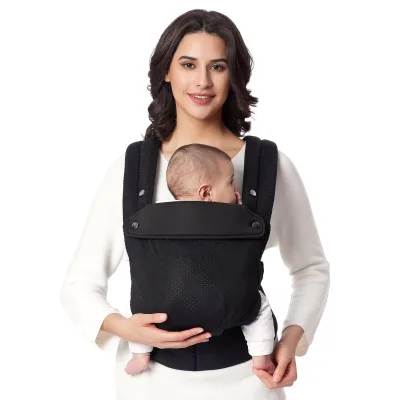


Everyday Skin-Friendly Baby Carrier with Breathable Open Design, Baby Carrier
$2.25 - $2.75
MOQ: 500 Pieces

Adjustable Infant Carrier with Waist Stool for Newborn to Toddler, Baby Carrier
$13.55 - $15.40
MOQ: 500 Pieces


Adjustable Positions Baby Carrier Breathable Multifunctional Baby Hipseat
$8.13 - $9.47
MOQ: 300 Pieces


Comprehensive Sourcing Guide
Strategic Sourcing Guide for Adjustable Breathable Baby Carriers
Understanding the Product Category and Technical Specifications
The Adjustable Breathable Baby Carrier represents a specialized segment within the infant transport market, designed to offer ergonomic support for both the caregiver and the child while maintaining airflow to prevent overheating. When sourcing this specific category, buyers must first distinguish between the various functional configurations available in the supply chain. The core product type is identified as a "Baby Carrier," with specific models ranging from HMJ-XC-4100 to HMJ-HBB-2600, and others such as JH2412203- #0003 and BW-2111. These models exhibit distinct structural characteristics, including foldable designs and specific weight limits that dictate their suitability for different market segments.
Technical specifications are the primary differentiator in this category. The observed data indicates a variety of weight capacities, with some models supporting infants up to 16 kilograms, while others specify a range of 14-16 kilograms. This variance requires precise alignment with the target demographic; for instance, a carrier rated for 3-24 months is functionally distinct from one with a minimum weight recommendation of 7 pounds and a maximum support of 44 pounds. The physical dimensions of the folded product are equally critical for logistics planning. Observed packing standards vary significantly, with some units measuring 282318CM, while others are as compact as 14.2"D x 5.9"W x 5.3"H. Buyers must verify these dimensions against their shipping constraints, as the "Foldable" attribute is a standard feature across many models, yet the resulting packed volume differs by manufacturer.
Material composition plays a pivotal role in the "breathable" claim. The supply chain offers products with varying fabric blends, such as a composition of 80% Polyester and 20% Cotton, or items made from 100% Cotton. The frame material is also a key specification, with some listings explicitly noting "Cotton" as the frame material, while others utilize a Polyester + Cotton mix. These material choices directly influence the carrier's durability, washability, and thermal regulation properties. Care instructions further reflect these material differences, with some products requiring "Machine Wash" while others specify "Hand Wash Only." Understanding these nuances is essential for defining the product's lifecycle and maintenance requirements for the end consumer.
Compliance, Certification, and Safety Standards
In the realm of baby products, compliance and safety are non-negotiable. While the provided data does not confirm specific certification statuses for every listed model, it references trusted industry standards such as OEKO-TEX and GOTS as relevant background considerations. Buyers must treat these as verification targets rather than guaranteed attributes of every SKU. The presence of "QC: Support" in the product attributes suggests that suppliers are capable of facilitating quality control processes, but the specific nature of the quality checks must be defined by the buyer.
When evaluating compliance, the focus should be on the origin and the manufacturing standards. The majority of the observed products originate from China, with specific mentions of Zhejiang as a production hub. This geographic concentration implies a mature supply chain but also necessitates rigorous due diligence regarding local and international safety regulations. Buyers should verify that the "Weight Limit" claims are backed by independent testing data, as these limits are critical for preventing structural failure during use. The distinction between "Weight Limit" and "Weight Supported" (e.g., 44 Pounds) must be clearly understood to ensure the product meets the intended safety thresholds for the target age group of 3-24 months.
Furthermore, the "Customized" logo and "Customization" availability indicate that many suppliers offer OEM services. However, customization must not compromise the structural integrity or safety compliance of the carrier. Any branding added to the product should not interfere with the breathable mesh or the load-bearing straps. Buyers should request documentation proving that the customized items still adhere to the same safety standards as the base models. The absence of explicit certification data in the product list means that the buyer's procurement team must actively request and validate these documents before finalizing any order.
Cost Drivers and Pricing Dynamics
The pricing landscape for adjustable breathable baby carriers is influenced by several interconnected factors, including material composition, customization levels, and order volume. The observed price range in the market spans from 2.04 to 18.12 USD, a wide spectrum that reflects the diversity in product quality and complexity. At the lower end of this range, products likely utilize simpler materials or have fewer customization options, while the higher end may correspond to premium fabric blends, advanced ergonomic designs, or extensive branding services.
Material costs are a primary driver of price variance. A carrier constructed from 100% Cotton will generally command a higher price point than one made from a Polyester blend, due to the cost of raw materials and the labor intensity of processing natural fibers. Similarly, the inclusion of specific features, such as the "Cross" strap type or specific folding mechanisms, adds to the manufacturing complexity and, consequently, the unit cost. The "Item Weight" of 1.2 Pounds for certain models also suggests a specific density of materials, which impacts shipping costs and overall logistics expenses.
Order volume is another critical cost driver. The Minimum Order Quantity (MOQ) varies significantly, with observed ranges from 2 to 1000 units, and a specific high-confidence fact noting an MOQ of 500PCS for certain models. Buyers with smaller order volumes may face higher per-unit costs due to the fixed costs of production setup and tooling. Conversely, larger orders can leverage economies of scale to reduce the unit price. However, the "Packing" method, whether "1PC/Bag," "1PCS/OPP Polybag," or "Color Box," also affects the final cost. Premium packaging options like color boxes will increase the price compared to simple polybagging, even if the carrier itself is identical.
Typical Applications and Market Segmentation
The Adjustable Breathable Baby Carrier serves multiple applications, catering to different usage scenarios and consumer needs. The primary application is infant transport, with specific models designed for "Front and Back Carry" orientations. This versatility allows caregivers to switch positions based on the child's age, comfort, or the caregiver's preference. The "Front" orientation is particularly noted in specific models, suggesting a design focus on bonding and monitoring the infant's well-being during the early months.
The target age range of 3-24 months indicates that these carriers are suitable for newborns who have developed sufficient neck control, as well as toddlers who are still too young to walk long distances. The weight limits, ranging from a minimum of 7 pounds to a maximum of 44 pounds, further segment the market. Some carriers are optimized for the early stages of infancy, while others are designed to accommodate heavier toddlers, extending the product's utility. This broad weight range suggests that a single carrier model might serve a family for a longer period, increasing its value proposition.
In terms of usage environments, the "Portable" attribute and "Foldable" design make these carriers ideal for travel, urban commuting, and outdoor activities. The compact dimensions, such as 214515CM or 254315CM when folded, ensure that the carriers can be easily stored in strollers, car trunks, or backpacks. The "Breathable" nature of the materials is particularly beneficial in warm climates or during physical activity, where heat dissipation is crucial for the comfort of both the wearer and the child. This makes the product highly relevant for active parents and travel-oriented demographics.
Supplier Evaluation and Quality Control Protocols
Evaluating suppliers in the baby carrier sector requires a multi-faceted approach that goes beyond price and lead time. The "QC: Support" attribute indicates that suppliers are willing to engage in quality assurance processes, but the depth of this support varies. Buyers should prioritize suppliers who offer transparent quality control protocols, including pre-production sample approvals, in-process inspections, and final random inspections. The "Customized" nature of the logo and packaging requires additional verification steps to ensure that branding does not compromise the product's safety or aesthetic quality.
Supplier location is another critical factor. With origins primarily in China and specific mentions of Zhejiang, buyers should consider the logistical advantages and potential risks associated with these regions. Zhejiang is a known hub for textile and manufacturing industries, which can offer competitive pricing and efficient production cycles. However, buyers must verify the supplier's capacity to handle the specific "MOQ" requirements, which can range from small batches of 2 units to large orders of 1000 units. Flexibility in MOQ can be a significant advantage for buyers testing new markets or managing inventory carefully.
Quality control should also focus on the material integrity and construction durability. Given the "Weight Limit" specifications, buyers must ensure that the stitching, strap attachments, and frame materials are robust enough to withstand the maximum load. The "Material Composition" should be verified against the supplier's claims, as discrepancies can lead to product failures or safety hazards. Additionally, the "Care Instructions" provided by the supplier must be accurate and clear, as improper washing can degrade the fabric and compromise the carrier's performance.
Long-Term Procurement Considerations and Strategic Planning
Sourcing adjustable breathable baby carriers is not merely a transactional activity but a strategic initiative that requires long-term planning. The "Customization" options available, such as logo printing and packaging variations, offer opportunities for brand differentiation. However, buyers must balance the desire for customization with the need for consistency and reliability. Frequent changes in design or materials can disrupt the supply chain and lead to quality inconsistencies.
Sustainability is an emerging consideration in the baby product market. While the provided data does not explicitly confirm GOTS or OEKO-TEX certification for all products, the mention of these standards suggests that eco-friendly materials and ethical manufacturing practices are relevant to the category. Buyers should explore suppliers who prioritize sustainable sourcing, such as the use of organic cotton or recycled polyester, to meet the growing demand for environmentally responsible products. This approach can enhance brand reputation and align with the values of modern consumers.
Inventory management is another critical aspect of long-term procurement. The "Foldable" and "Portable" attributes make these carriers space-efficient, but the variety of models and specifications requires careful inventory planning. Buyers should analyze sales data to determine which models and configurations are most popular, ensuring that stock levels align with market demand. The "Packing" methods, whether simple polybags or color boxes, also impact storage and display requirements. Strategic planning should include contingency measures for supply chain disruptions, such as diversifying suppliers or maintaining safety stock for high-demand items.
Comparative Analysis of Key Product Attributes
To facilitate informed decision-making, the following table summarizes the key attributes observed across the different models and suppliers. This comparison highlights the diversity in specifications, helping buyers identify the most suitable options for their specific needs.
| Attribute | Model HMJ-XC-4100 | Model JH2412203- #0003 | Model BW-2111 | Model BC-6708 |
|---|---|---|---|---|
| Type | Baby Carrier | Baby Carrier | Baby Carrier | Baby Carrier |
| Material | Not Specified | Cotton Frame | Polyester + Cotton | 100% Cotton |
| Weight Limit | >16kg | 44 Pounds | Not Specified | Not Specified |
| Age Range | 3-24 Months | 7 Pounds Min | Not Specified | Not Specified |
| Orientation | Front and Back | Front | Not Specified | Not Specified |
| Folded | Foldable | Not Specified | Not Specified | Not Specified |
| Packing | 1PC | Color Box | 1PC/Bag | 1 PCS/OPP Polybag |
| Dimensions | 282318CM | 23 x 16 x 21 inches | 14.2"D x 5.9"W x 5.3"H | 1 pcs/OPP polybag |
| Origin | China | China | Zhejiang, China | China |
This comparative view underscores the importance of aligning product specifications with buyer requirements. The variation in materials, weight limits, and packaging options necessitates a thorough review of each model's capabilities before making a procurement decision. By carefully analyzing these attributes, buyers can ensure that the selected baby carriers meet the highest standards of safety, comfort, and quality for their target market.
FAQs
What is the weight limit for adjustable breathable baby carriers?
Weight limits vary by model, with some supporting up to 16 kilograms and others up to 44 pounds. Buyers must verify the specific limit for each SKU to ensure safety for infants aged 3 to 24 months.
Which materials are commonly used in these carriers?
Common compositions include 80% polyester with 20% cotton or 100% cotton frames. These blends influence breathability and durability, with care instructions ranging from machine wash to hand wash only.
Can buyers request custom logos on these products?
Yes, customization is available for logos and packaging options like color boxes or polybags. This service allows branding without compromising the foldable design or structural integrity of the carrier.
What is the typical minimum order quantity for these items?
Minimum order quantities range from 2 to 1000 units, with specific models requiring 500 pieces. Smaller orders may incur higher per-unit costs due to production setup and tooling expenses.
How do folded dimensions affect shipping and storage?
Folded sizes vary significantly, ranging from compact 14 inches to larger 45-inch configurations. These dimensions determine logistics planning, as foldable designs must fit within specific shipping constraints and storage spaces.
What is the origin of these baby carriers?
Most products originate from China, with specific manufacturing hubs in Zhejiang. This geographic concentration offers a mature supply chain but requires verification of local and international safety regulations.