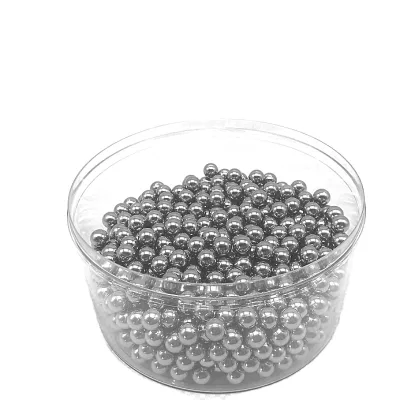
Source High Polished Chrome Steel Ball for Bicycle Motor Machinery
Compare 30 listings for High Polished Chrome Steel Ball with sizes from 0.4mm to 200mm and hardness of 58-65 HRC. Buyers can review specifications, certifications, and delivery times from Jiangsu, China suppliers.
Key considerations
Products List




Comprehensive Sourcing Guide
Strategic Sourcing Guide for High Polished Chrome Steel Balls
The procurement of high polished chrome steel balls represents a critical decision point for industries ranging from automotive manufacturing to precision machinery and household appliances. These components serve as the fundamental rolling elements in bearings, where surface finish, dimensional accuracy, and material integrity directly dictate the operational lifespan and efficiency of the final assembly. For buyers navigating the global market, understanding the specific technical attributes, material standards, and supplier verification processes is essential to mitigate risk and ensure supply chain reliability. This guide provides a structured approach to sourcing these components, grounded in observed market data and established industry practices.
Technical Specifications and Material Integrity
The foundation of a successful procurement strategy lies in a precise understanding of the technical specifications that define a High Polished Chrome Steel Ball. The primary material designation observed in the market is AISI 52100, often cross-referenced with international equivalents such as 100Cr6, GCr15, Suj-2, and Material 1.3505. These designations indicate a high-carbon chromium steel alloy specifically engineered for bearing applications. The chemical composition typically includes Carbon (C), Silicon (Si), Manganese (Mn), Chromium (Cr), Molybdenum (Mo), Phosphorus (P), Sulfur (S), Copper (Cu), Aluminum (Al), and Oxygen (O). The balance of these elements, particularly the chromium content, is vital for achieving the necessary hardness and wear resistance.
Dimensional consistency is equally critical. The market offers a broad size range, with observations indicating availability from 0.4mm up to 200mm, though specific listings often highlight ranges between 0.6mm and 180mm. Buyers must verify the exact size tolerance required for their application, as the precision grade (ranging from G10 to G1000) dictates the allowable deviation in diameter and roundness. The hardness of these balls is a non-negotiable specification, with standard observations falling between 58 and 65 HRC. This hardness level ensures the balls can withstand high contact stresses without deformation. The surface finish is described as "polished," a process that reduces friction and heat generation during operation. The shape is consistently observed as solid round, distinguishing these from hollow or segmented alternatives.
Compliance, Certification, and Standard Verification
In the B2B procurement of precision components, certification serves as a proxy for quality management system maturity. While specific supplier claims vary, the market frequently references adherence to ISO standards. Buyers should verify that the supplier maintains a valid ISO certification, which indicates a commitment to standardized quality control processes. Additional certifications such as BV (Bureau Veritas) and SGS are often cited in product listings, suggesting third-party validation of material and process compliance.
It is important to distinguish between general ISO certifications and specific product standards. While general quality management systems are often ISO 9001, specific product standards for steel balls may include ISO 3290, DIN 5401, ASTM F2215, or ISO 3970. However, buyers must exercise caution and request direct evidence of these specific standards rather than relying on general marketing claims. The product listings also mention "International Standard" designations like 100Cr6 and GCr15, which are material standards rather than dimensional tolerances. When evaluating a supplier, procurement teams should request a Certificate of Analysis (CoA) that explicitly maps the supplied material to these international standards. Furthermore, the "Standard Parts" attribute suggests that these components are often available as off-the-shelf items, but customization is also available. Buyers must clarify whether they require standard ISO tolerances or custom specifications, as this impacts the lead time and unit cost significantly.
Cost Drivers and Pricing Dynamics
The pricing of high polished chrome steel balls is influenced by a complex interplay of factors, including material costs, dimensional tolerance, surface finish requirements, and order volume. The observed price range in the market spans from $0 to $915, a wide variance that reflects the difference between small, low-tolerance units and large, high-precision batches. The unit price is rarely static; it is heavily dependent on the Minimum Order Quantity (MOQ). The market shows an MOQ range from 1 to 1000 units, indicating that suppliers are flexible for prototyping but may require bulk commitments for standard pricing.
Material grade is a primary cost driver. Balls meeting the G10 grade, which represents the highest precision, will command a premium over those meeting G1000. Similarly, the surface finish process—polishing to a mirror-like sheen—adds processing time and cost compared to a standard machined finish. Packaging also influences the final landed cost. Options such as steel drums, plastic bags, boxes, and cartons vary in expense, with specialized packaging for high-value shipments adding to the total. Buyers should note that "Stock" items, which are ready for immediate shipment within 7 days, may carry a different pricing structure compared to "Around 35 Days" lead time items, which may involve custom manufacturing runs. Understanding these variables allows buyers to negotiate more effectively and anticipate total cost of ownership rather than just the unit price.
Typical Applications and Performance Requirements
High polished chrome steel balls are ubiquitous in industries where reliability and low friction are paramount. The primary application observed is in ball bearings, where these balls facilitate smooth rotation and load distribution. Beyond bearings, the market data highlights applications in bicycles, motors, and general machinery. The durability of AISI 52100 steel makes it suitable for the high-stress environments found in automotive industries, where it contributes to the performance of wheel hubs and transmission systems.
The versatility of these components extends to household appliances, where they are used in washing machines, dryers, and other rotating mechanisms. The "Solid Round" shape and "Chrome Steel" material provide the necessary strength to handle the dynamic loads and vibrations inherent in these appliances. For buyers in the automotive sector, the "Maximum Hardness with Good Corrosion Resistance" characteristic is a key selection criterion. While chrome steel offers excellent hardness, it is not inherently stainless; therefore, the conditioning of the balls (dry or oiled) is crucial for preventing rust during storage and transit. The choice between oiled and dry conditioning depends on the specific storage environment and the immediate requirements of the assembly line.
Supplier Evaluation and Geographic Considerations
When evaluating potential suppliers, geographic origin is a significant factor in logistics and communication. The majority of high-volume chrome steel ball production is concentrated in Jiangsu, China, with specific mentions of Changzhou as a production hub. This concentration suggests a mature supply chain ecosystem with established infrastructure for shipping and quality control. However, buyers should not assume that all suppliers in this region offer identical quality. The "Universal" attribute and "Customization" availability suggest that many suppliers are capable of adapting to specific client needs, but the depth of this capability varies.
Suppliers should be evaluated based on their ability to provide transparent documentation. A reliable supplier will offer clear details on their production process, from raw material sourcing to final polishing. The "Standard Parts" attribute implies that many suppliers stock common sizes, but the "Customized" attribute indicates that custom orders are also a core competency. Buyers should prioritize suppliers who can demonstrate a track record of meeting the specific hardness (58-65 HRC) and size range (0.4-200mm) requirements. Additionally, the "Stock" availability is a key differentiator; suppliers with significant inventory can offer faster lead times, which is critical for production lines that cannot afford delays.
Quality Control and Long-Term Procurement Strategy
Ensuring consistent quality requires a robust quality control (QC) strategy. Buyers must verify that the supplier employs rigorous testing protocols to ensure the hardness, dimensional accuracy, and surface finish meet the specified requirements. The "Polished" surface finish is not merely aesthetic; it is a functional requirement that reduces friction and wear. QC should include checks for surface defects, such as pitting or scratches, which can compromise the ball's performance. The "Conditioning" of the balls, whether dry or oiled, must be verified to ensure they arrive in the correct state for immediate use or storage.
For long-term procurement, building a relationship with a supplier who offers consistent quality and reliable lead times is essential. The "Around 35 Days" lead time for custom orders suggests that planning ahead is necessary for non-stock items. Buyers should consider the "Packaging" options carefully; standard packaging like boxes and plastic bags is common, but specialized packaging may be required for high-value or sensitive shipments. The "Value" of the component in the final product, particularly in the automobile industry, underscores the need for a strategic approach to sourcing. This involves not just buying the lowest price but securing a supply chain that minimizes the risk of downtime due to component failure.
Comparative Analysis of Product Attributes
To facilitate decision-making, the following table summarizes the key attributes observed in the market for high polished chrome steel balls. This comparison highlights the variability in specifications and helps buyers identify the critical parameters for their specific needs.
| Attribute Category | Common Observation | Verification Requirement |
|---|---|---|
| Material Mark | AISI 52100, 100Cr6, GCr15, Suj-2 | Request CoA to confirm alloy composition |
| Size Range | 0.4mm - 200mm (Common: 0.6mm - 180mm) | Confirm tolerance grade (G10-G1000) |
| Hardness | 58-65 HRC | Verify via hardness testing report |
| Surface Finish | Polished | Visual inspection and roughness measurement |
| Certification | ISO, BV, SGS | Check validity of certificates |
| Origin | Jiangsu, China (e.g., Changzhou) | Confirm factory location and capacity |
| Lead Time | 7 Days (Stock) or ~35 Days (Custom) | Align with production schedule |
| Packaging | Box, Plastic Bag, Steel Drum, Carton | Specify based on shipping and storage needs |
By adhering to these guidelines and focusing on the verified attributes provided, buyers can navigate the complex landscape of chrome steel ball procurement with confidence. The key is to balance the need for precision with the realities of supply chain logistics, ensuring that the selected components meet the rigorous demands of modern industrial applications.
FAQs
What material is used for high polished chrome steel balls?
The primary material is AISI 52100 chrome steel, also known as 100Cr6 or GCr15. This high-carbon chromium steel ensures hardness between 58 and 65 HRC for reliable bearing performance.
Which size range is available for these steel balls?
Available sizes range from 0.4mm to 200mm, with common listings covering 0.6mm to 180mm. Buyers can select from various precision grades, typically spanning G10 to G1000.
Can these balls be customized for specific applications?
Yes, customization is available for specific client needs. While standard parts are in stock, suppliers offer tailored options for unique dimensions or surface finishes required by machinery or automotive industries.
How long is the delivery time for stock items?
Stock items are typically ready for shipment within 7 days. Custom orders or larger batches may require around 35 days depending on the manufacturer's production schedule and capacity.
What certifications do these products typically hold?
Products often carry ISO, BV, and SGS certifications. These verify adherence to international standards and quality management systems, ensuring the steel balls meet required industrial specifications.
Where are these chrome steel balls manufactured?
Most production originates from Jiangsu, China, with specific hubs in Changzhou. This region hosts a mature supply chain capable of meeting global demand for precision bearing components.
What packaging options are provided for these balls?
Standard packaging includes boxes, plastic bags, steel drums, and cartons. Buyers can also request custom packaging solutions to protect the balls during transit or to meet specific logistical requirements.