Source High Pressure Refrigerant Charging Hose for HVAC, Auto AC, and Industrial Cooling
Find 30 High Pressure Refrigerant Charging Hose options from verified Chinese manufacturers. Compare specifications including working pressure, burst pressure, and refrigerant compatibility for R134A, R410A, and R22 systems.
Key considerations
Products List


Factory Price Premium Refrigerant Charging Hose 1/4′ ′ SAE with Ball Valve
$2.00 - $3.00
MOQ: 500 Pieces




Comprehensive Sourcing Guide
High Pressure Refrigerant Charging Hose Sourcing Guide
Product Scope and Observed Listing Signals
The market for high-pressure refrigerant charging hoses presents a diverse array of products that blend general-purpose industrial components with specialized HVAC/R tools. Observed listings indicate a wide spectrum of product identities, ranging from digital display units and bellows pressure gauges to specific rubber air hoses and dedicated refrigerant charging lines. Buyers must carefully distinguish between these categories, as a "charging hose" may be listed alongside unrelated instrumentation such as civil and industrial pressure gauges with axial connections. The presence of attributes like "Local Indication Type" or "Electric Signal-controlled" in some listings suggests that suppliers often bundle complementary measurement devices with the actual hose assemblies, requiring precise filtering to isolate the fluid transfer components needed for refrigerant handling.
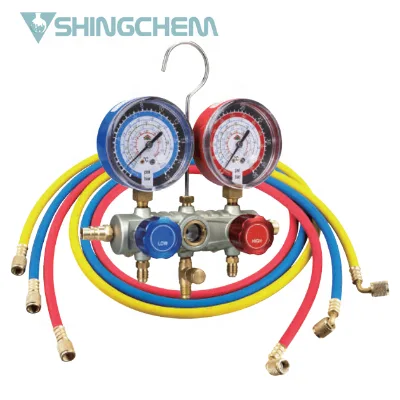
Visual and descriptive signals further complicate the sourcing landscape, with products appearing in various colors such as red, yellow, and blue, which often correspond to specific refrigerant types or pressure ratings in industry practice. The observed product models include specific identifiers like CT-336, CT-336A, and CT-366b, alongside generic size designations such as 1/4, 3/8, and 5/16 inches. These size variations are critical for compatibility with different service valve ports on HVAC equipment. Additionally, some listings describe the product as a "charging hose" with an overall length of 1.5 meters or 60 inches, while others refer to bulk rubber hoses with lengths up to 200 meters, indicating that buyers must clarify whether they are purchasing pre-assembled service kits or raw material for custom fabrication.
Technical Specifications to Verify
Verifying the working and burst pressure ratings is the most critical technical step when sourcing high-pressure refrigerant charging hoses. Trusted category knowledge and observed data indicate that these hoses must withstand significant internal pressures, with some listings specifying a working pressure of 800 PSI and a burst pressure of 4000 PSI. These figures are essential for ensuring safety during the charging of modern refrigerants like R410A and R134A, which operate at higher pressures than legacy gases. Buyers should confirm that the hose construction, described as a multi-layer assembly of tube, reinforcement, and cover, is engineered to handle these specific pressure differentials without risk of failure or permeation.
The compatibility of the hose material with specific refrigerants and environmental conditions must also be rigorously checked. Observed attributes highlight resistance to ozone and UV exposure, with some products tested for 72 hours of ozone resistance, which is vital for outdoor HVAC installations. The temperature range is another key specification, with typical operating limits cited between -30 and +95 degrees Celsius, ensuring flexibility and integrity in diverse climates. Furthermore, the internal tube material must be chemically compatible with the refrigerant being used, whether it is R22, R134A, R410A, R404, or R502, to prevent degradation of the hose lining that could lead to contamination of the refrigerant charge or hose failure.
Compliance and Safety Documentation
Safety and regulatory compliance are paramount when handling pressurized refrigerants, and buyers should prioritize suppliers who provide relevant certifications. Observed listings mention RoHS and ISO9001 certifications, which indicate adherence to environmental standards for hazardous substances and quality management systems, respectively. While these certifications do not directly certify the hose for refrigerant use, they serve as strong indicators of a supplier’s manufacturing discipline and commitment to consistent quality. Buyers should request documentation that specifically addresses the hose’s compliance with industry standards for refrigerant handling, ensuring that the product meets the necessary safety thresholds for pressure containment and chemical resistance.
Standards verification is another crucial aspect of compliance, with some products referencing SAE J2888 and SAE J2196, which are recognized standards for refrigerant hose assemblies. These standards define requirements for performance, durability, and testing procedures specific to automotive and stationary refrigeration applications. Buyers must ensure that the hoses they procure meet the specific standard applicable to their region and application type, as non-compliant hoses may fail safety inspections or void equipment warranties. Additionally, the presence of a one-year warranty on some products suggests a level of confidence in the product’s longevity, but buyers should clarify the terms of this warranty to understand what constitutes valid coverage versus misuse.
Cost Drivers and Commercial Terms
The cost of high-pressure refrigerant charging hoses is influenced by several factors, including material quality, construction complexity, and order volume. Observed price ranges vary significantly, from as low as $0.25 to as high as $47, reflecting the diversity of products from simple rubber tubes to complex, multi-layered, certified assemblies. The minimum order quantity (MOQ) also varies, with observed ranges from 100 to 5000 units, impacting the unit price and overall procurement strategy. Buyers should consider whether they are purchasing individual hoses or bulk rolls, as the latter may offer cost advantages for large-scale manufacturing or custom hose assembly operations.
Commercial terms and payment conditions also play a significant role in the total cost of ownership. Observed listings indicate a lead time of approximately 25 days, which buyers must factor into their supply chain planning to avoid production delays. Payment terms such as TT (Telegraphic Transfer) are common, and buyers should negotiate favorable terms based on their order volume and relationship with the supplier. Additionally, packaging methods, ranging from polybags and cartons to pallets, can affect shipping costs and handling requirements, so buyers should specify their preferred packaging to ensure efficient logistics and minimize damage during transit.
Supplier Qualification and Quality Control
Supplier qualification requires a thorough assessment of manufacturing capabilities and quality control processes. Buyers should verify that suppliers have the capability to produce rubber air hoses and refrigerant charging hoses with the specified construction layers, including the reinforcement that provides pressure resistance. The origin of the products, often listed as China or specifically Ningbo City, Zhejiang, provides context for the supply chain, but buyers should conduct on-site audits or request third-party inspection reports to verify manufacturing standards. Customization availability is a key advantage, allowing buyers to tailor hose lengths, colors, and fittings to their specific needs, but this requires clear communication and robust quality assurance protocols.
Quality control measures should include rigorous testing for pressure integrity, ozone resistance, and refrigerant compatibility. Buyers should request test reports that demonstrate the hose’s ability to withstand the specified working and burst pressures without leakage or deformation. Additionally, visual inspections for defects in the cover layer and consistent coloration can help identify manufacturing inconsistencies. Suppliers who offer customization should also provide samples for evaluation before committing to large orders, ensuring that the final product meets the buyer’s technical and aesthetic requirements.
Long-Term Procurement Checks
Long-term procurement success depends on establishing a reliable supply chain that can adapt to changing market demands and regulatory requirements. Buyers should regularly review supplier performance metrics, including on-time delivery rates, product quality consistency, and responsiveness to issues. The availability of customization and the ability to meet specific model requests, such as CT-336 or specific size ranges, are indicators of a supplier’s flexibility and commitment to customer satisfaction. Maintaining open communication with suppliers about future needs and potential changes in refrigerant standards can help ensure a continuous supply of compliant and high-quality hoses.
Furthermore, buyers should stay informed about industry trends and technological advancements in refrigerant handling equipment. As the HVAC/R industry shifts towards lower global warming potential refrigerants, the requirements for charging hoses may evolve, necessitating updates to material specifications and testing protocols. By maintaining a proactive approach to supplier management and staying engaged with industry developments, buyers can mitigate risks and ensure that their procurement strategy remains aligned with best practices and regulatory expectations.
FAQs
What is the working pressure of this High Pressure Refrigerant Charging Hose?
The hose operates at a working pressure of 800 Psi. It is constructed with a tube, reinforcement, and cover to ensure durability. The burst pressure reaches 4000 Psi, providing a significant safety margin for industrial applications. This design supports reliable performance under high-pressure conditions.
Which refrigerants are compatible with this charging hose?
This hose is compatible with R12, R22, R134A, R404, R502, R410A, and R134. It is specifically designed for general pressure gauge applications. The material ensures resistance to ozone and UV exposure, making it suitable for various refrigerant types in civil and industrial settings.
Can the hose be customized for specific requirements?
Yes, customization is available for this product. Buyers can request specific models, standards, and packing methods. The supplier offers options for axial connection types and direct mounting structures. This flexibility allows the hose to meet diverse operational needs and specific project specifications.
What certifications does the High Pressure Refrigerant Charging Hose hold?
The product holds RoHS and ISO9001 certifications. These standards ensure quality management and environmental compliance. The hose meets SAE J2888/2196 standards for performance. Buyers can rely on these documented certifications for procurement compliance and quality assurance in international trade.
What is the lead time for ordering this refrigerant hose?
The standard lead time is 25 days. This duration applies to typical production runs. Buyers should consider this timeline for planning inventory and project schedules. The supplier uses polybag and carton packing or pallets for shipment, ensuring safe delivery within the specified timeframe.
What is the minimum order quantity for this hose?
The minimum order quantity ranges from 100 to 5000 units. This range depends on the specific model and customization requirements. Buyers can negotiate terms based on their volume needs. The flexible MOQ allows both small-scale and large-scale procurement to proceed efficiently.