Source High Pressure Pump Oil Seal for Engine, Transmission, Rear Axle
Compare 30 listings for High Pressure Pump Oil Seal options featuring NBR materials, various lip designs, and custom sizes. Buyers can evaluate specifications like hardness, pressure ratings, and working temperatures to find suitable components for engine, transmission, and rear axle applications.
Key considerations
Products List




Comprehensive Sourcing Guide
Strategic Sourcing Guide for High Pressure Pump Oil Seals
Understanding Technical Specifications and Material Integrity
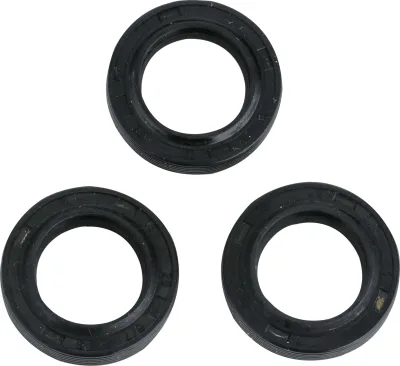
When sourcing high pressure pump oil seals, the primary objective is to identify components that can withstand extreme operational environments while maintaining a hermetic barrier against fluid leakage. The core technical differentiator for these components lies in their material composition and dimensional precision. Based on available market data, the most prevalent material specification for these seals is Nitrile Butadiene Rubber (NBR), with some high-performance variants utilizing HNBR (Hydrogenated Nitrile Butadiene Rubber). These materials are selected specifically for their oil resistance, a critical attribute for applications involving engine, transmission, and rear axle systems.
The physical construction of the seal is equally vital. Buyers must verify the lip configuration, as the market offers both single lip and double lip designs. A double lip configuration often provides enhanced protection against external contaminants, while a single lip may suffice for internal pressure retention. Furthermore, the lip material itself can vary, with composite lip options available to improve wear resistance and friction characteristics. The hardness of the rubber compound is another non-negotiable parameter, typically ranging from 30 to 90 Shore A. This range allows for flexibility in sealing against varying shaft speeds and pressures, ensuring the seal can deform slightly to fill microscopic gaps without extruding under load.
Dimensional standards are the next critical area of verification. While "Standard" is a common designation, precise measurements are required for high-pressure applications. Observed standard dimensions in the market include specific ratios such as 25.38x44.45x7.16 mm and 24x36x8.5 mm, alongside larger configurations like 45x68x12 mm. Customized sizes are also widely available, catering to unique pump geometries. The working temperature range is a significant constraint; reliable units in this category are engineered to function effectively between 100°C and 280°C. Exceeding these thermal limits can compromise the integrity of the NBR or HNBR material, leading to hardening, cracking, or loss of elasticity.
Compliance, Certification, and Standard Verification
In the B2B procurement of industrial sealing components, verifying compliance with industry standards is essential for risk mitigation. While specific certification bodies like ISO 9001 are often referenced in the broader manufacturing sector, buyers must treat these as background context rather than guaranteed attributes of every listed product. Instead of assuming a supplier holds a specific certification, the procurement strategy should focus on demanding proof of quality management systems and material traceability.
The "Standard" designation found in product listings often refers to a generic adherence to dimensional tolerances rather than a specific international standard code. Buyers should explicitly request the specific standard code (e.g., DIN, ISO, or SAE) that the seal meets, particularly for high-pressure applications where failure can result in catastrophic equipment damage. The provided data indicates that "Standard" and "Standard or Customized" are common descriptors, but these are observational facts rather than definitive compliance guarantees.
To ensure compliance, the procurement process must include a request for a Certificate of Conformity (CoC) or a Material Test Report (MTR). These documents should verify that the NBR or HNBR material used matches the specified hardness and chemical resistance properties. Additionally, since the origin of many high-pressure seals is reported as China, specifically regions like Hebei, buyers should be aware of the need for rigorous supplier audits. The "Company" attribute often lists "Manufacturer," which suggests a direct supply chain, but this does not automatically imply adherence to Western safety or environmental regulations. Therefore, the verification process must include a check for any specific export compliance requirements relevant to the buyer's jurisdiction.
Cost Drivers and Pricing Dynamics
The pricing structure for high-pressure pump oil seals is influenced by a complex interplay of material costs, manufacturing complexity, and order volume. The observed price range in the market is exceptionally broad, spanning from $0.05 to $18,000 USD. This variance is not indicative of quality differences alone but reflects the scale of the transaction. The lower end of the spectrum typically represents single units or small-batch purchases of standard sizes, while the upper end often corresponds to complete repair kits, large custom orders, or specialized high-performance assemblies.
A significant cost driver is the "Customization" availability. While standard seals are produced in high volumes, leading to competitive pricing, custom dimensions or specialized lip configurations require dedicated tooling and setup time. This increases the unit cost significantly. The "MOQ" (Minimum Order Quantity) also plays a pivotal role in pricing. The observed MOQ range is 1 to 1000 units. Buyers purchasing at the lower end of the MOQ spectrum (e.g., 1 set) will face higher per-unit costs compared to those ordering in bulk. The "Competitive" price attribute noted in listings suggests that the market is price-sensitive, but it does not define a specific dollar amount.
Payment terms are another factor influencing the total cost of ownership. The standard payment term observed is "Tt" (Telegraphic Transfer), which is common in international trade. Buyers should negotiate payment schedules that align with production milestones to manage cash flow. Additionally, the "Packing" method, whether "Box+Carton," "Paper Roller," or "Plastic Film + Carton," can add to the final cost, especially for high-value repair kits. Buyers should evaluate whether the packaging meets their logistical needs to avoid unnecessary damage during transit, which would otherwise increase the effective cost of the procurement.
Typical Applications and Operational Environments
High-pressure pump oil seals are engineered for demanding environments where fluid dynamics and mechanical stress are at their peak. The primary applications identified in the market data include engine, transmission, and rear axle systems. These are the critical zones where hydraulic fluid must be retained under pressure while preventing external contaminants from entering the system. The "High Speed" attribute indicates that these seals are designed to operate effectively in rotating machinery where centrifugal forces are significant.
The "Pressure Type" designation further clarifies the operational context. These seals are not merely for static sealing but are designed to handle dynamic pressure fluctuations typical in hydraulic pumps and high-pressure fluid systems. The "Haplotype" and "Assembled" type classifications suggest that some units come as pre-assembled components, which can simplify installation in complex machinery like high-pressure pumps. The "Working Temperature" range of 100°C to 280°C confirms their suitability for high-heat environments, such as those found in diesel engines or heavy industrial hydraulic systems.
Furthermore, the "Usage" attribute explicitly lists engine, transmission, and rear axle, indicating a broad applicability across automotive and heavy machinery sectors. The "High Performance" quality attribute reinforces that these seals are intended for critical applications where failure is not an option. Buyers should ensure that the seal's pressure rating matches the specific pump's operating pressure to prevent extrusion or blowout. The "Rich in Size and Quantity" stock availability suggests that these components are readily available for maintenance and repair, making them suitable for both original equipment manufacturing (OEM) and aftermarket service.
Supplier Evaluation and Quality Control Protocols
Evaluating a supplier for high-pressure pump oil seals requires a rigorous approach that goes beyond surface-level product descriptions. The "Brand" attribute, which lists options like "Doking" or "Cfw" or "as Your Requirement," indicates that many suppliers offer OEM services. This flexibility is advantageous for buyers seeking private labeling, but it necessitates a deeper dive into the supplier's manufacturing capabilities. The "Manufacturer" status suggests a direct relationship, which can reduce lead times and improve communication, but it also requires verification of the supplier's actual production capacity.
Quality control should be a central pillar of the supplier evaluation process. The "Condition: 100% New" and "After Sale Service: 12 Months" attributes provide a baseline expectation, but buyers must verify these claims through independent testing. The "Hardness: 30-90 Shore a" range is a critical quality metric; buyers should request sample testing to ensure the material hardness falls within the specified range for their specific application. Additionally, the "Oil Resistance" feature must be validated through chemical compatibility tests, especially if the seal will be exposed to non-standard hydraulic fluids.
The "Warranty: 1 Year" and "12 Months" after-sale service periods are standard offers, but the terms of these warranties should be clearly defined in the contract. Buyers should inquire about the specific conditions under which a warranty claim can be made, such as whether it covers premature failure due to material defects or installation errors. The "Market: All of The World" attribute suggests a global reach, but buyers should verify the supplier's experience in their specific region to ensure they understand local regulatory and logistical requirements.
Long-Term Procurement and Lifecycle Management
Sourcing high-pressure pump oil seals is not a one-time transaction but part of a long-term lifecycle management strategy. The "Stock: Rich in Size and Quantity" attribute indicates that these components are generally available, but buyers should establish a reliable supply chain to mitigate the risk of stockouts during critical maintenance windows. The "Customization: Available" feature allows for long-term adaptation to equipment upgrades or design changes, making it a valuable asset for buyers with evolving machinery fleets.
Long-term procurement considerations also include the total cost of ownership (TCO). While the initial purchase price may be competitive, the cost of downtime due to seal failure can be substantial. Therefore, investing in higher-quality seals with verified material properties and robust warranties is often more cost-effective in the long run. The "Standard or Customized size" specification allows for future-proofing, ensuring that replacement parts remain compatible with equipment modifications.
Buyers should also consider the environmental impact of their procurement choices. The use of NBR and HNBR materials is standard, but the disposal and recycling of these rubber components should be factored into the sustainability strategy. Additionally, the "Packing" methods, such as "Paper Roller" or "Plastic Film," should be evaluated for their environmental footprint. Establishing a long-term partnership with a supplier who can provide consistent quality, timely delivery, and technical support is essential for maintaining the reliability of high-pressure pump systems. By focusing on these strategic elements, buyers can ensure a stable and efficient supply chain for their critical sealing needs.
FAQs
What materials are used for high pressure pump oil seals?
These seals are primarily made from NBR or HNBR rubber compounds. This material selection ensures high oil resistance and durability for engine and transmission applications under high pressure conditions.
Which lip configurations are available for these oil seals?
Buyers can choose between single lip or double lip designs. Some variants also feature a composite lip to improve wear resistance and friction characteristics in high-speed rotating machinery.
Can these seals operate at high temperatures?
Yes, reliable units function effectively between 100 and 280 degrees Celsius. This wide thermal range makes them suitable for demanding environments like diesel engines and heavy industrial hydraulic systems.
What is the typical hardness range for these rubber seals?
The hardness typically ranges from 30 to 90 Shore A. This flexibility allows the seal to deform slightly to fill microscopic gaps without extruding under high operational loads.
Are customized sizes available for specific pump requirements?
Customized sizes are widely available to cater to unique pump geometries. While standard dimensions exist, buyers can request specific measurements to ensure a perfect fit for their machinery.
What is the minimum order quantity for purchasing these seals?
The minimum order quantity ranges from 1 set up to 1000 units depending on the supplier. Purchasing at the lower end may result in higher per-unit costs compared to bulk orders.
Where are these high pressure oil seals typically manufactured?
Most products originate from China, with specific manufacturing hubs in Hebei. Buyers should verify the specific factory location to ensure quality management and logistics alignment.
What warranty or after-sale service is provided for these seals?
Standard offerings include a 12-month warranty and after-sale service period. Buyers should confirm specific claim conditions to ensure coverage for material defects or premature failures.