Source High Pressure Sewer Jetting Truck for Municipal Cleaning
Find and compare 30 High Pressure Sewer Jetting Truck models with varying tank volumes and chassis options. Evaluate specifications such as GVW, wheelbase, and engine power to select the right vehicle for urban drainage maintenance and industrial waste removal tasks.
Key considerations
Products List

High Pressure Washing Vacuum Sewer Cleaner Flushing Jetting Sewage Suction Truck
$29000.00 - $39600.00
MOQ: 1 Pieces


High Pressure Washing and Vacuum Combined Jet Sewage Suction Truck Water Jetting Truck
$16500.00 - $24800.00
MOQ: 1 Pieces

Factory Supply Fton 6cbm 6000L 6m3 High Pressure Sewer Jetting Tank Truck
$15800.00 - $26000.00
MOQ: 1 Pieces


Portable and High Quality Cleaning Jetting Sewage Suction Truck Low Price Tank Truck
$24500.00 - $29000.00
MOQ: 1 Pieces


High Pressure Sewer Jetting and Vacuum Suction Truck with Hydraulic Lifting Tank
$19000.00 - $20000.00
MOQ: 1 Pieces

Compact High Pressure Sewer Jetting and Vacuum Suction Truck for Municipal Drain Maintenance
$19000.00 - $20000.00
MOQ: 1 Pieces


16 Ton High Pressure Sewer Jetting and Vacuum Suction Truck with Hydraulic Lifting Tank
$69000.00 - $71000.00
MOQ: 1 Pieces


Heavy-Duty Shacman 13m³ Sewer Jetting Truck with High-Performance Pump
$20000.00 - $40000.00
MOQ: 1 Pieces


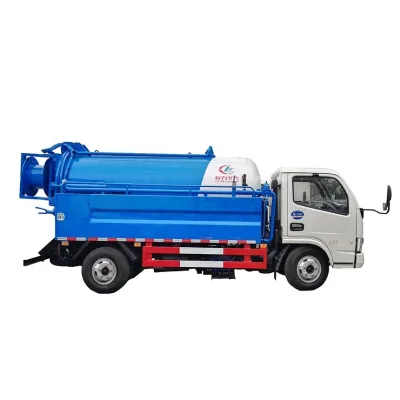

Multi-Functional Dongfeng 10 Tons High Pressure Sewer Jetting Truck Sewage Cleaning Truck
$29000.00 - $32000.00
MOQ: 1 units

Dongfeng High Pressure Jetting Sewer Cleaning Truck 3.5m3 Suction Tank
$13500.00 - $26400.00
MOQ: 1 Pieces

Customized 10 Wheels New Sewer Cleaning High Pressure 16m3/18m3 Drain Jetter Truck
$13500.00 - $26400.00
MOQ: 1 Pieces


Multi-Function Vacuum Sewage Suction Truck Dongfeng Mini Water Jetting Sewer Truck
$8900.00 - $17000.00
MOQ: 1 Pieces

Comprehensive Sourcing Guide
High Pressure Sewer Jetting Truck Sourcing Guide
Procuring specialized municipal and industrial maintenance vehicles requires a precise understanding of the distinction between vacuum sewage trucks and high-pressure jetting units. While the core keyword focuses on high-pressure jetting, the observed market data indicates a significant overlap in chassis platforms and supplier catalogs that list vacuum sewage trucks, vacuum trucks, and combined sewer cleaning vehicles. Buyers must recognize that "high pressure sewer jetting" often refers to the functional capability integrated into a chassis that may also feature vacuum suction systems. The sourcing strategy must therefore account for dual-functionality vehicles, where a single unit combines high-pressure water jetting for pipe clearing with vacuum suction for sludge removal. This hybrid approach is common in municipal fleets seeking to maximize asset utility, reducing the need for separate specialized trucks for different stages of sewer maintenance.
The observed product listings reveal a wide variance in vehicle specifications, ranging from light-duty configurations with a gross vehicle weight of 7,360 kg to heavy-duty models exceeding 25,000 kg. This spectrum suggests that suppliers offer modular solutions based on the intended operational environment, whether it be narrow urban streets or large industrial sites. The presence of multiple chassis models, such as the EQ1075 and EQ1125 series, indicates that buyers are not limited to a single manufacturer’s platform. Instead, the market offers flexibility to select a chassis that matches local road regulations and payload requirements. Understanding this diversity is critical, as the jetting pressure and tank volume capabilities are often dependent on the chosen chassis’s power take-off (PTO) capacity and structural integrity.
Product Scope and Observed Listing Signals
The current market signals indicate a strong availability of customization options, with suppliers explicitly noting that customization is available for these specialized vehicles. This flexibility allows buyers to tailor the jetting system’s pressure, flow rate, and tank configuration to specific municipal or industrial needs. The observed listings include vehicles with tank volumes ranging from 4.0 cubic meters to over 9.58 cubic meters, reflecting the diverse storage requirements for wastewater and debris. Buyers should interpret these variations as opportunities to optimize the balance between water capacity for jetting and sludge capacity for vacuum extraction, ensuring that the vehicle can complete a full cleaning cycle without frequent return trips to disposal facilities.
Condition and origin are consistent factors across the observed listings, with all products listed as new and originating from Hubei, China. This regional concentration suggests a mature supply chain for commercial vehicle modifications in this area, potentially offering competitive advantages in terms of component availability and specialized manufacturing expertise. The listings also highlight specific model numbers, such as HYS5137GYYZ3, which serve as unique identifiers for buyers to track specific configurations. However, buyers must be cautious not to assume that all listed models share identical jetting capabilities, as the model number often denotes the chassis or base vehicle rather than the specific superstructure or jetting equipment installed.
Technical Specifications to Verify
Verifying the technical specifications is paramount when sourcing high-pressure jetting trucks, particularly regarding the chassis and powertrain. The observed data shows a range of wheelbases from 2,600 mm to over 5,700 mm, which directly impacts the vehicle’s maneuverability and stability. A shorter wheelbase may be preferable for urban environments with tight turns, while a longer wheelbase provides better stability for heavy loads and high-pressure operations. Additionally, the drive wheel configuration is consistently listed as 4x4 or 4x2, with diesel fuel being the standard. Buyers must verify the engine horsepower, which ranges from 150 to 250 hp in the observed listings, to ensure sufficient power for both driving and operating the high-pressure pump and vacuum system simultaneously.
The tank volume and weight specifications provide critical insights into the vehicle’s operational capacity. Listings indicate tank volumes of 4.0, 7.35, and 9.58 cubic meters, with corresponding gross vehicle weights ranging from 7,360 kg to 25,000 kg. Buyers must carefully cross-reference the curb weight with the gross vehicle weight to determine the actual payload capacity for water and sludge. The axle load distribution, such as 2,640/4,720 kg for lighter models or 7,000/18,000 kg for heavier ones, must be checked against local road weight limits. Furthermore, the number of axles, typically two or three, affects the vehicle’s load-bearing capability and suspension performance, which is crucial for maintaining control during high-pressure jetting operations that can cause significant vibration and torque.
Compliance and Safety Documentation
Compliance with international and local standards is a non-negotiable aspect of sourcing specialized vehicles. The observed listings mention certifications such as ISOCCC and CCC, which are essential for market entry in certain regions. Buyers must verify that the supplier can provide the necessary documentation to prove compliance with these standards, including type approval certificates and emission standards, which are listed as Euro compliant in some configurations. The absence of specific emission tier details in the general observations means buyers must explicitly request the Euro standard level (e.g., Euro 5 or Euro 6) to ensure the vehicle meets environmental regulations in their operating jurisdiction.
Safety documentation extends beyond certification to include operational manuals and maintenance guidelines. The listed dimensions, such as overall lengths ranging from 5,635 mm to over 10,150 mm, and widths around 2,000-2,500 mm, must be reviewed to ensure the vehicle can access the intended work sites. The approach and departure angles, observed between 12 and 27 degrees, are critical for off-road or uneven terrain operations common in sewer maintenance. Buyers should request detailed safety data sheets for the jetting equipment, including maximum pressure ratings and emergency shutdown procedures, to ensure that the operational risks are adequately managed by the vehicle’s design and control systems.
Cost Drivers and Commercial Terms
The cost of high-pressure sewer jetting trucks is influenced by several key factors, including the chassis model, tank capacity, and the complexity of the jetting system. The observed price range of 100 to 71,000 USD suggests a wide disparity in vehicle classes, from smaller, single-axle units to large, multi-axle heavy-duty trucks. Buyers should understand that the lower end of this range likely corresponds to basic configurations with smaller tank volumes and lower horsepower, while the higher end reflects advanced systems with larger capacities, additional axles, and more sophisticated control systems. The minimum order quantity (MOQ) is consistently listed as 1, indicating that suppliers are willing to accommodate single-unit purchases, which is beneficial for small municipalities or private contractors.
Commercial terms such as packing and delivery conditions also play a role in the total cost of ownership. The observed listings specify "Nude Packing," which implies that the vehicles are shipped without additional protective packaging, potentially reducing shipping costs but requiring careful handling during transit. Buyers should clarify the Incoterms and delivery lead times, as these can vary significantly based on the customization level and production schedule. Additionally, the availability of customization means that buyers may incur additional costs for specific modifications, such as specialized nozzles, extended hose reels, or integrated water recycling systems. It is essential to obtain a detailed breakdown of costs to avoid unexpected expenses during the procurement process.
Supplier Qualification and Quality Control
Qualifying suppliers for specialized vehicles requires a thorough assessment of their manufacturing capabilities and quality control processes. Given that the products originate from Hubei, China, buyers should verify the supplier’s production facilities and their ability to handle complex vehicle modifications. The presence of specific chassis models in the listings suggests that the supplier has established relationships with major chassis manufacturers, which is a positive indicator of supply chain stability. Buyers should request evidence of past projects and references from other municipal or industrial clients to assess the supplier’s reliability and the performance of their vehicles in real-world conditions.
Quality control measures should be explicitly defined in the procurement contract, including pre-delivery inspections and testing protocols. Buyers should insist on witnessing the testing of the jetting system, including pressure tests and vacuum performance checks, before shipment. The listed specifications, such as maximum speed and axle load, should be verified through on-site inspections or third-party testing reports. Additionally, buyers should evaluate the supplier’s after-sales support capabilities, including the availability of spare parts and technical assistance, to ensure long-term operational readiness. A robust quality control process helps mitigate the risk of receiving vehicles that do not meet the specified performance criteria.
Long-Term Procurement Checks
Long-term procurement success depends on establishing a framework for ongoing performance monitoring and maintenance support. Buyers should implement a system for tracking vehicle performance metrics, such as jetting pressure consistency, vacuum efficiency, and fuel consumption, to identify potential issues early. The observed specifications, including wheelbase and track dimensions, should be used to plan maintenance schedules and facility requirements, ensuring that the vehicles can be serviced efficiently. Regular audits of the vehicle’s condition and performance against the initial specifications will help maintain operational efficiency and extend the lifespan of the equipment.
Furthermore, buyers should stay informed about regulatory changes and technological advancements in the sewer jetting industry. As emission standards become stricter and new technologies emerge, such as electric or hybrid jetting systems, buyers may need to update their procurement strategies accordingly. Maintaining a relationship with the supplier for future upgrades or replacements is crucial, as it ensures compatibility with existing fleet management systems and operational procedures. By focusing on long-term value rather than just initial cost, buyers can secure a reliable and efficient fleet of high-pressure sewer jetting trucks that meet their evolving operational needs.
FAQs
What is the tank capacity of the vacuum sewage truck?
The tank volume varies by model, with observed capacities including 4.0 cubic meters, 7.35 cubic meters, and 9.58 cubic meters. These volumes correspond to different chassis configurations and gross vehicle weights, allowing buyers to select a unit that matches their specific waste collection requirements and operational scale.
Which chassis models are used for these trucks?
The trucks utilize specific chassis models such as EQ1075sj3cdf and EQ1125sj8cdc. These chassis support various wheelbases ranging from 2700mm to over 5700mm, ensuring compatibility with different body sizes and axle load distributions required for heavy-duty municipal or industrial sewage transport applications.
Are these trucks customizable for specific needs?
Yes, customization is available for these vacuum trucks. Buyers can request modifications to suit particular operational environments or regulatory standards. This flexibility allows for tailored solutions regarding tank dimensions, pump configurations, or chassis specifications to ensure the vehicle meets precise functional requirements.
What certifications do these vehicles hold?
The vehicles hold ISOCCC and CCC certifications. These credentials indicate compliance with specific quality and safety standards relevant to their manufacturing and operation. Buyers should verify that the specific model selected meets the regulatory requirements of their target market or region.
What is the typical wheelbase range for these trucks?
Wheelbase options vary significantly across models, ranging from 2700mm to 5700mm plus additional axle spacing. Longer wheelbases are associated with higher gross vehicle weights and larger tank capacities, providing stability for heavier loads, while shorter wheelbases offer greater maneuverability for urban environments.
Can I find trucks with a 6000L tank volume?
Yes, models with a 6000L tank volume are available. This capacity corresponds to specific chassis configurations and is distinct from the 4.0 cubic meter or 9.58 cubic meter options. Buyers seeking this specific volume should look for units matching the associated curb weight and dimensions.