Find High Simulation Desktop Artificial Plant for Home Hotel Restaurant
Source 30 High Simulation Desktop Artificial Plant options from verified Chinese manufacturers. Buyers can compare materials like PE and plastic, customization services, and packaging details for home, hotel, and restaurant decoration needs.
Key considerations
Products List


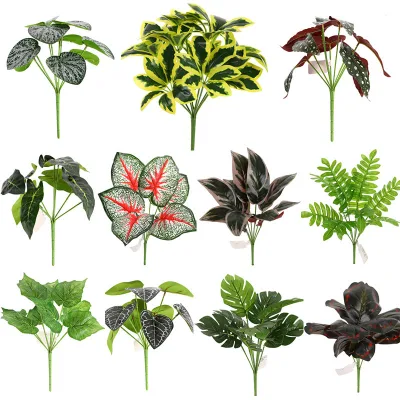


Hot Sale Good Quality Simulation Plastic Tree Plant Artificial Potted Tree
$9.50 - $23.00
MOQ: 50 Pieces

Desktop Wholesale Price Beautiful Corrosion-Resistance Fake Indoor Artificial Plant
$10.83 - $72.68
MOQ: 50 Pieces


Customizable Outdoor Indoor Artificial Plastic Plant for Wedding Decoration
$1.71 - $3.48
MOQ: 100 Pieces


Comprehensive Sourcing Guide
Strategic Sourcing Guide for High Simulation Desktop Artificial Plants
The global demand for high simulation desktop artificial plants has surged as businesses and homeowners seek durable, low-maintenance aesthetic solutions that mimic the organic complexity of real flora. For procurement professionals, sourcing these items requires a nuanced understanding of material composition, manufacturing standards, and supply chain logistics. The following guide synthesizes available market data to provide a disciplined framework for evaluating suppliers and products, ensuring that the final selection aligns with both aesthetic requirements and operational constraints.
Technical Specifications and Material Composition
The foundation of a high-quality artificial plant lies in its material composition and structural design. In the current market, the primary materials observed for these products are plastic and Polyethylene (PE). PE is particularly favored for high-simulation applications because it offers superior texture and flexibility, allowing manufacturers to replicate the veins and curvature of real leaves more effectively than standard rigid plastics. The surface treatment process typically involves printing techniques to apply realistic color gradients, ensuring that the "Green" or "Multicolor" attributes are not flat but possess depth and variation.
When evaluating technical specifications, buyers must look beyond generic descriptions. The product model numbers, such as P240582-60 or P220161-17, often encode specific dimensions or batch identifiers that are critical for inventory management. Height specifications vary significantly across the market, with observed ranges spanning from 17cm to 150cm. For desktop applications specifically, the most relevant dimensions typically fall between 40cm and 100cm, or more narrowly between 61cm and 90cm for table-top varieties. The base structure often utilizes a "Simulated Soil" root type, which provides stability and a naturalistic appearance when placed in a pot.
The packaging specifications are equally critical for transport integrity. Products are frequently shipped in cartons, with some variations utilizing boxed packaging or master cartons. A common packing standard observed is 10 pieces per carton, though this can vary based on the specific model and size. Buyers should verify the exact packaging dimensions, such as D28X28X60CM, to calculate shipping costs accurately and ensure the products fit within standard container loads without excessive void space.
Compliance, Certification, and Safety Standards
In the B2B sector, compliance is not merely a formality but a prerequisite for market access and brand safety. While specific test results for individual units are not universally disclosed in general product listings, reputable suppliers often adhere to recognized management and safety standards. The supply chain data indicates that certifications such as BSCI, Sedex, ISO9001, and ICS are available from certain manufacturers. These certifications suggest that the supplier maintains specific standards regarding labor practices, quality management systems, and supply chain transparency.
Buyers must verify the validity of these certifications directly with the supplier rather than relying solely on marketing claims. For products intended for commercial environments like hotels, restaurants, or supermarkets, fire safety is a paramount concern. However, it is important to note that the observed product attributes include a "Non-fire Retardant" classification for some items. This creates a critical distinction for procurement: if the destination market or the specific venue (such as a hotel or restaurant) mandates fire-retardant materials, the buyer must explicitly filter for products that meet these specific safety codes, as the default market offering may not satisfy this requirement.
Furthermore, the origin of the goods is a significant factor in compliance. The majority of the observed supply originates from China, with specific manufacturing hubs noted in Guangdong. This geographic concentration allows for economies of scale but requires rigorous due diligence regarding export regulations and potential trade tariffs. Buyers should also check for any region-specific environmental standards, as the "Sustainable Material Packaging" attribute suggests a growing trend toward eco-friendly logistics, which may be a requirement for corporate sustainability goals.
Cost Drivers and Pricing Dynamics
The pricing for high simulation desktop artificial plants is influenced by a complex interplay of factors, including material costs, customization levels, and order volume. The observed price range in the market is extensive, spanning from $0.58 to $72.68 USD. This wide variance indicates that the market is segmented by quality, size, and complexity. Lower-priced items likely utilize simpler plastic molds with basic printing, while higher-priced units may feature advanced PE materials, intricate leaf detailing, and custom pot designs.
Order Volume (MOQ) is a primary driver of unit cost. The minimum order quantities observed range from 10 to 720 units. Suppliers offering lower MOQs, such as 10 units, often charge a premium per unit to cover setup and handling costs. Conversely, larger orders can leverage economies of scale to reduce the per-unit price. Buyers must balance their inventory needs against their budget constraints. For instance, a small office renovation might opt for a higher MOQ to secure a better price point, whereas a large chain might negotiate a tiered pricing structure based on annual volume.
Customization is another significant cost variable. While some suppliers offer "Customized" services with "OEM/ODM" acceptance, others provide "Non-Customized" standard models. The ability to add logo printing, customize pot colors, or alter plant dimensions will inevitably increase the unit cost and potentially the lead time. Buyers should clearly define their customization needs early in the sourcing process to avoid unexpected cost escalations. The "As Your Request" standard implies a high degree of flexibility, but this flexibility comes with the administrative overhead of managing custom production runs.
Typical Applications and Aesthetic Integration
High simulation artificial plants serve a versatile range of applications, extending far beyond simple home decoration. The observed "Suitable for" categories include homes, weddings, restaurants, supermarkets, hotels, and commercial shops. This versatility is driven by the "Evergreen" and "Natural" features of the products, which allow them to maintain their aesthetic appeal without the maintenance requirements of live plants.
In residential settings, these plants are often used as tabletop accents or floor decorations in living rooms and bedrooms. The "Tabletop Plant" and "Artificial Tree" classifications highlight their adaptability to different spatial constraints. In commercial environments, the "Function" of decoration is paramount. Hotels and restaurants utilize these plants to create a welcoming atmosphere without the risk of pests or water damage. The "Olive Plant" and "Bonsai" styles are particularly popular for adding a touch of sophistication to reception areas or dining spaces.
The "Style" of the product, ranging from "Artificial Plant" to specific themes like "Grass Items," allows for cohesive interior design schemes. Buyers should consider the longevity of the product, with an observed "Lifetime" of 3-5 years. This durability makes them suitable for high-traffic areas where frequent replacement of decor would be cost-prohibitive. However, the "Non-fire Retardant" status mentioned earlier necessitates careful placement in venues with strict fire codes, potentially limiting their use in certain commercial zones unless specific safety upgrades are made.
Supplier Evaluation and Quality Control
Evaluating a supplier for artificial plants requires a multi-faceted approach that goes beyond price comparisons. The first step is verifying the supplier's ability to meet the "Customization" and "OEM/ODM" requirements. Suppliers that accept "Customized Services" and offer "Logo Printing" (both with and without options) demonstrate a higher level of operational flexibility. Buyers should request samples to assess the quality of the "Printing" surface treatment and the texture of the "PE" or "Plastic" materials.
Quality control should focus on the consistency of the "Simulated Soil" root type and the stability of the pot. The "Standard Export Carton" packaging is a positive indicator of a supplier's experience with international logistics, but buyers should also inspect the "Packing" details to ensure the products are protected against crushing during transit. The "Lifetime" of 3-5 years is a key performance indicator; buyers should inquire about the specific manufacturing processes that contribute to this durability, such as UV resistance treatments or the quality of the internal wiring and stems.
When assessing supplier reliability, the "prod_standard" of "As Your Request" suggests a willingness to adapt, but it also implies a need for clear communication. Buyers should establish a detailed specification sheet that includes exact dimensions (e.g., 60-150cm or 40-100cm), color codes, and packaging requirements. The presence of certifications like ISO9001 and BSCI is a strong signal of a supplier's commitment to quality and ethical standards, but these should be validated through third-party audits or recent audit reports.
Long-Term Procurement Considerations
Sourcing high simulation artificial plants is not a one-time transaction but a strategic partnership that impacts long-term operational efficiency. The "Lifetime" of 3-5 years suggests that these products are a medium-term investment. Buyers should consider the total cost of ownership, which includes not only the purchase price but also the costs associated with storage, handling, and potential replacement. The "Sustainable Material Packaging" attribute is increasingly relevant for companies with environmental, social, and governance (ESG) goals. Procuring from suppliers who prioritize sustainable packaging can enhance a brand's reputation and align with corporate sustainability targets.
Supply chain resilience is another critical consideration. With the majority of production originating from China, specifically Guangdong, buyers should assess the risk of supply chain disruptions. Diversifying the supplier base or maintaining a safety stock of critical items can mitigate these risks. The "OEM/ODM" capability of suppliers offers a strategic advantage, allowing buyers to differentiate their product offerings and respond quickly to changing market trends or interior design preferences.
Finally, buyers must remain vigilant regarding the "Non-fire Retardant" classification. As regulations evolve, particularly in the hospitality and commercial sectors, the demand for fire-safe artificial plants may increase. Procuring from suppliers who can transition to fire-retardant materials or who offer a range of compliant options will future-proof the procurement strategy. By focusing on these long-term factors, buyers can ensure a steady supply of high-quality, aesthetically pleasing artificial plants that meet both current needs and future regulatory requirements.
Comparative Analysis of Product Attributes
To facilitate decision-making, the following table summarizes the key attributes observed in the market, highlighting the variations that buyers must navigate.
| Attribute Category | Observed Variations | Procurement Implication |
|---|---|---|
| Material | Plastic, PE | PE offers higher simulation quality; verify material grade for durability. |
| Height/Size | 17cm to 150cm (e.g., 40-100cm, 61-90cm) | Match dimensions to specific desktop or floor space constraints. |
| Customization | Customized, Non-Customized, OEM/ODM Accepted | Customization increases cost and lead time; define needs clearly. |
| Packaging | Carton, Boxed, Master Carton, 10PCS/CTN | Verify packaging strength to prevent damage during shipping. |
| Fire Safety | Non-fire Retardant (Default) | Critical for commercial use; verify if fire-retardant options exist. |
| Certifications | BSCI, Sedex, ISO9001, ICS | Validate certification status for ethical and quality assurance. |
| Origin | China (Guangdong) | Factor in logistics costs and potential trade tariffs. |
| Lifetime | 3-5 Years | Plan for replacement cycles and total cost of ownership. |
By systematically analyzing these attributes, buyers can make informed decisions that balance aesthetic appeal, functional requirements, and cost efficiency. The High Simulation Desktop Artificial Plant market offers a robust array of options, but success depends on rigorous due diligence and clear communication with suppliers.
FAQs
What materials are used for high simulation desktop artificial plants?
These plants are primarily made from plastic and Polyethylene (PE) to ensure realistic texture. PE is preferred for its flexibility in replicating leaf veins, while surface printing adds color depth.
Can I find suppliers offering logo printing services?
Yes, suppliers offer both with and without logo printing options. Customization is available for specific models, allowing buyers to add branding while maintaining the natural aesthetic of the product.
Which certifications do manufacturers typically hold?
Reputable manufacturers often hold BSCI, Sedex, ISO9001, and ICS certifications. These indicate adherence to labor, quality, and supply chain transparency standards, though buyers should verify validity directly.
How long do these artificial plants typically last?
The observed lifetime for these products ranges from 3 to 5 years. This durability makes them suitable for high-traffic commercial areas, provided they are kept away from direct fire sources.
What is the minimum order quantity for these items?
Minimum order quantities vary significantly, ranging from 10 to 720 units. Lower MOQs often carry a higher per-unit cost, while larger orders leverage economies of scale to reduce pricing.
Are these plants fire retardant?
No, the observed product attributes indicate a non-fire retardant classification. Buyers must explicitly filter for fire-safe alternatives if the destination venue, such as a hotel, mandates specific fire codes.
Where are these products manufactured?
The majority of production originates from China, with specific hubs in Guangdong. This geographic concentration supports economies of scale but requires due diligence regarding export regulations and logistics.