Source High Strength Hydraulic Copper Tubing for HVAC, Refrigeration, and Plumbing
Compare 30 listings for High Strength Hydraulic Copper Tubing suitable for HVAC systems, refrigeration units, and plumbing applications. Buyers can evaluate specifications like wall thickness, length, and material grades to find the right fit for industrial needs.
Key considerations
Products List


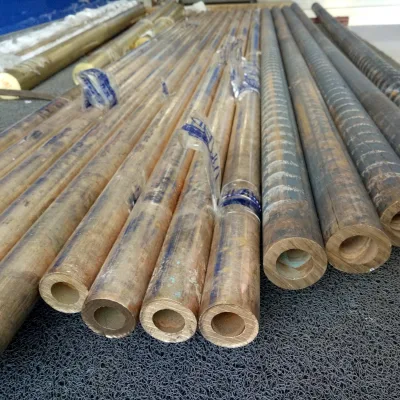
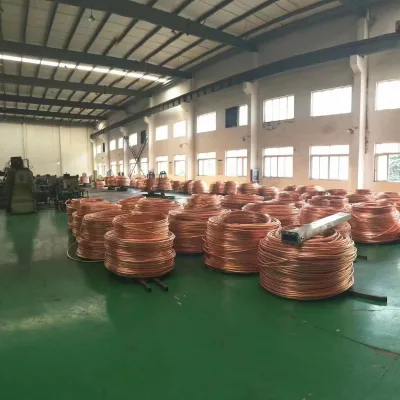


Durable Hydraulic Tubing for Reliable Industrial Operations and Projects
$900.00 - $1000.00
MOQ: 1 Tons


Comprehensive Sourcing Guide
Strategic Sourcing Guide for High Strength Hydraulic Copper Tubing
Understanding Material Properties and Technical Specifications
When sourcing High Strength Hydraulic Copper Tubing, the primary objective is to identify materials that balance ductility with the mechanical integrity required to withstand internal pressure without failure. The supplied product data indicates a diverse range of copper grades available in the market, specifically noting grades such as C1020, C1100, C1200, C1220, TU1, TU2, and T2. These designations are critical for procurement professionals, as they define the purity and alloy composition which directly influence the final mechanical performance. For applications demanding high strength, the presence of specific copper content, often cited as a minimum of 99.9% Cu in certain listings, serves as a baseline indicator of material quality. However, the term "high strength" in a hydraulic context often implies a specific temper or alloying addition that enhances yield strength beyond that of pure annealed copper.
The mechanical properties observed in the available product listings provide a framework for evaluating potential suppliers. One key metric found in the data is the Ultimate Strength, which is listed as being greater than or equal to 205 MPa. This figure represents a critical threshold for tubing that must resist deformation under hydraulic load. Additionally, elongation is a vital factor for hydraulic systems that may experience pressure surges or vibration; the data suggests an elongation capability of 45% or higher, indicating a material that can stretch significantly before fracturing. This ductility is essential for fittings and bends in complex hydraulic circuits. The hardness of the tubing is another variable, with listings specifying "1/2 Hard," "1/4 Hard," and "Hard" conditions. Selecting the correct hardness is a trade-off between the ease of installation (which favors softer tempers) and the resistance to pressure and abrasion (which favors harder tempers).
Dimensions play a pivotal role in hydraulic system design. The observed specifications include an external diameter range spanning from 3mm to 360mm, with wall thicknesses varying from 0.1mm to 50mm. This wide range suggests that the market offers solutions for both miniature hydraulic control lines and large-scale industrial fluid power systems. The length of the tubing is also customizable, with observed ranges extending from 0 to 15 meters, or fully customized lengths to minimize waste and joint count in specific installations. The availability of processing services such as bending, decoiling, welding, punching, and cutting is a significant advantage, as it allows buyers to source pre-fabricated components that reduce on-site labor and potential points of failure.
Compliance, Certification, and Standard Verification
In the hydraulic sector, compliance is not merely a regulatory formality but a prerequisite for system safety and longevity. The product data highlights several certifications and standards that buyers must verify during the sourcing process. The presence of ROHS and ISOTUV certifications in the listings indicates that the manufacturer adheres to specific environmental and safety protocols. While ISO9001 and ISO14001 are mentioned in the background context as general industry standards, buyers should treat these as verification targets rather than automatic inclusions. The explicit mention of CE certification in the data confirms that certain products meet the European Union's safety, health, and environmental protection requirements, which is often a mandatory entry point for international trade.
Standardization is equally critical. The data references a robust set of international standards including JIS, ASTM, DIN, EN, and ISO. Specifically, the EN 1057 standard is noted in the background context as a relevant standard for copper and copper alloys. Buyers must ensure that the tubing they procure explicitly conforms to the specific standard required for their application, such as ASTM B88 for seamless copper water tubes or specific hydraulic standards that may vary by region. The listed product standards also include specific model numbers like "Type-O," "K-FLEX," "TD," and "TT," which may correspond to specific industry classifications or proprietary product lines. It is imperative to cross-reference these model numbers with the applicable standard (e.g., JIS or ASTM) to ensure the tubing meets the required pressure ratings and chemical composition.
The origin of the product is another compliance factor. The data indicates origins in China, specifically from regions like Jiangsu (Changzhou) and Shandong. While these are major manufacturing hubs, buyers should verify that the specific supplier maintains a documented quality management system that aligns with the claimed certifications. The "Place of Origin" should be clearly stated on the product documentation and packaging to ensure traceability. Furthermore, the presence of "Customization" as an available attribute suggests that buyers can request specific compliance adjustments, but this must be formalized in the contract to ensure the final product meets the agreed-upon standards.
Cost Drivers and Economic Factors in Procurement
The pricing structure for High Strength Hydraulic Copper Tubing is influenced by a complex interplay of material costs, manufacturing processes, and logistical factors. The observed price range in the market is vast, spanning from $0.09 to $1,800. This extreme variance is not indicative of price instability but rather reflects the diversity of product configurations. The lower end of the spectrum likely corresponds to small-diameter, thin-wall tubing sold in short lengths or as fittings, while the higher end represents large-diameter, thick-wall, or heavily processed custom tubing. Buyers must understand that the unit price is often a function of the wall thickness and external diameter, as these directly correlate to the weight of copper required per meter.
Minimum Order Quantity (MOQ) is a significant economic driver in this sector. The data shows an MOQ range from 1 to 1,000 units. For small-scale projects or prototype development, suppliers offering an MOQ of 1 provide flexibility, though the unit cost may be higher due to the setup costs for small batches. Conversely, large industrial buyers can leverage the higher MOQs to negotiate better unit economics. The packaging method also impacts cost; listings show "Wooden Case," "Carton Box," and "Carton" as options. Wooden cases are typically more expensive but offer superior protection for heavy or high-value tubing, reducing the risk of damage during transit. Carton packaging is more cost-effective for lighter loads but may require additional handling care.
Processing services represent another variable cost. The availability of services such as bending, welding, and cutting adds value but also increases the final price. A buyer purchasing raw tubing and performing these operations in-house may save on the initial purchase price but will incur labor and equipment costs. Alternatively, sourcing pre-processed tubing from the supplier shifts these costs to the manufacturer, often resulting in a higher unit price but lower total cost of ownership due to reduced lead time and installation complexity. The "Customized" length attribute allows for optimization of material usage, potentially reducing waste costs, but may come with a premium for the custom run.
Typical Applications and Performance Requirements
The versatility of copper tubing allows it to serve in a wide array of hydraulic and fluid power applications. The product data explicitly lists "Air Conditioning Fitting," "Air Conditioning Copper Pipes for HAVC Parts," and "Flexible Copper Pipe" as product types, indicating a strong presence in HVAC and refrigeration sectors. However, the "High Strength" designation and the mechanical properties observed (such as the 205 MPa ultimate strength) suggest suitability for more demanding hydraulic environments. The "Applicable Brands" field mentions "Current," which may imply compatibility with specific existing systems or a generic designation for broad applicability.
The characteristic of "Fast Heating" noted in the data is particularly relevant for applications involving thermal exchange or rapid temperature changes. In hydraulic systems, copper's high thermal conductivity can be a double-edged sword; it allows for efficient heat dissipation but may also lead to thermal expansion issues if not properly accounted for in the design. The "Natural ventilation" mode mentioned in the data suggests that some products are designed for passive cooling environments, which is a consideration for outdoor or enclosed hydraulic installations.
The "Widely use" application attribute reinforces the general utility of these products across various industries. The specific mention of "Air Condition or Refrigerator" applications highlights the tubing's role in refrigerant lines, where high strength is necessary to withstand the pressure cycles of the refrigeration compressor. For true hydraulic applications, the tubing must resist high-pressure fluid pulses and potential vibration. The ability to customize the wall thickness (0.1mm to 50mm) and diameter (3mm to 360mm) allows engineers to tailor the tubing to specific pressure ratings, ensuring that the system operates within safe limits. The "Flexible" nature of some listed products is advantageous for routing tubing in tight spaces or around obstacles, reducing the need for multiple fittings and potential leak points.
Supplier Evaluation and Quality Assurance Protocols
Evaluating a supplier for High Strength Hydraulic Copper Tubing requires a rigorous assessment of their manufacturing capabilities and quality control systems. The data indicates that the manufacturing process is primarily "Casting," which is a fundamental step in creating the initial billet or ingot. However, for tubing, the subsequent drawing and annealing processes are equally critical to achieving the desired mechanical properties. Buyers should verify that the supplier has a complete in-house process chain or verified partnerships for all stages of production, from casting to final surface treatment. The "Galvanized" surface treatment listed in the data is an interesting attribute, as copper is typically not galvanized in the traditional sense (which implies zinc coating). This may refer to a specific protective coating or a mislabeling that requires clarification. Buyers must confirm the exact nature of the surface treatment to ensure it does not interfere with the hydraulic fluid compatibility or welding processes.
Quality control should be a central part of the supplier evaluation. The presence of certifications like CE, ROHS, and ISOTUV suggests a commitment to quality, but buyers should request specific test reports for the batches they intend to purchase. Key tests should include tensile strength verification to confirm the ≥205 MPa claim, elongation testing to ensure the ≥45% ductility, and hardness testing to validate the specified temper (1/2 Hard, 1/4 Hard, etc.). The "Single gross weight" of 2.000 KG and "Single package size" of 10X10X5 cm provide a baseline for logistics planning, but buyers should ensure that these figures are consistent with the actual order specifications, as custom orders may vary significantly.
Supplier location is another factor in the evaluation process. The data points to origins in Jiangsu and Shandong, China. Buyers should consider the logistical implications of sourcing from these regions, including lead times and shipping costs. The "Lead time" is not explicitly provided in the data, so buyers must negotiate this explicitly. A supplier with a strong track record in the specified regions may offer more reliable delivery schedules. Additionally, the "Customization" capability should be assessed based on the supplier's responsiveness and ability to handle small or large custom runs without compromising quality.
Long-Term Procurement and Lifecycle Management
Sourcing High Strength Hydraulic Copper Tubing is not just a one-time transaction but a long-term partnership that impacts the reliability and maintenance costs of the entire hydraulic system. The "Customization" attribute suggests that buyers can work with suppliers to develop tubing that fits specific lifecycle needs, such as enhanced corrosion resistance or specific dimensional tolerances. The "Widely use" application indicates that the product is versatile, but buyers should also consider the long-term availability of the specific grade and temper. If a project requires a specific copper grade like C1220, the buyer must ensure that the supplier can consistently source this material over the lifespan of the project.
Maintenance and replacement are critical considerations. The "Flexible Copper Pipe" and "Air Conditioning Fitting" types suggest applications where vibration and movement are common. Over time, these dynamic conditions can lead to fatigue failure. Buyers should evaluate the supplier's ability to provide tubing with consistent mechanical properties that resist fatigue. The "Fast Heating" characteristic may also imply that the tubing is suitable for applications with thermal cycling, but the long-term effects of thermal expansion and contraction on the tubing's integrity must be assessed.
The packaging and handling requirements also play a role in long-term procurement. The "Wooden Case" and "Carton Box" options indicate different levels of protection. For long-term storage or international shipping, robust packaging is essential to prevent damage that could compromise the tubing's structural integrity. Buyers should also consider the environmental impact of the packaging and the tubing itself, especially if they are operating in regions with strict environmental regulations. The ROHS and CE certifications help in this regard, but buyers should verify that the entire supply chain, including packaging materials, complies with relevant environmental standards.
In conclusion, sourcing High Strength Hydraulic Copper Tubing requires a detailed understanding of the material properties, standards, and supplier capabilities. By leveraging the specific data points regarding grades, dimensions, and certifications, buyers can make informed decisions that ensure the safety, efficiency, and longevity of their hydraulic systems. The vast range of available options, from standard to fully customized, provides the flexibility needed to meet diverse industrial requirements, provided that rigorous quality control and supplier evaluation protocols are maintained throughout the procurement process.
Comparative Analysis of Tubing Specifications
To assist buyers in making informed decisions, the following table summarizes the key specifications observed in the market data, highlighting the range of options available for high strength hydraulic applications.
| Specification Category | Observed Range / Options | Relevance to Hydraulic Applications |
|---|---|---|
| Material Grade | C1020, C1100, C1200, C1220, TU1, TU2, T2 | Determines purity, corrosion resistance, and mechanical strength. |
| Ultimate Strength | ≥ 205 MPa | Critical for withstanding internal hydraulic pressure without deformation. |
| Elongation | ≥ 45% | Indicates ductility; essential for absorbing pressure surges and vibration. |
| Hardness | 1/2 Hard, 1/4 Hard, Hard | Balances ease of installation with resistance to abrasion and pressure. |
| External Diameter | 3mm - 360mm | Defines flow capacity and system compatibility. |
| Wall Thickness | 0.1mm - 50mm | Directly impacts pressure rating and structural integrity. |
| Length | 0-15m, Customized | Affects installation complexity and waste reduction. |
| Surface Treatment | Galvanized (Note: Verify specific coating) | Protects against corrosion; verify compatibility with hydraulic fluids. |
| Certifications | CE, ROHS, ISOTUV | Ensures compliance with safety and environmental regulations. |
| Processing Services | Bending, Decoiling, Welding, Punching, Cutting | Reduces on-site labor and potential leak points. |
This comparison underscores the importance of matching specific technical requirements with the available market options. Buyers should use this table as a checklist to ensure that the selected tubing meets all necessary criteria for their specific hydraulic system design.
FAQs
What copper grades are available for high strength hydraulic tubing?
Available copper grades include C1020, C1100, C1200, C1220, TU1, TU2, and T2. These grades define purity and alloy composition to ensure mechanical integrity for hydraulic applications requiring specific strength levels.
Which certifications are verified for High Strength Hydraulic Copper Tubing?
Verified certifications include ROHS, ISOTUV, and CE. These indicate adherence to environmental, safety, and European Union protection requirements, ensuring the tubing meets international compliance standards for industrial use.
How can I customize the dimensions of High Strength Hydraulic Copper Tubing?
You can customize external diameters from 3mm to 360mm and wall thicknesses from 0.1mm to 50mm. Lengths are also available as customized options ranging from 0 to 15 meters to minimize waste.
What processing services are offered for High Strength Hydraulic Copper Tubing?
Processing services include bending, decoiling, welding, punching, and cutting. These services allow buyers to source pre-fabricated components, reducing on-site labor and potential points of failure in complex hydraulic circuits.
Can High Strength Hydraulic Copper Tubing withstand high pressure loads?
Yes, the tubing offers an ultimate strength of at least 205 MPa. This mechanical property ensures resistance to deformation under hydraulic load, supported by an elongation capability of 45% or higher for safety.
Where are High Strength Hydraulic Copper Tubing manufacturers located?
Manufacturers are located in China, specifically in Jiangsu, Changzhou, and Shandong regions. These areas are major manufacturing hubs known for producing copper tubing with documented quality management systems.