Source High Temperature Resistant Andalusite for Refractories, Kilns, and Furnaces
Compare 30 listings for High Temperature Resistant Andalusite suitable for refractory products, kiln linings, and industrial furnace applications. Buyers can review specifications like grain size, chemical composition, and packaging options from suppliers in China.
Key considerations
Products List


High Purity 55-60% Al2O3 Natural Andalusite Raw Material for Refractory Industry
$0.10 - $0.35
MOQ: 1000 Tons

Low Expansion Andalusite Raw Material with Superior Thermal Mechanical Strength
$0.10 - $0.35
MOQ: 1000 Tons


High Temperature 1800° C Refractory Raw Material Andalusite for Metallurgical Industry
$190.00 - $310.00
MOQ: 1 Tons

Heat Resistant 1800° C Andalusite Powder for Aluminum Industry Applications
$190.00 - $310.00
MOQ: 1 Tons

Premium Grade High Mechanical Strength Refractory Andalusite for Kiln Linings
$190.00 - $310.00
MOQ: 1 Tons

Thermal Shock Resistant Andalusite Aggregate for Steelmaking Refractories
$190.00 - $310.00
MOQ: 1 Tons

High Alumina Superior Co Resistance Andalusite Raw Material for Metal Processing
$190.00 - $310.00
MOQ: 1 Tons
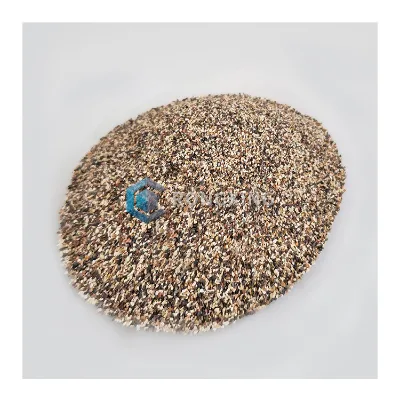


Alkalis Resistant Low Porosity Andalusite Bricks for Industrial Furnaces
$300.00 - $600.00
MOQ: 1 Tons


Anti Stripping High Alumina Refractory Anti-Penetration Andalusite Price
$450.00 - $650.00
MOQ: 10 Tons


Heat Resistance Maintains Sharpness and Stability Under High Temperatures
$5.99 - $7.99
MOQ: 10 Meters

Comprehensive Sourcing Guide
Strategic Sourcing Guide for High-Temperature Resistant Andalusite
Understanding the Material and Its Thermal Properties
Andalusite is a critical aluminosilicate mineral widely recognized in the industrial sector for its exceptional performance under extreme thermal conditions. When sourcing high-temperature resistant andalusite, buyers must first distinguish between the raw mineral forms and the processed refractory products derived from it. The core value proposition of this material lies in its chemical stability and ability to maintain structural integrity at elevated temperatures. Based on observed market data, the refractoriness of andalusite products typically falls within the range of 1580°C to 1770°C, with specific high-grade variants capable of exceeding 1770°C. Some specialized formulations are even classified as super high refractory, with ratings greater than 2000°C.
The thermal performance is intrinsically linked to the mineral's composition. High-alumina andalusite products often exhibit an Al2O3 content ranging between 57.8% and 58%. This high alumina concentration is a primary driver of its heat resistance. Conversely, the presence of impurities such as iron oxide (Fe2O3) and silica (SiO2) must be carefully managed. Market observations indicate Fe2O3 levels can vary from 0.64% to 0.8%, while SiO2 content is frequently observed around 38.5%. These impurities influence the melting point and the formation of liquid phases during high-temperature exposure. Buyers should verify that the specific batch they procure aligns with their required thermal threshold, as the distinction between standard andalusite and high-alumina classifications can significantly impact the maximum operating temperature of the final refractory lining.
Technical Specifications and Chemical Composition Analysis
When evaluating technical specifications, the chemical purity and physical form of the andalusite are paramount. The material is available in various physical states, including powder, granules, and raw blocks. The grain size is a critical specification that dictates the material's application suitability. Common size specifications observed in the market include 0-1mm, 1-3mm, and 200 mesh. These granular sizes are essential for mixing into castables or bricks, ensuring optimal packing density and thermal shock resistance. For powder forms, the particle size distribution must be consistent to prevent segregation during the manufacturing of refractory products.
Chemical composition tables are essential for procurement verification. The following table summarizes the typical chemical ranges observed in high-quality andalusite products, which buyers should use as a benchmark for supplier verification:
| Component | Typical Observed Range | Significance |
|---|---|---|
| Al2O3 Content | 57.8% - 58% | Primary determinant of refractoriness and strength. |
| SiO2 Content | ~38.5% | Affects the formation of low-melting eutectics. |
| Fe2O3 Content | 0.64% - 0.8% | Impurity that can reduce thermal stability. |
| CaO Content | ~0.03% | Low calcium content indicates high purity. |
| MgO Content | ~0.1% | Minimal magnesium oxide suggests limited contamination. |
| Bulk Density | ~2.50 g/cm³ | Indicates the compactness and potential strength. |
Buyers must note that while these values represent common observations, they are not universal guarantees. The presence of other trace elements can vary based on the geological origin of the ore. For instance, products originating from Xinjiang or Shandong, China, may exhibit slight variations in mineralogy due to local geological differences. It is imperative to request a Certificate of Analysis (CoA) for every shipment to confirm that the chemical profile matches the agreed-upon specifications, particularly regarding the Al2O3 to SiO2 ratio.
Compliance, Certification, and Standard Verification
In the B2B refractory market, compliance with international and industry-specific standards is non-negotiable. While specific certification bodies may vary by region, buyers should verify that suppliers adhere to recognized standards for refractory materials. The product standards observed in the market often reference specific size tolerances and grading systems. For example, standard sizes for refractory bricks are frequently cited as 230 x 114 x 64 mm or 230 x 114 x 76 mm, with size tolerances of +/- 1 mm. For granular and powder forms, standards may define the mesh size distribution, such as 0-1mm, 1-3mm, or 200 mesh.
Certification checks should extend beyond simple material composition. Buyers must ensure that the supplier's quality management system aligns with industry expectations for consistency and traceability. Although specific certification names are not universally mandated for all andalusite products, the ability to provide detailed test results for refractoriness, bulk density, and chemical composition is a strong indicator of a compliant supplier. The "High-Alumina" classification is a key regulatory and technical marker that must be explicitly stated in the product documentation. Furthermore, for applications involving food or pharmaceutical processing, additional hygiene certifications may be required, though these are less common for general industrial refractory applications.
Cost Drivers and Pricing Dynamics
The pricing of high-temperature resistant andalusite is influenced by a complex interplay of factors, including raw material scarcity, processing complexity, and logistics. The observed price range in the market is broad, spanning from $0.10 to $880 per unit, reflecting the diversity of product forms from raw ore to processed, high-purity powders and specialized bricks. Several key drivers influence where a specific product falls within this range.
First, the degree of processing is a primary cost factor. Raw andalusite ore is significantly less expensive than processed powder or precisely graded granules. The energy and equipment required to crush, grind, and sieve the material to specific mesh sizes (e.g., 200 mesh) add substantial value. Second, chemical purity acts as a premium driver. Products with lower impurity levels, such as Fe2O3 below 0.64% and high Al2O3 content near 58%, command higher prices due to the superior performance they offer in extreme environments. Third, packaging and logistics play a role. Products shipped in export-standard pallets or specialized ton bags may incur higher costs compared to bulk shipments. Finally, the Minimum Order Quantity (MOQ) affects the unit price. The observed MOQ range of 1 to 1000 units suggests that smaller orders may carry a premium, while bulk purchasing can significantly reduce the per-unit cost. Buyers should analyze their total cost of ownership, including the potential for waste reduction due to higher quality, rather than focusing solely on the initial purchase price.
Typical Applications and Performance Requirements
High-temperature resistant andalusite is a versatile material utilized across various heavy industries where thermal stability is critical. Its primary application is in the manufacture of refractory products, which line furnaces, kilns, and reactors. The material's ability to withstand temperatures exceeding 1580°C makes it ideal for use in cement kilns, steel ladles, and glass melting tanks. In these environments, the material must resist thermal shock, chemical corrosion, and mechanical wear.
The specific application dictates the required form of the andalusite. For instance, powder forms are often used as binders or additives in castable refractories, where they enhance the material's strength and thermal shock resistance. Granular forms (0-1mm, 1-3mm) are typically used as aggregates in brick manufacturing or as backfill materials in furnace linings. The high mechanical strength and good thermal insulation performance of andalusite make it suitable for applications where energy efficiency is a priority. Additionally, the material's low thermal conductivity helps in maintaining temperature gradients within the furnace, protecting the outer shell and improving overall energy efficiency. Buyers should match the specific application requirements with the correct grain size and chemical composition to ensure optimal performance and longevity of the refractory lining.
Supplier Evaluation and Quality Control Protocols
Selecting a reliable supplier for high-temperature resistant andalusite requires a rigorous evaluation process. Buyers should prioritize suppliers who demonstrate transparency in their production processes and offer customization options. The market data indicates that customization is available, allowing suppliers to tailor grain sizes, chemical compositions, and packaging to specific client needs. This flexibility is crucial for industries with unique thermal or mechanical requirements.
Quality control protocols should be a central part of the supplier evaluation. Buyers must verify that the supplier conducts regular testing for refractoriness, chemical composition, and physical dimensions. The ability to provide batch-specific test results is a strong indicator of quality assurance. Additionally, the supplier's location and logistics capabilities should be assessed. While products originate from regions like Xinjiang and Shandong, China, the logistics network must ensure that the material arrives without contamination or damage. Packaging standards, such as ton bags or export-standard pallets, should be evaluated to ensure they meet the requirements for safe transport and storage.
Long-Term Procurement and Strategic Sourcing Considerations
Sourcing high-temperature resistant andalusite is not merely a transactional activity but a strategic decision that impacts long-term operational efficiency. Buyers should consider the lifecycle of the refractory products they manufacture or use. High-quality andalusite with consistent chemical composition and superior thermal properties can extend the service life of furnace linings, reducing downtime and maintenance costs. This long-term value often outweighs the initial cost savings of lower-grade materials.
Furthermore, the availability of raw materials and the stability of the supply chain are critical considerations. Given the geological nature of andalusite, supply disruptions can occur due to mining regulations or environmental factors. Buyers should establish relationships with multiple suppliers to mitigate these risks. The ability of the supplier to offer customization and adapt to changing market demands is also a key factor in long-term partnerships. Finally, buyers should stay informed about advancements in refractory technology and how new formulations of andalusite might offer improved performance or cost-efficiency. By maintaining a proactive approach to sourcing and quality management, buyers can ensure a steady supply of high-performance materials that support their industrial operations.
FAQs
What is the typical refractoriness range for High Temperature Resistant Andalusite?
The typical refractoriness ranges from 1580 to 1770 degrees Celsius, with some high-grade variants exceeding 1770 degrees Celsius. Specific products may also be classified as super high refractory with ratings greater than 2000 degrees Celsius depending on the formulation and processing.
Which grain sizes are commonly available for High Temperature Resistant Andalusite?
Common grain sizes include 0-1mm, 1-3mm, and 200 mesh for powder forms. These specific sizes are essential for mixing into castables or bricks to ensure optimal packing density and thermal shock resistance in industrial applications.
Can buyers request customization for High Temperature Resistant Andalusite specifications?
Yes, customization is available for grain sizes, chemical compositions, and packaging to meet specific client needs. Suppliers can tailor the product to match exact requirements for different industrial furnace linings or refractory manufacturing processes.
How does the Al2O3 content affect the performance of High Temperature Resistant Andalusite?
High alumina content between 57.8% and 58% is a primary driver of heat resistance and mechanical strength. This concentration ensures the material maintains structural integrity at elevated temperatures while resisting chemical corrosion in harsh environments.
What packaging options exist for shipping High Temperature Resistant Andalusite?
Packaging options include ton bags, 25kg bags, 1 Mt big bags, and export standard pallets. The specific choice depends on the product form and customer requirements to ensure safe transport and storage without contamination.
Where are High Temperature Resistant Andalusite products typically sourced from?
Products are typically sourced from regions in China, specifically Xinjiang and Shandong. These locations provide the raw geological material, though slight variations in mineralogy may occur based on the specific origin of the ore.
What is the bulk density of High Temperature Resistant Andalusite products?
The bulk density is approximately 2.50 g/cm3, indicating the compactness and potential strength of the material. This density is a key indicator for evaluating the quality and suitability of the andalusite for heavy industrial refractory applications.