Source High Temperature Resistant Molybdenum Crucibles for Sapphire, Electronics, and Aviation
Find 30 listings for High Temperature Resistant Molybdenum Crucibles suitable for industrial melting, sapphire growing furnaces, and chemical processing. Compare specifications including purity, working temperature, and surface finish from verified Chinese manufacturers.
Key considerations
Products List


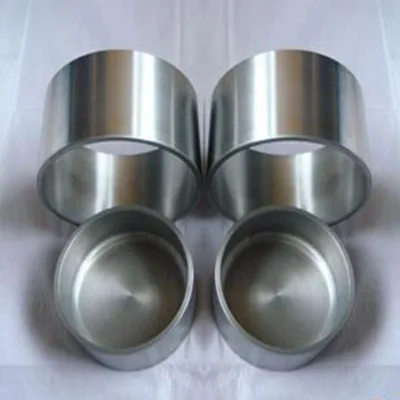


Molybdenum Crucible for Optimal Performance in High-Heat Environments
$110.00 - $115.00
MOQ: 50 kilograms

High-Performance Molybdenum Crucible for Metal Smelting and Refining
$110.00 - $115.00
MOQ: 50 kilograms

Efficient Molybdenum Crucible for Melting and Coating Technologies
$110.00 - $115.00
MOQ: 50 kilograms

Superior Molybdenum Crucible for Optimal Semiconductor Material Growth
$110.00 - $115.00
MOQ: 50 kilograms


Comprehensive Sourcing Guide
Strategic Sourcing Guide for High Temperature Resistant Molybdenum Crucibles
Understanding Material Composition and Physical Properties
When sourcing High Temperature Resistant Molybdenum Crucibles, the primary focus must be on the intrinsic material properties that define performance under extreme thermal stress. The core material is identified as a non-alloy molybdenum product, which distinguishes it from complex molybdenum alloys often used in other aerospace or high-stress structural applications. The critical chemical specification for these components is a molybdenum content of 99.95% minimum, with many high-grade options exceeding 99.95% purity. This high level of purity is essential for preventing contamination in sensitive industrial processes, particularly in the growth of sapphire crystals or the melting of high-purity metals.
The physical density of the material is a significant factor in design and handling, with observed values around 10.2 g/cm³. This density influences the weight of the crucible, which in turn affects the mechanical load on furnace lifting mechanisms. Buyers must verify that the specific supplier's inventory matches these physical constants, as variations can indicate impurities or structural inconsistencies. The working temperature range is a defining characteristic of the product's utility. Data indicates operational capabilities between 1100°C and 1700°C, with some specifications extending up to 1800°C. This wide thermal window makes the crucible suitable for diverse applications ranging from general industrial melting to specialized sapphire growing furnaces.
Surface finish is another critical physical attribute that impacts chemical resistance and thermal efficiency. The manufacturing process typically involves machining, resulting in a smooth surface achieved via lathe operations. The final surface state can vary; some units are described as having a black, chemically cleaned, and polished finish, while others are bright and polished. The glossiness is quantified by a roughness average (Ra) ranging from 0.6 to 3.2. A smoother surface generally reduces the risk of material adhesion and facilitates easier cleaning, which is vital for maintaining product purity in electronic and medical applications. The processing techniques employed to achieve these properties include sintering and forging, both of which are standard for ensuring the structural integrity required to withstand thermal cycling without deformation.
Technical Specifications and Customization Capabilities
The technical landscape of molybdenum crucibles is defined by a high degree of customization, allowing buyers to tailor dimensions and specifications to their specific furnace geometries. The product models identified in the market include MR-1, MC-1, and Mo-1, alongside generic designations like "molybdenum crucible." These models often correspond to specific size configurations, yet the overarching specification for size is explicitly customizable. This flexibility is crucial for industries where standard off-the-shelf components do not fit the unique constraints of their melting or growing equipment.
The surface treatment options are equally diverse, catering to different chemical environments. Buyers can specify surfaces that are black, bright, or chemically cleaned. The choice of surface finish is not merely aesthetic; it directly correlates with the chemical environment of the application. For instance, a chemically cleaned surface may be preferred for aggressive chemical applications, while a bright polished surface might be selected for high-visibility electronic manufacturing environments. The standardization of the product is also a key consideration. While some suppliers adhere to strict internal standards, others offer customization of the product standard itself, allowing the final specification to align precisely with the customer's request.
Packing is a technical specification that often gets overlooked but is vital for preventing damage during transit. The observed packaging methods include wooden cases, wooden boxes wrapped in waterproof paper, and standard export packages often lined with foam sponge. The use of foam sponge within a wooden case suggests a high level of protection against vibration and impact, which is necessary given the brittleness of molybdenum at lower temperatures. The minimum order quantity (MOQ) for these customized items is observed to be as low as one piece, which is advantageous for prototyping and small-batch production runs. However, lead times are variable, typically ranging from 7 to 25 days depending on the quantity and the complexity of the customization required.
Compliance, Certification, and Standard Verification
In the B2B procurement of high-temperature industrial components, verifying compliance with international and national standards is non-negotiable. The molybdenum crucibles in the current market landscape are frequently associated with ASTM and GB standards. ASTM standards are critical for ensuring the material meets American Society for Testing and Materials requirements, which are widely recognized globally for material testing and specification. GB standards refer to Chinese National Standards, which are the domestic regulatory framework for manufacturing in China. Buyers must ensure that the specific batch of crucibles they purchase is certified against the relevant standard for their region or industry sector.
Quality management systems play a pivotal role in supplier selection. The most common certification observed is ISO 9001, with specific references to the ISO 9001:2015 version. This certification indicates that the supplier has a documented quality management system in place, covering everything from raw material procurement to final inspection and shipping. Some suppliers also offer the ability to customize the product standard to match a specific customer's quality protocol, which is a valuable feature for large-scale industrial contracts. Additionally, the origin of the product is a key compliance factor. The primary manufacturing location is identified as Henan, China, with specific mentions of Zhengzhou. While this is a major industrial hub, buyers should verify the specific factory location to ensure it aligns with their supply chain risk management strategies.
The certification process should also include verification of the supplier's ability to provide traceability. While specific test results are not universally listed, the presence of a "High Quality After-Sale Service" attribute suggests that suppliers are prepared to handle quality disputes. Buyers should request copies of the ISO 9001 certificates and verify their validity through the issuing body. Furthermore, for applications in the medical or aviation sectors, additional industry-specific certifications may be required beyond the general ISO 9001. The procurement strategy must include a clause that mandates the supplier to provide proof of compliance with the stated standards (ASTM, GB) and certifications (ISO 9001:2015) prior to the finalization of the order.
Cost Drivers and Pricing Dynamics
The pricing of High Temperature Resistant Molybdenum Crucibles is influenced by a complex interplay of factors, resulting in a wide observed price range from $0.10 to $10,000 USD. This vast disparity is not indicative of a single product but rather reflects the extreme variability in size, customization level, and order volume. A standard, off-the-shelf crucible of small dimensions may fall at the lower end of this spectrum, while a large, custom-forged crucible with a specialized surface finish and high-purity requirements will command a premium price.
The primary cost driver is the level of customization. Since the product model and size are customizable, the engineering and machining time required to produce a unique part significantly impact the final cost. The surface treatment process also adds to the expense; a chemically cleaned and polished surface requires more steps than a standard machined finish. Additionally, the raw material cost of molybdenum, which is a refractory metal, forms the baseline for pricing. The high purity requirement of 99.95% or higher necessitates more refined refining processes, which increases the base material cost compared to lower-grade alloys.
Logistics and packaging also contribute to the total cost of ownership. The requirement for wooden cases, often wrapped in waterproof paper and lined with foam sponge, adds material and labor costs. Furthermore, the transport mode selected—whether by express, air, or sea—will drastically alter the final price. Air freight is faster but significantly more expensive, while sea freight is cost-effective for large, heavy shipments but involves longer lead times. Buyers should be aware that the minimum order quantity of one piece allows for small purchases but may result in a higher unit cost due to the fixed costs of setup and packaging. When evaluating quotes, procurement professionals should request a breakdown of costs to understand the specific contribution of material, machining, surface treatment, and logistics to the final price.
Typical Applications and Industry Suitability
High Temperature Resistant Molybdenum Crucibles are engineered for a diverse array of industrial applications, driven by their unique combination of high melting point, chemical stability, and mechanical strength. The most prominent application is in the sapphire growing furnace, where the crucible serves as the vessel for melting aluminum oxide to grow single-crystal sapphire ingots. In this context, the high temperature resistance up to 1700°C or 1800°C is critical, as the melting point of sapphire is extremely high. The high purity of the molybdenum ensures that no impurities are introduced into the sapphire crystal, which could degrade its optical properties.
Beyond sapphire production, these crucibles are widely used in industrial melting furnaces for various metals and alloys. The chemical resistance of molybdenum makes it suitable for handling aggressive molten metals that would corrode other materials. The electronics industry also relies on these components for processes requiring high thermal stability and purity, such as the production of semiconductor materials. The medical and chemical sectors utilize molybdenum crucibles for specialized melting and containment processes where contamination must be strictly controlled. The aviation industry, with its demand for high-performance materials, also finds applications for these crucibles in the processing of superalloys.
The versatility of the product is further enhanced by its compatibility with various surface finishes. For example, a bright and polished surface might be preferred in the electronics industry to minimize particle generation, while a black or chemically cleaned surface might be better suited for chemical applications where specific surface reactions are desired. The related products, such as molybdenum wire, sheet, plate, and boats, often suggest that the crucible is part of a larger system of molybdenum components used in high-temperature furnaces. Buyers should assess their specific application requirements against the working temperature range and chemical environment to ensure the selected crucible is the optimal choice for their process.
Supplier Evaluation and Quality Control Protocols
Selecting the right supplier for High Temperature Resistant Molybdenum Crucibles requires a rigorous evaluation process that goes beyond price comparison. The first step is to verify the supplier's location and manufacturing capabilities. The primary origin is Henan, China, with Zhengzhou being a specific hub. Buyers should confirm that the supplier has direct manufacturing capabilities rather than acting solely as a trading company, as this impacts quality control and lead time management. The ability to offer OEM services and accept custom requests is a strong indicator of a capable supplier, as it demonstrates flexibility and technical competence.
Quality control protocols must be a central part of the supplier evaluation. Buyers should inquire about the specific testing procedures used to verify the molybdenum content and purity. While specific test results are not always publicly listed, the presence of ISO 9001:2015 certification suggests a structured approach to quality assurance. It is advisable to request a quality control plan that outlines the inspection points for raw materials, in-process machining, surface treatment, and final packaging. The supplier's ability to provide a certificate of analysis (COA) for each batch is essential for maintaining traceability and ensuring compliance with the stated purity standards.
The lead time is another critical factor in supplier evaluation. The observed range of 7 to 25 days indicates that production is generally efficient, but buyers must confirm how this timeline is affected by customization. Complex customizations may extend the lead time beyond the standard range. Additionally, the supplier's after-sales service capabilities should be assessed. The mention of "High Quality After-Sale Service" suggests that the supplier is prepared to handle issues related to product performance or delivery. Buyers should clarify the terms of this service, including response times and resolution procedures for quality disputes. Finally, the transport mode options (Express, Air, Sea) should be evaluated based on the urgency of the project and the budget constraints, ensuring that the logistics strategy aligns with the overall procurement timeline.
Long-Term Procurement and Operational Considerations
Sourcing High Temperature Resistant Molybdenum Crucibles is not a one-time transaction but a long-term strategic partnership that requires careful planning. The high cost of these components, combined with their critical role in industrial processes, necessitates a focus on reliability and consistency. Buyers should establish long-term contracts with suppliers who have demonstrated the ability to maintain consistent quality over time. This includes verifying that the supplier can consistently meet the 99.95% molybdenum purity requirement and adhere to the specified ASTM or GB standards across multiple production batches.
Operational considerations also extend to the lifecycle management of the crucibles. Given the high working temperatures and the potential for thermal stress, the durability of the crucible is a key performance metric. Buyers should monitor the performance of the crucibles in their furnaces and track metrics such as service life, resistance to corrosion, and the frequency of replacement. This data can be used to negotiate better terms with suppliers or to drive continuous improvement in the product design. The customizable nature of the product allows for iterative improvements based on operational feedback, enabling buyers to refine the specifications over time to optimize performance and cost.
Inventory management is another long-term consideration. While the MOQ is low, allowing for small orders, maintaining a strategic stock of critical spare parts can prevent production downtime. Buyers should work with suppliers to establish a just-in-time delivery schedule that balances inventory costs with the risk of supply chain disruptions. The packaging requirements, such as wooden cases with foam sponge, should be standardized to ensure that the crucibles arrive in perfect condition, minimizing the risk of damage during transit. Finally, buyers should stay informed about market trends and technological advancements in molybdenum processing to ensure they are always utilizing the most efficient and cost-effective solutions available. By adopting a proactive and data-driven approach to procurement, organizations can secure a reliable supply of high-quality molybdenum crucibles that support their long-term industrial goals.
FAQs
What is the minimum molybdenum content for these crucibles?
The minimum molybdenum content is 99.95 percent. This high purity ensures no contamination occurs during sensitive processes like sapphire crystal growth or industrial melting.
How customizable are the product dimensions and models?
Dimensions and models are fully customizable to fit specific furnace geometries. Buyers can request specific sizes or models like MR-1 and MC-1 tailored to their equipment.
Which surface finishes are available for chemical resistance?
Available finishes include black, bright, and chemically cleaned surfaces. These options allow selection based on the specific chemical environment and required roughness average for the application.
Can I order a single piece for prototyping purposes?
Yes, the minimum order quantity is one piece. This low threshold supports prototyping and small-batch production runs without requiring large initial inventory commitments.
What is the typical lead time for custom orders?
Lead times typically range from seven to twenty-five days. The exact duration depends on the order quantity and the complexity of the customization requested by the buyer.
Which certifications verify the quality management system?
ISO 9001:2015 certification is commonly provided to verify quality management. This ensures the supplier maintains documented processes for material procurement, manufacturing, and final inspection.
How are the crucibles packed for safe transport?
Crucibles are packed in wooden cases often lined with foam sponge and wrapped in waterproof paper. This robust packaging protects the brittle material from vibration and impact during shipping.