Source High Voltage Control Panel Enclosures for Construction, Switch Boards, and Plants
Find 30 High Voltage Control Panel Enclosures with customizable sizes, steel plate shells, and IP protection grades up to IP66. Buyers can compare models from Zhejiang suppliers offering OEM services and various mounting types for construction and industrial applications.
Key considerations
Products List


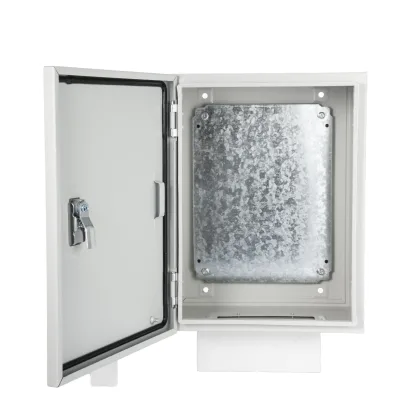
Standardized Power Distribution Enclosure with CE & ISO 9001 Quality Assurance
$10.00 - $50.00
MOQ: 100 Pieces

Reliable Electrical Enclosure for Substations and Energy Distribution
$1000.00 - $5800.00
MOQ: 1 Pieces
Comprehensive Sourcing Guide
Strategic Sourcing Guide for High Voltage Control Panel Enclosures
Selecting the right high voltage control panel enclosure is a critical decision that impacts the safety, reliability, and longevity of industrial electrical infrastructure. While the term "high voltage" often implies specific regulatory hurdles, the market offers a diverse range of solutions, from low-voltage distribution boxes to specialized high-voltage cabinets. This guide synthesizes available market data to help procurement professionals navigate the complexities of sourcing these essential components. The focus remains on evidence-based attributes, ensuring that buyers make decisions grounded in verified specifications rather than unverified marketing claims.
Technical Specifications and Material Composition
The foundation of a reliable enclosure lies in its material composition and structural integrity. Market observations indicate that suppliers frequently utilize cold-rolled sheet steel and stainless steel variants, including grades 304 and 201, to construct the shell. The choice between carbon steel and stainless steel often depends on the specific environmental conditions of the installation site. For instance, environments requiring resistance to corrosion may necessitate stainless steel, while standard industrial settings might suffice with cold-rolled steel.
Thickness is a primary determinant of durability. Data suggests that door thicknesses typically range from 1.2mm to 1.5mm, while mounting plates may vary between 1.5mm and 2.0mm. The overall cabinet thickness can be customized to meet specific load-bearing requirements, with some listings indicating options up to 2.0mm. The structural form of these enclosures varies significantly; buyers may encounter partly-welded types, all-packaged types, or fixed board structures. The "partly-welded" configuration often offers a balance between manufacturing efficiency and structural rigidity, while "all-packaged" types may imply a higher degree of pre-assembly.
Dimensional flexibility is another critical technical aspect. While standard models exist, the market heavily favors made-to-order solutions. Custom sizes are available, with ranges extending from compact units of 200x200x150mm to large industrial cabinets measuring up to 1400x1200x300mm. This customization capability allows procurement teams to optimize space utilization within switchboard rooms or construction plants. Furthermore, the mounting type is versatile, offering rectilinear styles, wall-mounted options, console configurations, and movable designs. The operating voltage capabilities span both low voltage and high voltage, though specific voltage ratings must be verified against the intended application to ensure safety compliance.
Compliance, Certification, and Protection Standards
Ensuring that an enclosure meets international and local safety standards is non-negotiable in high voltage applications. The protection class, often denoted by the IP (Ingress Protection) code, is a vital metric. Observed data points to a wide range of protection levels, including IP30, IP54, IP55, IP65, IP66, and even IP67. The IP66 rating, in particular, is frequently cited as a standard for high-performance enclosures, indicating robust protection against powerful water jets and dust ingress. However, buyers must verify that the specific unit selected matches the environmental demands of the site, as not all listed products satisfy every protection level simultaneously.
Certification status is another area requiring careful scrutiny. While some suppliers reference ISO9001 certification for their shell protection grades, this generally attests to the quality management system rather than the specific product's electrical safety. The provided context also mentions compliance with China GB Codes and EN standards. It is crucial for buyers to confirm that the specific enclosure model adheres to the relevant IEC standards, such as IEC 61439, which governs low-voltage switchgear and controlgear assemblies, even if the keyword focuses on high voltage. Relying solely on general certification claims without verifying the specific product test reports can lead to compliance gaps.
Surface treatment processes play a significant role in meeting these standards. Common treatments include spray painting, powder coating, electroplating, and polishing. The color options often align with the RAL system, with Ral 7035, Ral 7032, and Ral 2000 being frequently observed. These finishes not only provide aesthetic consistency but also enhance corrosion resistance and UV stability. Buyers should request documentation confirming that the surface treatment process has been validated to withstand the specified environmental conditions, including temperature ranges from -10° to +50°.
Cost Drivers and Pricing Dynamics
The pricing of High Voltage Control Panel Enclosures is influenced by a complex interplay of factors, including material costs, customization levels, and manufacturing complexity. The observed price range in the market is extensive, spanning from approximately $0.90 to $10,000. This vast disparity reflects the difference between small, standard distribution boxes and large, custom-engineered high-voltage cabinets.
Material quality is a primary cost driver. Enclosures constructed from high-grade stainless steel (304) will inherently cost more than those made from standard cold-rolled carbon steel. Additionally, the thickness of the steel directly impacts material usage and, consequently, the price. Thicker gauges, such as 2.0mm doors or mounting plates, command a premium over thinner alternatives. Customization is another significant factor. While standard models may be available at lower price points, made-to-order units with specific dimensions, protection levels, or internal configurations require additional engineering and production time, increasing the overall cost.
Minimum Order Quantity (MOQ) also affects the unit price. The market shows an MOQ range from 1 to 10,000 units. Buyers purchasing small quantities may face higher per-unit costs due to setup fees and limited economies of scale. Conversely, large-volume orders can leverage bulk pricing, though this requires careful inventory management. Packaging requirements, such as wooden cases or wound film for full packaging, can also add to the total cost, particularly for international shipments where protection against transit damage is critical.
Typical Applications and Operational Environments
High Voltage Control Panel Enclosures are deployed across a diverse spectrum of industrial sectors. The primary applications identified include construction plant switchboard rooms, equipment mats, and general electrical distribution facilities. These enclosures serve as the protective housing for critical switching and metering equipment, ensuring that sensitive components are shielded from external hazards.
The operational environment dictates the specific requirements for the enclosure. For instance, facilities located at elevations below 1000m may have different cooling and pressure requirements compared to high-altitude installations. Temperature tolerance is a key consideration, with many units designed to operate within a range of -10° to +50°. This range ensures reliable performance in both cold storage facilities and hot industrial zones.
The form factor of the enclosure must also align with the application. In construction sites, movable or console-mounted units may be preferred for flexibility, whereas fixed board structures are common in permanent switchboard rooms. The protection level must match the site's exposure to dust, water, and physical impact. For example, outdoor installations in coastal areas might require IP66 or IP67 ratings to withstand salt spray and heavy rain, while indoor dry environments might only require IP30 or IP54.
Supplier Evaluation and Sourcing Strategy
When evaluating potential suppliers, buyers should prioritize transparency and verification of capabilities. The market includes suppliers offering OEM services, with some brands like "Golden Unicorn" appearing in listings, though generic OEM offerings are also prevalent. It is essential to verify the supplier's origin, with many manufacturers based in Zhejiang, China, specifically Hangzhou. This regional concentration suggests a mature supply chain, but buyers should still conduct due diligence regarding the specific factory's capacity and quality control processes.
Key evaluation criteria should include the supplier's ability to provide customization, as evidenced by their "Made to Order" capabilities. The ability to formulate custom sizes and models is a strong indicator of a supplier's technical competence. Additionally, buyers should assess the supplier's production capacity, with some listing practical capacities ranging from 1 to 3000 pieces per year. This metric helps in planning long-term supply chain stability.
Verification of machining methods is also crucial. Laser cutting is a commonly cited technique, offering high precision with tolerances of +/-0.10mm. This level of precision ensures that components fit together seamlessly, reducing the risk of gaps that could compromise the enclosure's protection rating. Buyers should request samples or detailed technical drawings to confirm that the supplier's machining capabilities meet their specific tolerance requirements.
Quality Control and Long-Term Procurement Considerations
Quality control extends beyond the initial inspection of the finished product. Buyers should establish a framework for ongoing quality assurance, focusing on the consistency of material quality, surface treatment, and dimensional accuracy. The use of cold-rolled sheet steel and stainless steel must be verified through material certificates to ensure the specified grades (304, 201, Carbon Steel) are actually used.
Long-term procurement considerations involve assessing the supplier's ability to support the product throughout its lifecycle. This includes the availability of spare parts, the ease of maintenance, and the supplier's responsiveness to design changes. The "Custom-Made Available" attribute suggests that suppliers are flexible, but buyers should confirm the lead times and costs associated with future modifications.
Packaging is another critical aspect of long-term quality. Options range from cartons to full packaging with wooden cases and wound film. Proper packaging ensures that the enclosure arrives at the site without damage, preserving the integrity of the surface treatment and structural components. Buyers should specify packaging requirements based on the distance of transport and the fragility of the contents.
Finally, buyers must remain vigilant regarding the distinction between observed attributes and universal claims. Not every product listed will possess every feature mentioned in the market overview. For example, while IP66 is a common rating, it is not guaranteed for all units. Procurement strategies should therefore include rigorous testing and validation of each specific order to ensure that the delivered product meets the exact technical and safety requirements of the project. By adhering to these evidence-based practices, buyers can secure high-quality, compliant, and reliable High Voltage Control Panel Enclosures for their critical infrastructure needs.
Comparative Analysis of Enclosure Attributes
To assist in decision-making, the following table summarizes key attributes observed in the market, highlighting the variability that buyers must navigate.
| Attribute | Observed Range / Options | Verification Requirement |
|---|---|---|
| Shell Material | Cold-Rolled Sheet Steel, Stainless Steel (304, 201) | Request material test certificates for grade verification. |
| Thickness | Doors: 1.2mm - 1.5mm; Plates: 1.5mm - 2.0mm | Confirm specific thickness via technical drawing or sample. |
| Protection Class | IP30, IP54, IP55, IP65, IP66, IP67 | Verify IP rating via test reports specific to the model. |
| Surface Treatment | Spray Paint, Powder Coated, Electroplating, Polishing | Check for corrosion resistance data and color consistency. |
| Customization | Sizes, Colors, Models, Mounting Types | Confirm lead times and costs for non-standard requests. |
| Operating Voltage | Low Voltage, High Voltage | Ensure voltage rating matches the specific electrical system. |
| Origin | China (Zhejiang, Hangzhou) | Verify factory location and export compliance. |
| Tolerance | +/-0.10mm | Confirm machining precision capabilities for fitment. |
This comparative view underscores the necessity of detailed specification checks. The diversity in options allows for tailored solutions but requires a disciplined approach to ensure that the selected enclosure aligns perfectly with the project's technical and safety mandates. By focusing on verified data and avoiding assumptions, procurement professionals can mitigate risks and ensure the successful deployment of High Voltage Control Panel Enclosures.
FAQs
What materials are used for High Voltage Control Panel Enclosures?
Enclosures are constructed from cold-rolled sheet steel or stainless steel grades 304 and 201. Buyers should verify material certificates to ensure the specified steel grade matches the environmental corrosion requirements of the installation site.
Which protection levels are available for these enclosures?
Available protection levels range from IP30 up to IP67, with IP66 being a common standard for high-performance units. Select the specific rating based on the site's exposure to dust, water jets, or harsh industrial conditions.
Can the enclosure dimensions be customized for specific projects?
Yes, custom sizes are available ranging from 200x200x150mm to 1400x1200x300mm. Manufacturers offer made-to-order solutions to optimize space utilization within switchboard rooms or construction plant equipment mats.
What is the typical price range for these control panel enclosures?
Market prices vary significantly from 0.90 USD to 10000 USD depending on size and customization. Costs are driven by material quality, thickness, and whether the unit is a standard distribution box or a large custom cabinet.
How are these enclosures mounted in industrial settings?
Mounting options include rectilinear styles, wall-mounted, console, and movable configurations. The choice depends on whether the application requires a fixed board structure for permanent rooms or a movable design for flexible construction sites.
What surface treatments are applied to ensure durability?
Common treatments include spray painting, powder coating, electroplating, and polishing. These finishes often use RAL colors like 7032 or 7035 to enhance corrosion resistance and UV stability for long-term outdoor performance.