Source Hoisting Machinery Industrial Joystick for Excavators, Cranes, and Lifts
Find 30 Hoisting Machinery Industrial Joystick options from suppliers in Shanghai and China. Compare models like Genie, JLG, and Terex compatible units with ISO9001 certification and customizable packaging for various lifting applications.
Key considerations
Products List


Crane Electric Chain Hoist Wireless Industrial Remote Control Joystick
$100.00 - $1000.00
MOQ: 5 Pieces


Industrial Remote Control with Proportional Joystick for Precision Hoisting
$170.00 - $210.00
MOQ: 1 Pieces
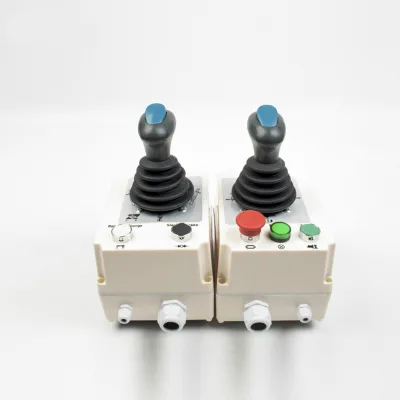
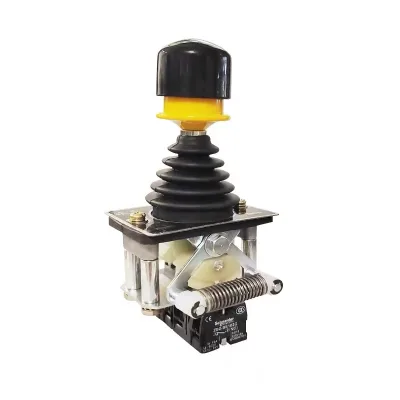


Professional Control Joystick for Port Machinery and Cranes
$2600.00 - $2850.00
MOQ: 1 Pieces
Guangzhou Duida Mechanical and Electrical Equipment Co., Ltd.




Comprehensive Sourcing Guide
Strategic Sourcing Guide for Hoisting Machinery Industrial Joysticks
Understanding the Technical Landscape of Industrial Joysticks
The procurement of industrial joysticks for hoisting machinery requires a precise understanding of the specific mechanical and electrical interfaces required by modern equipment. In the context of heavy-duty applications, these components serve as the primary human-machine interface, translating operator input into hydraulic or electrical signals that control boom extension, rotation, and lifting functions. The market presents a variety of form factors, ranging from standard electrical joysticks to specialized fingertip and thumb-operated models. Buyers must recognize that these devices are not generic inputs but are engineered to withstand the rigorous vibration, dust, and moisture conditions inherent to construction and industrial environments.
The technical specifications observed in the current supply landscape indicate a diverse range of product models designed to fit specific machinery architectures. For instance, the market includes models such as the Hj8-101005, H23-62161, and the compact Fj1 Fingertip variant. Each of these models carries a distinct part number, such as Ge-62161 or Hj80, which serves as a critical identifier for compatibility. The physical dimensions and weight are also significant factors in the selection process. Data indicates that single gross weights can vary significantly, from as light as 45 grams for certain fingertip models to 0.7 kilograms for heavier-duty units. This variance suggests that the selection process must account for the payload capacity of the operator's station and the mounting constraints of the specific hoisting machine.
Furthermore, the electrical characteristics and signal output types are paramount. While specific voltage ratings are not universally standardized across all listings, the presence of "Electrical Joystick" in product titles confirms that these are active electronic components rather than purely mechanical levers. The compatibility with major brands such as Genie, Terex, JLG, Skyjack, Manitou, and Haulotte implies that the internal circuitry and pin configurations are often tailored to the proprietary communication protocols of these manufacturers. When sourcing, buyers must verify that the part number of the new joystick matches the legacy part number of the existing machinery to ensure seamless integration without the need for complex adapter harnesses.
Compliance and Certification Verification Protocols
In the industrial sector, compliance is not merely a formality but a prerequisite for operational safety and liability management. When sourcing joysticks for hoisting machinery, buyers must rigorously verify that the products meet international quality and safety standards. The supply chain data highlights the prevalence of ISO 9001 certification, which serves as a baseline indicator that the manufacturer has established a quality management system. This certification, noted in both "New" and "Used" condition listings, suggests that the manufacturing process adheres to consistent quality control measures, regardless of the product's lifecycle stage.
Beyond general quality management, specific safety certifications are critical for equipment operating in regulated environments. The presence of CE certification in the product attributes indicates compliance with European health, safety, and environmental protection standards. For buyers operating in regions with strict regulatory frameworks, the CE mark is often a mandatory requirement for importing and deploying machinery. However, the absence of a specific certification in a product listing does not automatically disqualify the item; rather, it necessitates a direct inquiry to the supplier to confirm the existence of equivalent regional certifications, such as UL or ETL for North American markets.
Buyers should also scrutinize the "Machinery Test Report" attribute. The availability of a provided test report is a strong indicator of product reliability, as it suggests that the joystick has undergone functional testing to verify its performance under load and stress. This document should detail the results of durability tests, electrical continuity checks, and environmental resistance assessments. When evaluating a supplier, requesting a copy of the most recent test report for the specific model being purchased is a standard due diligence step. This report serves as empirical evidence that the product meets the claimed specifications before it leaves the factory.
Cost Drivers and Pricing Structure Analysis
The pricing of industrial joysticks is influenced by a complex interplay of factors, including the complexity of the internal electronics, the brand compatibility, and the condition of the unit. The observed market data reveals a wide price range, spanning from approximately 2.3 USD to 2850 USD. This broad spectrum reflects the difference between basic replacement components and high-end, fully integrated control units with advanced features. The lower end of the price range typically corresponds to simpler models, such as the Fj1 Fingertip or Tw1 Thumb Joystick, which may have fewer axes of control or simpler signal processing capabilities. Conversely, the higher price points are associated with comprehensive electrical joysticks designed for complex hoisting operations, such as the Hj8-101005 or H23-62161 models.
Condition is another primary driver of cost. Listings explicitly distinguish between "New" and "Used" conditions. While used units can offer significant cost savings, they often come with a higher risk of wear and reduced operational lifespan. Buyers must weigh the initial savings against the potential for premature failure and the cost of downtime. The "Condition: New" attribute is often paired with certifications like ISO 9001, suggesting that new units are subject to stricter quality controls. Additionally, the "Single Item" selling unit structure indicates that these products are typically sold individually, which simplifies the cost calculation for small-scale repairs but may result in higher per-unit costs compared to bulk industrial orders.
Customization options also impact the final price. Attributes such as "Logo/Packaging/More" and "Customization: Available" suggest that suppliers can tailor the product to specific branding or packaging requirements. These value-added services usually incur additional charges. Buyers should clarify whether the quoted price includes customization or if it is an add-on cost. Furthermore, the "Standard Packing" versus specific carton configurations (e.g., 12 pieces in 1 carton) can influence logistics costs, which should be factored into the total cost of ownership.
Typical Applications and Compatibility Mapping
The primary application for these industrial joysticks is within the hoisting machinery sector, which encompasses a wide array of equipment used for lifting and moving heavy loads. The specific compatibility with brands like Genie, Terex, JLG, Skyjack, Manitou, and Haulotte indicates that these components are essential for aerial work platforms, boom lifts, and telehandlers. In these applications, the joystick is the critical control element that allows operators to precisely maneuver the boom, extend the platform, and control the load. The "Hoisting Machinery" application tag confirms that these devices are engineered to handle the dynamic loads and frequent directional changes associated with lifting operations.
The mapping of part numbers to compatible brands is a crucial step in the sourcing process. For example, the model with part number Ge-62161 is explicitly linked to JLG compatibility, while the Hj8-101005 is associated with Genie. The Fj1 and Tw1 models, with their specific form factors, are likely designed for compact control stations or specific operator preferences within these machines. Buyers must ensure that the part number of the sourced joystick matches the original equipment manufacturer (OEM) specifications exactly. Mismatched part numbers can lead to electrical incompatibility, signal errors, or complete failure of the control system.
The "Compatible Brand" attribute often lists multiple manufacturers, suggesting that some joysticks are designed as universal replacements or are part of a cross-compatible ecosystem. For instance, the Hj80 and Hj60 models are listed as compatible with a broad range of brands including Genie, Terex, Skyjack, JLG, Manitou, and Haulotte. This universality can be advantageous for fleet managers who operate mixed fleets of different brands, as it simplifies inventory management. However, buyers must verify the specific pinout and signal requirements for each brand to ensure that a universal joystick will function correctly across all intended machines.
Supplier Evaluation and Operational Reliability
Evaluating a supplier for industrial joystick components requires a focus on reliability, transparency, and logistical capability. The supply chain data indicates that many suppliers are based in Shanghai or generally in China, which is a major hub for industrial electronics manufacturing. Buyers should verify the "prod_origin" to understand the supply chain geography, as this can impact shipping times and import duties. The "Delivery Time" attribute varies significantly, ranging from "Stock Is Available" to "10-30 days" or "as Quantity." This variance highlights the importance of confirming lead times before placing an order to avoid project delays.
The "MOQ" (Minimum Order Quantity) is another critical factor in supplier evaluation. The observed range of 1 to 10 units suggests that many suppliers are flexible, catering to both individual repair needs and small fleet replenishment. An MOQ of 1 unit is particularly beneficial for buyers who need to replace a single failed component without committing to a large inventory purchase. However, buyers should be aware that lower MOQs may come with higher per-unit costs or less favorable shipping terms.
Transparency in product condition and testing is essential for supplier reliability. Suppliers who provide "Machinery Test Reports" and clearly state the "Condition" (New or Used) demonstrate a commitment to quality and honesty. Buyers should prioritize suppliers who are willing to provide detailed documentation, including quality certificates and test results. Additionally, the "Shipping Term: Accepted" attribute suggests that suppliers are open to negotiation on logistics, which can be advantageous for buyers looking to optimize their supply chain costs.
Quality Control and Long-Term Procurement Considerations
Implementing a robust quality control process is essential for ensuring the longevity and safety of the hoisting machinery. When sourcing joysticks, buyers should establish clear acceptance criteria based on the observed specifications. The "Single Gross Weight" and "Standard" dimensions (e.g., 25x18x18 cm) serve as physical benchmarks for verifying the received goods. Any deviation from these specifications could indicate a counterfeit or substandard product. Buyers should also verify the "prod_packing" details, such as "1 Pieces in 1 Box, 12 Pieces in 1 Carton," to ensure that the packaging is sufficient to protect the delicate electronic components during transit.
Long-term procurement considerations involve building a relationship with suppliers who can offer consistent quality and support. The availability of "Customization" options, such as logo and packaging, can be leveraged to create a unified brand identity for the procurement department. Furthermore, the "Quality: ISO 9001" attribute suggests that suppliers with this certification are more likely to maintain consistent quality over time. Buyers should seek out suppliers who demonstrate a commitment to continuous improvement and are willing to provide ongoing technical support.
Finally, buyers should consider the lifecycle of the product. While "New" units offer the longest potential lifespan, "Used" units can be a viable option for non-critical applications or as temporary replacements. However, the risk of failure must be carefully managed. Establishing a stock of critical spare parts, such as the Hj80 or H23-62161 models, can minimize downtime in the event of a failure. By maintaining a strategic inventory and fostering strong supplier relationships, buyers can ensure the continued operational efficiency of their hoisting machinery fleet.
FAQs
What certifications do these industrial joysticks have?
Many products carry ISO 9001 certification, indicating a quality management system, while some units also display CE certification for European safety standards. Buyers should verify if a machinery test report is provided to confirm functional reliability before purchase.
Which brands are compatible with these joystick models?
These joysticks are compatible with major brands including Genie, Terex, JLG, Skyjack, Manitou, and Haulotte. Specific part numbers like Ge-62161 or Hj8-101005 must match the original equipment to ensure seamless integration without complex adapters.
How much does a single unit cost?
The observed price range spans from 2.3 USD to 2850 USD depending on the model and condition. Basic fingertip models are cheaper, while complex electrical units for heavy hoisting machinery command higher prices, with new units often costing more than used ones.
Can I order a single unit as a replacement?
Yes, the minimum order quantity is typically 1 unit, allowing for single-item replacements without bulk commitments. This flexibility supports fleet managers who need to replace a single failed component immediately without overstocking inventory.
What is the delivery time for stock items?
Delivery times vary from immediate stock availability to 10-30 days depending on the specific model and supplier capacity. Some listings indicate stock is available, while others require a lead time based on the order quantity and production schedule.
Are customization options available for packaging?
Customization for logo, packaging, and other features is available upon request. Suppliers can tailor the standard packing, such as 12 pieces in one carton, to meet specific branding or logistical requirements, though this may affect the final price.