Source Hoisting Machinery Industrial Joystick Controller for Cranes, Lifts, and Excavators
Find and compare 27 Hoisting Machinery Industrial Joystick Controller options from verified suppliers. Buyers can review specifications like transmission distance, IP65 waterproof ratings, and working environments for industrial machinery and special equipment applications.
Key considerations
Products List


Industrial Joystick Remote Controller for Forestry Machinery Joystick
$100.00 - $1000.00
MOQ: 1 Pieces

Industrial Joystick Industrial Joystick Controller for Engineering Vehicle
$100.00 - $1000.00
MOQ: 5 Pieces


Industrial Joystick Remote Controller for Construction Control Joystick
$100.00 - $1000.00
MOQ: 1 Pieces


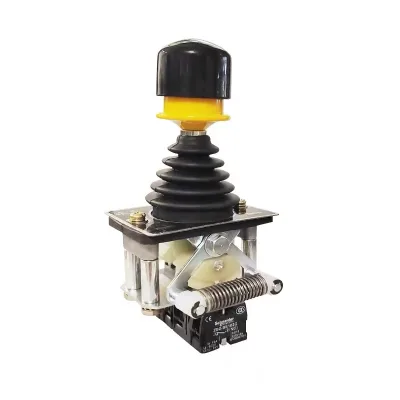

Industrial Remote Control with Proportional Joystick for Precision Hoisting
$170.00 - $210.00
MOQ: 1 Pieces


Heavy-Duty 12 Ton Joystick Controller for Mining Operations
$94700.00 - $95700.00
MOQ: 1 Pieces
Shandong Hongke Mechanical Equipment Manufacturing Co., Ltd. Shanghai Branch


Comprehensive Sourcing Guide
Strategic Sourcing Guide for Industrial Hoisting Joystick Controllers
The procurement of industrial joystick controllers for hoisting machinery represents a critical decision point for facility managers and engineering teams. These components serve as the primary human-machine interface, directly influencing operational safety, precision, and efficiency in heavy-duty environments. When sourcing these specialized devices, buyers must navigate a complex landscape of technical specifications, environmental constraints, and regulatory compliance. The following guide outlines the essential factors for evaluating potential suppliers and selecting the right equipment, grounded in observable market data and industry standards.
Technical Specifications and Operational Parameters
Selecting the correct joystick controller begins with a rigorous analysis of technical specifications that align with the specific demands of the hoisting application. The core functionality of these devices often relies on specific transmission technologies. In the current market, infrared (IR) remote control systems are prevalent, offering signal transmission distances that can exceed 100 meters. For applications requiring extended range, some models advertise remote control distances of 150 meters or more, with options for other distances depending on the configuration. The transmission speed is a critical metric for responsiveness; observed data indicates a transmitting power of 9600 bit/s, which ensures reliable data transfer for control signals.
Physical dimensions and weight are equally vital for integration into existing machinery. The market presents a variety of form factors, ranging from compact units weighing as little as 0.5 kg to larger, robust assemblies. Dimensional standards vary significantly; some units adhere to specific size profiles such as 18*26 mm or larger configurations like 321mm, 183mm, and 180mm. Buyers must verify that the single package size, often listed in centimeters (e.g., 70x70x170 cm), fits within the logistical constraints of their installation site. Furthermore, the power requirements must be matched to the machine's electrical system. While some units operate on standard AA batteries, others are integrated into systems with specific motor power ratings, such as 13KW, which dictates the necessary power supply infrastructure.
Environmental Durability and Protection Ratings
Industrial environments, particularly those involving hoisting machinery, are often harsh, characterized by dust, moisture, and extreme temperature fluctuations. Therefore, the environmental rating of the joystick controller is a non-negotiable factor. A high-waterproof level, specifically IP65, is a standard requirement for equipment operating in outdoor or semi-outdoor industrial settings. This rating ensures protection against water jets and dust ingress, preventing premature failure.
The operating temperature range is another critical specification. Controllers intended for heavy machinery must function reliably across a broad thermal spectrum. Observed data suggests a working environment range of -25ºC to 70ºC, which covers most global industrial climates. Additionally, humidity tolerance is essential; units should withstand relative humidity levels up to 97% Rh. For applications in corrosive environments, such as chemical plants or marine settings, buyers should specifically look for anti-corrosion (Anti-Co) treatments. The material composition, typically high-grade plastic or reinforced composites, plays a significant role in achieving these durability standards. The color of the unit, often available in black or yellow, may also be a factor for visibility and safety compliance on the factory floor.
Compliance, Certification, and Safety Standards
In the realm of industrial procurement, compliance with international and regional safety standards is paramount. Buyers must verify that the joystick controllers carry the necessary certifications to operate legally and safely within their jurisdiction. Common certifications observed in the market include CE, which indicates conformity with health, safety, and environmental protection standards for products sold within the European Economic Area. Other critical certifications include ISOCE and CCC (China Compulsory Certification), which are essential for operations in China and related supply chains.
Furthermore, environmental compliance is increasingly important. RoHS (Restriction of Hazardous Substances) certification ensures that the product is manufactured without specific hazardous materials, aligning with global sustainability goals. When evaluating suppliers, buyers should request valid certification documents and verify their authenticity. It is important to note that while some products list multiple certifications, the specific applicability of each certification to the buyer's local regulations must be confirmed. The presence of a "New" condition status and "Standard Packing" or specialized packaging with foam cushioning also indicates a commitment to maintaining product integrity during transit, which is a proxy for the supplier's adherence to quality handling protocols.
Cost Drivers and Pricing Structures
The pricing of industrial joystick controllers is influenced by a complex interplay of factors, including technical complexity, brand reputation, and customization requirements. The observed market price range is extensive, spanning from approximately $18.40 to $95,700. This wide disparity reflects the difference between simple, off-the-shelf remote control units and highly specialized, heavy-duty systems integrated into larger hoisting machinery.
Several variables drive these costs. Customization is a significant factor; products listed as "Available" for customization will typically command a higher price due to the engineering and tooling required. The brand name, such as Caldaro or CLSJ, can also influence pricing, with established brands often charging a premium for perceived reliability and support. Additionally, the inclusion of core components like engines or gearboxes within a larger assembly, or the specific lifting capacity of the associated machinery (e.g., rated loading capacity of 2000kg), can drastically alter the final cost.
Buyers should also consider the Minimum Order Quantity (MOQ). The market shows an MOQ range of 1 to 5 units, offering flexibility for small-scale projects while accommodating bulk orders for large installations. The delivery terms, often listed as "as Quantity," suggest that lead times may vary based on order volume and production scheduling. Understanding these cost drivers allows buyers to budget accurately and negotiate effectively without compromising on essential quality or safety features.
Supplier Evaluation and Origin Verification
Evaluating potential suppliers requires a deep dive into their operational capabilities and geographical origins. The supply chain for these components is global, with products originating from diverse locations such as Sweden, Shanghai, and Hebei, China. Each origin point may imply different manufacturing standards, labor costs, and logistical considerations. For instance, products from Sweden might be associated with specific engineering traditions, while those from Shanghai or Hebei might offer competitive pricing and rapid manufacturing capabilities.
When assessing a supplier, buyers should look for evidence of video outgoing-inspection services, which provide transparency into the manufacturing and quality control processes. The availability of a warranty, typically one year, is another key indicator of supplier confidence in their product. Core components such as the engine and gearbox should be scrutinized for their quality and origin. A supplier that provides detailed information about their production standards, such as specific model numbers like FYF100A or TB700, demonstrates a level of professionalism and traceability.
Buyers must also verify the supplier's ability to handle the specific application requirements. Whether the joystick is intended for special equipment, industrial machinery, or automatic doors, the supplier should have a proven track record in the relevant sector. The "Universal" attribute of some products suggests broad compatibility, but this should be validated against the specific machinery interface.
Quality Control and Long-Term Procurement Considerations
Ensuring the long-term reliability of industrial joystick controllers requires a robust quality control strategy. Buyers should prioritize suppliers who offer video inspection services and provide detailed documentation on the condition of the product, ensuring it is "New" and free from defects. The packaging method, such as per-product packing in cartons with foam cushioning, is a tangible indicator of the care taken to prevent damage during shipping.
For long-term procurement, the availability of spare parts and the ease of maintenance are critical. The transmission distance and signal reliability, such as the 9600 bit/s rate, must be consistent over time to prevent operational disruptions. Buyers should also consider the "Unique Selling Points" of the product, such as high operating efficiency, which can lead to significant cost savings over the lifecycle of the machinery.
Furthermore, the warranty terms, typically one year, should be clearly understood, including what is covered and the process for claims. The ability to customize the product to specific needs ensures that the equipment remains relevant as operational requirements evolve. By focusing on these quality control and long-term considerations, buyers can secure a reliable supply chain that supports the continuous and safe operation of their hoisting machinery.
Comparative Analysis of Product Attributes
To facilitate decision-making, the following table summarizes key attributes observed in the market for industrial joystick controllers and hoisting machinery components. This comparison highlights the diversity in specifications and helps buyers identify the most suitable options for their specific needs.
| Attribute Category | Specific Observation | Relevance to Procurement |
|---|---|---|
| Certification | CE, ISOCE, CCC, RoHS | Essential for legal compliance and safety in target markets. |
| Material | Plastic | Determines durability and resistance to environmental factors. |
| Water Proof Level | IP65 | Critical for outdoor or wet industrial environments. |
| Transmission | IR Remote Control, >100m | Defines operational range and signal reliability. |
| Operating Temp | -25ºC ~ 70ºC | Ensures functionality in extreme climate conditions. |
| Weight | 0.5 kg to 2000kg (System) | Impacts installation logistics and structural requirements. |
| Origin | Sweden, Shanghai, Hebei | Influences lead times, shipping costs, and manufacturing standards. |
| Warranty | 1 Year | Indicates supplier confidence and after-sales support. |
| Customization | Available | Allows for tailored solutions to specific machinery interfaces. |
By carefully analyzing these attributes and understanding the underlying technical and commercial drivers, buyers can make informed decisions that optimize performance, safety, and cost-efficiency in their industrial operations. The goal is to select a joystick controller that not only meets immediate operational needs but also provides a foundation for long-term reliability and growth.
FAQs
What certifications are available for these controllers?
Common certifications include CE, ISOCE, CCC, and RoHS. These ensure compliance with safety and environmental standards for European and Chinese markets, though specific applicability depends on the buyer's local regulations.
How far can the signal transmission distance reach?
Transmission distances typically exceed 100 meters, with some models offering remote control distances of 150 meters or more. Other distances are optional depending on the specific configuration and customization requirements.
Can the product be customized for specific needs?
Yes, customization is available for these industrial joystick controllers. Buyers can request tailored solutions, though this may influence the final pricing and lead time based on the complexity of the modification.
Which operating environment conditions are supported?
The units operate within a temperature range of -25ºC to 70ºC and humidity up to 97% Rh. They also feature IP65 waterproof protection and anti-corrosion treatments for harsh industrial settings.
What is the typical minimum order quantity?
The minimum order quantity ranges from 1 to 5 units. This flexibility allows for small-scale testing while accommodating bulk orders for larger industrial machinery installations.
How long is the warranty period provided?
A standard one-year warranty is typically provided for these products. This indicates supplier confidence in product durability, covering potential defects during the initial operational period.
Where are these products typically manufactured?
Products originate from locations such as Sweden, Shanghai, and Hebei, China. The origin influences manufacturing standards, shipping costs, and lead times for the specific unit selected.