Source Home Decoration Curtain Rod for Hotel, Hospital, and Home
Compare 30 listings for Home Decoration Curtain Rod options featuring metal construction, various diameters, and customization services. Buyers can evaluate single or double bracket types with embossed or plain finishes for window and shower applications.
Key considerations
Products List


Gold Curtain Rod Set Crystal Diamond Finial Drapery Pole Home Decoration
$1.00 - $1.50
MOQ: 2000 Pieces


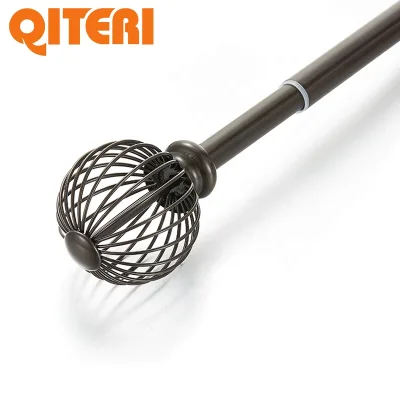
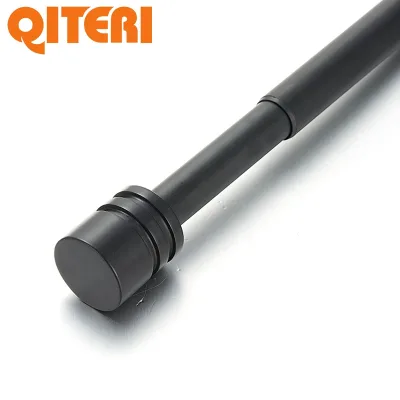
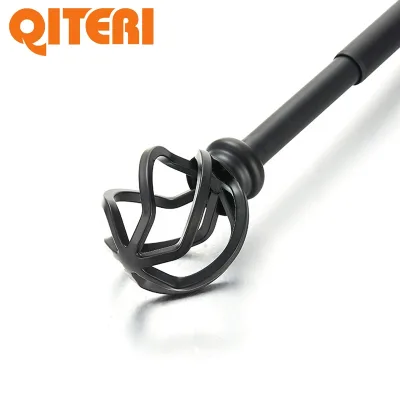
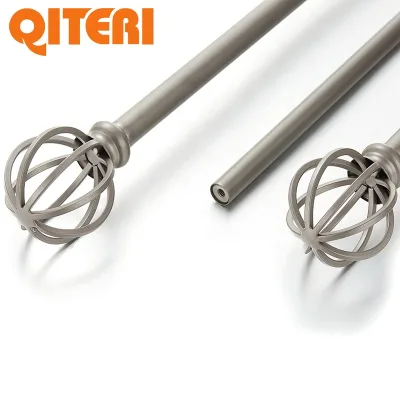


Comprehensive Sourcing Guide
Strategic Sourcing Guide for Home Decoration Curtain Rods
The global market for home decoration curtain rods has evolved from a simple functional necessity into a critical design element that defines the aesthetic character of residential and commercial interiors. For procurement professionals and sourcing agents, navigating this sector requires a disciplined approach that balances technical specifications with aesthetic customization and supply chain reliability. The following guide synthesizes observed market data and technical parameters to provide a robust framework for sourcing curtain rods, ensuring that buyers can make informed decisions based on verified attributes rather than speculative claims.
Technical Specifications and Material Standards
The foundation of a successful procurement strategy lies in a precise understanding of the technical specifications that define product performance and durability. Curtain rods are primarily categorized by their material composition, with metal being the dominant choice due to its structural integrity and finish versatility. Buyers must verify the specific alloy composition and wall thickness, as these factors directly influence the rod's load-bearing capacity. Observed market data indicates a standard rod thickness range of 0.55mm to 0.6mm, with options available for custom requests to accommodate heavier drapery.
Diameter is another critical dimension that dictates both the visual weight of the rod and its compatibility with curtain rings. The market presents a diverse range of diameters, including 16mm, 19mm, 25mm, and 28mm, alongside a specific standard reference list of 13mm, 16mm, 19mm, 22mm, 25mm, 28mm, and 35mm. For instance, a specific product model (HA-0704-1021) features a 16mm diameter with a 1.0mm thickness, while another variant (HA-0704-1025) offers a 28mm diameter. The length of the rods is equally variable, typically ranging from 2 meters to 6 meters, with many suppliers offering custom-made sizes to fit specific window dimensions.
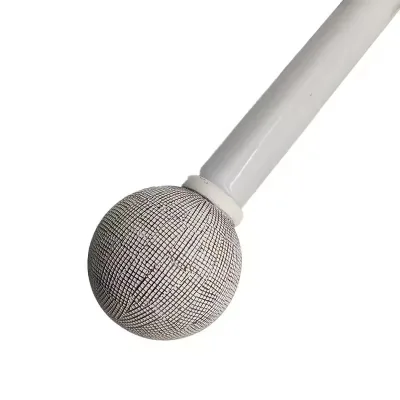
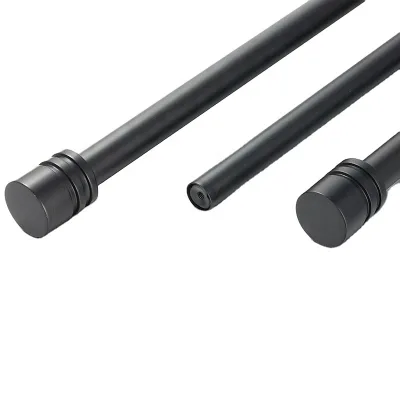
The finish and surface treatment are equally vital for both aesthetics and longevity. Two primary finishing processes are prevalent in the market: electroplating and spray-painting. Electroplating is often associated with a metallic sheen, such as the golden or silver finishes observed in specific product lines, while spray-painting provides a uniform color coat, such as the white variants available. The choice between an embossed rod and a plain rod further distinguishes the product line, with embossed rods offering a textured, decorative profile suitable for traditional interiors, and plain rods providing a minimalist look for modern spaces.
Aesthetic Customization and Design Variability
In the realm of home decoration, the ability to customize the visual appearance of curtain rods is a primary driver for procurement decisions. The market demonstrates a high degree of flexibility regarding patterns and colors. Buyers can source rods with hand-painted patterns, which add a unique artistic touch to the installation. Additionally, the availability of OEM (Original Equipment Manufacturer) and ODM (Original Design Manufacturer) services allows brands to create proprietary designs that align with their specific collection themes.
Color options are extensive, with golden, silver, and white being the most commonly observed finishes. These colors are not merely surface treatments but are integral to the product's finish process, whether achieved through electroplating or spray-painting. The customization extends to the bracket type as well. While double brackets are common for supporting the weight of the rod, wall brackets are also available, offering different mounting aesthetics and structural support configurations.
The following table summarizes the key aesthetic and customization variables observed in the current market:
| Feature Category | Observed Options | Customization Availability |
|---|---|---|
| Surface Finish | Electroplating, Spray-painting | High (Color and Texture) |
| Rod Profile | Embossed Rod, Plain Rod | Yes (Pattern and Texture) |
| Color Palette | Golden, Silver, White | Yes (OEM/ODM Supported) |
| Pattern Style | Hand Painted | Yes (Design Specific) |
| Packing | In Box, OPP Bags, Pipe (10PCS/CTN) | Yes (Branding and Packaging) |
Application Scenarios and Usage Context
Understanding the intended application is crucial for selecting the right curtain rod. The product attributes indicate a broad usage spectrum that includes hotels, hospitals, homes, and cafes. This versatility suggests that the products are designed to meet varying standards of durability and aesthetics required by different sectors. In residential settings, the focus is often on decorative appeal and ease of installation, whereas commercial applications like hotels and hospitals may prioritize hygiene, durability, and compliance with safety standards.
The specific application categories listed include curtain poles, shower rods, and hang rods. This indicates that the same product lines can be adapted for different environments. For example, a rod used in a hotel bathroom as a shower rod must withstand high humidity, while a rod in a hotel lobby as a curtain pole must support heavy drapes. The mounting type is typically wall-mounted, which is the standard for most interior applications. However, the specific requirements of the installation site, such as the wall material and the weight of the curtains, must be considered when selecting the appropriate bracket and rod thickness.
Cost Drivers and Pricing Dynamics
The pricing of curtain rods is influenced by a complex interplay of factors, including material costs, finishing processes, customization levels, and order volume. The observed price range in the market spans from $0.10 to $50.00 USD. This wide disparity reflects the difference between basic, mass-produced units and high-end, custom-finished products. Several key drivers contribute to these cost variations.
First, the material thickness and diameter significantly impact the cost. A rod with a 1.0mm thickness and 28mm diameter will inherently cost more than a thinner, narrower alternative due to the increased material usage. Second, the finishing process plays a major role. Electroplating and hand-painted finishes generally command a higher price point than standard spray-painting due to the additional labor and chemical processes involved. Third, customization is a primary cost driver. While standard models are available at lower price points, orders requiring specific colors, patterns, or custom dimensions will incur higher costs.
The Minimum Order Quantity (MOQ) also affects the effective unit price. The observed MOQ range is between 10 and 6000 units. Buyers purchasing at the lower end of this spectrum may face higher per-unit costs, while those ordering in bulk can leverage economies of scale to reduce the price. Additionally, the packaging method, whether simple OPP bags or more robust carton packaging with accessories, can influence the final cost. Buyers should note that sample availability is often free, which can be a strategic tool for evaluating quality before committing to a larger order.
Supplier Evaluation and Compliance Verification
When evaluating potential suppliers, buyers must look beyond the basic product description and assess the supplier's capability to meet specific quality and compliance standards. The origin of the products is a significant factor, with the majority of observed products originating from Zhejiang, China. This region is known for its robust manufacturing infrastructure, but it is essential to verify the specific factory's reputation and production capacity.
Compliance and certification checks are critical, although specific certification names are not universally listed in the provided data. Buyers should request documentation regarding the materials used, ensuring they meet relevant safety and environmental standards. The "Custom Made Size" standard suggests that suppliers are capable of flexible production, but this requires rigorous quality control to ensure that custom dimensions do not compromise structural integrity.
Key evaluation criteria for suppliers include:
- Production Capacity: Can the supplier handle the required volume, given the wide MOQ range?
- Quality Control: Are there in-process checks for finish consistency, thickness, and diameter?
- Sample Policy: Does the supplier offer free samples for quality verification?
- OEM/ODM Capability: Can the supplier support custom branding and design requirements?
- Packaging Standards: Is the packaging sufficient to prevent damage during transit, especially for delicate finishes?
Quality Control and Long-Term Procurement Considerations
Ensuring long-term satisfaction with curtain rod procurement requires a proactive approach to quality control. The observed product attributes, such as the "Single" rod quantity and "Double Bracket" or "Wall Bracket" types, highlight the importance of component compatibility. A mismatch between the rod diameter and the ring diameter (observed at 35mm) can lead to operational issues. Therefore, buyers must verify that all components, including brackets, rings, and the rod itself, are compatible and meet the specified tolerances.
Long-term procurement considerations also involve the durability of the finish. In environments with high humidity, such as bathrooms or coastal hotels, the choice between electroplating and spray-painting becomes critical. Buyers should request test results or performance data regarding corrosion resistance and color fastness. Additionally, the "Hand Painted" attribute suggests a higher level of craftsmanship, which may require more stringent quality checks to ensure consistency across large batches.
For ongoing procurement, establishing a clear communication channel with the supplier regarding lead times and production schedules is essential. While specific lead times are not provided in the data, the variability in customization options suggests that production times may fluctuate. Buyers should plan for potential delays when ordering custom designs and maintain a buffer stock of standard items to mitigate supply chain disruptions.
Conclusion
Sourcing home decoration curtain rods requires a nuanced understanding of the interplay between technical specifications, aesthetic customization, and supply chain dynamics. By focusing on verified attributes such as material thickness, diameter ranges, and finishing processes, buyers can make informed decisions that align with their specific project requirements. The wide range of applications, from residential homes to commercial hotels, underscores the versatility of these products, but also highlights the need for rigorous supplier evaluation and quality control. As the market continues to evolve, maintaining a disciplined approach to procurement will ensure that buyers secure high-quality curtain rods that meet both functional and aesthetic standards.
FAQs
What materials are used for home decoration curtain rods?
Metal is the primary material used for these curtain rods, ensuring structural integrity and durability. Buyers can find options with varying thicknesses, typically ranging from 0.55mm to 1.0mm, to support different curtain weights.
Which finish processes are available for metal curtain rods?
Two main finish processes are available: electroplating and spray-painting. Electroplating often provides metallic sheens like golden or silver, while spray-painting offers uniform colors such as white for various interior styles.
Can I order custom sizes for home decoration curtain rods?
Yes, custom made sizes are available to fit specific window dimensions. Suppliers typically offer length ranges from 2 meters to 6 meters, accommodating various installation requirements without compromising structural stability.
What is the minimum order quantity for curtain rod suppliers?
The minimum order quantity ranges from 10 to 6000 units depending on the supplier and product customization. Lower MOQs allow for smaller trial orders, while bulk purchases leverage economies of scale for better pricing.
How are home decoration curtain rods packaged for shipping?
Packaging options include individual boxes, OPP bags, or cartons containing 10 pieces per carton with accessories. The specific packing method depends on the product model and supplier standards to ensure safe transit.
Which rod diameters are commonly available in the market?
Common rod diameters include 16mm, 19mm, 25mm, and 28mm, with some standards extending up to 35mm. These dimensions dictate the visual weight and compatibility with curtain rings for different aesthetic preferences.