Source Home Refrigerator Water Level Probe for Boilers, Furnaces, Stoves
Compare 30 Home Refrigerator Water Level Probe options from verified Chinese suppliers. Buyers can evaluate models like HDL300 and YN-L148 with features including piezoelectric and magnetic sensor principles, varying accuracy grades, and explosion-proof certifications for industrial and residential applications.
Key considerations
Products List


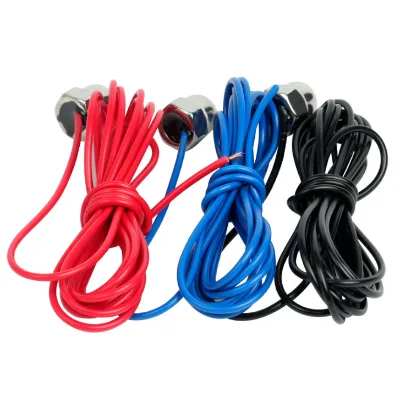
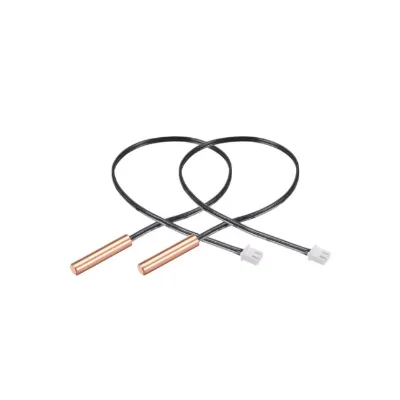
Water Level Sensor Electrode Probe Liquid Level Probe for Chiller Water Tank
$10.00 - $20.00
MOQ: 10 Pieces










Comprehensive Sourcing Guide
Strategic Sourcing Guide for Home Refrigerator Water Level Probes
Understanding Technical Specifications and Sensor Principles
When sourcing water level probes specifically designed for home refrigerators, buyers must first navigate the diverse landscape of sensor technologies available in the global market. The core functionality of these devices relies on converting the physical presence of liquid into an electrical signal. Based on current market offerings, two primary principles dominate the technical specifications: Piezoelectric Type and Magnetic Sensors. The Piezoelectric Type operates by generating an electrical charge in response to mechanical stress, often utilized in applications requiring high sensitivity to pressure changes. Conversely, Magnetic Sensors, often associated with float-based mechanisms, detect the position of a magnetic float moving within a guide tube. For a home refrigerator application, the choice between these principles depends heavily on the specific internal architecture of the appliance and the required response time.
Accuracy is a critical metric that directly influences the reliability of the water dispensing system. Market data indicates that precision levels can vary significantly, with observed accuracy grades ranging from 0.1% to 0.2%. A probe with 0.2% accuracy, often linked to Silicon Piezoresistive Type sensors, offers a balance of cost and performance suitable for general household use. However, for high-end models requiring precise ice maker fill cycles, the 0.1% accuracy grade becomes a more desirable specification. The structural design also plays a pivotal role; "All in One" structures are prevalent, integrating the sensing element and signal processing into a single compact unit, which simplifies installation within the confined spaces of a refrigerator chassis. Additionally, the physical form factor must align with the appliance's internal constraints, with options available in Round, Square, or Three Pins configurations to ensure compatibility with existing mounting points.
Compliance, Certification, and Safety Standards
In the B2B procurement of electronic components for consumer appliances, compliance with international safety and environmental standards is non-negotiable. The supply chain for water level probes is heavily regulated to ensure that products do not pose risks to the end-user or the environment. A primary certification observed in the market is the CE mark, which indicates conformity with health, safety, and environmental protection standards for products sold within the European Economic Area. While the CE certification is a high-confidence fact for many suppliers, buyers must verify that the specific batch of components carries this marking, as it is a prerequisite for market access in many regions.
Beyond general safety, the operational environment of a refrigerator probe introduces specific challenges regarding temperature and potential hazardous atmospheres. Although home refrigerators typically operate in standard indoor conditions, the manufacturing standards often account for extreme scenarios. Some suppliers offer products with an Explosion-Proof rating compliant with ATEX standards, which is crucial if the probe is intended for use in environments where flammable gases might be present, such as in industrial settings or specific commercial refrigeration units. Furthermore, the RoHS (Restriction of Hazardous Substances) directive is a standard requirement, ensuring that the probe does not contain lead, mercury, or other restricted materials. Buyers should explicitly request documentation proving RoHS compliance to avoid regulatory hurdles during product certification.
The material composition of the probe also impacts its compliance profile. The process connection materials often include 304 or 316 stainless steel, as well as Hastelloy, which provide corrosion resistance and durability. The diaphragm material is frequently specified as 316L Hastelloy, ensuring longevity in contact with water and potential cleaning agents. These material choices are not merely technical preferences but are often mandated by food safety standards and environmental regulations. When evaluating suppliers, procurement teams should verify that the stated materials match the certified specifications to ensure the final product meets all necessary regulatory frameworks.
Cost Drivers and Pricing Dynamics
The pricing of water level probes for home refrigerators is influenced by a complex interplay of technical specifications, material costs, and order volume. The observed market price range is extensive, spanning from $0.02 to $500 per unit. This wide variance reflects the difference between basic mechanical float sensors and advanced electronic transmitters with digital output capabilities. The lower end of the spectrum typically corresponds to simpler Magnetic Sensor or Float-based units with minimal electronic integration. In contrast, the higher price points are associated with high-accuracy Silicon Piezoresistive Type sensors that offer superior stability and digital communication protocols.
Minimum Order Quantity (MOQ) is another significant factor affecting the total cost of ownership. The market shows an MOQ range from 1 to 1000 units. For small-scale prototyping or niche appliance manufacturers, suppliers with an MOQ of 1 allow for low-risk testing of new designs. However, for mass production runs typical of major home appliance brands, negotiating an MOQ closer to 1000 units can unlock significant volume discounts. Buyers should be aware that the unit price is rarely static; it is often tiered based on the order size. A purchase of 100 units may carry a premium compared to a bulk order of 5,000 units.
Customization is a major cost driver in this sector. While standard models are available, the "Customization: Available" attribute indicates that many suppliers offer tailored solutions. Customization can involve altering the probe's shape, adjusting the accuracy grade, or modifying the process connection material to fit unique appliance designs. These bespoke requirements inevitably increase the unit cost and may extend the lead time. Additionally, the packaging method, whether Box, Carton, or Wooden Packing, can influence logistics costs. Wooden packing is typically reserved for heavy or high-value items requiring extra protection, while standard cartons are sufficient for most electronic components. Buyers must balance the desire for customization against the budget constraints, ensuring that the added cost of a custom probe delivers tangible value in terms of performance or integration ease.
Typical Applications and Operational Environments
While the core keyword focuses on home refrigerators, the underlying technology for water level probes is versatile and applicable across a broader spectrum of industries. Understanding these diverse applications helps buyers contextualize the robustness required for their specific use case. The observed "Use" attributes for these probes include Stove, Furnace, and Boiler, indicating that the technology is often engineered to withstand high thermal loads and harsh industrial environments. For instance, some probes are designed to operate within a process temperature range of -190℃ to 425℃, a capability far exceeding the typical operating range of a domestic refrigerator.
However, for home refrigerator applications, the operational parameters are more moderate. The standard process temperature for many general-purpose probes is listed as -20℃ to 80℃, which comfortably covers the internal temperature variations of a refrigerator, including the freezer compartment. The pressure range is typically atmospheric, meaning the probes are not designed for high-pressure systems but rather for open or vented tanks. This makes them ideal for water reservoirs and ice maker trays found in household appliances. The "Kind" of probe, such as Liquid Level Transmitter or Float, dictates the specific application. Float-type probes are often preferred for simple on/off control in water tanks, while Liquid Level Transmitters provide continuous level monitoring, which is essential for smart refrigerators that track water usage.
The mounting and structural design also vary based on the application. The "Structure Design" may be Input Type, and the "Mounting Bracket" could be a Pipe Mounting Bracket, allowing for flexible installation in different appliance configurations. For home refrigerators, the compact "All in One" structure is particularly advantageous as it minimizes the space required for the sensor assembly. Furthermore, the "IP Rating" is a critical consideration for water applications, ensuring that the probe is protected against water ingress. While specific IP ratings are not universally defined in the provided data, buyers should verify that the probe meets the necessary ingress protection standards for a wet environment.
Supplier Evaluation and Service Capabilities
Selecting the right supplier is as critical as selecting the right product. In the B2B market, the reliability of the supplier directly impacts the continuity of production and the quality of the final appliance. A key differentiator among suppliers is the availability of technical support. The market offers "7*24h" technical support, which is a significant advantage for buyers facing urgent production issues or requiring immediate troubleshooting assistance. This round-the-clock support ensures that any technical challenges can be addressed promptly, minimizing downtime.
Localization service is another valuable attribute to consider. Suppliers offering "Localization Service" can provide on-site assistance, training, or customized support tailored to the buyer's regional needs. This is particularly beneficial for international buyers who may face language barriers or logistical challenges. The "Shipping Method" is also a crucial factor; "Door-to-Door Delivery" simplifies the logistics process, ensuring that the goods arrive directly at the buyer's facility without the need for complex customs handling or third-party freight forwarding.
The origin of the product is another factor in supplier evaluation. The data indicates that products originate from China and Hefei, a region known for its manufacturing capabilities. While the origin is a factual observation, buyers should assess the specific manufacturing facilities of the supplier to ensure they meet quality standards. The "Warranty" period, typically 1 Year for these components, provides a safety net against manufacturing defects. Buyers should review the warranty terms carefully to understand what is covered and the process for claims. Additionally, the "More details: please contact us" attribute suggests that some specifications may not be fully listed and require direct communication with the supplier. This highlights the importance of engaging in detailed discussions to clarify all technical and commercial terms before finalizing a purchase.
Quality Control and Long-Term Procurement Strategies
Ensuring consistent quality is paramount in the procurement of water level probes. The "Accuracy Grade" of 0.2G and the "Accuracy" of 0.1% or 0.2% are specific metrics that must be verified through rigorous quality control processes. Buyers should request test reports and calibration certificates to confirm that the probes meet the stated accuracy specifications. The "Finish of Ceramic" being Glazed is another quality indicator, suggesting a protective layer that enhances durability and resistance to chemical corrosion.
Long-term procurement strategies should focus on building a resilient supply chain. The "Customized" nature of many products means that buyers should establish a strong relationship with their supplier to ensure that future production runs maintain the same quality and specifications. The "Standard" of 505050cm or "Flange mounted and Thread mounted" indicates that there are established norms for packaging and mounting, which buyers should adhere to for consistency.
To mitigate risks, buyers should implement a multi-sourcing strategy where possible, although this may be limited by the specific customization requirements. Regular audits of the supplier's manufacturing process and quality control systems can help maintain high standards. Additionally, buyers should plan for the "Lead time" and "MOQ" constraints by forecasting demand accurately. The "Product Packing" options, ranging from Box to Wooden Packing, should be selected based on the fragility of the components and the shipping distance. By focusing on these quality control measures and strategic planning, buyers can ensure a steady supply of high-performance water level probes for their home refrigerator production lines.
Comparative Analysis of Probe Types
To assist buyers in making informed decisions, the following table compares the key attributes of the different probe types observed in the market. This comparison highlights the trade-offs between accuracy, material, and application suitability.
| Attribute | Piezoelectric Type | Magnetic Sensors (Float) | Silicon Piezoresistive Type |
|---|---|---|---|
| Principle | Piezoelectric | Magnetic Sensors | Silicon Piezoresistive |
| Accuracy | 0.2% | 0.1% | 0.2% |
| Kind | Liquid Level Transmitter | Float | Liquid Level Transmitter |
| Structure | All in One | Float | All in One |
| Typical Use | General Monitoring | Simple On/Off Control | High Precision |
| Material | SS | Ni80cr20, Cr27al7mo2 | 304/316 Stainless Steel |
| Temperature Range | -20℃~80℃ | -190~425℃ | -20℃~80℃ |
This table illustrates that while Magnetic Sensors offer a wider temperature range, they are often better suited for simple applications. Silicon Piezoresistive Type probes, with their high accuracy and robust materials, are ideal for demanding home refrigerator applications where precision is key. Buyers should select the type that best aligns with their specific technical requirements and budget constraints.
FAQs
What sensor principles are available for home refrigerator water level probes?
Available principles include Piezoelectric Type and Magnetic Sensors. Piezoelectric sensors generate electrical charges from mechanical stress, while magnetic sensors detect float positions. The choice depends on the appliance architecture and required response time for accurate water dispensing.
Which accuracy grades are typically offered for these probes?
Observed accuracy grades range from 0.1% to 0.2%. The 0.2% accuracy is often linked to Silicon Piezoresistive Type sensors suitable for general use, while 0.1% accuracy is preferred for high-end models requiring precise ice maker fill cycles and superior stability.
Can these probes be customized for specific refrigerator designs?
Yes, customization is available for various specifications. Buyers can request tailored solutions involving shape adjustments, accuracy grade modifications, or specific process connection materials. Customization may increase unit costs and extend lead times compared to standard models.
What certifications are standard for these electronic components?
Standard certifications include CE and RoHS compliance. The CE mark indicates conformity with safety standards for the European Economic Area, while RoHS ensures the absence of restricted hazardous substances. Verification of specific batch documentation is recommended for regulatory compliance.
How do pricing and minimum order quantities vary for these probes?
Prices range from 0.02 to 500 USD depending on complexity. Minimum order quantities vary from 1 to 1000 units. Lower prices typically correspond to simpler float sensors, while higher prices reflect advanced electronic transmitters with digital output capabilities and higher accuracy grades.
What operational temperature ranges do these probes support?
Standard process temperatures range from -20 to 80 degrees Celsius, covering typical refrigerator conditions. Some industrial variants support ranges from -190 to 425 degrees Celsius. Most home refrigerator applications require the moderate range suitable for internal reservoirs and ice maker trays.
What materials are used for process connections and diaphragms?
Process connection materials include 304, 316 stainless steel, and Hastelloy. Diaphragm materials are frequently specified as 316L Hastelloy to ensure corrosion resistance. These choices meet food safety standards and provide durability in contact with water and cleaning agents.
What warranty and technical support services are provided?
A standard warranty period of 1 year is typically offered against manufacturing defects. Suppliers often provide 7*24h technical support and localization services. Door-to-door delivery is available to simplify logistics and ensure goods arrive directly at the buyer's facility.