Source Hydraulic Clamping Feeding Sawing Machine for Steel, Pipes, and Bars
Compare 30 Hydraulic Clamping Feeding Sawing Machine listings from verified suppliers. Buyers can evaluate specifications like spindle speed, clamping methods, and voltage options for metal cutting applications.
Key considerations
Products List

High Torque Hydraulic Clamping Automatic Sawing Machine with Horizontal Saw Head Feed
$30000.00 - $116200.00
MOQ: 1 sets


High Torque Hydraulic Clamping Automatic Sawing Machine with 3000 to 6000mm Bar Loading
$45000.00 - $50000.00
MOQ: 1 Sets

Hydraulic Clamping Automatic Sawing Machine with 3000 to 6000mm Long Bar Loading
$37500.00 - $41654.00
MOQ: 1 sets


Hydraulic Clamping CNC Machine Fixing Workpieces Firmly and Improving Clamping Efficiency
$55000.00 - $63000.00
MOQ: 1 unit
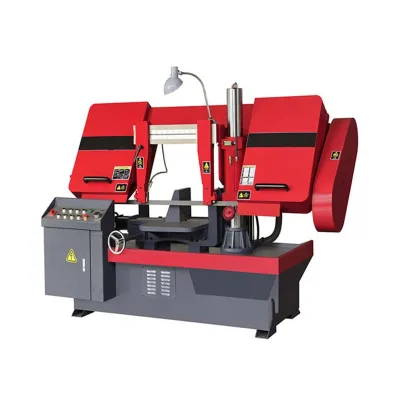

$2600.00 - $3100.00
MOQ: 1 Pieces


Ghs4240 Automatic Feed Hydraulic Clamping Metal Cutting CNC Band Saw Machine
$6000.00 - $10000.00
MOQ: 1 Pieces


Comprehensive Sourcing Guide
Strategic Sourcing Guide for Hydraulic Clamping Feeding Sawing Machines
The procurement of industrial sawing equipment, specifically hydraulic clamping feeding sawing machines, requires a rigorous evaluation of technical capabilities, compliance standards, and supply chain reliability. Buyers in the metalworking sector must navigate a complex landscape where machine configurations vary significantly between circular and band sawing technologies. This guide synthesizes observed market data and verified product attributes to provide a structured framework for sourcing decisions. The focus remains on high-precision, automated solutions that integrate hydraulic feeding systems with numerical control (CNC) environments to ensure optimal cutting performance for metal processing applications.
Technical Architecture and Operational Specifications
Understanding the mechanical architecture of hydraulic clamping feeding sawing machines is the first step in defining procurement requirements. These machines are designed to handle heavy-duty metal cutting with high precision, utilizing a combination of hydraulic power for clamping and servo-driven systems for feeding. The observed market data indicates a clear distinction between circular sawing machines and band sawing machines, each serving different operational needs.
Circular sawing machines, such as the model HY-180NC, often feature a robust host machine weight of 12,400 kg when combined with a roller table. These units typically employ a horizontal saw feed direction and are powered by a 30(4p) Kw spindle motor. The spindle speed for these high-end units ranges from 20 to 80 rpm, allowing for controlled cutting of large diameter workpieces. The allowable length to be loaded on these machines spans from 3000 mm to 6000 mm, accommodating long stock materials. The physical footprint is substantial, with dimensions reaching 7416 mm in length and 3788 mm in width.
In contrast, band sawing machines, including the HY-100NC and HY-120NC models, offer a different set of specifications. These double-column horizontal band sawing machines are lighter, with a recorded weight of 4500 kg. They are equipped with an 11kw motor and utilize a Mitsubishi control system for numerical control operations. The dimensions for these units are approximately 6500 mm in length and 2760 mm in width. The feeding mechanism in these machines relies on an AC servo motor combined with a ball screw, ensuring precise linear control. The clamping method is hydraulic and horizontal, securing the workpiece firmly before the cutting cycle begins.
The following table summarizes the key technical differences observed between the two primary machine types available in the current market:
| Feature | Circular Sawing Machine (e.g., HY-180NC) | Band Sawing Machine (e.g., HY-100NC/120NC) |
|---|---|---|
| Primary Type | Circular Sawing Machine | Horizontal Band Sawing Machine (Double Column) |
| Spindle/Motor Power | 30(4p) Kw | 11 Kw |
| Spindle Speed | 20-80 rpm | Variable (Servo Driven) |
| Clamping Method | Hydraulic, Horizontal Clamping | Hydraulic, Horizontal Clamping |
| Feeding Drive | AC Servo Motor + Ball Screw | AC Servo Motor + Ball Screw |
| Host Weight | 12,400 kg (with roller table) | 4,500 kg |
| Max Bar Capacity | Round: 70-180mm; Square: 70-130mm | Specific to model, generally for smaller profiles |
| Control System | CNC | Mitsubishi CNC/MNC |
| Dimensions (LxW) | 7416 x 3788 mm | 6500 x 2760 mm |
Buyers must verify that the specific model selected matches their intended workpiece dimensions. For instance, the circular sawing machine is optimized for round bars between 70 mm and 180 mm and square bars between 70 mm and 130 mm. The pin hole and aperture specifications for certain models include a 4Xφ21 configuration with a pitch circle diameter of 120 mm and a φ50 mm aperture, which must be compatible with the buyer's existing tooling or fixture setups.
Compliance, Certification, and Safety Standards
When sourcing industrial machinery, verifying compliance with international standards is non-negotiable. The provided data confirms that products in this category often carry ISO and CE certifications. These certifications indicate that the machinery meets specific safety, health, and environmental protection requirements, which is critical for operations within the European Union and other regulated markets.
Buyers should explicitly request documentation proving the ISO and CE status of the specific unit they intend to purchase. While the general product listing mentions these certifications, the actual certification status for a specific batch or serial number must be validated before finalizing the transaction. Additionally, the machinery test report is provided for these units, offering empirical evidence of the machine's performance prior to shipment. This report should be reviewed to ensure that the machine meets the claimed specifications regarding precision and operational stability.
The production standards for these machines are also defined by specific dimensional benchmarks. For example, the standard dimension for certain models is listed as 590023502390 mm, while others adhere to 6500X2760 mm. Buyers must ensure that the physical dimensions of the machine align with their facility's floor space and load-bearing capacity. The voltage requirements are another critical compliance factor. The observed voltage options include 380V, 220V, or negotiable configurations. It is imperative to confirm the exact voltage requirement for the specific model to avoid electrical incompatibility issues upon installation. The input voltage for band sawing machines is typically 380V, while circular sawing machines may offer more flexibility with 220V or 380V options.
Cost Drivers and Financial Considerations
The pricing for hydraulic clamping feeding sawing machines varies significantly based on the machine type, automation level, and included features. The observed price range in the market spans from 1,000 USD to 125,000 USD. This wide disparity reflects the difference between entry-level models and high-end CNC machine tools designed for high-precision applications.
Several factors drive the cost of these machines. First, the control system plays a major role; models equipped with Mitsubishi control systems or advanced CNC/MNC interfaces command a higher price due to the sophistication of the automation. Second, the motor power and spindle capabilities influence the cost, with 30 Kw motors being more expensive than 11 Kw units. Third, the inclusion of a roller table and the overall weight of the host machine contribute to material and shipping costs.
Payment terms are another financial consideration. The standard payment structure observed in the market is a 30/70 split, where 30% is paid upfront and the remaining 70% is paid upon delivery or completion of milestones. Buyers should negotiate these terms based on their cash flow and risk tolerance. Additionally, the lead time for delivery is a critical cost driver. The standard delivery time is approximately 40 days, which impacts the total cost of ownership when factoring in inventory holding costs and production scheduling.
Typical Applications and Material Compatibility
Hydraulic clamping feeding sawing machines are primarily designed for metal processing applications. The observed data explicitly categorizes these machines under "Metal-Cutting CNC Machine Tools" and "Metal-Forming CNC Machine Tools." They are also suitable for "CNC Non-Conventional Machine Tools," indicating versatility in handling various metalworking tasks.
The specific applications depend on the machine type. Circular sawing machines are ideal for cutting round and square bars, with capacities ranging from 70 mm to 180 mm for round bars and 70 mm to 130 mm for square bars. These machines are particularly effective for high-productivity environments where large volumes of stock need to be cut to length with high precision. The horizontal feed direction and hydraulic clamping ensure stability during the cutting of heavy metal profiles.
Band sawing machines, on the other hand, are often used for cutting a wider variety of shapes and sizes, though the specific capacity depends on the model. The HY-100NC and HY-120NC models are marketed as high-end CNC machine tools, suggesting they are suitable for precision cutting tasks where tight tolerances are required. The processing precision for these machines is listed as 0.01~0.02 mm, making them suitable for applications where dimensional accuracy is paramount.
Supplier Evaluation and Verification Protocols
Selecting the right supplier is as important as selecting the right machine. Buyers should evaluate suppliers based on their ability to provide comprehensive documentation, including machinery test reports, certification proofs, and detailed technical specifications. The origin of the machines is a key factor, with Shanghai, China, being a primary production hub for these units. Buyers should verify the specific manufacturing location to ensure it aligns with their supply chain strategy.
The condition of the machines is listed as "New," and customization is available. This indicates that suppliers are willing to tailor the machines to specific buyer requirements, such as adjusting the voltage, modifying the control system, or altering the packing method. The standard packing method is an export wooden box or wooden packaging, which ensures the machine is protected during transit. Buyers should verify that the packing meets the specific requirements of their destination country to avoid customs delays or damage.
When evaluating suppliers, buyers should also consider the warranty of core components. The observed warranty period is 1 year, which covers critical parts of the machine. It is essential to clarify the scope of this warranty, including what constitutes a "core component" and the process for claiming repairs or replacements. The marketing status of the product, such as "Hot Product 2019," should be treated with caution, as it may not reflect the current technological relevance of the machine. Buyers should focus on the technical specifications and performance classification rather than marketing claims.
Quality Control and Long-Term Procurement Strategy
Ensuring the quality of hydraulic clamping feeding sawing machines requires a proactive approach to quality control. Buyers should request detailed machinery test reports that verify the machine's performance against the claimed specifications. The processing precision of 0.01~0.02 mm should be validated through on-site testing or third-party inspection before the machine is shipped.
Long-term procurement considerations include the availability of spare parts, the ease of maintenance, and the potential for future upgrades. The use of high-quality components, such as AC servo motors and ball screws, suggests a focus on durability and precision. However, buyers should verify the availability of these components from the supplier to ensure minimal downtime in the event of a failure.
The movement method of these machines is linear control, which is a standard for high-precision applications. Buyers should ensure that the linear control system is compatible with their existing automation infrastructure. The numerical control (CNC/MNC) system should be user-friendly and capable of integrating with other factory systems.
In conclusion, sourcing hydraulic clamping feeding sawing machines requires a meticulous approach that balances technical specifications, compliance requirements, and financial considerations. By focusing on verified data and avoiding unconfirmed claims, buyers can make informed decisions that align with their operational needs and long-term strategic goals. The market offers a range of options from circular sawing machines to band sawing machines, each with unique advantages depending on the specific application. Buyers must carefully evaluate the technical architecture, certification status, and supplier reliability to ensure a successful procurement outcome.
FAQs
What certifications do these machines have?
These machines carry ISO and CE certifications to meet international safety and environmental standards. Buyers should request specific documentation for the batch they intend to purchase to verify compliance before finalizing the transaction.
Can I customize the voltage for this machine?
Yes, customization is available for voltage requirements including 380V, 220V, or negotiable configurations. Buyers must confirm the exact voltage needed for their facility to ensure electrical compatibility upon installation.
How long is the delivery lead time?
The standard delivery lead time is approximately 40 days from order confirmation. This timeline impacts inventory planning and should be factored into production scheduling and total cost of ownership calculations.
What is the maximum bar capacity for circular saws?
Circular sawing machines can handle round bars from 70 to 180 mm and square bars from 70 to 130 mm. This capacity defines the maximum stock size the machine can process effectively during operation.
Which control system is used for these machines?
Band sawing models utilize a Mitsubishi control system for numerical control operations. Circular sawing models employ CNC systems to ensure high precision and automated feeding drive methods using AC servo motors.
What is the warranty period for core components?
The warranty for core components covers a period of 1 year. Buyers should clarify the specific scope of this warranty to understand what parts are covered and the process for claiming repairs.