Source Hydraulic Concrete Pipe Mold for Drainage, Sewer, and Culvert Projects
Find 30 Hydraulic Concrete Pipe Mold options from verified Chinese manufacturers. Buyers can compare specifications like diameter, voltage, and production capacity to select the right equipment for industrial drainage and sewer applications.
Key considerations
Products List


Pipe Machine Concrete Pipe Concrete Mold Concrete Pipe for Manhole Drain
$5500.00 - $29999.00
MOQ: 1 Pieces

Professional Customized Cement Pipe Processing Machine Concrete Pipe Mould
$5500.00 - $29999.00
MOQ: 1 Pieces

Best-Selling Cement Pipe Making Machine Concrete Pipe Production Cement Pipe Mould
$5500.00 - $29999.00
MOQ: 1 Pieces


$200000.00 - $300000.00
MOQ: 1 Pieces

$10000.00 - $20000.00
MOQ: 1 Pieces


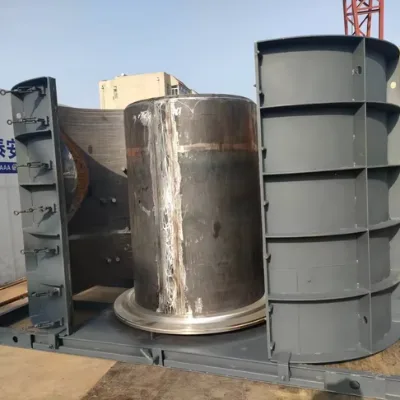


a Manufacture of Concrete Pole Molds Concrete Pipe Mold Concrete Pile Mould
$3500.00 - $30000.00
MOQ: 10 Sets


Supplier Concrete Pipe Mould Concrete Pipe Equipment Concrete Drainage Pipe Machine
$2000.00 - $3000.00
MOQ: 10 Pieces


Best Sales Concrete Pipe Making Machinery Steel Moulds for Drainage Pipes
$4000.00 - $6000.00
MOQ: 1 Pieces


Comprehensive Sourcing Guide
Strategic Sourcing Guide for Hydraulic Concrete Pipe Molds
Understanding Hydraulic Concrete Pipe Mold Specifications
When initiating a procurement process for hydraulic concrete pipe molds, buyers must first establish a precise understanding of the technical specifications that define the equipment's capability. The core product category, often identified as a "Concrete Pipe Machine" or "Pipe Production Line," encompasses a wide array of configurations designed to produce circular pipes for various industrial applications. The primary output of these machines is typically defined by the pipe diameter, which in the observed market ranges significantly from 300mm up to 2400mm, with some specialized lines capable of producing pipes with diameters extending to DN4000. The length of the resulting pipes is equally critical, with standard production lengths observed between 1000mm and 4000mm, while heavy-duty production lines may generate units reaching 6000mm.
The physical construction of the mold is a primary determinant of its performance and longevity. The raw materials utilized in the manufacturing of the pipe itself are consistently listed as cement, sand, crushed stone, and water. Consequently, the mold must be engineered to withstand the abrasive nature of these materials. The structural integrity of the mold is often highlighted by its weight, which varies considerably based on the model and intended output; observed weights range from approximately 1300kg for smaller units to 30,000kg for large-scale industrial machines. The wall thickness of the pipes produced is another critical specification, typically falling within the 30mm to 100mm range, requiring molds with precise dimensional tolerances to ensure the final product meets structural requirements.
Power requirements and electrical configurations are essential for facility planning. The machinery generally operates on voltages of 220V, 380V, or 440V, with the specific configuration often available as a buyer request to match local grid standards. The power consumption for these units is substantial, with observed ratings between 40kw and 80kw. The operating theory behind the hydraulic systems varies, with some models utilizing pulse theory and others employing inverter technology to optimize the molding process. The joint types produced are equally diverse, including flat joints (normal), socket joints, and rabbet joints, necessitating molds with interchangeable or adjustable components to accommodate different connection standards.
Compliance, Certification, and Standard Verification
In the realm of heavy industrial machinery, compliance and certification serve as the primary indicators of quality and safety. While specific test results and third-party audit reports are not universally listed for every unit, buyers should verify that the supplier provides documentation confirming adherence to relevant international standards. The observed market data indicates that products often carry ISO certifications, which is a baseline expectation for reputable manufacturers. It is crucial for buyers to request explicit confirmation of the certification type, as the data notes "ISO" as a general attribute and "ISOType:Metal Casting Mould Parts" in specific contexts.
The standards governing the production of concrete pipes are complex and vary by region and application. Although specific ASTM standards such as ASTM C1433, ASTM C1602, or ASTM C143 are frequently associated with concrete testing and pipe manufacturing, the provided product data does not explicitly confirm that every listed machine automatically produces pipes meeting these specific numerical standards. Instead, the data suggests that the production standard is "According To Different Needs." This implies that the mold's output must be validated against the specific project requirements or local regulatory codes. Buyers should not assume that a machine labeled with a general standard automatically complies with a specific ASTM or ISO number without direct verification from the supplier.
Furthermore, the origin of the machinery plays a role in compliance expectations. The observed products originate from regions such as Guangxi and Shandong in China. While these are established manufacturing hubs, the specific "prod_standard" listed varies, with some entries noting ranges like "200-400, 500-1200, 1200-1500mm" or "DN600-3600X6000mm." This variability underscores the need for buyers to explicitly define their required standards during the inquiry phase. The absence of a universal standard in the product listings means that the burden of verification falls on the buyer to ensure the mold's output aligns with the intended application's legal and safety requirements.
Cost Drivers and Pricing Structures
The pricing of hydraulic concrete pipe molds is influenced by a complex matrix of factors, resulting in a wide observed range from $1,000 to $300,000. This significant variance is not arbitrary but is directly correlated with the scale, complexity, and customization level of the equipment. The primary cost driver is the machine's capacity, specifically the maximum pipe diameter and length it can produce. A machine capable of molding a DN4000 pipe will inherently cost significantly more than one limited to 300mm due to the increased material requirements for the mold itself and the heavier-duty hydraulic systems needed to operate it.
Material composition is another critical cost factor. The molds are constructed from metal, with specific references to "Metal Casting Mould Parts" and plate thicknesses of 8mm. The quality of the steel, the precision of the casting, and the durability of the welding (noted as Argon Welding in some listings) directly impact the unit price. Higher-grade metals and more precise welding techniques command a premium but offer superior longevity and resistance to the abrasive forces of concrete molding. Additionally, the weight of the machine, ranging from 1300kg to 30,000kg, serves as a proxy for the amount of raw material used, further influencing the base cost.
Customization represents a third major cost variable. The product data explicitly states that customization is "Available" and that the "Customized" attribute is a key feature. Buyers seeking specific pipe shapes, unique joint configurations, or tailored voltage requirements will incur additional costs. The "Theory" of operation, whether pulse or inverter, also affects pricing, as advanced control systems typically add to the overall expense. Finally, the packaging and shipping logistics, described as "Standard Seaworthy Packing," "Bare & Container," or "Standard Export Packing," contribute to the final landed cost. Buyers must account for these variables when budgeting, understanding that the lowest price point often corresponds to a standard, non-customized model with minimal capacity, while the upper end of the price range reflects fully customized, high-capacity production lines.
Typical Applications and Industry Use Cases
Hydraulic concrete pipe molds are designed for a broad spectrum of industrial applications, with the primary use case being the production of drainage infrastructure. The product attributes clearly identify "Drain Pipe" as a key application, indicating that these machines are essential for municipal water management, sewage systems, and stormwater runoff projects. The circular shape of the pipes, consistently noted in the data, makes them ideal for conveying fluids under pressure or gravity flow, where structural integrity is paramount.
Beyond drainage, the versatility of these molds allows for their use in various other sectors. The "Application" field lists "Industry" and "Machinery," suggesting that the pipes produced may serve as conduits for industrial processes, culverts for road construction, or structural components in large-scale civil engineering projects. The ability to produce different joint types, such as socket and rabbet joints, expands the utility of these pipes to applications requiring tight seals and easy assembly, such as underground utility tunnels or high-pressure water transmission lines.
The specific model numbers and dimensions observed, such as "XG600-1500" or "DN600-4000X3000/6000MM," indicate that the machinery is tailored for specific project scales. Smaller diameter pipes (300-600mm) are typically used for residential or light commercial drainage, while larger diameters (up to 2400mm or DN4000) are reserved for major highway underpasses, large-scale sewage treatment facilities, and river diversion projects. The "Pccp Jccp Concrete Pipe" designation further suggests that these molds are capable of producing prestressed concrete cylinder pipes, which are critical for high-pressure water transmission and long-span culvert applications.
Supplier Evaluation and Origin Considerations
Evaluating suppliers for hydraulic concrete pipe molds requires a rigorous assessment of their location, brand reputation, and after-sales support capabilities. The observed data indicates that manufacturers are primarily located in Guangxi and Shandong, China. These regions are known for their heavy industrial manufacturing bases, but buyers should verify the specific factory capabilities and history of the supplier rather than relying solely on the general region. The brand names observed include "Hongfa" and "OEM" options, suggesting that some suppliers offer white-label manufacturing while others have established proprietary brands.
A critical component of supplier evaluation is the after-sales service. The data explicitly mentions a "5 Years" after-sales service period for certain models. This is a significant differentiator in the market, as hydraulic systems and molds require ongoing maintenance, calibration, and potential part replacement. Buyers should treat this warranty period as a baseline and seek to clarify the scope of coverage, including whether it covers labor, travel, and specific component failures. The availability of customization services is another indicator of a supplier's flexibility and technical depth. A supplier that offers "Customized" solutions and "Buyer Request" voltage options demonstrates a higher level of customer engagement and technical capability.
Furthermore, the "Condition" of the products is listed as "New," which is standard for new machinery procurement. However, buyers should verify the production date and the age of the inventory to ensure they are receiving the latest technology, particularly regarding the "Theory" of operation (Pulse vs. Inverter). The "Brand" attribute also serves as a proxy for quality; established brands often have more rigorous internal quality control processes than generic OEM providers. Buyers should request references or case studies from previous clients in similar geographic or industrial sectors to validate the supplier's claims.
Quality Control and Long-Term Procurement Strategy
Implementing a robust quality control (QC) strategy is essential when procuring hydraulic concrete pipe molds, given the high stakes involved in infrastructure projects. The observed specifications, such as "Plate Thickness: 8mm" and "Welding Type: Argon Welding," provide objective metrics for initial QC checks. Buyers should insist on visual inspections and non-destructive testing reports to verify the integrity of the welds and the uniformity of the plate thickness. The "Standard Export Packing" and "Standard Seaworthy Packing" attributes suggest that the supplier is aware of international shipping standards, but buyers must verify that the packing protects the precision-machined surfaces of the mold from damage during transit.
Long-term procurement considerations extend beyond the initial purchase price. The "Weight" and "Power" specifications indicate that these are capital-intensive assets with significant operational costs. Buyers should evaluate the energy efficiency of the machine, particularly the difference between 40kw and 80kw models, to estimate long-term electricity expenses. The "After Sales Service" of 5 years is a crucial factor in the total cost of ownership, as it mitigates the risk of downtime. Buyers should also consider the availability of spare parts, especially for the "Metal Casting Mould Parts," to ensure that the mold can be repaired rather than replaced in the event of wear and tear.
Finally, the "Customization" aspect of the mold should be viewed as a strategic investment. A mold that is precisely tailored to the buyer's specific project requirements can reduce waste, improve production speed, and enhance the quality of the final pipe. However, this customization must be balanced against the lead time and cost implications. Buyers should develop a clear specification sheet that defines the exact diameter, length, joint type, and material requirements before engaging with suppliers. By doing so, they can ensure that the procurement process is efficient and that the resulting machinery delivers the expected performance over its operational lifespan. The "Theory" of the machine, whether pulse or inverter, should also be selected based on the specific production volume and quality standards required for the intended application.
FAQs
What raw materials are used to make the pipes?
The pipes are manufactured using cement, sand, crushed stone, and water. These specific materials are listed as the standard composition for the concrete pipe production process.
Which pipe diameters can this machine produce?
The machine can produce circular pipes with diameters ranging from 300mm up to 2400mm. Some specialized production lines are capable of generating pipes with diameters extending to DN4000.
Can the machine voltage be customized for my region?
Yes, the voltage is available as a buyer request to match local grid standards. The standard configurations include 220V, 380V, or 440V options depending on your specific needs.
What types of pipe joints are supported by the mold?
The mold supports flat joints, socket joints, and rabbet joints. These options allow for different connection standards required by various drainage and industrial infrastructure projects.
How long is the after-sales service period offered?
Certain models offer a five-year after-sales service period. This warranty covers maintenance and support, though the specific scope should be verified with the supplier.
Where are these hydraulic concrete pipe molds manufactured?
The products originate from manufacturing hubs in Guangxi and Shandong, China. Buyers should verify the specific factory location as the data lists multiple origins within these regions.
What is the weight range of the production machines?
The machine weight varies significantly from 1300kg for smaller units to 30,000kg for large-scale industrial models. This weight difference reflects the capacity and structural requirements of the mold.