Source Hydraulic Cylinder Piston Seal Ring for Auto, Industry, Engine
Find 30 Hydraulic Cylinder Piston Seal Ring options from China. Compare PU and metal materials, high-pressure ratings up to 40 MPa, and OEM services. View CE and ISO certifications for reliable sealing solutions; compare the available evidence and request quotations based on your requirements.
Key considerations
Products List






Comprehensive Sourcing Guide
Hydraulic Cylinder Piston Seal Ring Sourcing Guide
Procuring hydraulic cylinder piston seal rings requires a disciplined approach to material selection and dimensional accuracy, as these components are critical for maintaining system integrity under high-pressure conditions. Buyers must recognize that the market offers a diverse range of options, from standard off-the-shelf parts to fully customized solutions tailored to specific OEM or ODM requirements. The availability of customization services allows engineers to adapt seals to unique operational environments, ensuring optimal performance and longevity in demanding industrial applications.
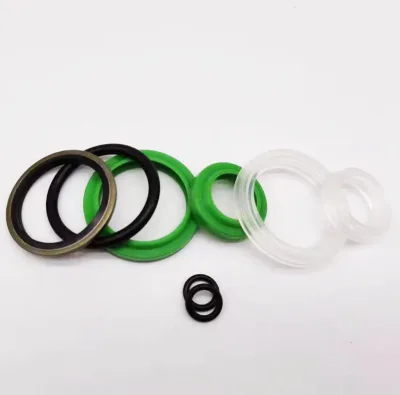
Understanding the observed market signals is essential for effective sourcing. Listings indicate a wide price range and varying minimum order quantities, reflecting the complexity of manufacturing processes and material costs. Suppliers often provide products in various colors, such as black, blue, or green, which may serve as visual identifiers for different material compositions or pressure ratings. Buyers should carefully evaluate these signals to align their procurement strategy with their specific volume needs and technical specifications, ensuring they select suppliers who can meet their production timelines and quality expectations.
Product Scope and Observed Listing Signals
The product scope for hydraulic piston seals encompasses a variety of configurations, including O-rings and specialized lip-type seals designed for fixed and rotary applications. Observed listings highlight materials such as metal, rubber, and polyurethane (PU), each offering distinct advantages in terms of durability, flexibility, and resistance to wear. The presence of models like H00476, G-HS-0010, and PS-012 suggests a broad catalog that caters to both standard and non-standard requirements, allowing buyers to find components that fit precise cylinder dimensions and operational parameters.
Listing attributes reveal that many suppliers offer high-pressure performance capabilities, with some seals rated for pressures up to 40 MPa or ≤ 32 MPa. This variation underscores the importance of matching the seal’s pressure rating to the specific hydraulic system’s demands. Additionally, the availability of 2D or 3D drawings indicates that suppliers are equipped to handle custom engineering requests, facilitating seamless integration into existing machinery. Buyers should leverage these detailed specifications to verify that the selected seals can withstand the intended speed, temperature, and media conditions of their application.
Technical Specifications to Verify
Verifying technical specifications is paramount to ensuring the reliability of hydraulic piston seals. Buyers must confirm the exact dimensions, such as the 201015 specification observed in some listings, to ensure a proper fit within the cylinder bore and piston groove. The material composition, whether it be standard rubber or specialized PU, must be validated against the hydraulic fluid compatibility and environmental conditions. High-quality seals often undergo 100% professional testing, a claim that buyers should request verification for through independent quality reports or sample testing.
Pressure ratings and speed capabilities are critical technical parameters that must be explicitly confirmed. While some listings mention high-pressure performance, buyers should verify the specific pressure type and maximum operating limits to prevent seal failure. The distinction between standard and non-standard components also requires careful attention, as non-standard parts may require longer lead times or higher costs. Ensuring that the seal’s lip type and shape, such as O-ring or specific lip configurations, match the cylinder design is essential for effective sealing and preventing leakage under dynamic conditions.
Compliance and Safety Documentation
Compliance with international standards and safety regulations is a non-negotiable aspect of sourcing hydraulic seals. Buyers should request documentation confirming certifications such as CE, ISO, RoHS, and GS, which indicate adherence to quality management and environmental standards. These certifications provide assurance that the manufacturing processes and materials used meet recognized safety and performance benchmarks, reducing the risk of non-compliance in regulated industries. Verifying these credentials helps mitigate liability and ensures that the seals are suitable for use in applications where safety and environmental impact are critical considerations.
In addition to certifications, buyers should inquire about the specific standards to which the seals are manufactured, whether they are standard or non-standard. Understanding the standard component status helps in predicting availability and interchangeability with existing parts. Documentation should also include material safety data sheets (MSDS) and compatibility charts to ensure that the seal materials do not degrade when exposed to specific hydraulic fluids or external contaminants. This thorough review of compliance documentation is essential for maintaining operational safety and regulatory adherence throughout the lifecycle of the hydraulic system.
Cost Drivers and Commercial Terms
Cost drivers for hydraulic piston seals include material quality, customization complexity, and order volume. The observed price range of 0-319 USD reflects the variability in product specifications and supplier pricing strategies. Buyers should analyze the cost implications of choosing between standard and customized parts, as custom seals often incur higher unit costs due to specialized tooling and engineering efforts. Minimum order quantities (MOQ) ranging from 1 to 1000 units also impact the total cost, with larger volumes typically offering better per-unit pricing but requiring greater inventory management.
Commercial terms such as delivery time and packaging are also significant factors in the total cost of ownership. Listings indicate a delivery time of 7-10 days, which is crucial for maintaining production schedules. Packaging options, including PP bags, cartons, or custom requirements, affect logistics costs and product protection during transit. Buyers should negotiate clear terms regarding payment, shipping, and returns to avoid hidden costs. Understanding these commercial dynamics allows for more accurate budgeting and ensures that the procurement process aligns with the company’s financial and operational goals.
Supplier Qualification and Quality Control
Supplier qualification involves assessing the manufacturer’s capability to produce consistent, high-quality seals. Buyers should verify the supplier’s experience in OEM and ODM services, as this indicates flexibility and technical expertise. Quality control processes, such as 100% professional testing, should be scrutinized to ensure that every batch meets the specified performance criteria. Requesting samples for rigorous testing in actual operating conditions is a prudent step to validate the supplier’s claims and ensure that the seals perform as expected under real-world stress.
Additionally, buyers should evaluate the supplier’s ability to handle custom orders, including the acceptance of 2D or 3D drawings. This capability is essential for projects requiring non-standard dimensions or specialized materials. Communication efficiency and responsiveness are also key indicators of a reliable supplier, as they impact the ability to resolve issues quickly and adapt to changing requirements. Establishing a strong relationship with a qualified supplier ensures a steady supply of high-quality seals and facilitates continuous improvement in the hydraulic system’s performance and reliability.
Long-Term Procurement Checks
Long-term procurement checks focus on maintaining supply chain stability and product performance over time. Buyers should regularly review supplier performance metrics, including on-time delivery rates, defect rates, and responsiveness to quality issues. Establishing a schedule for periodic re-qualification of suppliers ensures that they continue to meet evolving standards and regulatory requirements. This proactive approach helps identify potential risks early and allows for timely adjustments to the supplier base if necessary.
Furthermore, buyers should monitor changes in material technology and industry standards that may impact seal performance. Staying informed about advancements in materials like PU or specialized rubber compounds can lead to cost savings or performance improvements. Regularly updating technical specifications and requirements based on operational feedback ensures that the procured seals remain optimal for the application. By implementing these long-term checks, buyers can sustain high levels of system reliability and efficiency, minimizing downtime and maintenance costs associated with seal failures.
FAQs
What materials are used for hydraulic cylinder piston seal rings?
Hydraulic cylinder piston seal rings are typically manufactured from metal, rubber, or polyurethane (PU) to ensure durability and resistance to wear. These materials are selected based on the specific application requirements, such as high-pressure environments or exposure to various fluids. The choice of material directly impacts the seal's performance and longevity in industrial settings.
Can these seals be customized for specific cylinder applications?
Yes, customization is available for hydraulic cylinder piston seal rings to meet unique operational needs. Buyers can provide 2D or 3D drawings for tailored solutions, and OEM or ODM services are supported. This flexibility allows for precise fitting in various cylinder types, ensuring optimal sealing performance and compatibility with existing machinery components.
What is the typical lead time for delivery?
The typical delivery time for these hydraulic seals is 7-10 days after order confirmation. This timeframe applies to standard and nonstandard specifications, ensuring timely supply for urgent industrial needs. Packaging is usually done in PP bags and cartons to protect the seals during transit, maintaining their quality until they reach the buyer's facility.
What pressure ratings are available for these seals?
These hydraulic seals are designed to handle high-pressure applications, with specific ratings such as 30 MPa, 40 MPa, or up to 32 MPa. The pressure type is carefully engineered to withstand intense hydraulic forces, making them suitable for demanding environments. Selecting the correct pressure rating ensures reliable performance and prevents seal failure under load.
Which certifications do these hydraulic seals hold?
These hydraulic cylinder piston seal rings hold certifications such as CE, ISO, RoHS, and GS, ensuring compliance with international quality and safety standards. These certifications verify that the products meet rigorous manufacturing criteria, providing buyers with confidence in the reliability and safety of the seals for use in various industrial and automotive applications.
What packaging options are provided for these seals?
Packaging options include PP bags combined with cartons or custom carton solutions as required by the buyer. This flexible packaging ensures that the seals are protected from damage during shipping and storage. The choice of packaging can be tailored to specific logistical needs, ensuring that the products arrive in pristine condition ready for immediate installation.