Source Automotive Stainless Steel O-Ring for Water, Oil, Gas
Compare 30 listings for Automotive Stainless Steel O-Ring options suitable for water pipelines, oil, and gas applications. Buyers can evaluate specifications like pressure ratings, temperature ranges, and customization services from verified suppliers; compare the available evidence and request quotations based on your requirements.
Key considerations
Products List


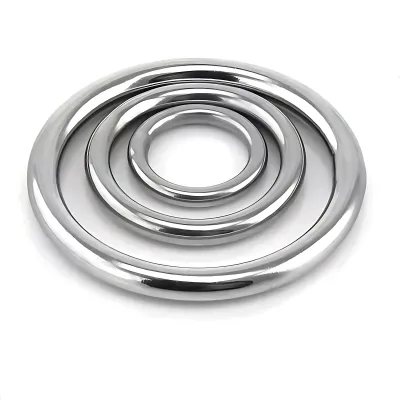


$2.30 - $2.50
MOQ: 100 Pieces


Comprehensive Sourcing Guide
Automotive Stainless Steel O-Ring Sourcing Guide
Sourcing automotive-grade stainless steel O-rings requires a disciplined approach to material verification and application matching. Buyers must distinguish between decorative jewelry items and functional sealing components, as the supplied data contains mixed signals regarding product intent. While some listings highlight fashion attributes and customization for rings, others specify industrial sealing functions such as water seals and pressure containment. Procurement teams must rigorously filter suppliers based on their actual manufacturing capabilities rather than generic listing titles.
The core keyword suggests a focus on sealing technology, yet the observed inventory includes items labeled as metal buckle rings and decorative accessories. This discrepancy necessitates a clear definition of requirements before engaging with suppliers. Buyers should prioritize vendors who explicitly demonstrate experience in producing circular cross-section seals for automotive environments. Verifying the specific model numbers, such as SSOR or specific numeric codes, helps isolate genuine sealing component manufacturers from general hardware traders.
Product Scope and Observed Listing Signals
The observed product range reveals a significant divergence between decorative stainless steel rings and functional industrial seals. Some listings describe items with attributes like "Fashion," "Female," and "Decoration," which are irrelevant to automotive sealing applications. These products often feature plating options such as silver, gold, or rose gold and are marketed for aesthetic purposes. Procurement specialists must carefully exclude these items from their sourcing lists to avoid confusion with technical sealing components.
Conversely, other listings in the dataset describe products with functional attributes like "Water Seal," "Cold-Resistant," and "Heat-Resistant." These items specify a circular cross-sectional shape and are intended for applications involving water pipelines, oil, and gas. The presence of terms like "Press Connection" and "Medium Pressure" indicates a focus on mechanical integrity rather than aesthetics. Buyers must scrutinize product descriptions to ensure they are evaluating components designed for fluid containment and pressure resistance.
Technical Specifications to Verify
Technical verification begins with confirming the material composition and manufacturing process. The supplied facts indicate that stainless steel is a primary material, but buyers must also verify if iron or zinc alloy components are present in mixed listings. The production technique is noted as "Seamed," which is critical for structural integrity in high-pressure environments. Buyers should request detailed material certificates to ensure the stainless steel grade meets automotive standards for corrosion resistance and tensile strength.
Dimensional accuracy is paramount for O-ring functionality. The observed specifications include sizes ranging from 10mm to 50mm for some items, while others reference standards like DN15-100 or 15mm-80mm. Wall thickness is specified as Sch10 in some contexts, indicating a need for precise dimensional control. Buyers must verify that the selected O-ring dimensions match the exact groove specifications of the automotive assembly. Cross-sectional shape must be strictly circular to ensure uniform compression and effective sealing under operational loads.
Compliance and Safety Documentation
Compliance verification is essential for automotive components that operate under pressure and temperature variations. The dataset mentions ISOCE certification, which buyers should validate as a relevant quality management standard for the supplier. However, automotive applications often require additional certifications specific to fluid compatibility and environmental resistance. Procurement teams must ensure that the supplier can provide documentation proving the material's suitability for contact with automotive fluids such as oil, gas, or coolant.
Safety documentation should also cover the operational limits of the sealing components. The observed data lists a working temperature range of -40°C to 110°C and a working pressure of 1.6MPa. Buyers must confirm that these limits align with the specific demands of their automotive systems. Additionally, the coating process is described as "Eco-Friendly," which may be relevant for environmental compliance but does not replace technical safety data sheets. Suppliers must provide clear evidence that their products meet the required safety thresholds for automotive use.
Cost Drivers and Commercial Terms
Cost structures for stainless steel O-rings are influenced by material grades, customization levels, and order volumes. The observed MOQ ranges from 1 to 300,000 pieces, allowing for flexibility in procurement strategies. However, specific listings mention an MOQ of 500 PCS, which may apply to certain customized or specialized items. Buyers should negotiate pricing based on volume tiers, keeping in mind that higher customization, such as specific plating or dimensional adjustments, will increase unit costs.
Lead times and payment terms are critical commercial factors. The observed lead time is typically 7-10 days or 7-15 days, depending on the supplier and order complexity. Buyers must account for these timelines in their production scheduling to avoid delays. Packaging details, such as 2000 PCS per carton with specific dimensions, impact logistics costs. Understanding these commercial terms helps in calculating the total landed cost and ensures that budget allocations are accurate for the procurement cycle.
Supplier Qualification and Quality Control
Supplier qualification requires a thorough assessment of their manufacturing capabilities and quality control processes. The dataset indicates that OEM and ODM services are available, suggesting that suppliers can accommodate custom designs. Buyers should verify the supplier's ability to maintain consistent quality across large production runs, especially given the wide range of observed MOQs. Requesting samples for physical inspection is a necessary step to validate the "High Quality" claims made in the listings.
Quality control should include checks for surface finish, dimensional accuracy, and material integrity. The observed products feature various colors and platings, which must be evaluated for durability and adhesion. Buyers should inquire about the supplier's testing procedures for pressure resistance and temperature stability. Additionally, the provision of after-sales technical guidance is a positive indicator of supplier support. Establishing a clear quality agreement ensures that any deviations from specifications are addressed promptly and effectively.
Long-Term Procurement Checks
Long-term procurement success depends on continuous monitoring of supplier performance and product reliability. Buyers should establish key performance indicators related to delivery times, defect rates, and responsiveness to technical queries. The observed warranty period of 1 year provides a baseline for evaluating product durability. Regular audits of the supplier's quality management systems help ensure ongoing compliance with automotive standards and internal requirements.
Supply chain resilience is another critical aspect of long-term sourcing. Buyers should diversify their supplier base to mitigate risks associated with single-source dependencies. Monitoring market trends for stainless steel prices and availability helps in anticipating cost fluctuations. Additionally, staying informed about changes in automotive regulations regarding material safety and environmental impact ensures that procurement strategies remain compliant. Continuous feedback loops with engineering teams help refine specifications and improve the overall sourcing process.
FAQs
Can I customize the Automotive Stainless Steel O-Ring specifications?
Yes, customization is available for the Automotive Stainless Steel O-Ring. The product supports customized models and standards, allowing buyers to tailor dimensions and features to specific needs while maintaining high quality and eco-friendly coating processes.
What is the lead time for ordering automotive stainless steel o rings?
The lead time for ordering automotive stainless steel o rings is typically 7 to 15 days. This delivery window applies to standard orders, ensuring timely supply for production schedules while accommodating various customization requests from international buyers.
Which certifications do the Automotive Stainless Steel O-Ring manufacturers hold?
Manufacturers of the Automotive Stainless Steel O-Ring hold ISOCE certification. This ensures that the production processes meet international quality and safety standards, providing buyers with confidence in the reliability and compliance of the supplied industrial components.
How does the working temperature range affect Automotive Stainless Steel O-Ring usage?
The Automotive Stainless Steel O-Ring operates effectively within a temperature range of -40 to 110 degrees Celsius. This wide range allows the product to function reliably in diverse environments, making it suitable for demanding applications in pipelines and industrial systems.
What is the minimum order quantity for automotive stainless steel o rings?
The minimum order quantity for automotive stainless steel o rings is 500 pieces. This MOQ applies to standard orders, though bulk purchasing options may be available for larger projects requiring significant quantities of high-quality stainless steel components.
Can I source automotive stainless steel o rings with specific wall thickness?
Yes, you can source automotive stainless steel o rings with specific wall thicknesses like Sch10. The product specifications allow for precise dimensional requirements, ensuring the components fit seamlessly into various pipeline and pressure system applications.
What after-sales service is provided for automotive stainless steel o rings?
Comprehensive after-sales service includes full technical guidance for automotive stainless steel o rings. Buyers receive support to ensure proper installation and usage, backed by a warranty period that guarantees product performance and reliability throughout the operational lifecycle.