Source Hydraulic Mechanical Transmission Gearbox Assembly for trucks, machinery, and heavy duty equipment
Compare 30 verified listings for Hydraulic Mechanical Transmission Gearbox Assembly suitable for trucks, machinery, and heavy duty applications. Buyers can review specifications, pricing, and supplier details to find the right component for their needs.
Key considerations
Products List


Crane Transmission Gearbox Assembly with Hydraulic and Electric Control
$1000.00 - $12000.00
MOQ: 1 Pieces


Mining Special Backhoe Loader Transmission Gearbox Assembly for 388 Model
$1000.00 - $12000.00
MOQ: 1 Pieces

China Professional Transmission Assembly for Mining Equipment Gearbox Transmission
$1000.00 - $12000.00
MOQ: 1 Pieces

Four Forward Gears and Three Backward Gears Hydraulic Transmission Gear Box
$7000.00 - $8000.00
MOQ: 1 Pieces


Hydraulic Powershift Transmission Gearbox Assembly with Torque Converter for Wheel Loader
$2000.00 - $3000.00
MOQ: 1 Pieces


Transfer Gearbox for Multiple Hydraulic Pumps Connection to The Prime Engines
$800.00 - $1500.00
MOQ: 1 Pieces


4.5 Tons Forklift Parts Mechanical Transmission Gearbox Manual Shift Type
$700.00 - $1000.00
MOQ: 1 Pieces


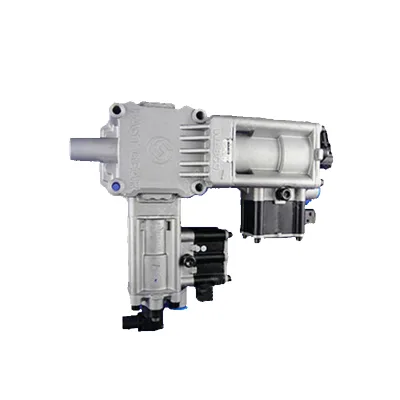


Advanced High Efficiency Gear Transmission System for Optimal Performance
$200.00 - $437.00
MOQ: 1 Pieces


Comprehensive Sourcing Guide
Strategic Sourcing Guide for Hydraulic Mechanical Transmission Gearbox Assemblies
Understanding Technical Specifications and Core Configurations
When sourcing a Hydraulic Mechanical Transmission Gearbox Assembly, buyers must first navigate a complex landscape of technical configurations that directly impact performance in heavy-duty applications. The core keyword suggests a system designed for high-torque transfer and variable speed control, often found in machinery where precision and durability are paramount. Based on observed market data, these assemblies frequently feature a cycloidal layout, a design choice that offers compactness and high load-bearing capacity. The internal tooth surfaces are typically hardened to withstand the immense stress of continuous operation, ensuring longevity in demanding environments.
The functional versatility of these units is a primary consideration. Sourcing lists indicate that these gearboxes are engineered to perform multiple critical functions: speed increase, speed reduction, speed changing, and torque conversion. This multifunctionality allows a single assembly to adapt to varying operational requirements without the need for multiple distinct components. Furthermore, the installation profile is predominantly horizontal, which dictates the spatial requirements for the machinery integration. Buyers should verify that the physical dimensions align with their existing chassis or frame constraints, as standard sizes vary significantly.
Material composition plays a vital role in the assembly's resilience. Observed specifications highlight the use of aluminum for body materials, a choice that balances weight reduction with structural integrity. This is particularly relevant for mobile applications where weight savings contribute to fuel efficiency and payload capacity. Additionally, the displacement and cylinder configurations observed in related heavy-duty components suggest that these systems are often paired with four-cylinder inline engines, supporting displacements greater than 4.0 liters. This combination indicates a target application in heavy-duty trucks and large-scale industrial machinery where power density is critical.
Compliance, Certification, and Regulatory Standards
Navigating the compliance landscape is essential for international procurement, as regulatory requirements vary significantly by destination market. The most frequently observed certification for these transmission assemblies is ISO9001, which validates the manufacturer's quality management systems. This certification is a baseline indicator that the supplier adheres to standardized processes for design, production, and inspection. Some listings also reference CE certification, which is mandatory for products entering the European market, ensuring compliance with health, safety, and environmental protection standards.
Beyond general quality certifications, specific product standards must be scrutinized. The supply data indicates that product standards can differ based on the specific model or custom request. Buyers should not assume a universal standard applies to all units; instead, they must verify the specific standard applicable to their order, which may be defined by the customer's request or a specific industry norm. For instance, certain heavy-duty applications may require adherence to specific emission standards, such as Euro classifications, which dictate the environmental performance of the engine-transmission interface.
Customization is a key feature in this sector, with many suppliers offering "as requested" standards for packing and product specifications. This flexibility allows buyers to tailor the assembly to local regulatory environments. However, this also introduces a verification step: buyers must ensure that any custom standard requested is clearly documented in the contract to avoid ambiguity during inspection. The "Differs" standard noted in some listings suggests that the product may be adapted to meet unique client specifications rather than a rigid global standard, necessitating a thorough review of the technical datasheet before finalizing a purchase.
Cost Drivers and Pricing Dynamics
The pricing structure for hydraulic mechanical transmission gearbox assemblies is highly variable, reflecting the diversity of specifications, customization levels, and order volumes. Observed market data reveals a price range spanning from $1.25 to $14,000 USD. This wide disparity is not indicative of quality variance alone but rather reflects the difference between individual components, sub-assemblies, and complete, high-performance units. A unit priced at the lower end of the spectrum may be a replacement part or a smaller component, whereas the upper end likely represents a full assembly with advanced features, custom engineering, or heavy-duty specifications.
Several factors drive these costs. First, the level of customization significantly impacts the price. Units with "as requested" packing or specific model numbers like ZL28 or TMG07543 may command different price points based on the complexity of the manufacturing process. Second, the condition of the product is a primary cost driver. While most listings specify "New" condition, the presence of OEM (Original Equipment Manufacturer) acceptance and the ability to replace or repair existing systems can influence the final valuation. High-performance units designed for heavy-duty trucks often carry a premium due to the rigorous testing and material quality required.
Minimum Order Quantity (MOQ) also plays a crucial role in the effective unit cost. The observed MOQ range is between 1 and 500 pieces. Buyers purchasing a single unit for immediate replacement or prototyping will face a higher per-unit cost compared to those placing bulk orders. The flexibility to order as few as one piece is advantageous for small-scale repairs or testing, but it comes with a price penalty. Conversely, larger orders allow for economies of scale, potentially lowering the unit cost but requiring a larger upfront capital outlay. Buyers must balance their immediate needs against long-term inventory strategies to optimize their procurement budget.
Typical Applications and Operational Environments
The versatility of hydraulic mechanical transmission gearboxes makes them suitable for a broad spectrum of industrial and commercial applications. The primary market for these assemblies is machinery, with a specific emphasis on heavy-duty trucks and construction equipment. The "Used" attribute in the data points directly to applications in heavy-duty trucking, where reliability and torque management are non-negotiable. These systems are designed to handle the rigorous demands of long-haul transport, where consistent speed reduction and torque conversion are essential for maintaining performance on varied terrains.
In addition to transportation, these assemblies are integral to retrofit and upgrade projects. The "Purpose" attribute explicitly mentions "for Replace/Repair" and "for Retrofit/Upgrac," indicating that these units are often used to modernize older machinery or replace failed components in existing fleets. This application is particularly relevant in industries where downtime is costly, and the ability to quickly source a compatible replacement is critical. The "Steering System Parts" and "Brake System Parts" associations further suggest that these gearboxes are part of a larger integrated system, working in tandem with steering and braking mechanisms to ensure overall vehicle safety and control.
The market reach of these products is global, with a specific focus on the Middle East and all-over-the-world distribution. This global presence implies that the units are designed to meet diverse environmental and operational conditions. Whether operating in the extreme heat of the Middle East or the varied climates of other regions, the "Cold Style" and "Water-Cooled" attributes suggest that these systems are engineered to maintain optimal operating temperatures. The "Four-Step" configuration and "Horizontal Type" installation further indicate that these units are adaptable to various machine layouts, making them a versatile choice for manufacturers and fleet operators alike.
Supplier Evaluation and Verification Protocols
Evaluating suppliers for hydraulic mechanical transmission gearboxes requires a rigorous approach to ensure reliability and product integrity. The first step is verifying the supplier's certification status. While ISO9001 is a common standard, buyers should request current certificates and confirm that they cover the specific manufacturing processes for the requested model. The presence of CE certification is another critical check for European markets. Buyers should not rely solely on the listing; they must request physical or digital copies of these documents to ensure they are valid and not expired.
Lead time and delivery capabilities are equally important factors in supplier evaluation. The observed delivery time ranges from 7 to 15 days, which is a standard window for many industrial components. However, buyers must confirm if this timeline applies to stock items or if it includes production time for custom orders. The "Stock: in Stock" attribute suggests that some items are readily available, which can expedite the procurement process. For custom orders, the lead time may extend beyond the standard window, and buyers should negotiate clear delivery schedules in the contract to avoid production delays.
After-sales support is a critical differentiator among suppliers. The data highlights "24h Full Technical Support" and "24-Hours Online Service" as key attributes. Buyers should verify the scope of this support, including whether it covers troubleshooting, spare parts availability, and on-site assistance. A warranty of 12 months is standard, but the terms of this warranty must be clearly defined. Does it cover manufacturing defects only, or does it include wear and tear? Understanding these nuances is essential for risk management. Additionally, the "OEM: Acceptable" attribute indicates that suppliers are willing to work with original equipment specifications, which is crucial for maintaining compatibility with existing machinery.
Quality Control and Long-Term Procurement Strategy
Implementing a robust quality control (QC) strategy is essential for mitigating risks associated with hydraulic mechanical transmission gearboxes. Given the high-performance nature of these components, buyers should insist on pre-shipment inspections that verify critical attributes such as hardness, material composition, and dimensional accuracy. The "Hardened Tooth Surface" and "Aluminium Body Material" specifications should be confirmed through third-party testing or supplier-provided test reports. For custom orders, a sample inspection is highly recommended before full-scale production begins.
Long-term procurement considerations involve building a sustainable relationship with suppliers who can provide consistent quality and support. The "Customization: Available" attribute suggests that suppliers are capable of adapting to changing needs, but this requires clear communication and detailed technical specifications. Buyers should establish a standardized process for documenting requirements, including model numbers, packing standards, and performance expectations. This documentation serves as a reference point for future orders and helps ensure consistency across different batches.
Inventory management is another key aspect of long-term strategy. With the "Stock: in Stock" option available, buyers can maintain a buffer inventory of critical components to minimize downtime. However, for non-stock items, a just-in-time (JIT) approach may be more appropriate, relying on the supplier's 7-15 day delivery window. Buyers should also consider the "Warranty: 12 Months" period when planning maintenance schedules, ensuring that replacement parts are available within the warranty window. By integrating these quality control and inventory strategies, buyers can optimize their procurement processes and ensure the reliable operation of their machinery.
Final Procurement Considerations and Decision Framework
The final stage of the procurement process involves synthesizing all gathered information to make an informed decision. Buyers must weigh the technical specifications, compliance requirements, cost factors, and supplier capabilities against their specific operational needs. The wide price range and diverse model options require a careful analysis of the total cost of ownership, including not just the purchase price but also installation, maintenance, and potential downtime costs.
When comparing suppliers, buyers should prioritize those who offer transparent communication, valid certifications, and robust after-sales support. The ability to customize the product to specific needs is a significant advantage, but it must be balanced against the complexity and potential delays associated with custom manufacturing. For standard applications, stock items with a 12-month warranty and 24-hour support may be the most efficient choice. For specialized needs, a supplier with a proven track record in custom engineering and OEM acceptance is essential.
Ultimately, the success of the procurement depends on the buyer's ability to clearly define their requirements and verify the supplier's ability to meet them. By adhering to the standards and specifications outlined in this guide, buyers can navigate the complex market for hydraulic mechanical transmission gearbox assemblies with confidence, ensuring they acquire high-quality components that enhance the performance and reliability of their machinery.
FAQs
What certifications do hydraulic mechanical transmission gearbox assemblies have?
Most units carry ISO9001 certification, with some listings also including CE marks. These certifications validate quality management systems and compliance with safety standards for European markets, ensuring reliable manufacturing processes.
Can I customize the packaging for these transmission assemblies?
Yes, customization is available with options like plastic bags, cartons, or wooden boxes. Buyers can request specific packing standards to meet local regulatory requirements or protect the equipment during international shipping.
What is the typical lead time for delivery of these gearboxes?
The standard delivery time ranges from 7 to 15 days for available stock. This timeline applies to immediate replacement needs, though custom orders may require additional production time beyond the standard window.
Which installation types are supported for these transmission units?
The assemblies primarily support horizontal type installation configurations. This layout is designed to fit standard machinery frames, ensuring compatibility with existing chassis or structural constraints in heavy-duty applications.
What is the minimum order quantity for purchasing these gearboxes?
The minimum order quantity can be as low as one piece for immediate repairs. Bulk orders may start at higher volumes, but the flexibility allows buyers to source single units for prototyping or replacement.
How is the warranty structured for these transmission components?
A standard 12-month warranty covers manufacturing defects for new condition units. Buyers should verify specific terms regarding wear and tear, as the warranty primarily protects against initial production quality issues.