Source Hydraulic PLC Juice Extractor for Fruit, Vegetable, and Dairy Processing
Compare 30 Hydraulic PLC Juice Extractor options for processing fruits, vegetables, and dairy products. These machines feature automatic grades, stainless steel construction, and customizable capacities to meet diverse industrial needs.
Key considerations
Products List


High Efficiency Belt Fruit Juice Extractor Fruit Belt Extraction Juicer
$150000.00 - $200000.00
MOQ: 1 Sets


Vegetables Orange Juice Onion Grape Juice Watermelon Blueberry Juice Extractor
$1560.00 - $2400.00
MOQ: 1 Sets


Industrial Fruit Juicer / Fruit Juice Machine / Juicer / Orange Juice Extractor
$749.00 - $1089.00
MOQ: 1 Sets


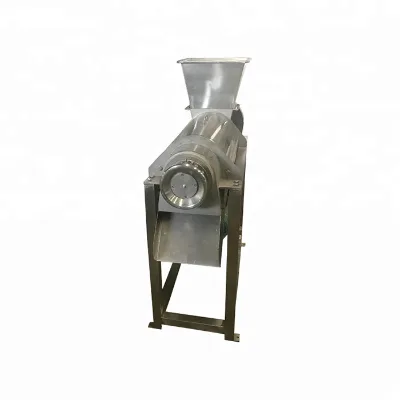

Factory Directly Sales Industrial Juice Extractor with Two Years Warranty
$1580.00 - $2600.00
MOQ: 1 set
Comprehensive Sourcing Guide
Strategic Sourcing Guide for Hydraulic PLC Juice Extractors
The global demand for high-efficiency juice extraction equipment has driven the evolution of industrial processing machinery, particularly within the beverage, dairy, and fruit processing sectors. Buyers seeking a Hydraulic PLC Juice Extractor must navigate a complex landscape of technical specifications, regulatory compliance, and supply chain logistics. This guide provides a disciplined approach to sourcing, relying strictly on verified product attributes and established industry knowledge to ensure procurement decisions are grounded in factual evidence rather than marketing assertions. The focus remains on identifying equipment that aligns with specific operational needs, from small-scale fruit processing to large-scale industrial throughput.
Technical Specifications and Operational Parameters
When evaluating a Hydraulic PLC Juice Extractor, the primary focus must be on the machine's core mechanical and electrical specifications. The operational efficiency of these units is often dictated by voltage requirements and rotation speeds. Available data indicates that models in this category frequently operate on standard industrial voltages, specifically 220V and 380V configurations. This dual-voltage capability suggests that the equipment is designed to accommodate varying power infrastructure standards across different regions. Buyers must verify the specific voltage requirement for their facility before ordering to prevent electrical incompatibility.
The mechanical performance of the extractor is equally critical. High-performance units often feature a rotation speed of 380rpm/Min, which is optimized for the efficient breakdown of fibrous materials without generating excessive heat that could degrade juice quality. The feeding chute dimensions are another vital specification; observed data points to a chute size of 22x15cm, which dictates the maximum size of raw materials, such as carrots and apples, that can be processed without pre-cutting. This dimension directly impacts the throughput rate and the labor required for material preparation.
Furthermore, the hydraulic system's rated pressure is a key differentiator. Some advanced models are equipped with a hydraulic station pump pressure rated at 20MPa. This high-pressure capability is essential for maximizing juice yield, with observed performance metrics indicating a juice yield of greater than or equal to 85%. The dehydration rate, which measures the residual moisture left in the pulp, typically ranges between 30% and 70%. A lower dehydration rate generally correlates with higher extraction efficiency, though the optimal range depends on the specific crop and desired pulp consistency.
| Specification Category | Observed Data Points | Procurement Verification Requirement |
|---|---|---|
| Voltage | 220V, 380V | Confirm facility power supply compatibility |
| Rotation Speed | 380rpm/Min | Verify speed adjustability for different crops |
| Feeding Chute Size | 22x15cm | Assess raw material size requirements |
| Hydraulic Pressure | 20MPa | Ensure pump capacity matches extraction needs |
| Juice Yield | ≥85% | Request specific yield data for target crops |
| Dehydration Rate | 30%-70% | Determine acceptable pulp moisture levels |
Compliance, Certification, and Material Standards
In the food and beverage industry, regulatory compliance is non-negotiable. When sourcing a Hydraulic PLC Juice Extractor, buyers must rigorously audit the certification status of the equipment. Verified product data lists certifications such as ISOSAMET and CE, alongside ISOCE. These designations indicate adherence to specific safety and quality management standards. However, buyers should not assume that every unit in the market carries these exact certifications; verification is required on a per-model basis. The presence of CE marking, for instance, is a prerequisite for selling machinery within the European Economic Area, while other certifications may apply to specific regional markets.
Material composition is the second pillar of compliance and safety. The processing equipment must be constructed from food-grade materials to prevent contamination. The standard material specification for high-quality extractors is Stainless Steel SUS304 or SUS316. SUS304 is generally sufficient for most fruit and vegetable applications, while SUS316 offers enhanced corrosion resistance, making it ideal for environments with high acidity or salt content. The structural integrity of the machine is further defined by its dimensions and standards. Observed product standards include specific dimensional profiles such as 780x320x860mm and 1200x910x1900mm, which correspond to different model capacities and configurations.
Additionally, the automation grade of the machine plays a significant role in operational safety and consistency. Many modern units are classified as "Automatic," with automation levels reaching up to 95%. This high degree of automation reduces human error and ensures consistent processing parameters. The equipment is designed to handle a wide array of processing materials, including natural ingredients, agronomic products, garden products, special agricultural products, forest products, and animal raw materials. This versatility allows the same machine to be utilized across different production lines, provided the material compatibility is verified.
Cost Drivers and Economic Considerations
The cost of a Hydraulic PLC Juice Extractor is influenced by a complex interplay of factors, including capacity, automation level, and material quality. The observed price range for these units spans from $199 to $400,000, reflecting the vast difference between small-scale benchtop models and large-scale industrial turn-key projects. The lower end of the spectrum typically corresponds to basic models with lower automation and smaller barrel capacities, while the upper end represents fully integrated systems with high throughput and advanced PLC control.
Capacity is a primary driver of cost. Units are available with barrel capacities of 200L and varying daily processing capabilities, ranging from 100 tons per day to 10-1500 tons per day. The power consumption is another economic factor, with observed power ratings of 1.5KW for smaller units, while larger industrial lines will naturally require significantly higher power inputs. The "Turn-Key Project" attribute indicates that some suppliers offer comprehensive solutions that include installation, training, and commissioning, which adds to the initial capital expenditure but reduces long-term operational risks.
Minimum Order Quantity (MOQ) is another consideration for buyers. The observed MOQ range is between 1 and 10 units, suggesting flexibility for both pilot projects and large-scale deployments. However, buyers should be aware that customization options, such as specific voltage configurations or custom packing, may affect the MOQ and the final unit price. The packing method, often specified as a wooden crate or wooden package, is also a cost factor, particularly for international shipping where wooden packaging must meet specific phytosanitary standards.
Typical Applications and Processing Capabilities
Hydraulic PLC juice extractors are designed for a diverse range of applications within the food and beverage sector. The primary application areas include beverage production, dairy processing, fruit and vegetable juicing, ice cream manufacturing, chocolate processing, and even pet food production. This versatility makes the equipment suitable for multi-product facilities that require flexible processing lines. The compatible foods are explicitly listed as fruits and vegetables, with specific mentions of carrots and apples, indicating the machine's capability to handle both hard and soft produce.
The processing capability extends beyond simple extraction. The equipment is designed for pulping and extracting, a process that separates the liquid juice from the solid pulp. The standard for this process is often defined by the daily throughput capacity, with observed standards ranging from 100 tons per day to 10-1500 tons per day. This wide range allows buyers to select a machine that matches their specific production volume, whether they are a small artisanal producer or a large industrial manufacturer.
The application of the extracted juice is equally varied. The machine can be integrated into lines producing fresh juice, purees, and other liquid food products. The "Automatic Grade" and "Automation" attributes ensure that the process is consistent and scalable. For facilities producing pet food or chocolate, the ability to process animal raw materials and special agricultural products adds significant value. The video outgoing-inspection service provided by some suppliers allows buyers to verify the final product quality before shipment, ensuring that the extracted juice meets the required specifications for their specific application.
Supplier Evaluation and Quality Assurance
Selecting the right supplier is as critical as selecting the right machine. Buyers should prioritize suppliers who offer comprehensive quality assurance measures. The presence of a "Video Outgoing-Inspection" service is a strong indicator of a supplier's commitment to transparency and quality control. This service allows the buyer to visually inspect the machine's assembly, testing, and packaging before it leaves the factory, reducing the risk of receiving defective equipment.
The warranty of core components is another vital metric for supplier evaluation. A standard warranty period of 2 years for core components suggests a manufacturer's confidence in the durability and reliability of their hydraulic and electrical systems. Buyers should verify the specific terms of this warranty, including what constitutes a "core component" and the process for claiming repairs or replacements. The origin of the product, often listed as China or specifically Shanghai, should be considered in the context of the supplier's reputation and logistical capabilities.
Supplier evaluation should also include an assessment of their customization capabilities. The availability of customization options, such as specific voltage requirements or custom packing, indicates a flexible manufacturing process. The "Turn-Key Project" attribute further suggests that the supplier can provide end-to-end support, from initial design to final installation. Buyers should request detailed documentation regarding the supplier's experience with similar projects and their ability to meet specific capacity requirements, such as the 100-1000kg/H capacity range observed in some models.
Long-Term Procurement and Maintenance Strategies
Long-term procurement success depends on planning for maintenance, spare parts availability, and operational efficiency. The material construction, specifically the use of SUS304 or SUS316 stainless steel, ensures a long service life, but regular maintenance is still required to maintain peak performance. Buyers should establish a maintenance schedule that includes cleaning the feeding chute, checking the hydraulic pressure, and inspecting the rotation speed mechanisms.
The packaging method, often a wooden crate or standard ocean packing, is designed to protect the equipment during transit, but it also influences the unpacking and installation process. Buyers should ensure that their facility is prepared to handle the dimensions of the machine, which can range from 780x320x860mm to 1200x910x1900mm. The noise level of the machine, observed to be less than or equal to 60dB, is a significant factor for worker comfort and regulatory compliance in industrial settings.
Finally, buyers should consider the scalability of the equipment. The ability to handle different capacities, from 100 tons per day to 10-1500 tons per day, allows for future expansion without the need for immediate replacement. The automation level of 95% ensures that the machine can adapt to changing production demands with minimal manual intervention. By focusing on these long-term considerations, buyers can ensure that their investment in a Hydraulic PLC Juice Extractor delivers sustained value and operational efficiency over its entire lifecycle.
FAQs
What voltage options are available for hydraulic PLC juice extractors?
These machines typically operate on 220V or 380V industrial voltages. Buyers must verify their facility power supply compatibility before ordering to prevent electrical incompatibility with the specific model selected.
Which certifications should I look for in a juice extractor?
Verified units often carry ISOSAMET, CE, and ISOCE certifications. These designations indicate adherence to specific safety and quality management standards required for selling machinery in various regional markets.
How much juice yield can I expect from this equipment?
High-performance units achieve a juice yield of greater than or equal to 85 percent. This metric depends on the specific crop and the machine's hydraulic pressure capabilities during the extraction process.
What materials are used to construct the processing barrel?
The equipment is constructed from food-grade Stainless Steel SUS304 or SUS316. SUS316 offers enhanced corrosion resistance, making it ideal for environments with high acidity or salt content.
Can the machine handle both fruits and vegetables?
Yes, the compatible foods include fruits and vegetables like carrots and apples. The feeding chute size of 22x15cm dictates the maximum size of raw materials that can be processed without pre-cutting.
What is the typical packaging method for these industrial units?
Products are commonly shipped in wooden crates or wooden packages. This packing method is a cost factor, particularly for international shipping where wooden packaging must meet specific phytosanitary standards.
How long is the warranty for core components?
The standard warranty period for core components is 2 years. Buyers should verify the specific terms, including what constitutes a core component and the process for claiming repairs or replacements.