Source Hydraulic Robot Waterjet Coil Tube for Cutting Systems
Find and compare 19 Hydraulic Robot Waterjet Coil Tube options from Chinese manufacturers. These components support plastic, stone, and metal cutting applications with high-pressure pump systems and WEIHONG software control for industrial use; compare the available evidence and request quotations based on your requirements.
Key considerations
Products List


Waterjet Robot Parts Coil 106671 Axis 2 Irb1600 Waterjet Robot Coil Tube
$300.00 - $450.00
MOQ: 1 Sets

Robot Waterjet Consumables Robotic Water Jet Cutting Machine Part Coil Tubes
$300.00 - $450.00
MOQ: 1 Sets


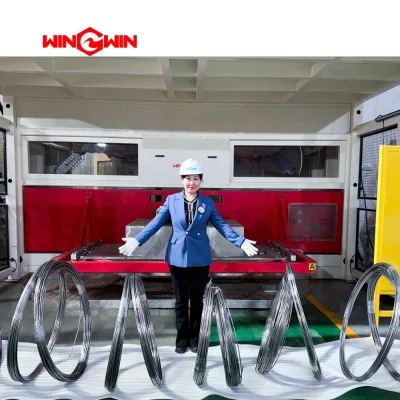
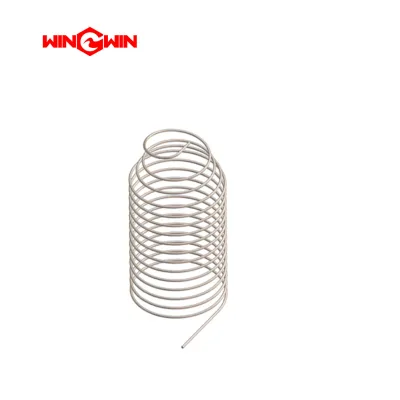
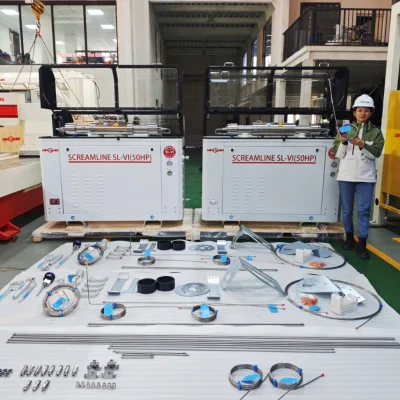


Water Jet High Preasure Coil Tubing for Robotic Arm
$250.00 - $400.00
MOQ: 1 Pieces
Shanghai Yuanhong Ultra High Pressure WaterJet Technology Co., Ltd.


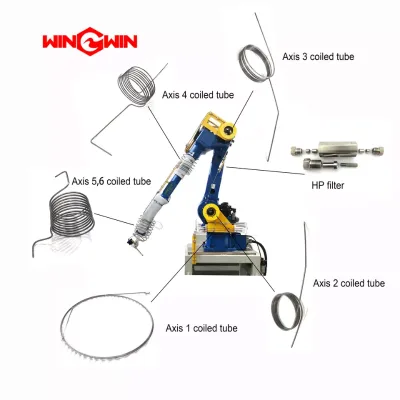
Comprehensive Sourcing Guide
Hydraulic Robot Waterjet Coil Tube Sourcing Guide
Procuring hydraulic robot waterjet coil tubes requires distinguishing between complete machine systems and critical spare parts, as listings often conflate the two. Buyers must verify whether the "coil tube" refers to a specific high-pressure component or a broader assembly, noting that observed listings describe both "Coil Tube" products and "Robot waterjet spare parts" with varying specifications. The presence of "Win-Win" as a brand name and "Shenyang, China" as a production origin suggests a specific supply chain, yet the diversity in model numbers like "WW-CL-456AXIS" and "coil" indicates multiple product variants that may serve different robotic integration needs.
Buyers should carefully analyze the power source and pressure ratings to ensure compatibility with existing robotic cutting systems. While some listings specify a hydraulic power source with an output pressure of 87,000 psi, others mention electrical power ratings ranging from 5 kW to 37 kW, creating potential confusion regarding the actual energy input required. It is essential to confirm if the coil tube is designed to operate within a hydraulic intensifier pump system or if it is part of a fully electric high-pressure pump assembly, as this distinction dictates the necessary infrastructure and safety protocols for the installation site.
Product Scope and Observed Listing Signals
The observed product scope reveals a significant variance in how "coil tube" components are categorized, ranging from standalone spare parts to integrated system elements. Listings explicitly mention "Water Jet Cutting Machine and Spare Parts" as the main product category, yet specific attributes like "Product Name: Coil Tube" and "Name: Robot waterjet spare parts" suggest these are modular components intended for retrofitting or maintenance. The "Single package size" varies drastically from 50x50x10 cm to 200x200x200 cm, indicating that some units are compact replacement parts while others may include larger assemblies or packaging for heavy-duty industrial delivery.
Buyers must scrutinize the "Condition" and "Feature" attributes to understand the lifecycle stage of the product being offered. All observed listings consistently state the condition as "New" and highlight a "Long Service Life" as a primary feature, which is critical for high-pressure applications where component failure can be catastrophic. However, the "Warranty" status is inconsistent, with some entries marking it as "Unavailable" or "Not Available" while others specify a "Three Months" warranty for core components, requiring immediate clarification on the supplier's commitment to product reliability and after-sales support.
Technical Specifications to Verify
Technical verification must begin with the core components, specifically the pump type and control system integration. Listings identify the core components as "Pump," "Motor," and "Pump," with specific types noted as "Intensfier Pump" and "High pressure pump." The control system is cited as "WEIHONG Software," which implies a specific proprietary interface that must be compatible with the buyer's existing robotic controller. Buyers should request detailed schematics to confirm if the coil tube interfaces correctly with this software stack or if additional adapters are required for seamless operation within a robot waterjet cutting system.
Pressure and power specifications present another critical area for verification due to the conflicting data in the listings. While one attribute lists an output pressure of 87,000 psi, another entry mentions a rated power of 37 kW alongside a 5 kW power rating, creating ambiguity about the system's actual capacity. The voltage is specified as 380 V, but the power source is listed as "Hydraulic" in some contexts and electrical in others. Procurement teams must demand a unified technical datasheet that reconciles these figures to ensure the coil tube can withstand the required operating pressures without exceeding the electrical or hydraulic limits of the facility.
Compliance and Safety Documentation
Safety compliance is paramount when sourcing high-pressure hydraulic components, particularly given the "CE" certification observed in the product attributes. This certification indicates that the product meets European Union safety, health, and environmental protection requirements, which is a baseline expectation for industrial machinery. However, buyers must verify if this certification applies to the entire assembly or just specific sub-components like the pump, as the "Warranty of core components" is listed as "Not Available" in some instances, potentially affecting the liability coverage for safety-critical failures.
Documentation regarding the "After-sales Service Provided" and "Core components" warranty is essential for risk mitigation in high-stress environments. While "After-sales Service Provided" is listed as a positive attribute, the inconsistency in warranty terms—ranging from "Unavailable" to "Three Months"—creates a gap in the safety assurance framework. Buyers should require a formal safety manual that details the maximum operating limits, emergency shutdown procedures, and maintenance schedules, ensuring that the "Long Service Life" claim is backed by verifiable testing data rather than marketing assertions.
Cost Drivers and Commercial Terms
Commercial terms are heavily influenced by the "MOQ" and "Delivery Days" observed in the listings, which show a minimum order quantity of 1 PC and a delivery window of 2-3 days after payment. This low barrier to entry suggests a flexible supply chain capable of handling small batch orders, which is advantageous for prototyping or urgent replacement needs. However, the "Single gross weight" varies significantly from 2 kg to 1500 kg, indicating that shipping costs will be a major variable in the total cost of ownership, especially for the heavier units that may require specialized freight handling.
Pricing structures appear to be highly variable, with observed ranges spanning from 10 to 6900 USD, reflecting the difference between simple spare parts and complex system assemblies. The "Selling Units" are listed as "Single item," which simplifies the purchasing process but requires careful budgeting to avoid unexpected costs associated with the heavier, more complex units. Buyers should negotiate based on the specific "prod_model" and "prod_packing" requirements, as the "Carton" packing standard may not be sufficient for international shipping of heavy components without additional reinforcement, potentially adding to the final landed cost.
Supplier Qualification and Quality Control
Supplier qualification should focus on the "Company Type" and "Production Capacity" to ensure the vendor can sustain long-term supply. The listings identify the supplier as a "Manufacturer" with a production capacity of 100, which suggests a specialized facility rather than a trading company. This direct manufacturing relationship is beneficial for technical support and customization, as "Customization" is explicitly listed as "Available." Buyers should verify the "place of origin" consistency, noting that while "Shenyang, China" and "Liaoning, China" are mentioned, the "prod_origin" and "place of origin" fields should align to confirm the specific manufacturing facility.
Quality control processes must be validated through the "Standard Size" and "prod_standard" attributes, which indicate adherence to industry norms. The "Single package size" and "weight" variations suggest that quality control checks are performed on a per-unit basis, but buyers should request evidence of these checks, such as pressure test reports or dimensional inspection records. Given the "Core components" include critical parts like the pump and motor, the supplier's ability to maintain consistent quality across different model numbers, such as "2026" and "WW-CL-456AXIS," is a key indicator of their manufacturing maturity and reliability.
Long-Term Procurement Checks
Long-term procurement strategies must account for the "Warranty" inconsistencies and the availability of "Spare Parts" for future maintenance. The observation that "Warranty" is sometimes "Unavailable" while "After-sales Service Provided" is listed requires a proactive approach to contract negotiation, ensuring that service agreements are explicitly defined rather than assumed. Buyers should establish a clear protocol for handling core component failures, particularly since the "Warranty of core components" varies between "Not Available" and "Three Months," which could impact the total cost of ownership over the machine's lifecycle.
Supply chain resilience is critical given the "Delivery Days" of 2-3 days after payment, which implies a rapid turnaround but may not account for international logistics delays. Buyers should verify the "Production Capacity" of 100 units to ensure the supplier can meet demand during peak periods or unexpected replacement needs. Additionally, the "Customization" availability offers a strategic advantage for adapting the coil tube to specific robotic configurations, but this should be formalized in a long-term agreement to guarantee that future modifications remain compatible with the existing "WEIHONG Software" control system.
FAQs
What is the output pressure for this Hydraulic Robot Waterjet Coil Tube?
The output pressure reaches 87000psi for high-performance cutting applications. This specification supports the use of an intensifier pump to maintain consistent flow. The system is designed for durability and long service life in industrial environments. It ensures precise cutting capabilities for various materials including plastic, stone, and metal.
Can the Hydraulic Robot Waterjet Coil Tube be customized for specific needs?
Yes, customization is available to meet specific operational requirements. The manufacturer offers tailored solutions to integrate seamlessly with existing robot waterjet cutting systems. This flexibility allows for adjustments in specifications and configurations. Buyers can request modifications to ensure the product aligns perfectly with their production line needs.
What is the delivery time for orders of this Hydraulic Robot Waterjet Coil Tube?
Delivery occurs within 2-3 days after payment is arranged. This rapid turnaround supports efficient supply chain management for urgent production needs. The manufacturer maintains a streamlined process to ensure quick dispatch. Buyers can rely on this short lead time for timely project completion and inventory management.
Which core components are included in the Hydraulic Robot Waterjet Coil Tube system?
The system includes a pump as a core component. Some configurations may also feature a motor for enhanced functionality. These components are essential for generating the high pressure required for waterjet cutting. The quality of these parts ensures reliable performance and longevity in demanding industrial applications.
What is the minimum order quantity for the Hydraulic Robot Waterjet Coil Tube?
The minimum order quantity is 1 piece or 1 PC. This low MOQ allows buyers to test the product or order small batches. It reduces the initial investment risk for new customers. The flexible ordering policy supports both small-scale trials and larger procurement needs effectively.
Where is the Hydraulic Robot Waterjet Coil Tube manufactured?
The product is manufactured in Shenyang, Liaoning, China. This location is a known hub for industrial machinery production. The origin ensures access to established supply chains and manufacturing expertise. Buyers can trace the product back to a specific regional source for quality assurance.
What warranty is provided for the core components of the Hydraulic Robot Waterjet Coil Tube?
Warranty coverage for core components varies by configuration. Some items offer a three-month warranty for the pump or motor. Other configurations may have unavailable warranty terms for core parts. Buyers should verify specific warranty details for their selected model to ensure adequate protection.