Source Hydraulic Rotary Union for Injection Molding, Paper Machines, and Heat Exchangers
Find and compare 30 Hydraulic Rotary Union options from verified Chinese manufacturers. Evaluate specifications such as working pressure, speed, and seal types to select the right component for industrial fluid transfer applications.
Key considerations
Products List
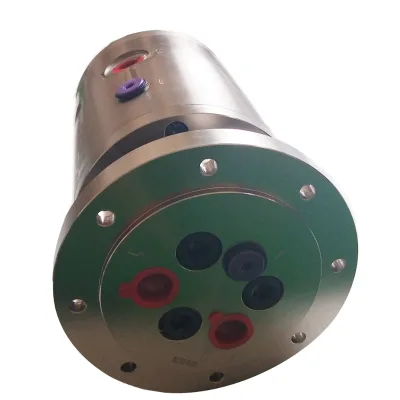
Rotary Joint Application of Hydraulic Machine Hydraulic Rotary Union Design
$81.53 - $191.61
MOQ: 20 Minimum


Heavy Duty Hydraulic Rotary Union for Forestry Machinery and Rotating Equipment
$120.00 - $260.00
MOQ: 5 Pieces

Hydraulic Rotary Union for Excavator and Industrial Hydraulic Equipment
$139.00 - $168.00
MOQ: 1 Pieces


Integrate Pneumatic Rotary Union with Rotating electric connector and Encoder
$169.90 - $9999.00
MOQ: 1 Pieces


Rotating Hydraulic Rotator Forest Equipment Parts Hydraulic Rotator for Crane
$550.00 - $600.00
MOQ: 6 Pieces


Comprehensive Sourcing Guide
Hydraulic Rotary Union Sourcing Guide
Selecting the right Hydraulic Rotary Union requires a careful balance of mechanical precision, material compatibility, and operational reliability. These components serve as critical interfaces in rotating machinery, allowing the transfer of fluid power across stationary and rotating sections without leakage or pressure loss. Buyers must approach this procurement with a clear understanding of the specific environmental conditions, pressure requirements, and rotational speeds their equipment will encounter. The complexity of these units means that off-the-shelf solutions often fail to meet unique engineering needs, making customization and thorough technical verification essential steps in the sourcing process.
The market for hydraulic rotary unions is diverse, featuring various configurations such as single-channel, dual-channel, and multi-channel designs. Each configuration serves distinct purposes, from simple lubrication circuits to complex hydraulic systems requiring multiple fluid paths. Understanding the structural differences between these types is vital for ensuring that the selected union integrates seamlessly with existing machinery. Furthermore, the choice of materials and sealing technologies directly impacts the longevity and performance of the union under varying thermal and mechanical stresses, necessitating a detailed evaluation of component specifications before finalizing any purchase order.
Product Scope and Observed Listing Signals
Current market listings indicate a wide range of product names and configurations, including terms like "rotary joint," "multichannel rotary joint," and "hot water rotary union." These variations often reflect different marketing focuses or specific application niches rather than fundamental differences in the core technology. Buyers should recognize that these terms generally refer to the same class of mechanical devices designed to facilitate fluid transfer in rotating environments. The presence of multiple naming conventions suggests that suppliers may cater to diverse industry terminologies, requiring buyers to map these terms to their specific technical requirements to avoid confusion during the sourcing phase.
Observed listing signals reveal significant variability in customization options, with many suppliers offering OEM and ODM support. This flexibility allows buyers to tailor unions to specific mounting types, thread standards, and passage configurations. However, this abundance of choice also introduces complexity, as not all listed attributes apply to every product variant. For instance, while some listings highlight stainless steel construction for corrosion resistance, others may specify carbon steel for cost-effective general-purpose applications. Buyers must carefully cross-reference these observed signals with their actual engineering needs to ensure that the selected product aligns with their operational constraints and budgetary limits.
Technical Specifications to Verify
Verifying the working temperature and pressure ratings is the first critical step in ensuring the reliability of a Hydraulic Rotary Union. Typical operating ranges observed in the market span from -40℃ to 80℃ for temperature and up to 20 bar for pressure, though higher-performance units may support pressures up to 8.0 MPa and temperatures up to 120°C. Buyers must confirm that the selected union can withstand the peak thermal and hydraulic loads of their specific application without compromising seal integrity or structural stability. Mismatched ratings can lead to premature failure, leaks, and costly downtime, making precise verification of these parameters non-negotiable.
Rotational speed and medium compatibility are equally important technical factors that influence the selection process. Units are generally rated for speeds ranging from 0 to 1000 RPM, with some high-performance models supporting up to 3000 RPM. The choice of bearing type, such as NSK or equivalent brands, plays a crucial role in maintaining stability at higher speeds. Additionally, the union must be compatible with the specific hydraulic medium being used, whether it is oil, water, air, or coolant. Buyers should verify the seal type, typically mechanical seals, to ensure they are suitable for the chemical properties and abrasiveness of the fluid, preventing degradation and maintaining a leak-free operation over time.
Compliance and Safety Documentation
Ensuring that the Hydraulic Rotary Union meets relevant international standards is essential for global compliance and operational safety. Certifications such as ISO and CE are commonly cited, indicating adherence to quality management and safety directives. Buyers should request valid certification documents to verify that the manufacturer has undergone rigorous auditing processes. These certifications provide assurance that the product has been manufactured under controlled conditions, reducing the risk of defects and ensuring consistency in quality across production batches.
Protection levels and warranty terms are also key components of the safety and reliability documentation. An IP54 protection level, for example, indicates that the union is protected against limited dust ingress and water splashes, which is suitable for many industrial environments. Buyers should confirm that the stated protection level matches the environmental conditions of their installation site. Furthermore, a standard warranty period of 12 months offers a baseline for manufacturer accountability. Understanding the scope of this warranty, including what constitutes valid claims and exclusions, helps buyers mitigate financial risks associated with potential product failures.
Cost Drivers and Commercial Terms
The cost of a Hydraulic Rotary Union is influenced by several factors, including material selection, number of channels, and customization requirements. Stainless steel constructions typically command higher prices than carbon steel due to superior corrosion resistance and durability. Similarly, multi-channel unions with complex internal passages and specialized seals are more expensive than single-channel variants. Buyers should evaluate the total cost of ownership, considering not just the initial purchase price but also the potential savings from reduced maintenance and longer service life offered by higher-quality materials and designs.
Commercial terms such as MOQ, packaging, and lead times also impact the overall procurement strategy. Observed MOQ ranges vary from 1 to 100 units, offering flexibility for both small-scale trials and large-volume production runs. Packaging options, including export cartons and wooden cases, are designed to protect the units during transit, which is crucial given their precision engineering. Buyers should negotiate clear terms regarding packaging standards to prevent damage during shipping. Additionally, understanding the lead times associated with customized orders is vital for planning production schedules and avoiding delays in project timelines.
Supplier Qualification and Quality Control
Evaluating supplier qualifications is crucial for ensuring the reliability and consistency of hydraulic rotary unions. Buyers should verify the supplier's manufacturing capabilities, including their ability to handle custom designs and maintain tight tolerances. The presence of certifications like ISO and CE is a positive indicator, but buyers should also assess the supplier's quality control processes, such as incoming material inspections and final product testing. A robust quality management system ensures that each unit meets the specified technical requirements and performs reliably in real-world applications.
Geographic origin and supply chain transparency are also important considerations. Suppliers from regions like Jiangxi and Shandong in China are common sources for these components, offering competitive pricing and manufacturing expertise. However, buyers should conduct due diligence to ensure that the supplier has a stable supply chain and consistent production capacity. Requesting samples for preliminary testing can help verify the supplier's ability to meet quality expectations. Building a relationship with a qualified supplier ensures long-term support, including technical assistance and after-sales service, which are valuable assets in maintaining operational efficiency.
Long-Term Procurement Checks
Establishing long-term procurement checks involves regular monitoring of product performance and supplier reliability. Buyers should implement a feedback loop to track the performance of installed rotary unions, noting any issues related to leaks, wear, or seal failure. This data can be used to refine future specifications and negotiate better terms with suppliers. Continuous improvement in product design and manufacturing processes should be encouraged through regular communication and performance reviews with the supplier.
Reviewing warranty claims and return rates is another critical aspect of long-term procurement management. A high rate of warranty claims may indicate underlying quality issues or mismatches between product specifications and application requirements. Buyers should analyze these trends to identify potential areas for improvement in product selection or installation procedures. By maintaining a proactive approach to quality management, buyers can minimize downtime and ensure that their hydraulic systems operate efficiently and reliably over the long term.
FAQs
What is the maximum operating pressure for this Hydraulic Rotary Union?
The maximum operating pressure is 20 bar. This specification applies to the standard configuration, but custom pressure ratings up to 8.0 MPa are available for specialized applications. Always verify the specific pressure rating against your system requirements before ordering.
What materials are used in the construction of this rotary union?
The rotary union is constructed from stainless steel and carbon steel. These materials provide the necessary durability and corrosion resistance for hydraulic applications. The choice of material may vary depending on the specific medium being transferred and the operating environment.
What is the maximum rotational speed supported by this product?
The standard model supports a maximum rotational speed of 1000 RPM. However, certain configurations can handle speeds up to 3000 RPM. The appropriate speed rating depends on the specific design and application requirements, so confirm the speed limit for your intended use.
Can the number of channels be customized for this rotary union?
Yes, the number of channels is customizable, ranging from one to twenty. This flexibility allows the rotary union to be tailored to specific hydraulic system needs. Customization options also include flow hole size and connection types to ensure compatibility with your equipment.
What certifications does this Hydraulic Rotary Union hold?
The product holds ISO and CE certifications. These certifications indicate compliance with international standards for quality and safety. They are essential for ensuring the product meets regulatory requirements in various global markets and for maintaining consistent performance.
What is the warranty period for this rotary union?
The warranty period is 12 months. This coverage provides assurance against manufacturing defects and ensures reliable performance during the initial operational period. Specific warranty terms may vary based on the supplier and the agreed-upon service conditions.
What connection types are available for this Hydraulic Rotary Union?
Available connection types include threaded and flange connections. Thread standards such as NPT, BSP, and MPT are customizable to fit different system requirements. This variety ensures compatibility with a wide range of hydraulic equipment and piping configurations.