Source Locking and Closing Solenoid for Drawer, Valve, and Gate
Find and compare 30 Locking and Closing Solenoid options for drawer, flow control, and gate applications. Review specifications like 12VDC operation, CE standards, and customization availability to select the right component for your industrial needs; compare the available evidence and request quotations based on your requirements.
Key considerations
Products List


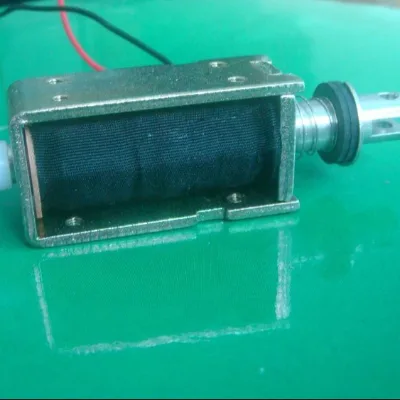

$15.00 - $20.00
MOQ: 200 Pieces

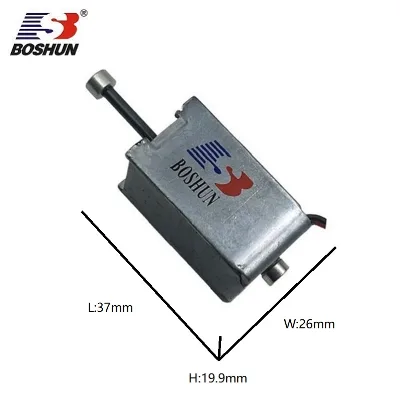
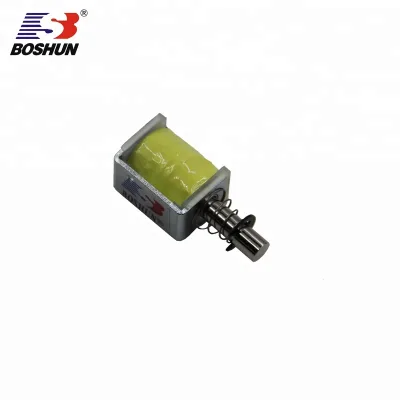
BS-0730-08 miniature latching solenoid lock with bolt DC 3V,6V,12V,24V
$3.13 - $5.21
MOQ: 1000 Minimum
Comprehensive Sourcing Guide
Locking and Closing Solenoid Sourcing Guide
Product Scope and Observed Listing Signals
The market for locking and closing solenoids presents a diverse array of electromechanical actuators designed for precise linear motion control in automated systems. Buyers will encounter products categorized primarily as mortise locks or slide latches, with specific applications ranging from drawer mechanisms to flow control valves. The observed listings indicate a strong emphasis on customization, with many suppliers offering tailored solutions for branding, packaging, and specific operational requirements. This flexibility allows procurement teams to align the hardware closely with their end-product design constraints, ensuring seamless integration into larger assemblies.
Current market signals reveal a wide variance in product specifications, including stroke lengths of 8mm and 10mm, and varying latch shapes. The observed price range spans from $0.50 to $72.63, reflecting differences in material quality, such as brass construction, and operational complexity. Minimum order quantities typically range from 1 to 1000 units, catering to both prototyping needs and high-volume production runs. Understanding these listing signals helps buyers navigate the spectrum from basic off-the-shelf components to highly specialized, custom-engineered locking solutions.
Technical Specifications to Verify
Electrical parameters are critical for ensuring compatibility with existing control systems, particularly regarding voltage and current draw. Observed data highlights operation voltages of 12VDC, with current ratings varying significantly from 0.6A to 2A. Buyers must verify the power consumption, such as 12V DC at 500mA, to prevent circuit overload and ensure efficient energy usage. Additionally, the duty cycle and operation mode, whether intermittent or fail-locked, must align with the intended application’s safety and reliability requirements. Misalignment in these electrical specs can lead to premature failure or inadequate performance in automated environments.
Mechanical attributes such as stroke length, latch dimensions, and load capacity are equally vital for physical integration. Specifications like an 8mm or 10mm stroke and a latch length of 10.5mm dictate the physical movement and engagement depth. Load capacities observed range from 0.15kg to 0.5kg, which is crucial for determining the maximum force the solenoid can exert. Buyers should also consider the protection class, such as IP20, and cycle ratings, which may reach 600,000 cycles, to assess durability. Verifying these mechanical limits ensures the solenoid can withstand the operational stresses of its intended environment without structural compromise.
Compliance and Safety Documentation
Regulatory compliance is a non-negotiable aspect of sourcing electronic components, particularly when products are destined for international markets. The presence of CE certification in observed listings indicates adherence to European health, safety, and environmental protection standards. Buyers must request valid test reports and certificates to verify that the solenoids meet these rigorous requirements. This documentation is essential for customs clearance and market access, ensuring that the imported goods do not face regulatory hurdles or rejection at border controls.
Environmental regulations also play a significant role in component selection, with RoHS compliance being a key indicator of restricted hazardous substance management. Many observed products list CE and RoHS standards, signaling that they are manufactured without certain dangerous materials. Procurement teams should verify the specific versions of these standards and ensure that the supplier provides up-to-date compliance statements. This due diligence protects the buyer from legal liabilities and supports corporate sustainability goals by ensuring the supply chain adheres to environmentally responsible manufacturing practices.
Cost Drivers and Commercial Terms
Pricing in the solenoid market is influenced by a complex mix of material costs, manufacturing complexity, and order volume. The observed price range of $0.50 to $72.63 reflects these variables, with higher costs associated with specialized materials like brass or custom engineering. Buyers should analyze the cost structure relative to the technical specifications, such as cycle rating and load capacity, to determine value. Understanding these drivers helps in negotiating better terms and avoiding overpayment for features that may not be necessary for the specific application.
Commercial terms, including minimum order quantities and packaging options, significantly impact the total cost of ownership. MOQs ranging from 1 to 1000 units allow for flexible purchasing strategies, from small batch testing to bulk procurement. Packaging variations, such as neutral packages or cartons/wooden boxes, affect logistics costs and handling efficiency. Buyers should also consider warranty terms, such as the observed 12-month guarantee, which provides a safety net against early failures. Aligning commercial terms with production schedules and inventory strategies optimizes cash flow and reduces storage expenses.
Supplier Qualification and Quality Control
Evaluating supplier capabilities is essential for ensuring consistent quality and reliable supply chain performance. Buyers should verify the supplier’s origin, with many products originating from Zhejiang, China, a hub for manufacturing excellence. Assessing the supplier’s production capacity and quality control processes, including adherence to standards like ISO 9001, helps mitigate risks associated with inconsistent product quality. Requesting samples and conducting thorough inspections before placing large orders is a prudent step to validate the supplier’s claims and capabilities.
Quality control extends to the verification of product attributes and performance metrics. Buyers should confirm that the delivered solenoids match the specified technical parameters, such as voltage, current, and mechanical dimensions. Implementing incoming quality control checks, including functional testing and visual inspections, ensures that only compliant products enter the production line. Establishing clear communication channels with suppliers for addressing defects or discrepancies is crucial for maintaining high standards and fostering a collaborative relationship that supports continuous improvement.
Long-Term Procurement Checks
Sustaining a successful procurement strategy requires ongoing monitoring of supplier performance and product reliability. Buyers should track key performance indicators, such as defect rates, delivery times, and responsiveness to issues, to identify potential problems early. Regular audits and reviews of supplier quality systems help ensure that they continue to meet the required standards over time. This proactive approach minimizes disruptions and maintains the integrity of the supply chain, supporting long-term business stability.
Technological advancements and market trends also necessitate periodic reassessment of sourcing strategies. Buyers should stay informed about new developments in solenoid technology, such as improved energy efficiency or enhanced durability, to remain competitive. Engaging with suppliers for feedback on product performance and exploring opportunities for co-development can lead to innovative solutions that address evolving customer needs. By maintaining a dynamic and informed procurement process, buyers can adapt to changes and secure a sustainable competitive advantage in the market.
FAQs
What is the operating voltage for these Locking and Closing Solenoid units?
The operating voltage is 12VDC. This standard DC input ensures compatibility with common industrial power supplies. The system draws 1.5A to 2A during activation. This power profile supports reliable engagement for drawer applications. The intermittent mode allows for efficient energy use during short duty cycles.
Can the Locking and Closing Solenoid be customized for specific brands?
Yes, customization is available for branding and specifications. Buyers can request custom logos and packaging options. The product supports customized configurations to meet unique operational needs. This flexibility allows for tailored solutions in various industrial settings. Customization ensures the component aligns with specific project requirements.
Which certifications apply to the Locking and Closing Solenoid products?
The products hold CE and RoHS certifications. These standards confirm compliance with European safety and environmental regulations. The CE mark indicates adherence to essential health and safety requirements. RoHS compliance ensures restricted hazardous substances are not used. These certifications facilitate market access in regulated international regions.
How does the Locking and Closing Solenoid handle power failure?
The device operates in a fail-locked mode. This means the latch remains engaged when power is lost. This safety feature prevents unintended opening during electrical outages. It is critical for secure drawer and cabinet applications. The fail-locked design ensures security is maintained without continuous power.
What is the stroke length of the Locking and Closing Solenoid?
The stroke length varies between 8mm and 10.5mm depending on the model. Specific models offer an 8mm stroke for compact installations. Others provide a 10.5mm latch length for extended reach. This variation allows selection based on precise mechanical clearance requirements. Buyers should choose the model that matches their dimensional constraints.
What is the load capacity of the Locking and Closing Solenoid?
The load capacity ranges from 0.15kg to 0.5kg across different models. This range suits light-duty drawer and cabinet locking tasks. The specific capacity depends on the selected model variant. Buyers must verify the exact load rating for their application. This ensures the solenoid can reliably hold the intended weight.