Source Hydraulic Wheeled Wood Grabber for Logging, Recycling, and Material Handling
Find and compare 30 Hydraulic Wheeled Wood Grabber options from verified suppliers. Evaluate specifications such as jaw opening, oil flow requirements, and compatibility with 12-18 ton excavators to select the right attachment for your heavy machinery needs.
Key considerations
Products List


Hydraulic Wood Grabber for Log Loading and Unloading Flexible Operation
$1300.00 - $1600.00
MOQ: 1 Pieces


Heavy-Duty Hydraulic Wood Grabber for Efficient Log Handling and Transport
$500.00 - $1800.00
MOQ: 1 Pieces


Heavy-Duty Hydraulic Wood Grabber for Excavators in Forest Operations
$500.00 - $1800.00
MOQ: 1 Pieces


Rotating Hydraulic Type Excavator Timber Grabber for Heavy Equipment
$3370.00 - $3500.00
MOQ: 1 Pieces

Hydraulic Grab Rotator Wood Grapple Rotator Hydraulic Rotator for Wood Grapple
$420.00 - $450.00
MOQ: 6 Pieces


Versatile Excavator Mechanical Timber Grabber with 1500mm Height Capacity
$500.00 - $4000.00
MOQ: 1 Pieces

Robust Excavator Mechanical Timber Grabber for Timber Loading and Handling
$500.00 - $4000.00
MOQ: 1 Pieces

Hydraulic Wood Grabber for Log Loading and Unloading Flexible Operation
$1680.00 - $2000.00
MOQ: 1 sets


$2199.00 - $3599.00
MOQ: 1 Sets


Light Hydraulic Timber Grab Grab Wood for Excavators Hydraulic Wood Grapple
$1200.00 - $1300.00
MOQ: 1 Pieces
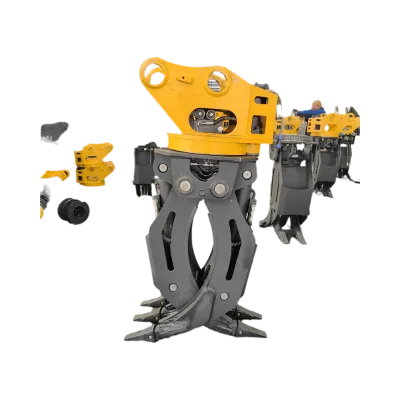


Premium Hydraulic Wood Grabber for Excavators - Durable and Efficient
$1800.00 - $8000.00
MOQ: 1 Pieces


Comprehensive Sourcing Guide
Hydraulic Wheeled Wood Grabber Sourcing Guide
Sourcing hydraulic wheeled wood grabbers requires a nuanced understanding of attachment compatibility, hydraulic system integration, and operational safety. These attachments are designed to mount onto existing wheeled loaders or excavators, transforming standard material handling equipment into specialized forestry or biomass processing tools. The core value proposition lies in the ability to automate the loading and unloading of logs, branches, and wood chips, significantly reducing manual labor and increasing throughput in recycling centers, sawmills, and timber yards. Buyers must recognize that the "grabber" is not a standalone machine but a critical interface between the host vehicle and the material, making hydraulic compatibility and structural integrity the primary decision factors.
The procurement process involves evaluating a wide range of configurations, from compact mini-grabbers suitable for small loaders to heavy-duty units designed for large-scale industrial operations. Market listings indicate a diverse product ecosystem, with models ranging from lightweight units weighing approximately 740 kg to substantial attachments with operating weights exceeding 10 tons. This variance directly impacts the choice of host machinery, as the grabber’s weight and hydraulic demands must align with the loader’s capacity and power output. Understanding these distinctions is essential for selecting a unit that enhances productivity without overloading the host vehicle’s hydraulic system or structural frame.
Product Scope and Observed Listing Signals
The current market landscape for hydraulic wood grabbers reveals a broad spectrum of capabilities, primarily categorized by their mounting compatibility and jaw opening dimensions. Listings frequently highlight compatibility with excavators ranging from 12 to 50 tons, as well as wheeled loaders with rated loads exceeding 9 tons. A key differentiator is the maximum jaw opening, which varies significantly from 1600 mm to 2700 mm, dictating the size of logs or bundles the unit can handle. Buyers should observe that some models are specifically engineered for front discharge operations, while others offer 360-degree rotating systems to optimize loading angles and reduce the need for repositioning the host vehicle.
Another critical signal in product listings is the hydraulic requirement profile, which includes operating pressure and oil flow specifications. Typical observed ranges for operating pressure span from 20 to 35 MPa, while oil flow requirements can vary from 30 to 150 liters per minute. These parameters are non-negotiable for successful integration; a grabber requiring 110 L/min will underperform or fail to operate on a loader with a lower flow capacity. Additionally, the lifting capacity at specific outreach distances, such as 300 kg at 4 meters, provides insight into the unit’s stability and reach. Buyers must cross-reference these observed signals with their existing fleet’s technical data sheets to ensure seamless compatibility.
Technical Specifications to Verify
Verifying the hydraulic interface is the most critical technical step in the procurement process. Buyers must confirm that the host vehicle’s auxiliary hydraulic circuit can meet the grabber’s pressure and flow demands. For instance, if a listing specifies an oil pressure requirement of 150-170 kg/cm² and an oil flow of 90-110 L/min, the loader must be equipped with a high-flow pump and appropriate control valves. Mismatches in these specifications can lead to sluggish operation, excessive heat generation, or premature wear on both the grabber’s hydraulic cylinders and the loader’s pump. It is advisable to request detailed hydraulic schematics from the supplier to validate these connections before finalizing any purchase.
Structural dimensions and weight distribution also play a pivotal role in operational efficiency and safety. The overall dimensions of the attachment, including length, width, and height, must fit within the operational constraints of the intended work site. For example, a unit with an overall dimension of 7140x2420x3120 mm is likely a large loader-integrated system, whereas smaller models may have more compact footprints. Furthermore, the working weight of the grabber, which can range from 740 kg to over 10 tons, affects the host vehicle’s stability and tire wear. Buyers should verify the center of gravity and lifting moment specifications to ensure the attachment does not compromise the loader’s balance, especially when handling heavy or uneven loads at full outreach.
Compliance and Safety Documentation
Compliance with international safety and quality standards is a fundamental requirement for industrial equipment procurement. Most reputable suppliers provide certifications such as CE and ISO 9001, indicating adherence to European safety directives and quality management systems. These certifications are not merely decorative; they signify that the manufacturing processes and final products have undergone rigorous testing for structural integrity and operational safety. Buyers should request copies of these certificates and verify their validity with the issuing bodies to ensure they are current and applicable to the specific model being purchased.
Safety features and operational documentation are equally important for protecting personnel and minimizing liability. The grabber should be equipped with safety mechanisms such as mechanical locks to prevent accidental jaw movement and pressure relief valves to protect the hydraulic system from over-pressurization. Additionally, suppliers should provide comprehensive operation and maintenance manuals that detail safe operating procedures, emergency shutdown protocols, and routine inspection checklists. Buyers must ensure that these documents are available in the local language and that they include clear warnings about potential hazards, such as pinch points and high-pressure hydraulic lines.
Cost Drivers and Commercial Terms
The cost of a Hydraulic Wheeled Wood Grabber is influenced by several factors, including material quality, hydraulic component grade, and customization options. High-strength steel alloys and premium hydraulic cylinders contribute to higher upfront costs but offer greater durability and longer service life. Customization options, such as specialized jaw teeth for different types of wood or custom paint colors for fleet identification, can also impact the final price. Buyers should request detailed breakdowns of costs to understand where their investment is going and to identify areas where cost-saving measures might be possible without compromising quality.
Commercial terms, including minimum order quantities (MOQ) and packaging standards, also affect the total cost of ownership. Observed MOQs can range from 1 to 6 units, which may influence pricing tiers and shipping logistics. Packaging is typically done in wooden boxes or plywood cases to protect the attachment during transit, but buyers should verify that the packaging meets international shipping standards to prevent damage. Additionally, payment terms, warranty periods, and after-sales support services should be clearly defined in the contract. Buyers should negotiate for favorable terms that align with their cash flow and risk management strategies, ensuring that they are protected in case of defects or operational issues.
Supplier Qualification and Quality Control
Evaluating supplier qualifications is essential to mitigate the risk of receiving substandard equipment. Buyers should prioritize suppliers with a proven track record in manufacturing heavy machinery attachments and those who hold relevant certifications. Factory audits, either virtual or on-site, can provide valuable insights into the supplier’s production capabilities, quality control processes, and workforce expertise. Suppliers who are transparent about their manufacturing processes and willing to share detailed information about their supply chain are generally more reliable partners.
Quality control measures should be implemented throughout the procurement process, from raw material inspection to final assembly and testing. Buyers should request quality inspection reports and test results for critical components such as hydraulic cylinders, structural welds, and control valves. Third-party inspection services can be engaged to verify that the delivered goods meet the agreed-upon specifications and quality standards. Establishing clear quality acceptance criteria and communication channels with the supplier ensures that any issues are identified and resolved promptly, minimizing downtime and operational disruptions.
Long-Term Procurement Checks
Long-term procurement success depends on establishing a robust supply chain relationship and implementing continuous improvement strategies. Buyers should regularly review supplier performance metrics, including delivery times, product quality, and responsiveness to issues. Building a partnership based on mutual trust and open communication can lead to better pricing, priority support, and access to new product innovations. Suppliers who invest in research and development and stay updated with industry trends can provide valuable insights and recommendations for optimizing operations.
Maintenance and spare parts availability are critical for ensuring the longevity and reliability of the hydraulic wood grabber. Buyers should verify that the supplier offers a comprehensive range of spare parts and provides technical support for troubleshooting and repairs. Establishing a preventive maintenance schedule and training operators on proper usage and care can significantly extend the lifespan of the attachment. Regularly reviewing and updating procurement strategies based on operational feedback and market changes ensures that the organization remains competitive and efficient in its material handling operations.
FAQs
What is the typical working weight of a Hydraulic Wheeled Wood Grabber?
The working weight for this specific model is 740kg. This weight is designed to balance stability and maneuverability for wheeled operations. Buyers should verify that their excavator or carrier can support this attachment weight safely.
What is the maximum jaw opening for this hydraulic wood grabber?
The maximum jaw opening is 1600mm for the Hawk06 model. Other models in the series may offer openings up to 2700mm. Selecting the correct opening width depends on the size of the logs or timber being handled.
Which excavator tonnage is suitable for this hydraulic wood grabber?
This grabber is suitable for excavators in the 12-18 ton range. The system requires an oil pressure of 150-170kg/cm2 and a flow rate of 90-110L/min. Ensure your machine's hydraulic system meets these specifications for optimal performance.
Can the Hydraulic Wheeled Wood Grabber be customized for specific needs?
Yes, customization is available for this product. Buyers can request specific modifications to fit their operational requirements. OEM services are also supported, allowing for tailored branding or technical adjustments during the manufacturing process.
What are the standard packaging and shipping conditions for this grabber?
The product is shipped in a wooden box to ensure safe transport. The condition is new, and it includes CE and ISO9001 certifications. This packaging protects the hydraulic components and structural integrity during international logistics.
What is the rated load capacity of the hydraulic wood grabber?
The rated load is greater than 9 tons. This capacity allows for efficient handling of heavy timber loads. The front discharge mode and wheeled walking system facilitate easy loading and unloading in various site conditions.
What are the hydraulic requirements for operating this wood grabber?
The system requires an oil pressure of 150-170kg/cm2 and an oil flow of 90-110L/min. These parameters ensure smooth operation of the hydraulic transmission. Matching these specs with your excavator is critical for preventing system strain.