Source Hydroponic Dutch Bucket with Siphon Elbows for Tomatoes, Cucumbers, Peppers
Compare 30 Hydroponic Dutch Bucket with Siphon Elbows from verified Chinese manufacturers. These food-grade PP units support growing vegetables like tomatoes, cucumbers, and peppers in home or agricultural settings with options for floor or desktop use.
Key considerations
Products List


Plastic Dutch Bucket Growing System Siphon Elbow Hydroponic Bato Bucket System
$1.99 - $3.00
MOQ: 90 Pieces


11L Plastic Dutch Bucket Hydroponic Growing Dutch Bucket for Hydroponics
$1.99 - $3.00
MOQ: 300 Pieces


Hydroponic Manufacturer New Dutch Bucket for Hydroponic Systems Growing Sale
$69.00 - $89.00
MOQ: 1 cartons


Comprehensive Sourcing Guide
Strategic Sourcing Guide for Hydroponic Dutch Buckets with Siphon Elbows
Understanding Product Specifications and Variants
The core keyword "Hydroponic Dutch Bucket with Siphon Elbows" refers to a specific subset of hydroponic growing systems designed for high-yield vegetable production. Based on available market data, these units are primarily constructed from durable plastics, specifically Food Grade PP (Polypropylene), ensuring safety for edible crops like cucumbers, tomatoes, peppers, melons, and eggplants. The product is fundamentally categorized as a planter designed for agricultural and home gardening applications, with a distinct usage profile in hydroponic systems.
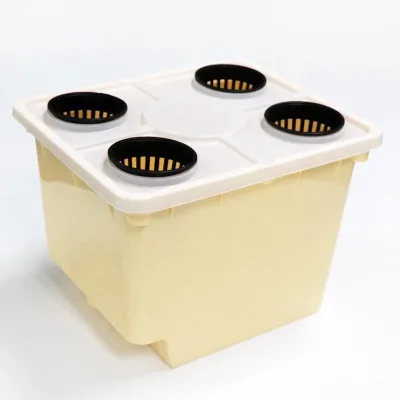
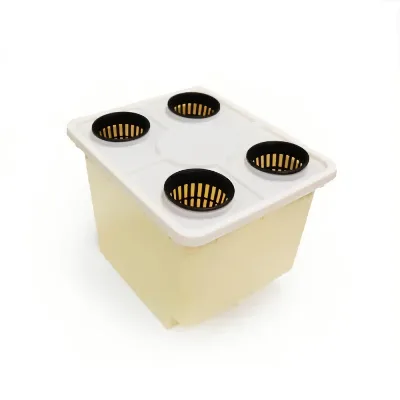
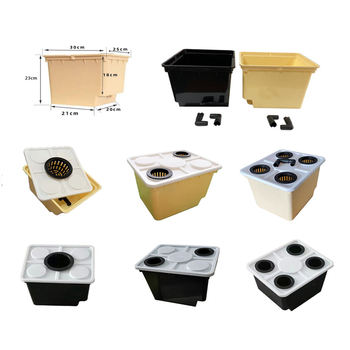
A critical observation in the current market is the variation in physical dimensions and configurations. Buyers must distinguish between models labeled as "Medium," "Large," and "Small." For instance, specific model designations such as GN01 and GN02 indicate different dimensional standards. The GN01 variant is often associated with dimensions of 302330 cm, while the GN02 model frequently appears with a size of 302523 cm (12x10x9 inches). Furthermore, capacity specifications vary, with some units rated at 11 liters. The shape of these buckets is not uniform; while some are round, others are square, and the layer configuration ranges from single-layer to double-layer designs.
The physical construction involves mechanical production methods, resulting in a product that is typically not coated. The material thickness is a vital specification, with observed values around 3.2mm, which contributes to the structural integrity required for supporting heavy fruit loads. The color palette is generally limited to black or beige, often with an anti-UV feature to protect the plastic from degradation under direct sunlight. The siphon elbows, which are essential for the drainage mechanism, are integral to the bucket's function in a Dutch bucket system, allowing for efficient nutrient delivery and waste removal.
Compliance and Certification Verification
When sourcing hydroponic equipment, verifying compliance with international safety and environmental standards is paramount. The supplied data indicates that certain products carry RoHS certification, which restricts the use of specific hazardous materials in electrical and electronic equipment, though in the context of plastic buckets, this primarily ensures the absence of heavy metals and harmful phthalates in the polymer. Buyers should explicitly request proof of this certification to ensure the material is safe for growing food crops.
Beyond material safety, the longevity of the product is a key compliance metric. The observed lifespan for these units ranges from 5 to 8 years, with some high-grade variants claiming over 8 years of service. This durability is often linked to the anti-UV properties of the plastic. However, buyers must not assume all listed products meet these lifespan claims without verification. The standard for packaging is also a compliance factor; products are typically shipped in cartons with a standard packing density of 30 pieces per carton. Understanding the "prod_standard" is crucial, as dimensions like 302523 cm must be consistent with the buyer's infrastructure requirements.
Cost Drivers and Pricing Dynamics
The pricing for hydroponic Dutch buckets is influenced by several variables, including material quality, dimensional size, and order volume. The observed price range in the market spans from $1.45 to $89 USD. This wide disparity suggests that the lower end of the spectrum likely corresponds to smaller, single-layer, or less robust models, while the higher end may reflect larger, double-layer, or specialized variants with enhanced UV protection.
Minimum Order Quantity (MOQ) is a significant cost driver. The market data shows an MOQ range from 1 unit up to 2000 units. For small-scale growers or those testing the market, suppliers offering an MOQ of 1 are available, though the unit cost will be higher. Conversely, large-scale agricultural operations can leverage economies of scale. Container loading efficiency is a critical factor in cost optimization. A 20-foot container can typically hold approximately 6,500 pieces, while a 40-foot container can accommodate up to 16,000 pieces. These figures allow buyers to calculate the landed cost per unit accurately based on their container requirements.
The packaging method also impacts shipping costs. With a standard package of 30 pieces per carton, the volumetric weight becomes a consideration. Buyers should verify if the supplier offers optimized packing to reduce void space, as this directly affects freight charges. Additionally, the origin of the product, identified as China, influences the baseline manufacturing cost, but logistics, tariffs, and insurance must be factored into the total cost of ownership.
Typical Applications and System Integration
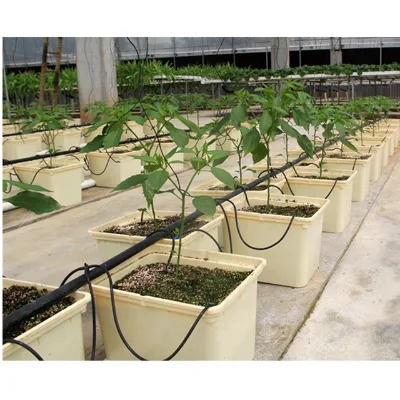
Hydroponic Dutch buckets are versatile tools designed for a wide array of agricultural applications. They are explicitly marketed for use in hydroponic systems, making them ideal for commercial farms, greenhouses, and home gardening setups. The "Application Scene" is listed as Home Gardening, but the "Usage" is also defined as Farm/Agriculture, indicating a dual-purpose utility. The system is particularly well-suited for growing vegetables, with specific mentions of cucumbers, tomatoes, peppers, melons, and eggplants.
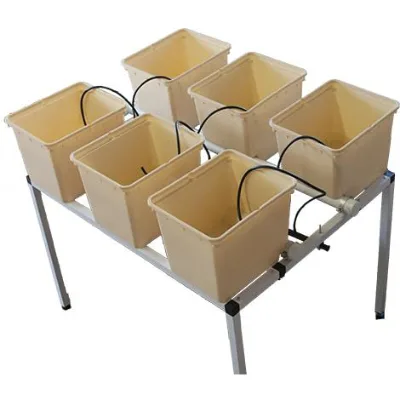
The integration of the siphon elbow is critical for the system's functionality. In a Dutch bucket setup, the bucket acts as a reservoir and a support structure for the plant. The siphon mechanism allows excess nutrient solution to drain from the bucket to the next one in the series or to a collection tank, preventing root rot and ensuring a consistent nutrient flow. The "Use Type" can be either desktop or floor type, depending on the specific model and the buyer's setup. The "Layer" attribute, ranging from single to double, suggests that these buckets can be stacked or used in multi-tier systems to maximize vertical growing space.
The product is also noted for its "Perfect for" application in specific crops, highlighting its suitability for heavy-fruiting plants. The "Style" is described as simple, which often implies ease of assembly and maintenance. The "Cover Material" options, including film or plastic sheet, suggest that some models may come with lids or covers to reduce evaporation and prevent contamination, although this is not a universal feature across all listed variants.
Supplier Evaluation and Sourcing Strategy
Evaluating suppliers for hydroponic Dutch buckets requires a focus on consistency and reliability. Since the product origin is consistently listed as China, buyers should expect a robust supply chain but must verify the specific factory capabilities. The "Production Method" is mechanical, which implies a high degree of standardization, but buyers should still assess the supplier's quality control processes.
Key evaluation criteria include the supplier's ability to provide samples that match the claimed specifications, such as the 3.2mm thickness and the specific dimensions (e.g., 302523 cm). Buyers should also verify the "prod_packing" details to ensure the carton box quality is sufficient to protect the plastic buckets during transit. The "Package" specification of 30/CTN is standard, but deviations should be clarified.
Furthermore, the "Life Span" claim of 5-8 years or over 8 years should be backed by warranty terms or material data sheets. Suppliers who can provide third-party test results for UV resistance and material safety (RoHS) are preferable. The "Certfication" status, specifically RoHS, should be verified for every batch, as this is a critical compliance requirement for food-grade applications. Buyers should also inquire about the "20FT Container Qty" and "40FT Container Qty" to ensure the supplier can meet their volume requirements without compromising on quality or delivery timelines.
Quality Control and Long-Term Procurement Considerations
Quality control for hydroponic Dutch buckets must address both structural integrity and material safety. The "Material" is listed as Plastic, specifically Food Grade PP, which is a strong indicator of quality, but buyers must ensure that the "Cover Material" and any additives used in the production process do not compromise food safety. The "Anti UV" feature is a critical quality attribute; without it, the plastic may degrade rapidly under sunlight, leading to brittleness and failure.
Long-term procurement considerations involve the durability of the product. The "Life Span" of 5-8 years is a significant investment factor. Buyers should assess the cost-benefit ratio of purchasing higher-quality buckets with a longer lifespan versus cheaper alternatives that may need replacement sooner. The "Weight" of the unit, observed at 0.45kg, is another factor to consider for logistics and handling, especially in large-scale operations where manual handling is frequent.
Finally, buyers should consider the "Standard" dimensions carefully. Variations in size, such as the difference between 302330 cm and 302523 cm, can impact the layout of the entire hydroponic system. Ensuring that all components, including the siphon elbows, are compatible with the chosen bucket size is essential for system efficiency. Regular quality checks on incoming batches, focusing on the "Shape" (Round vs. Square) and "Layer" configuration, will help maintain the integrity of the hydroponic setup over time. By adhering to these verification steps, buyers can secure a reliable supply of high-performance Dutch buckets for their agricultural needs.
FAQs
What material is used for Hydroponic Dutch Bucket with Siphon Elbows?
The buckets are constructed from Food Grade PP plastic to ensure safety for edible crops. This material provides durability and resistance to chemicals used in hydroponic systems.
Can these buckets be customized for specific growing needs?
Yes, customization is available to meet specific requirements for different agricultural setups. Buyers should verify specific customization options with the supplier before placing an order.
Which certification ensures the safety of the plastic material?
RoHS certification is observed on these products to restrict hazardous materials. This ensures the absence of heavy metals and harmful phthalates in the polymer used for growing food.
How long does a Hydroponic Dutch Bucket with Siphon Elbows last?
The typical lifespan ranges from 5 to 8 years depending on usage conditions. Some high-grade variants with anti-UV features may last over 8 years under direct sunlight.
What is the standard packaging configuration for these buckets?
Products are typically shipped in cartons containing 30 pieces per carton. This standard packing density helps optimize container loading efficiency for shipping.
Which dimensions are available for the large model variants?
Large models often feature dimensions of 30 by 25 by 23 cm. Specific model designations like GN02 correspond to these standard size specifications.
Can these buckets be used for growing vegetables like tomatoes?
Yes, they are perfect for growing cucumbers, tomatoes, peppers, melons, and eggplants. The design supports heavy-fruiting plants in both home gardening and commercial farm applications.