Source IEC61032 Standard Test Finger for Lab, School, and Industrial Use
Find 30 verified options for the IEC61032 Standard Test Finger suitable for lab, school, and industrial applications. Compare models like ZLT-I02 and BND-B with varying certifications and delivery times to meet your accessibility probe testing needs.
Key considerations
Products List


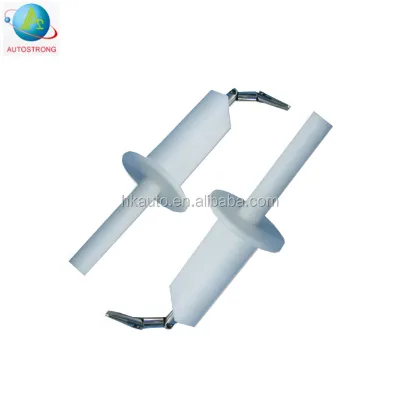


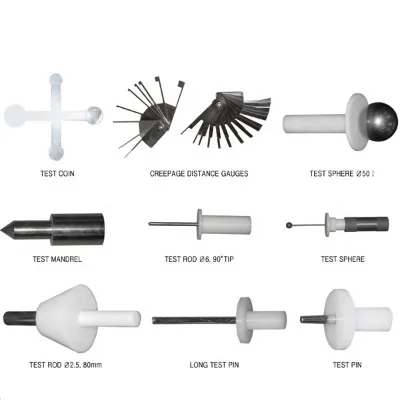
Comprehensive Sourcing Guide
Strategic Sourcing Guide for IEC 61032 Standard Test Finger Equipment
Procuring test equipment that adheres to the IEC 61032 standard requires a disciplined approach to ensure that the tools selected will accurately verify the ingress protection of electrical enclosures. The core keyword, "IEC 61032 standard test finger," refers to a specific category of measurement instruments designed to simulate the intrusion of fingers or tools into equipment housings. For procurement professionals, the challenge lies not only in identifying the physical probe but in verifying that the entire assembly, including the materials and construction, meets the rigorous dimensional and functional requirements mandated by international safety standards. This guide outlines the critical factors buyers must evaluate when sourcing these instruments, focusing on technical specifications, compliance verification, and supplier reliability.
Understanding Technical Specifications and Probe Geometry
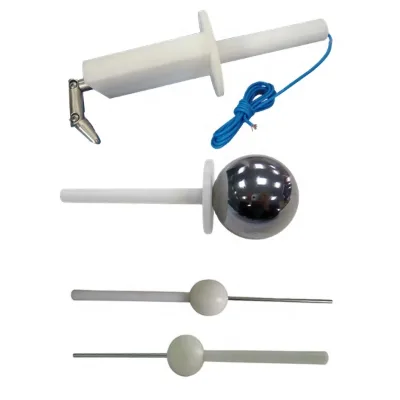
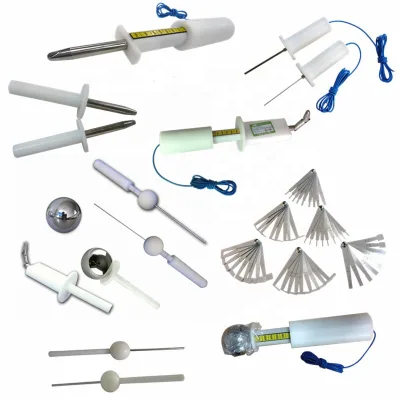
The fundamental requirement for any IEC 61032 compliant test finger is precise geometric accuracy. The standard defines specific dimensions for the "noodle" or finger, which is used to attempt entry into an enclosure. Based on observed product attributes in the current market, these probes often feature a "nodular finger" with a length of 100mm and a "curved finger" with specific segment lengths of 30mm, 30mm, and 40mm. These dimensions are not arbitrary; they are engineered to replicate the human hand's reach and the specific pressure points that could compromise safety in a real-world scenario.
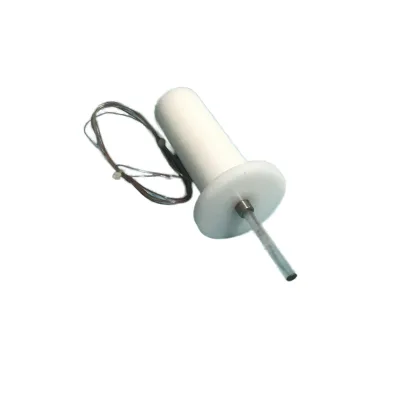
When evaluating potential suppliers, buyers must scrutinize the physical construction of the probe. The material composition is a primary indicator of durability and precision. Stainless steel is a commonly observed material for these instruments, offering the necessary rigidity to maintain shape under pressure while resisting corrosion. The structure of the probe is often described as "portable" or "handheld," indicating that the device is designed for field testing or laboratory use where mobility is essential. However, portability should not compromise the stability of the measurement. The probe must be mounted or held in a manner that ensures the force applied is consistent and measurable.
Furthermore, the specific model numbers associated with these probes, such as ZLT-I02, ZLT-I15, and ZLT-I07A, often denote variations in the standard being tested or the specific configuration of the finger. For instance, some models are explicitly linked to "IEC61032 Test probe15," while others reference "IEC61032 Figure 2." This variation suggests that a single product line may not cover all testing scenarios. Buyers must ensure that the specific model selected matches the exact test requirement of their product development cycle. A probe designed for one specific clause of the standard may not be suitable for another, particularly when testing different classes of electrical equipment.
Compliance Verification and Certification Requirements
Compliance with the IEC 61032 standard is the non-negotiable baseline for any test finger intended for safety certification testing. However, the mere claim of compliance is insufficient. Buyers must verify that the equipment carries valid certifications that attest to its manufacturing quality and adherence to safety norms. In the observed market, products frequently list certifications such as CE, ISO, and RoHS. The CE marking indicates conformity with health, safety, and environmental protection standards for products sold within the European Economic Area, while RoHS ensures the device is free from specific hazardous materials.
It is crucial to distinguish between the certification of the test equipment itself and the standards it is designed to test. The test finger must be manufactured to a standard that allows it to accurately apply the IEC 61032 test. Some suppliers list standards such as IEC60950, IEC60529, UL1278, and IEC60335 alongside the primary IEC 61032 reference. These additional standards often relate to the broader safety context of the equipment being tested or the safety of the test apparatus itself. For example, IEC60529 relates to degrees of protection provided by enclosures (IP codes), which is the ultimate goal of the IEC 61032 test.
Buyers should request documentation that explicitly maps the physical dimensions of the probe to the specific clauses of IEC 61032. The standard references specific figures, such as Figure 2, which detail the exact curvature and dimensions of the finger. If a supplier claims their product conforms to "IEC61032" but cannot provide a calibration certificate or a dimensional report referencing the specific figure, the risk of non-compliance is high. Additionally, the presence of certifications like FCC or ISO suggests a higher level of quality management in the manufacturing process, which is a positive indicator for long-term reliability.
Cost Drivers and Pricing Structures
The pricing of IEC 61032 test fingers varies significantly based on the complexity of the design, the materials used, and the included accessories. The observed price range for these instruments spans from approximately $50.65 to $4,000. This wide disparity is not necessarily indicative of quality alone but often reflects the scope of the package. A lower-priced unit might be a single probe or a basic kit, while a higher-priced unit could include a complete testing rig, a protective case, and multiple interchangeable fingers.
Material costs are a primary driver of price. Stainless steel probes are generally more expensive than those made from lower-grade metals due to the cost of the raw material and the precision machining required. The "in Box" or "in Aluminum Box" packaging mentioned in product attributes also influences the final cost. Aluminum cases offer superior protection for the delicate probe geometry during transport, which is essential for maintaining calibration and preventing damage.
Minimum Order Quantity (MOQ) is another factor that affects the total cost of acquisition. In the current market, the observed MOQ is consistently 1 PC, which is highly favorable for buyers who need to purchase a single unit for internal validation or small-scale testing. This low barrier to entry allows laboratories and small manufacturers to acquire necessary equipment without committing to large inventory volumes. However, buyers should be aware that while the unit price might be low, the cost of shipping and potential import duties can impact the final landed cost, especially for international procurement.
Typical Applications and Industry Use Cases
IEC 61032 test fingers are utilized across a diverse range of industries where electrical safety is paramount. The primary application is in the laboratory and school settings, where students and researchers test the safety of electrical components and enclosures. In these environments, the probes are used to verify that live parts are not accessible to users, ensuring compliance with safety regulations before a product is released to the market.
Beyond educational institutions, the industrial sector is a major consumer of these test instruments. Manufacturers of home appliances, communication electronic products, and special equipment rely on these probes to validate their designs. The "Application" attribute often lists "Home, Industry, Communication Electronic Products, Special Equipment," highlighting the versatility of the tool. For instance, a manufacturer of a household power supply unit must ensure that the enclosure prevents finger access to high-voltage components. Similarly, industrial control panels must be tested to ensure they meet the ingress protection requirements for their intended environment.
The specific usage is often described as "for Accessibility Probe Testing," which emphasizes the functional goal of the equipment. This testing is critical for obtaining type approval and safety certifications required for market entry in various regions. Without a compliant test finger, a manufacturer cannot reliably demonstrate that their product meets the necessary safety standards, potentially leading to product recalls or legal liabilities. Therefore, the application of these probes extends from the initial design phase through to final quality control and regulatory compliance verification.
Supplier Evaluation and Operational Considerations
When selecting a supplier for IEC 61032 test fingers, buyers must look beyond the product specifications to evaluate the supplier's operational capabilities. The origin of the product is a significant factor; many suppliers are located in Guangzhou, China, a major hub for manufacturing testing equipment. While this location offers competitive pricing and a wide variety of options, buyers must verify the supplier's ability to provide consistent quality and after-sales support.
Lead times and delivery methods are critical operational considerations. The observed delivery times range from 3-7 days to 20-25 days, depending on the specific product and the supplier's current workload. For urgent testing needs, a supplier offering a "3-7 days" delivery window may be preferable. However, buyers should also consider the delivery method; some suppliers offer "by Freight" shipping, which may be necessary for larger, heavier testing rigs, while others may use standard courier services for smaller probes.
After-sales service is another key metric. A supplier offering a "One Year" warranty and "Good" after-sales service provides a safety net for buyers in case of equipment failure or calibration drift. The availability of spare parts and the ability to provide calibration certificates are also essential. Buyers should inquire about the supplier's policy on re-calibration and whether they offer training on the proper use of the test finger to ensure accurate results.
Quality Control and Long-Term Procurement Strategy
Maintaining the integrity of the test equipment is essential for reliable results. Quality control measures should include regular calibration checks to ensure that the probe dimensions have not changed due to wear and tear. The "Customization" attribute, which is listed as both "Available" and "Non-Customized" in different contexts, suggests that some suppliers may offer tailored solutions. Buyers should evaluate whether their specific testing needs require a customized probe or if a standard model suffices.
Long-term procurement strategies should focus on building a relationship with a supplier who can provide consistent quality and support. The "Inventory" status, often listed as "in Stock," is a positive indicator of a supplier's ability to fulfill orders quickly. However, buyers should also consider the total cost of ownership, including the cost of maintenance, calibration, and potential replacement parts.
In conclusion, sourcing IEC 61032 standard test finger equipment requires a careful balance of technical verification, compliance checking, and supplier evaluation. By focusing on the specific dimensions, material quality, and certification status of the probes, buyers can ensure that their testing equipment meets the rigorous demands of international safety standards. The wide range of available options, from basic handheld probes to comprehensive testing kits, allows buyers to select the solution that best fits their specific operational needs and budget constraints.
FAQs
What certifications do IEC 61032 test fingers typically have?
These probes typically carry CE, ISO, and RoHS certifications to ensure safety compliance. Some models also include FCC or UL1278 markings, verifying they meet specific international standards for electrical equipment testing and material safety.
Which materials are used for durable test finger probes?
Stainless steel is the primary material used for these probes due to its rigidity and corrosion resistance. This material ensures the probe maintains precise geometric dimensions required by the IEC 61032 standard during repeated testing cycles.
Can I find portable handheld versions of these test probes?
Yes, portable and handheld structures are commonly available for field and laboratory use. These designs allow for mobility while ensuring the probe remains stable enough to apply consistent force during accessibility testing scenarios.
What is the minimum order quantity for purchasing these probes?
The minimum order quantity is typically one piece, allowing buyers to purchase single units for validation. This low barrier supports small manufacturers and laboratories needing specific models without committing to large inventory volumes.
How long does delivery take for these testing instruments?
Delivery times generally range from three to seven days for stock items or up to twenty-five days for custom orders. The specific timeline depends on the supplier's location and whether the item requires freight shipping.
Which standards do these probes conform to besides IEC 61032?
Probes often conform to IEC 60950, IEC 60529, UL 1278, and IEC 60335 standards. These additional standards ensure the equipment is suitable for testing various electrical enclosures and meets broader safety requirements for industrial and home applications.